

Bananas Grown in Russian Smart Greenhouses Show Strong Nutritional Results
Russia’s program to cultivate tropical crops domestically is moving toward commercial-scale production. An automated greenhouse system has produced bananas in Sochi that outperform imported fruit in several quality indicators.
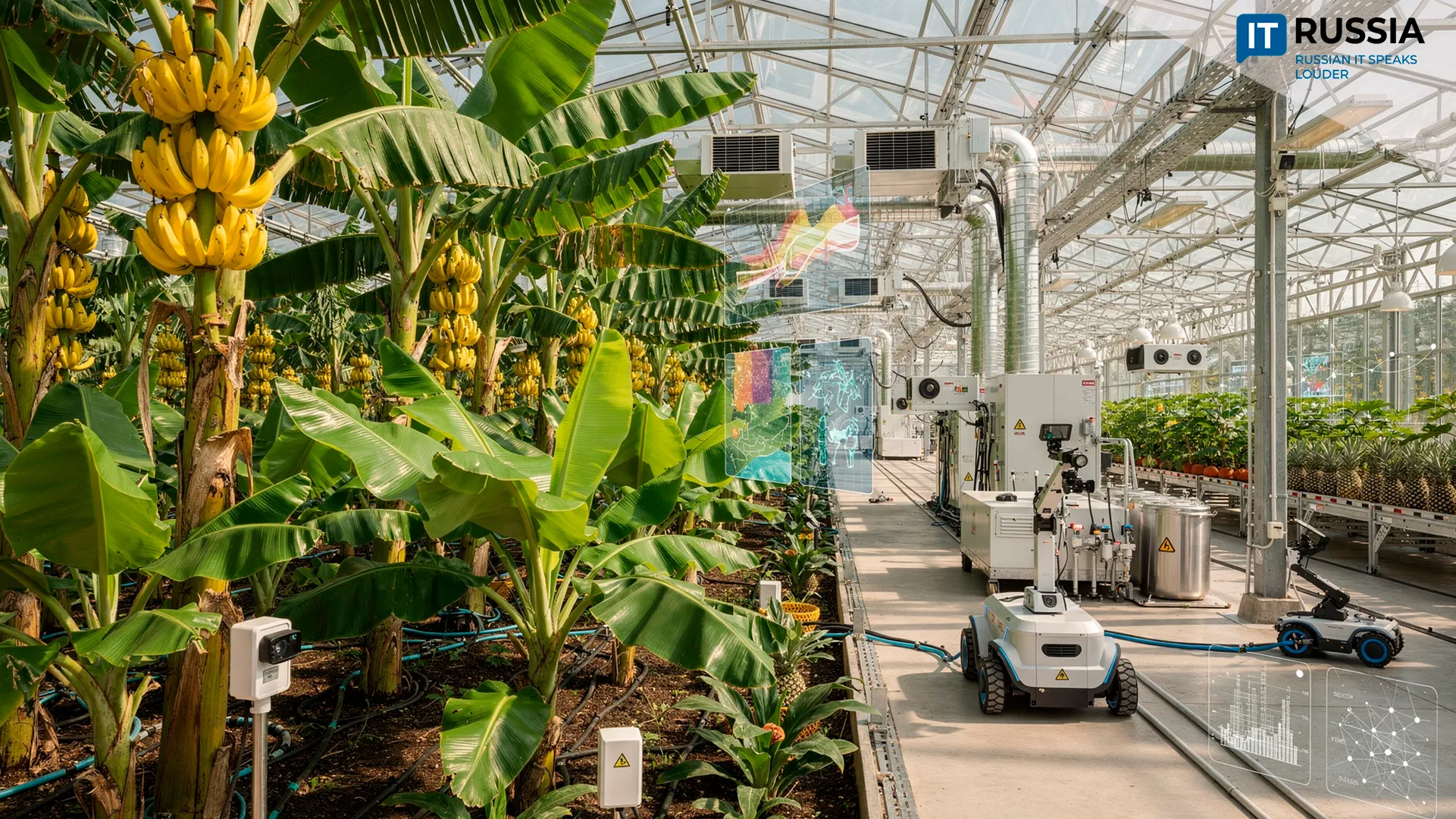
Russia’s first commercial-scale tropical crop project grown in controlled-environment agriculture is demonstrating what digital farming can achieve. The Krasnodar-based agricultural enterprise 100 Gektar (100 Hectares) has shown in practice that it can supply Russian consumers with high-quality bananas, including some of the most exotic varieties.
AI Instead of the Tropics
Commercial cultivation of tropical crops in Russia began in 2025 and is being led by 100 Gektar. Bananas have also been officially recognized as a Russian agricultural product: Government Directive No. 1761-r, dated July 2, 2025, added bananas to the country’s list of agricultural products. That status not only allows bananas to be grown and processed domestically but could eventually make producers eligible for a range of agricultural support programs.
Growing bananas is a complex undertaking. The perennial crop requires temperatures of about 30°C, abundant irrigation, and air humidity of around 60%. Without those conditions, growth slows dramatically. Maintaining such a stable environment indoors is only practical through a greenhouse controlled by artificial intelligence.
In Sochi, the company has built a 600-square-meter greenhouse complex equipped with an AI-based climate-management system. Automated sensors track humidity and temperature levels, allowing environmental conditions to be adjusted continuously. The software platform controlling the facility was developed by Russian engineers. An automated monitoring platform is used to track plant health. When machine-vision systems identify a problem plant, a robotic system sends the relevant data directly to the agronomist’s mobile device. The greenhouse is also equipped with a network of 25 surveillance cameras. Together, these technologies improve the precision of crop-management operations while eliminating much of the costly manual monitoring traditionally required.
Better Taste and Stronger Nutrition
In May 2026, the first bananas harvested from the project were tested by the Novorossiysk branch of the Federal Center for Safety and Quality Assessment of Agricultural Products (TsOK APK). Growing the fruit under tightly controlled AI-managed conditions produced strong results.
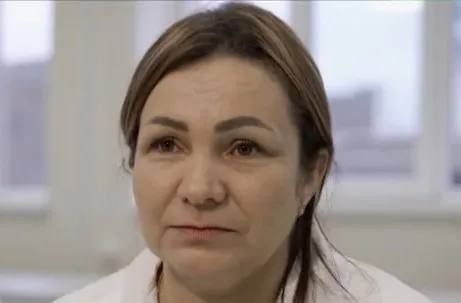
“The first Russian-grown bananas comply with the Technical Regulations of the Customs Union on Food Safety. The sample was tested against key safety indicators. No pesticide residues or toxic elements were detected,” said Liliya Kugusheva, Director of the Novorossiysk branch of TsOK APK.
Kugusheva also highlighted the nutritional value of the Russian-grown bananas. The sample contained 9.7% sucrose and 6.4% fructose. Potassium content reached 3,315 mg/kg, an important nutrient for cardiovascular health and fluid balance. Magnesium content measured 261 mg/kg, which is essential for the nervous system and muscle function.
According to experts, imported supermarket bananas performed less well in quality testing. As Kugusheva noted, magnesium levels in imported samples ranged from 138 mg/kg to 176 mg/kg, compared with 261 mg/kg in the Russian-grown bananas. “The sweetest fruits turned out to be poor in this important mineral. In that respect, they were essentially empty,” Kugusheva explained. The expert also noted the strong organoleptic characteristics of the samples, particularly the richness of the aroma and the dense texture of the fruit.
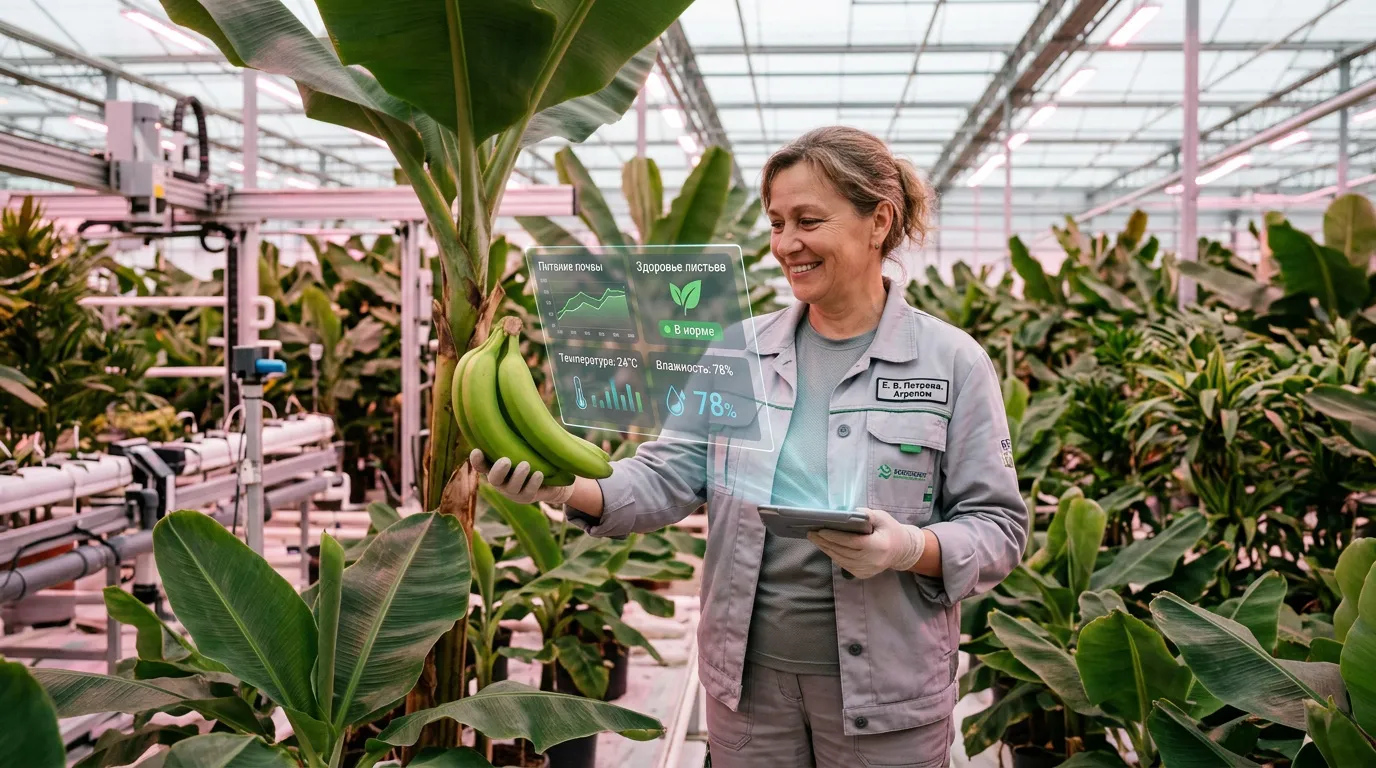
Tropical Fruit Year-Round Across Russia
Russian-grown bananas are unlikely to replace imports entirely. In 2025 alone, 1.242 million tonnes of bananas were imported through the Port of St. Petersburg, with shipments arriving from Ecuador, Costa Rica, Colombia, and Peru. However, Russian growers could realistically capture a share of this large market. Their advantage lies in quality and product differentiation. The project aims to cultivate premium varieties that are not currently imported into Russia. Experimental greenhouses are already growing 15 banana varieties, and that number could eventually increase to 20.
Thus, greenhouse production could help position southern Russia as a hub for subtropical agriculture. At the same time, the country is building technical expertise in cultivating complex crops under controlled-environment conditions.
For Russia’s digital technology sector, greenhouse farming has become an important field that will require continued innovation. The use of IoT sensors, digital climate-control systems, and algorithm-driven crop-management tools makes automated greenhouses a model of smart agriculture that could be replicated across the country.
This is particularly important in Russia’s Far North, where access to fresh tropical fruit is extremely limited. The experience gained from growing bananas in smart greenhouses could also be applied to other tropical crops. Given the quality of the produce achieved so far, scaling AI-managed greenhouses in northern regions could become not only an agricultural initiative but also a social-development project.