When Science Speeds Up: How Hybrid AI Is Reshaping the Future of Materials Science
An international team of scientists from Russia and the United States has developed a hybrid artificial intelligence system capable of accelerating quantum-chemical calculations by a factor of 100 compared with classical methods, while preserving accuracy.

A Breakthrough at the Intersection of AI And Quantum Physics
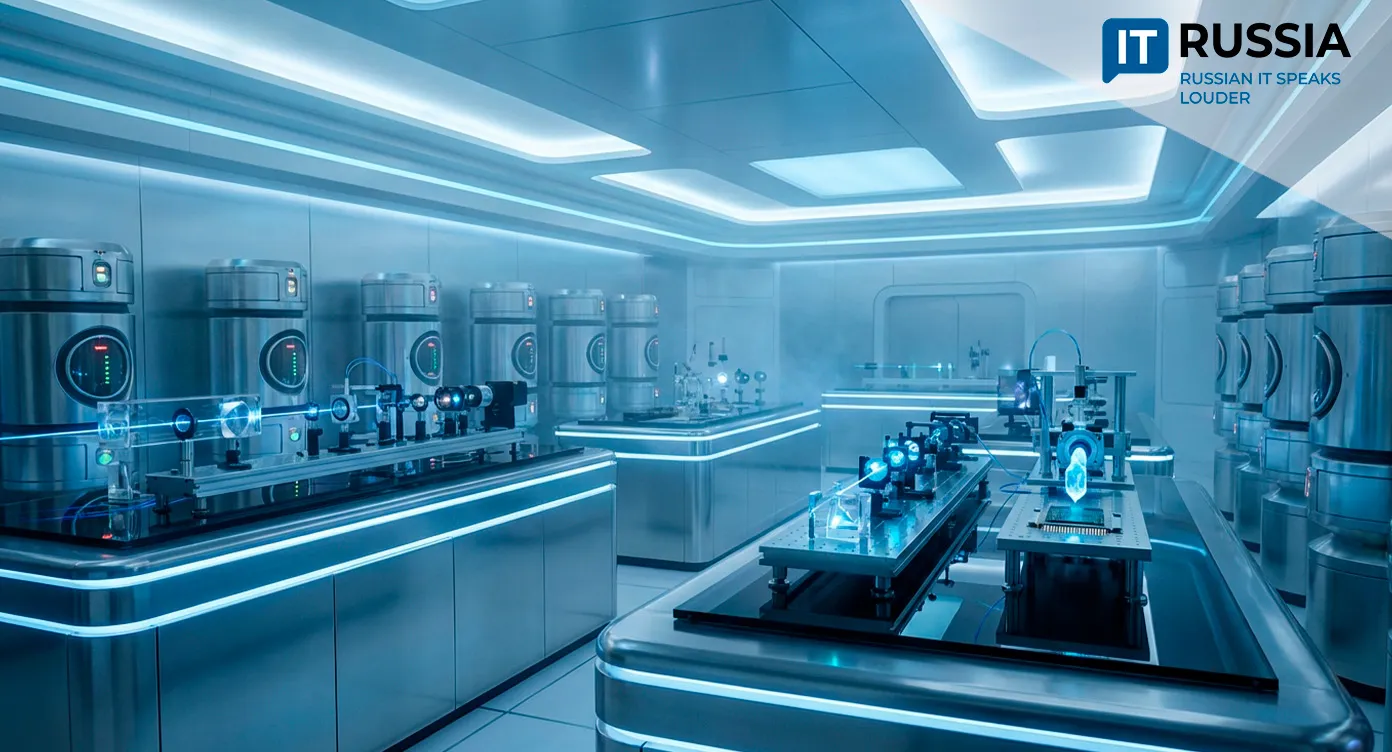
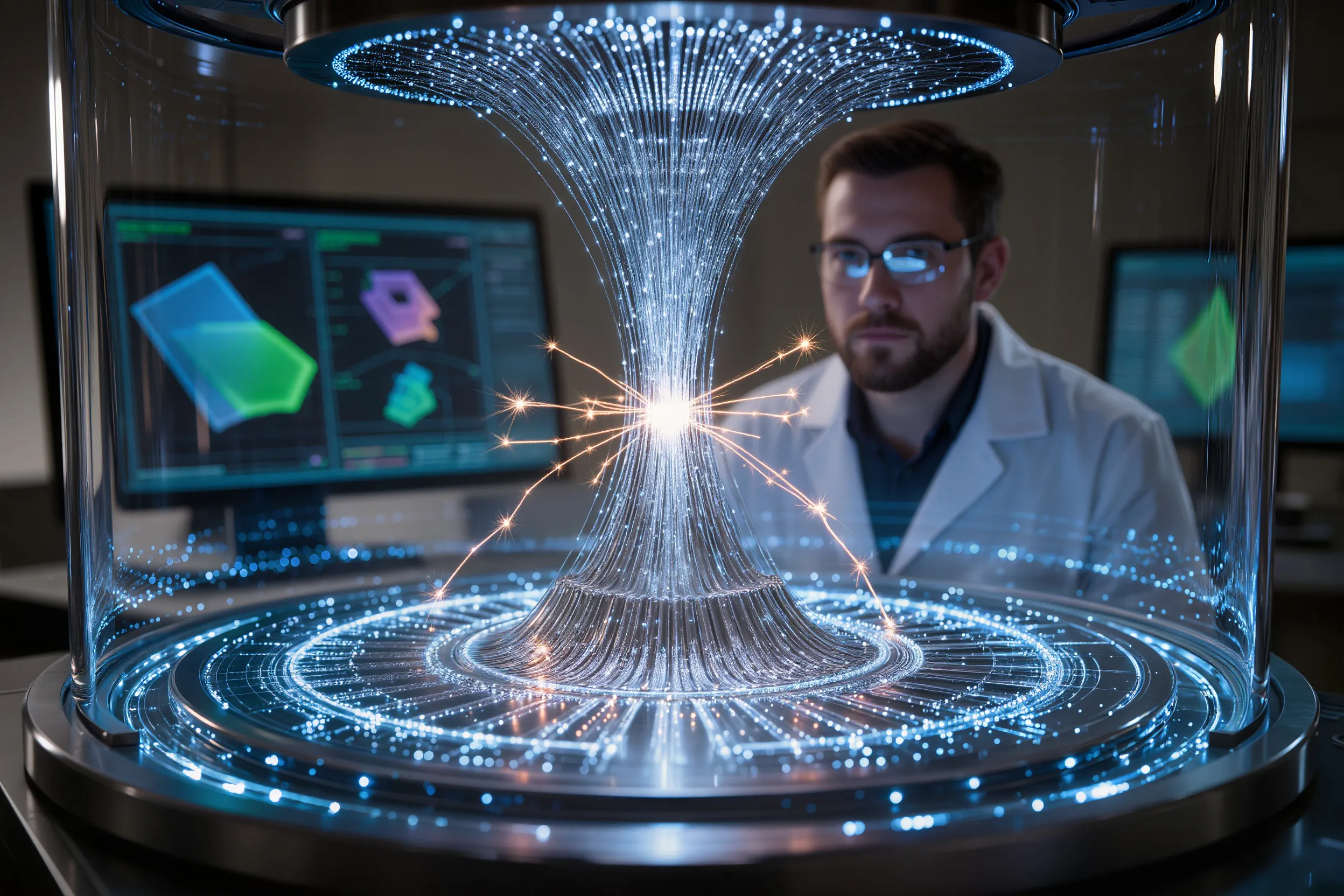
An international research group from Russia and the United States has taken a major step in computational science by developing a hybrid artificial intelligence system that can accelerate quantum-chemical calculations by nearly 100 times. Crucially, the accuracy of the results remains on par with traditional approaches such as density functional theory (DFT). The core idea lies in a rational division of labor: AI performs a preliminary screening to identify the most likely material structures, while classical quantum methods finalize calculations only for these “promising” candidates. As part of a pilot project, the researchers successfully modeled the properties of ternary metallic alloys, achieving identical results with a dramatic reduction in computation time.
Why This Matters for Russia and the World
This breakthrough carries not only academic significance but also clear practical value. For Russia, it opens the door to faster development of materials needed in strategic sectors, ranging from aviation and defense to energy and medicine. Cutting the time required to calculate the properties of new alloys or molecules directly reduces reliance on costly empirical experiments. At the global level, the technology could become a universal tool for pharmaceutical laboratories, energy companies and battery manufacturers. Faster drug discovery, for example, directly affects humanity’s ability to respond to emerging challenges, from pandemics to chronic diseases.
From Science to Market: Export Potential
Russian science is once again demonstrating its ability not only to participate in global research but also to generate export-oriented solutions. The hybrid method combining AI and quantum physics could be licensed to international companies in the chemical and pharmaceutical industries. Its value is especially high in areas where traditional calculations represent a bottleneck in the innovation cycle. Support from the Russian Science Foundation adds resilience to this direction, enabling not only research but also the scaling of the technology.


Five Years on the Road to Hybrid Computing
Recent years have seen an active convergence of AI and quantum technologies. As early as 2021, Russian researchers from AIRI presented an AI accelerator that trained four times faster than comparable systems. In 2023, Google Quantum AI demonstrated quantum advantage in chemical problems, while Quantinuum launched commercial quantum systems with integrated AI capabilities. These milestones shaped the broader scientific trend within which the new Russian–American method emerged. Rather than replacing existing approaches, it integrates seamlessly with them, making established methods more efficient.

What Lies Ahead in the Coming Years?
Experts predict that by 2026–2027, similar hybrid systems will begin to be adopted in pharmaceutical design and energy carrier development. Commercialization through startups and partnerships with R&D centers is expected to follow shortly thereafter. At the same time, competition for leadership in hybrid AI–quantum technologies will intensify among the United States, China, the European Union and Russia. Cross-platform solutions may emerge, uniting classical, quantum and AI computing into a single ecosystem.
The new method is not a revolution but an evolution of the scientific approach. It does not replace quantum physics but makes it faster and more accessible. Integrating AI into the scientific process is no longer science fiction but a working reality that is already accelerating progress. And Russia, through such collaborative initiatives, once again finds itself among those shaping the future of science and technology.