

Two Degrees in Two Years: Omsk Polytechnic and Sirius Launch Joint Master’s Program
The new program brings mathematics and neural networks together with mechatronics and robotics. Graduates earn degrees from both universities.

During their first year, students study Applied Mathematics and Computer Science at Sirius University of Science and Technology. In their second year, they continue at Omsk State Technical University (OmSTU), specializing in Mechatronics and Robotics. Some courses completed at Sirius also count toward the degree, while minor differences between the curricula are covered through remote classes. The program runs for two years. After passing the final state certification, graduates receive diplomas from both universities. The universities plan to admit a new cohort every year.
“The Schedule Is Intense, but the Material Is Valuable”
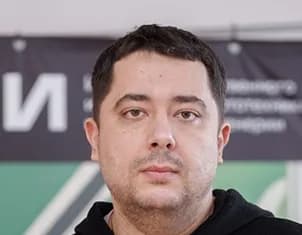
The program’s first student is Vitaly Svidersky, an OmSTU graduate with a degree in Automation of Technological Processes and Production. He successfully passed the entrance exams at both universities. At a conference held at Sirius, he also took the entrance exams for the university’s master’s program, an option offered as part of the event.
“I decided to apply to the new program because I wanted to go beyond a standard curriculum, gain more knowledge and access to Sirius’s advanced technologies and expertise, and see how challenging it would be to study in this format. The first few weeks have made a strong impression on me: the schedule is packed and intensive, but the material is extremely useful,” the first master’s student said.

What a Robot Needs
Modern robotics is difficult to fit within the boundaries of a single academic department. For a robot to move reliably, understand its surroundings, make decisions and work in a manufacturing environment, it needs mechanical engineering, electronics, control theory, programming and artificial intelligence algorithms. The project is not about developing a new technology. Its innovation lies in how the education is organized: Sirius’s strengths in mathematics and computing are combined with OmSTU’s engineering expertise.
The curricula are designed so students do not have to complete two separate master’s degrees. Instead, they follow a single pathway in which courses taken at one university count toward requirements at the other. This is particularly important for industrial robotics, where companies need specialists who understand both how machines are built and how software controls them. The program also aligns with the national project Sredstva proizvodstva i avtomatizatsii (Means of Production and Automation) and OmSTU’s work in Applied Robotics.

“Make Life Better”
In recent years, it has become increasingly clear that even a strong academic department is no longer enough to support complex engineering fields. Progress increasingly depends on universities, laboratories and industry partners working together, sometimes across entire regions. There are already many examples of mutually beneficial collaboration.
In September 2021, Sirius launched a master’s program in mathematical robotics and AI, with plans to involve students in research projects from the outset. “We believe that applying new knowledge is just as important as acquiring it. Our task is to train engineers who can make life better in the federal territory of Sirius and throughout our country,” said Roman Ivanov, then rector of Sirius University of Science and Technology.
In June, the federal territory of Sirius and the Moscow city government agreed to cooperate on robotics, AI, autonomous technologies and intelligent transportation systems.
This year, OmSTU opened an Applied Robotics program at its StankoInstrumentTech Advanced Engineering School, focusing on robot design, modeling and control.

From Transferable Credits to Engineering Projects
Degrees alone, of course, are not enough to secure a job. Employers look at practical skills, project experience, and the ability to work with equipment and software. The new program’s success will therefore become clear after its first students graduate, when their engineering skills, employment outcomes and participation in real-world projects can be assessed. If the model proves successful, it could be extended to industrial AI, autonomous systems, digital twins and manufacturing automation.
Over the next few years, technical universities are likely to develop systems for recognizing each other’s course credits. The focus could then shift toward hands-on work, with joint laboratory projects, internships and assignments from industry. More broadly, the initiative could attract students from other countries as well. That would strengthen international research ties and bring graduates into collaborative development projects.