Russian Company Launches Software to Optimize Mobile Network Management
VAS Experts has introduced the SKAT GTP-C Proxy platform, a software tool that gives mobile operators greater flexibility in managing traffic and replacing imported equipment without service disruptions.

Import substitution in Russia’s telecom market is entering a new phase. Developers are now offering more than domestic alternatives to foreign network management products: they are building integrated solutions designed to make network operations simpler and faster.
Greater Operational Flexibility
A significant development in this area is the launch of SKAT GTP-C Proxy by VAS Experts. The platform allows operators to distribute subscribers across packet gateways (PGWs) according to their own policies. Customers can allocate dedicated gateway pools for enterprise clients, M2M devices and specific geographic areas. The platform also reduces dependence on a single PGW vendor, as its configuration is compatible with products from different manufacturers.

Designed to Work With Any Operator’s Network
The software acts as an intelligent intermediary, distributing sessions across gateways and allowing equipment from different vendors to operate within a unified network. The platform selects the appropriate route based on user or device identifiers, connection parameters, mobile network type and location.
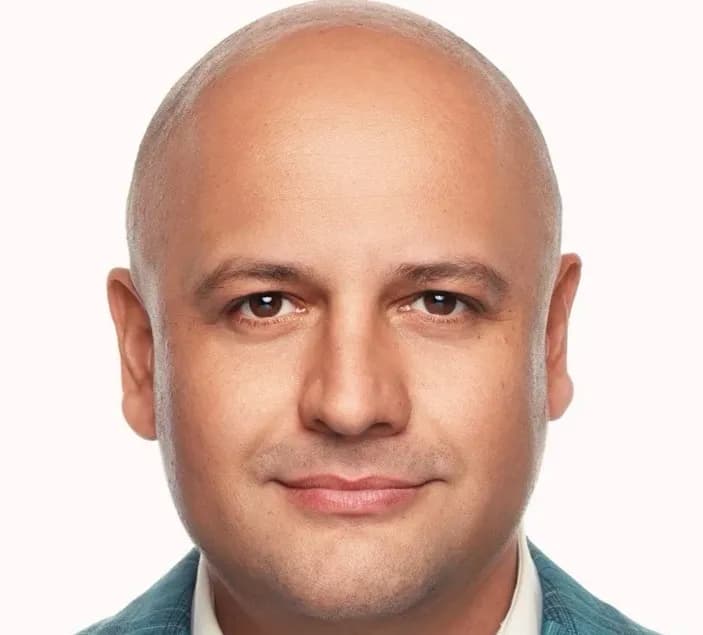
“Different subscriber groups have different service requirements. Mobile virtual network operators (MVNOs) and enterprise customers have their own gateways and service conditions, while M2M devices have different requirements again. Usually, this kind of logic is constrained by the capabilities of a particular PGW and its vendor. SKAT GTP-C Proxy moves that logic into a separate layer. Operators define their own policies and change them without restarting the system, while gateways from different suppliers can operate within the same network. The product is built on 3GPP standards, so it can be integrated into any operator’s network,” says Stanislav Beloborodov, VAS Experts’ product director.
The platform can also address other operational requirements. These include setting up regional gateway pools so that subscribers can reconnect automatically when they move between areas, balancing network loads and quickly switching users to functioning routes in the event of a failure.

Rapid Scalability
According to VAS Experts’ internal tests, a single node running on a standard eight-core server with 32 GB of RAM can process 3,000 connection requests and 158,000 signaling messages per second, enough to serve up to 1.5 million subscribers. If additional capacity is needed, the system can be scaled by adding more servers.
For the Russian telecom industry, one of the development’s main advantages is its compatibility with a wide range of existing solutions. In practice, SKAT GTP-C Proxy could significantly simplify the replacement of imported equipment with domestic alternatives while keeping networks running normally.The solution could be particularly useful for virtual operators, which use another telecom provider’s radio access network while developing their own tariffs and services.

The Next Phase of Import Substitution
Between 2023 and 2025, Russian operators implemented a range of projects aimed at developing domestic components for mobile network cores and expanding specialized functions for managing subscribers and traffic, as well as enabling networks from different vendors to work together.
In March, VAS Experts helped a Russian mobile virtual network operator restore access to 4G roaming after its Australian partner upgraded its network. The issue was resolved using a Russian packet gateway (PGW) that ensured correct processing of the GTPv2 protocol.
In November, the company announced a project to deploy its SKAT PCEF system, a policy control and enforcement platform, in the infrastructure of the Miatel virtual operator. The solution allows the operator to manage enterprise customers’ mobile internet usage, set data limits, create shared data allowances and restrict industrial SIM cards from accessing specific resources.
The launch of the new product illustrates how Russia’s telecom industry is gradually moving beyond the development of standalone alternatives to foreign equipment toward software tools that enable different components of mobile infrastructure to work together. For operators, this could provide a way to modernize their packet cores without replacing all their equipment at once, while reducing the risks of service disruption for subscribers.