

All Roads Lead to AI: Moscow Schools Make Artificial Intelligence a Required Course
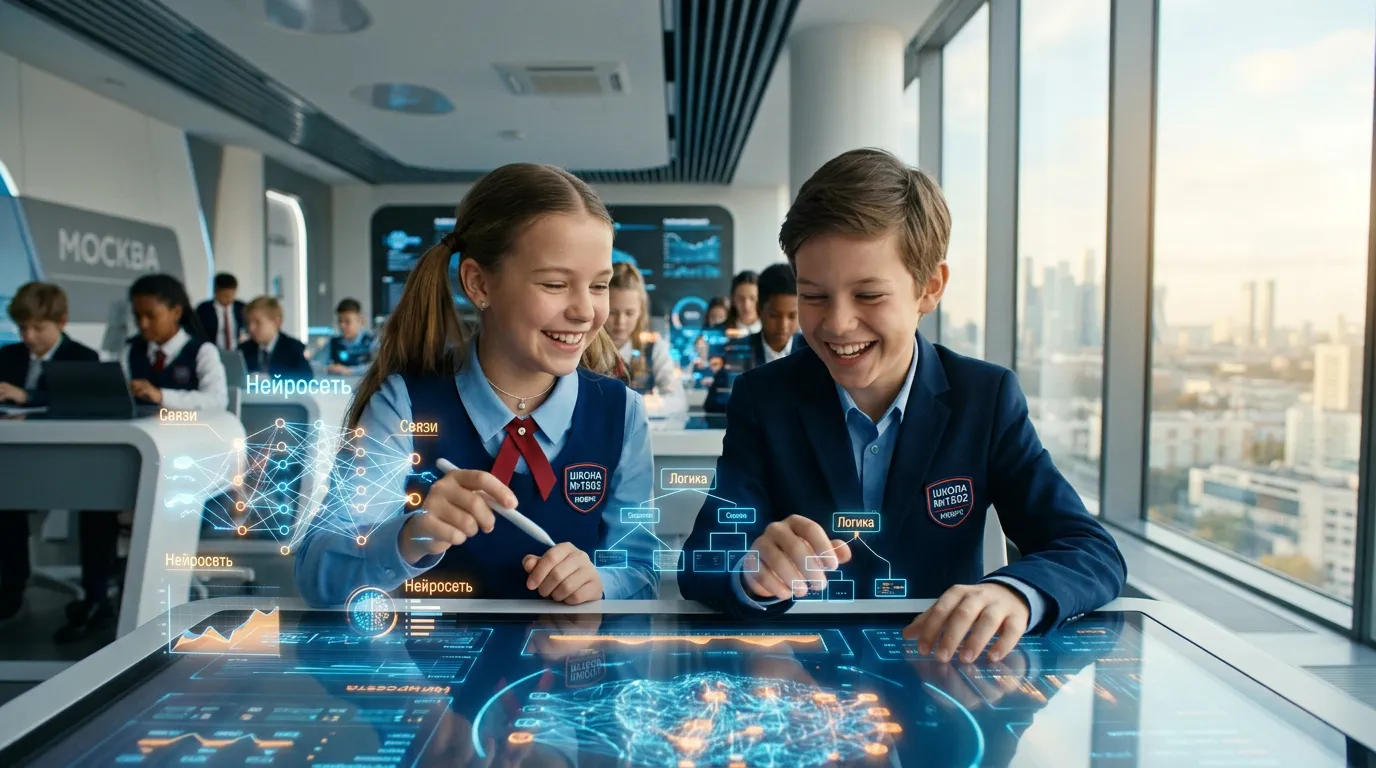
Starting with the new school year, Moscow fifth- and sixth-graders will study artificial intelligence as a required subject. The goal is not simply to teach students how to use neural networks, but to develop critical-thinking skills.
Moscow schools are undergoing major changes. Starting this school year, a dedicated artificial intelligence course became mandatory for fifth- and sixth-grade students. More than 200,000 children will take the course. Moscow Deputy Mayor Anastasia Rakova said the program has already been successfully tested: “Last year, we piloted parts of the artificial intelligence course for the first time in some fifth-grade classes. It received very positive feedback.” But that is not the only new initiative. Tenth-graders will also get a separate project with Sberbank, a course called “Skills for Working With Artificial Intelligence Technologies.”
Children Put AI to the Test
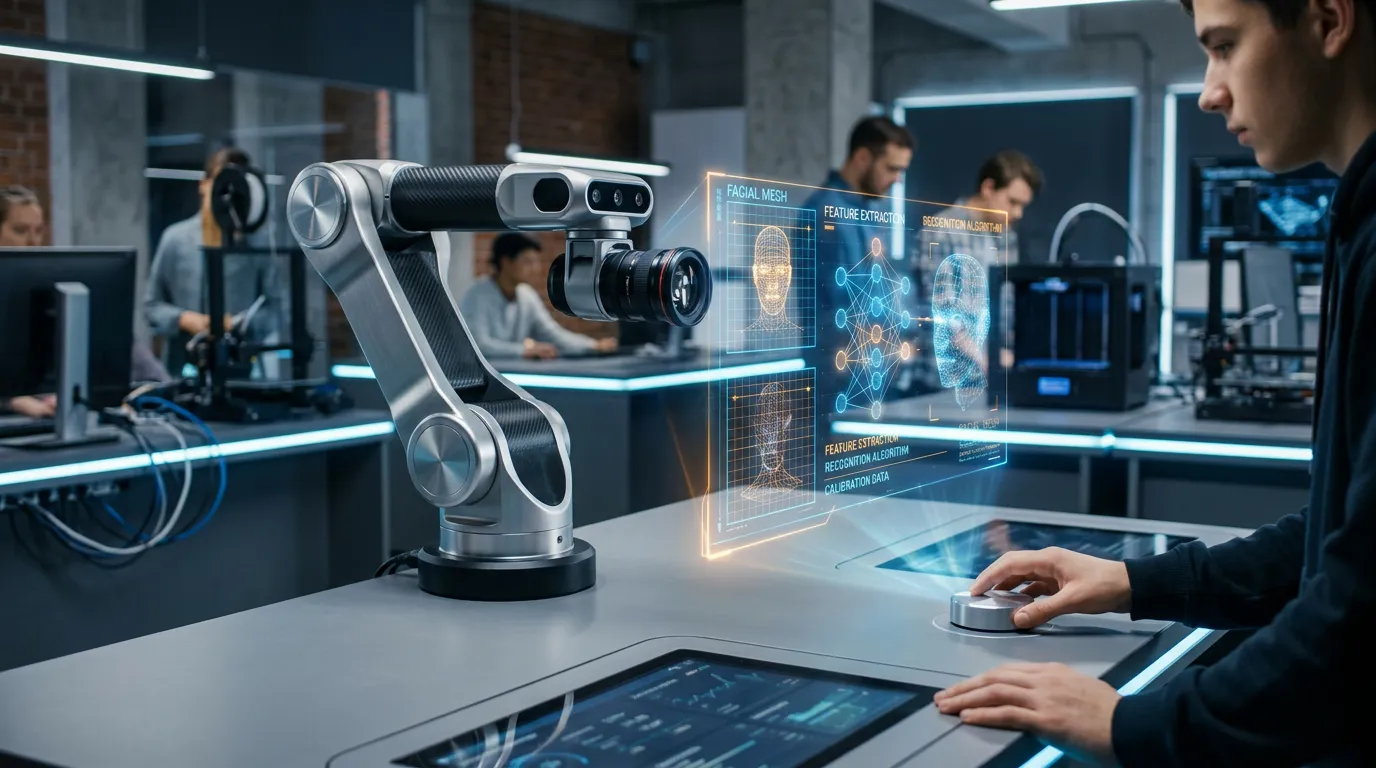
The new curriculum will cover the basics of AI and machine learning, along with generative algorithms, machine translation, speech and facial recognition, and image search and identification. The central goal is to teach students to use AI thoughtfully and to critically evaluate what a neural network produces.
Notably, these in-demand lessons will be available to all children regardless of their family’s income. As students learn how to work with the technology, Russia is also building a valuable base of future AI users, developers and professionals.
An Era of Transformation
The Moscow course is part of a broader transformation of the school system. As previously announced, the new school year will bring AI fundamentals into computer science classes. Starting in the second quarter, schools across Russia are also scheduled to offer a course called “Artificial Intelligence and Information Security.” The Russian Ministry of Education has already added introductory AI textbooks for grades 5–6, 7–8 and 9 to the federal list of approved educational materials.
However, introducing a course like this requires teachers to be prepared. In August 2026, the Ministry of Education announced a nationwide professional-development program called “Artificial Intelligence in the Teacher’s Work.” By the end of the year, 250,000 educators are expected to complete the training.
The Ministry of Education has also made clear that further integration of AI into learning will affect every subject. AI tools are therefore likely to become part of the process of developing educational materials as well.
There is another potential opportunity. Textbooks, teacher-training programs and educational platforms developed in Russia could be of interest to Russian-language schools in other CIS countries. That may become particularly relevant as Belarus also introduces AI technologies into school computer science classes.
A Fast Start
Russia began integrating AI into education by focusing on teacher training. In 2022, more than 19,000 Russian schoolteachers completed the “Fast Start in Artificial Intelligence” program. The course covered school digitalization as well as hands-on chatbot development.
By 2025, programs run by the AI Academy for Schoolchildren had reached about 600,000 children and teenagers across 2,300 educational organizations in 50 regions. Then, in 2026, the Ministry of Education announced that AI would be studied in computer science classes. An AI track was also added to the All-Russian Olympiad for Schoolchildren.
The global experience is worth watching, too. In 2025, Estonia launched its national TI-Hüpe / AI Leap program. During the first stage, 20,000 high school students and 3,000 teachers received access to AI tools and training in how to use them. That same year, the United Arab Emirates made artificial intelligence a required part of the curriculum in public schools, from kindergarten through high school. There, too, the emphasis is not only on technical skills but also on understanding AI’s limitations and risks.
South Korea has taken a different approach. Schools have begun using AI-powered digital textbooks for mathematics and English. Rather than teaching AI as a separate subject, this model embeds the technology directly into the learning process.
A Clearer Picture of Student Progress
Alongside the new course, Moscow is expanding an AI-powered service called “Tsifrovoy uchitel” (Digital Teacher). It has been available through the Moscow Electronic School for three years, helping students practice topics in mathematics, physics, computer science and English. Starting with the new school year, Russian language and biology will be added.
The service has two modes of use. The first is independent study. A student takes an initial assessment, the system determines their level and builds an individualized learning program. It combines theory with practice exercises that are checked automatically. Algorithms track the student’s progress and adjust the learning process to the child’s needs. In the second format, the teacher assigns exercises from the service as homework. If a student makes a mistake, the system offers additional exercises to help them practice areas where they are struggling.
The school AI course, teacher retraining and services such as “Tsifrovoy uchitel” all serve the same broader goal. Together, they give children a valuable tool that can bring extraordinary technological capabilities together with something technology cannot replace: human thinking.