

5G Network Deployed from a Stratospheric Balloon
Russia has conducted unique tests of an airborne platform carrying telecommunications equipment.
Russia has begun rolling out 5G networks. At the initial stage, they will be developed only in major cities to ease pressure on infrastructure that is continuously handling growing mobile traffic. But next-generation connectivity is needed everywhere, including remote areas where installing extensive ground infrastructure is too expensive. Russian researchers have proposed a way to address that challenge.
Reliable Transmission of High-Bandwidth Video
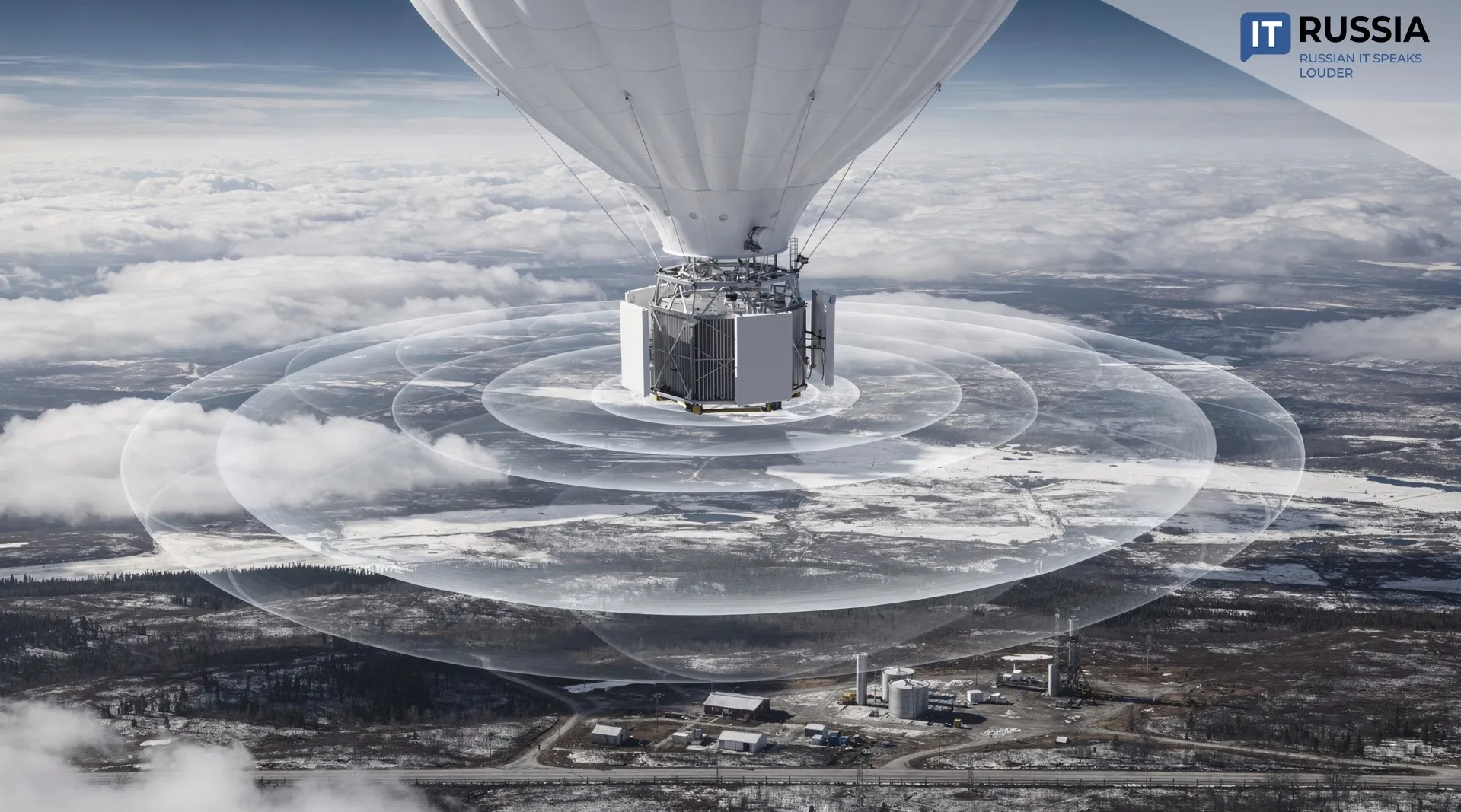
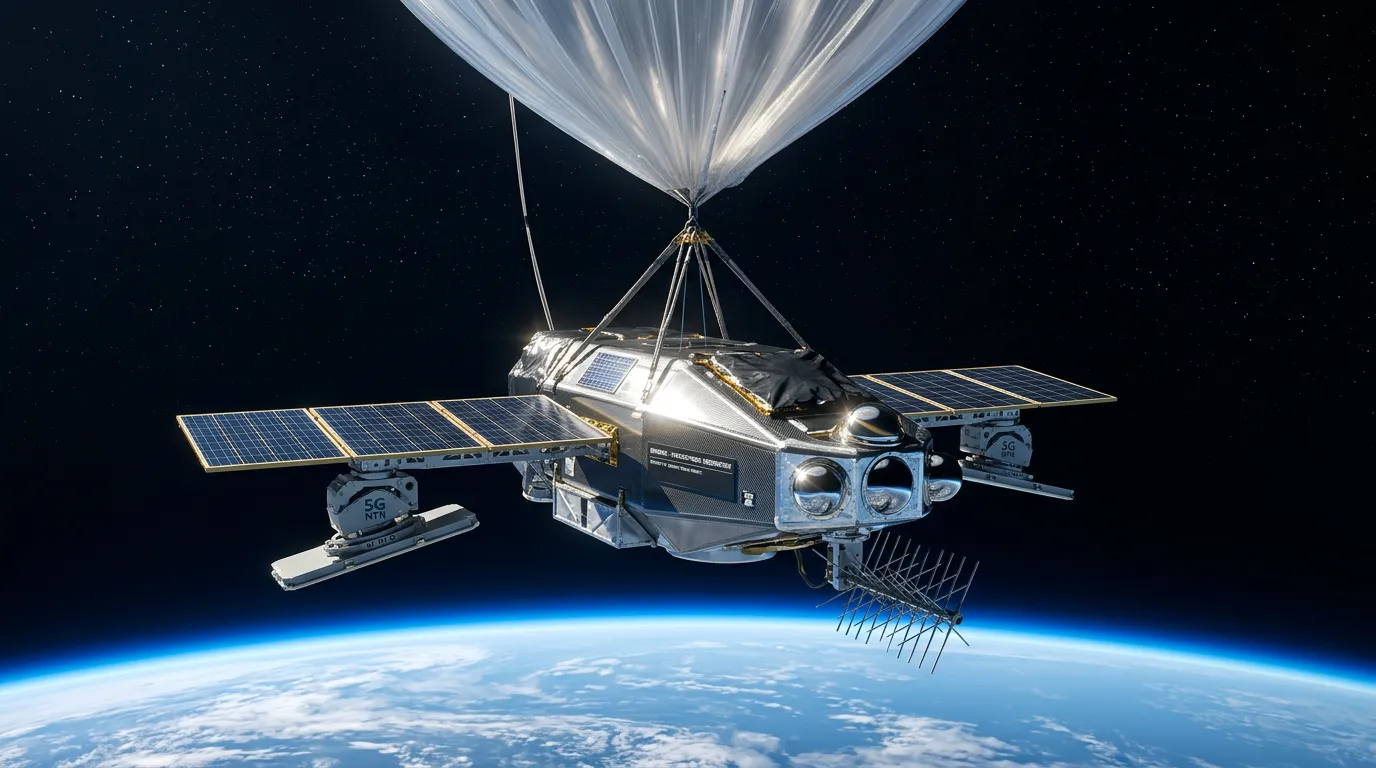
The Advanced Research Foundation recently conducted a unique test. Researchers launched a stratospheric platform carrying telecommunications equipment operating under the 5G NTN standard used in satellite communications. A ground-based device successfully received the transmitted signal. The session lasted about 80 minutes. 2K-resolution video was transmitted over a wireless link from an altitude of 17 kilometers (10.6 miles). The test launch was conducted as part of the Barazh (Barrage) project.
The researchers said the tests demonstrated the practical feasibility of hybrid communications systems. So, stratospheric balloons are able to work alongside ground infrastructure and relay signals to Earth in much the same way as satellites, but they would operate at a lower altitude.
Arctic and Far East Are Top Priorities
Such systems could open up significant opportunities for connecting remote areas of Russia. Stratospheric balloons carrying telecommunications equipment could provide high-speed connectivity to both populated areas and remote industrial sites. This approach could be particularly valuable for developing the Arctic and the Russian Far East.
The new hybrid technology also has one clear advantage over satellites. Spacecraft are constantly moving along their orbits, providing strong connectivity only while they are positioned over a particular ground location. Eventually, they move away. A stratospheric balloon, by contrast, can be launched wherever it is needed and kept over a specific location for as long as necessary. The approach is also many times less expensive. And yet, it would be wrong to view stratospheric platforms as a complete replacement for satellites. Each communications system is suited to particular tasks. Over time, they may therefore complement rather than compete with one another.

A New Type of Technology Export
Looking ahead, the development of 5G-enabled stratospheric platforms is likely to become an export opportunity for Russian telecommunications technology. Such systems could be in demand in countries with large territories, challenging geography, and insufficient terrestrial network coverage.
The first flight of the Barazh-1 stratospheric platform took place in February this year, when some of its technical details were also disclosed. One of the platform’s key features is a pneumatic ballasting system that changes its flight altitude to take advantage of wind currents and move in the required direction. This allows the vehicle to maneuver and remain within a designated area or follow a trajectory suited to its payload. The platform can carry not only communications equipment but also other payloads.
The Result of Years of Development
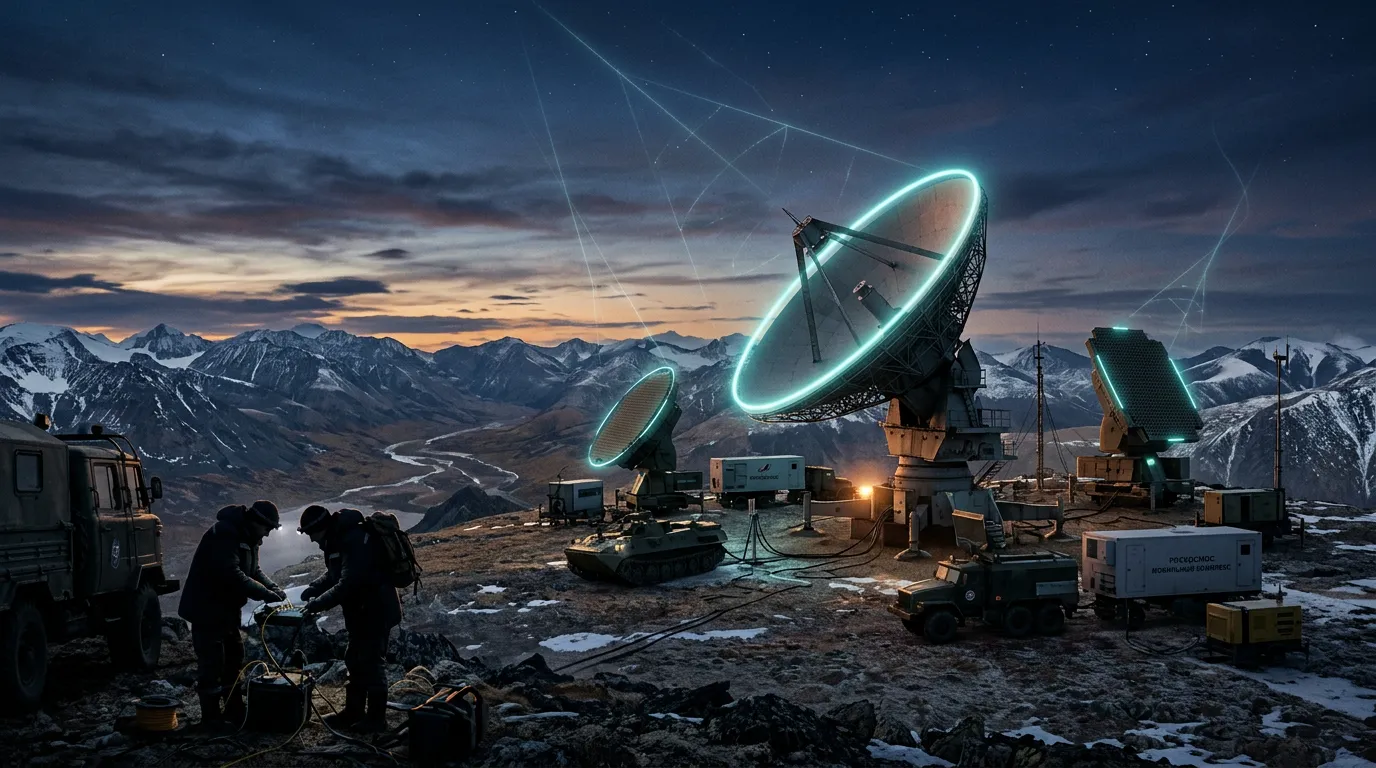
The Advanced Research Foundation has been working on 5G-standard communications systems for several years. In May 2025, for example, Russia conducted its first airborne flight tests of a 5G satellite communications system demonstrator in the Tomsk region. During the tests, a network was deployed to simultaneously control five unmanned aerial vehicles from an airborne laboratory based on a TVS-2MS aircraft, which served as an atmospheric analogue of a satellite. The ground-based monitoring and control station provided a feeder data link during the tests, as well as control of the 5G communications system and the drones through that system.
In effect, Russia’s telecommunications industry is now entering a new stage in the evolution of mobile communications. Development is moving well beyond terrestrial systems. The industry’s future will depend not only on increasing the number of base stations but also on building hybrid systems that combine terrestrial networks, satellites, unmanned vehicles, and atmospheric platforms.