Halal Investments Sber and Mirrico Test a New Model of Digital Partnership Financing
Sber and the Mirrico Group signed an agreement to issue “Sukuk DFA” digital financial assets. The instrument complies with the principles of Islamic finance, where lending and borrowing money at interest is prohibited under Sharia law.

Instead of conventional bonds, which many investors in the Islamic world avoid because they are associated with usury, the parties are issuing sukuk – securities that provide shared ownership in an asset and distribute both risks and profits equally between the issuer and investors. The Sukuk DFA project is effectively a pilot attempt to introduce a new financial instrument into a market that strictly follows religious financial traditions.
Bridge Between Russia and the Middle East
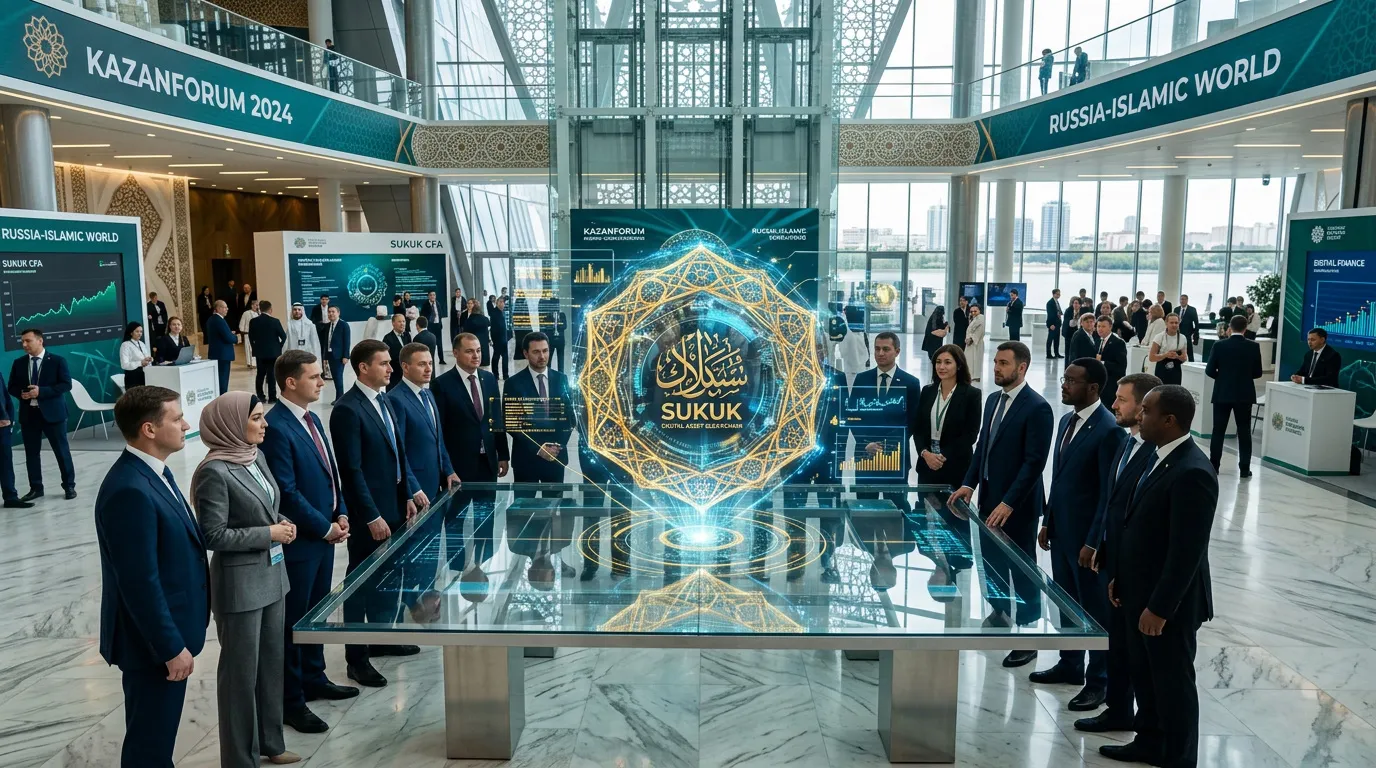
Sber, acting in this case as the operator of the information system, and the Russian oilfield services holding company Mirrico reached the Sukuk DFA agreement during the XVII International Economic Forum “Russia – Islamic World: KazanForum.” The forum serves as a bridge between Russia and Middle Eastern countries, helping participants not only discuss projects and technologies, but also find partners and financing for implementation.
For the first time, Russian fintech is combining digital financial asset infrastructure with the requirements of Islamic banking. That demonstrates its ability to structure non-standard financial instruments.
From a Pilot Issue to Export Infrastructure
Mirrico describes the placement as experimental and is starting with a relatively small volume. Yet that pilot format makes it possible to refine the methodology without creating systemic risks. Inside Russia, a successful test launch could expand the geography of partnership financing, which is currently used in Tatarstan, Bashkortostan, Dagestan and Chechnya, while the number of participating organizations continues to grow.
For Mirrico, partnership-based DFAs represent a way to attract investors from Saudi Arabia, the UAE, Kuwait and Qatar, where the company already supplies its products. The Sukuk DFA model could open new capital flows for Russian export-oriented industrial companies from regions and countries where finance is built around Sharia principles.

Partnership Financing as a Legal Experiment
Russia first introduced partnership financing, also known as Islamic banking, as a pilot project in 2023 after the State Duma adopted the relevant legislation. The experiment covered four regions – Tatarstan, Bashkortostan, Chechnya and Dagestan. For example, people there can purchase apartments not through traditional mortgages, but through instruments such as murabaha – where a bank purchases housing itself and then resells it to the client in installments with a markup, but without charging interest on borrowed money.
In 2024, the company Universal Blockchain issued the first digital sukuk compliant with Islamic banking principles. That precedent confirmed the legal feasibility of the instrument. Later that year, the Bank of Russia reported that the portfolio of partnership financing operations had grown by 56% to 2.8 billion rubles (about $37 million).
In 2025, lawmakers extended the Islamic banking experiment through 2028 and expanded the list of permitted operations.

Alternative Financial Instruments for the Islamic World
Experts estimate the potential size of Russia’s sukuk market at between 700 billion and 3 trillion rubles (roughly $9.3 billion to $40 billion). At the same KazanForum event where Sber and Mirrico signed their Sukuk DFA agreement this year, VEB.RF announced a debut sukuk bond issuance to finance the construction of the Alabuga Development industrial park project in Tatarstan.
“As a development institution, we are interested in expanding the range of debt instruments that allow us to attract new categories of investors willing to participate alongside us in projects in Russia while sharing both risks and economic returns,” said Konstantin Vyshkovsky, deputy chairman of VEB.RF.
This is an example of how technology can adapt global financial models to Russia’s regulatory environment, opening new channels for investment, exports and regional development.