

Metallurgy Is Changing the Paradigm of Workplace Safety
An industrial project developed by Ural metallurgists at the intersection of industrial automation, IT and occupational safety shows how Industrial Internet of Things (IIoT) technologies are changing the way manufacturers approach workplace safety. At VIZ-Steel (NLMK Group) production sites in Yekaterinburg, a key stage has been completed in deploying an intelligent system to prevent production risks in the cold-rolling shop.
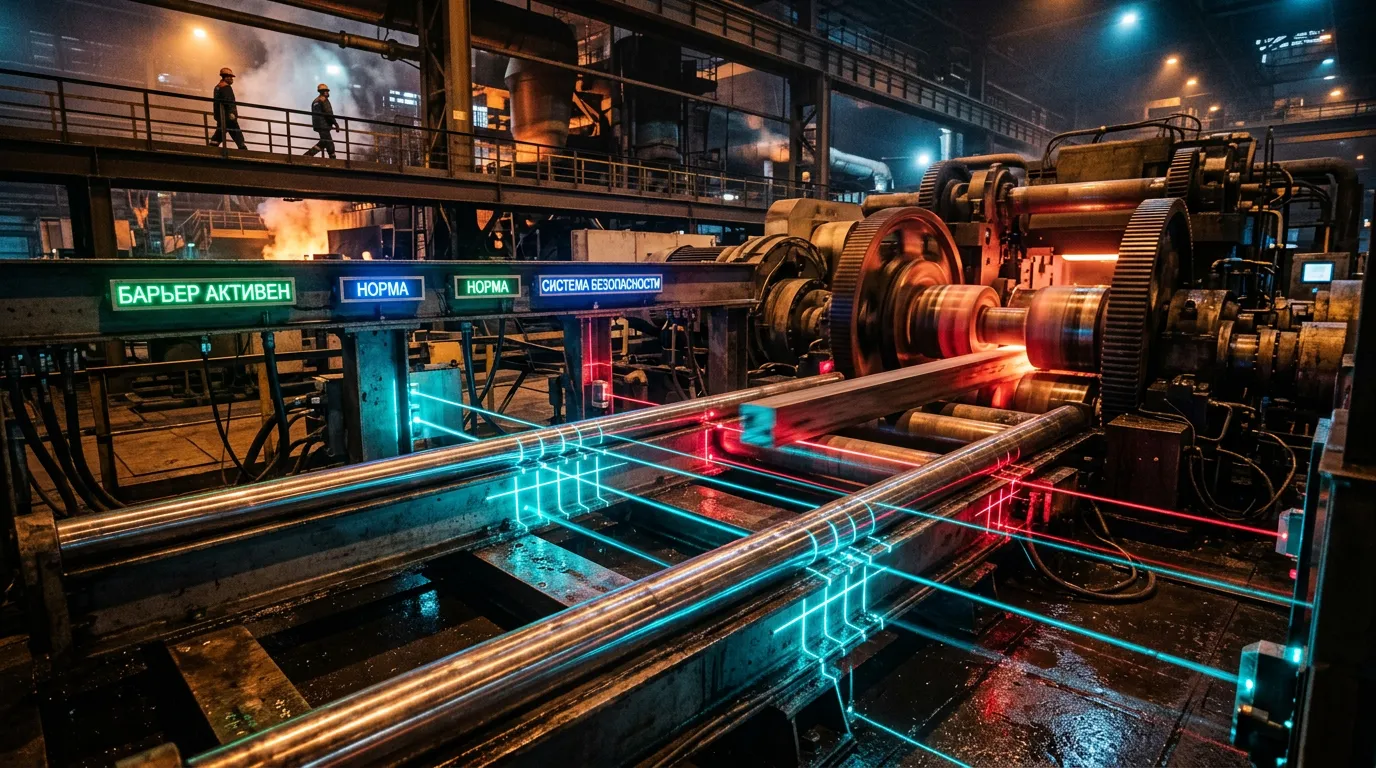
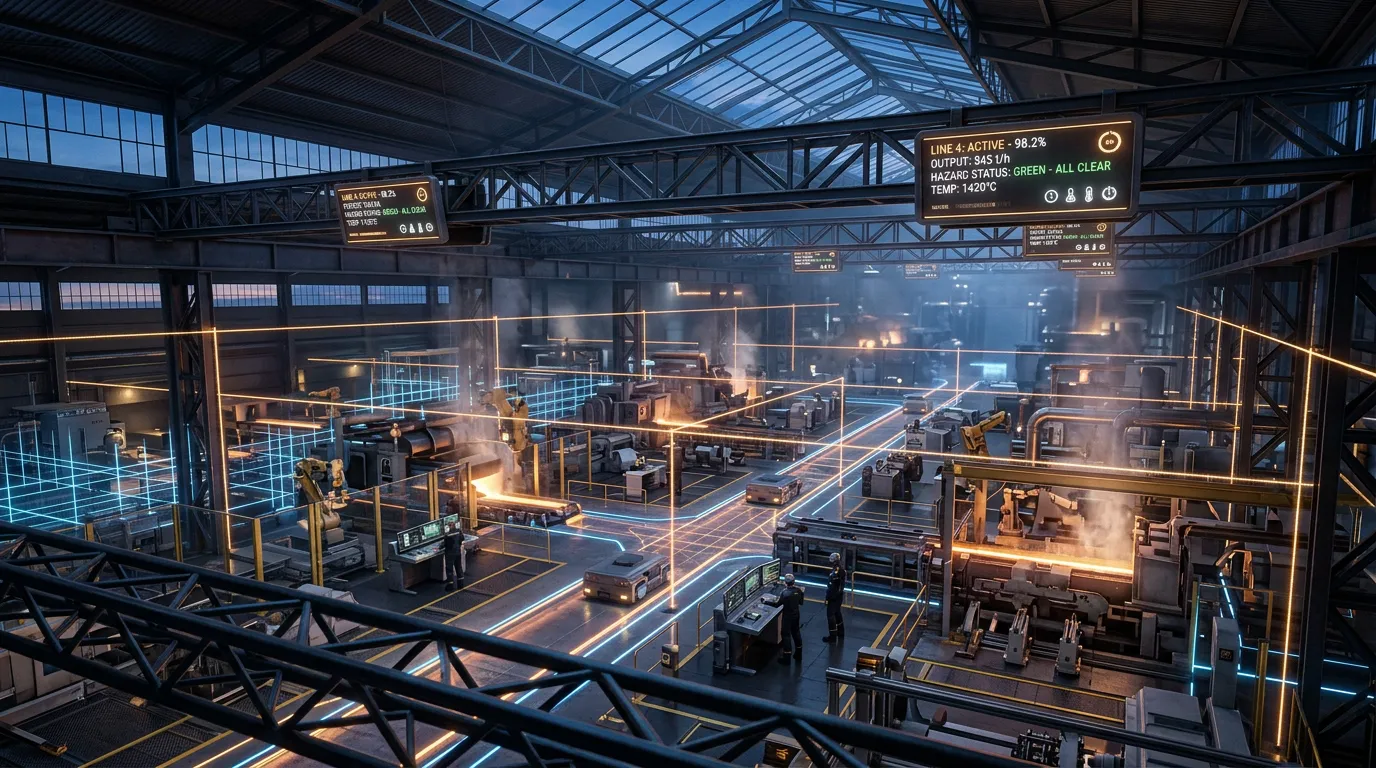
The system is built around 189 light barriers installed on 27 production units. It continuously monitors the perimeter of hazardous areas without physical contact: when a person crosses a protected line, sensors immediately send a signal to the controllers. Programmable emergency-stop logic then shuts down the equipment and keeps it locked until the hazard is removed. This eliminates personnel contact with moving machinery. The system was designed for a mixed technology environment, allowing analog and digital equipment to operate together without replacing the plant's existing production assets.
The rollout required a review of operating procedures and a phased expansion of the protective circuits. In practice, this approach helps prevent abnormal situations, reduces the impact of human error and minimizes unplanned downtime. The investment totaled about 30 million rubles (approximately $350,000 at the current exchange rate) and covered sensors, controllers and mounting structures. Work is continuing as part of a long-term strategy to raise occupational safety standards. The next stage will strengthen protection at the most critical areas.
A Multilevel Safety Framework
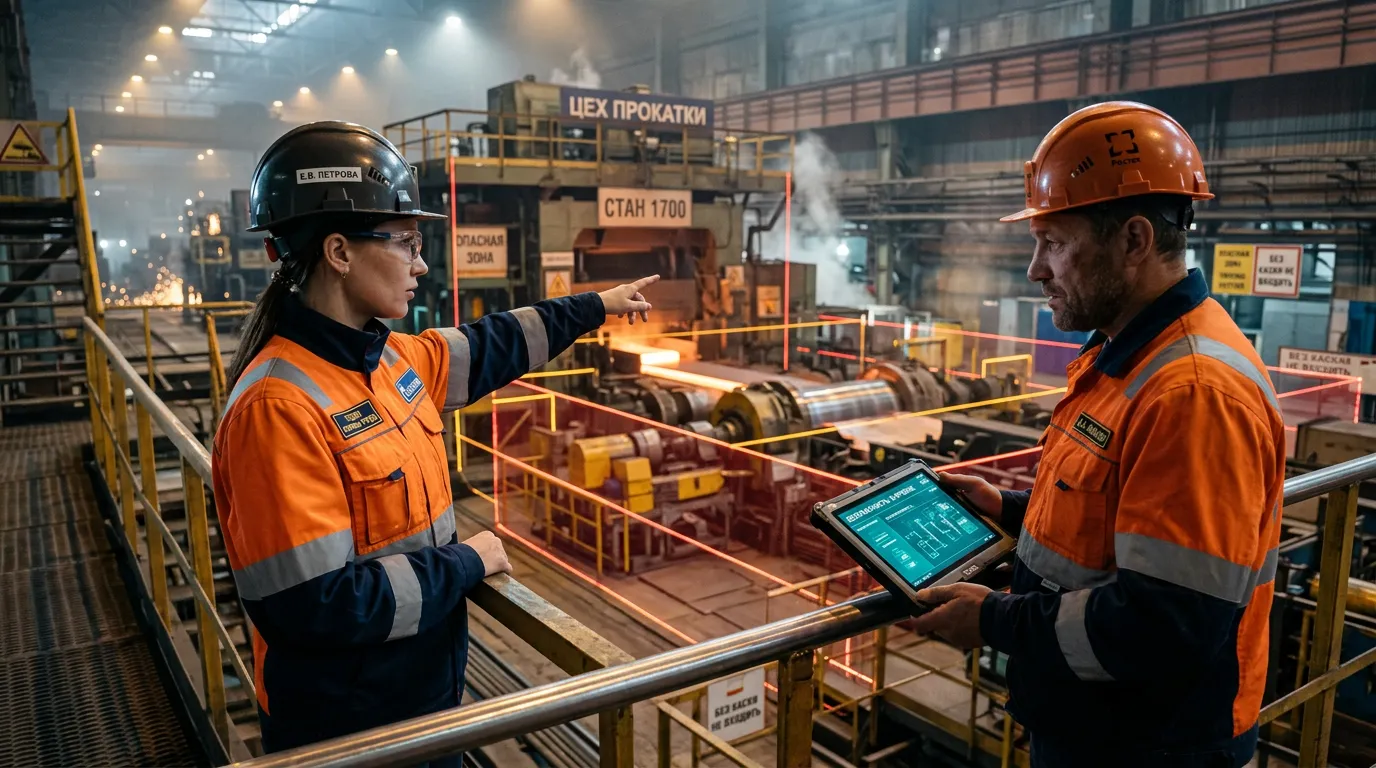
VIZ-Steel is Russia's largest and one of the world's leading producers of transformer steel, with annual capacity of up to 170,000 tonnes. Since 2015, the plant has been building a multilevel safety framework, starting with automated guarding on annealing and pickling equipment. In 2022-2023, the plant added video analytics systems that detect, in real time, when a person enters a restricted area or is not wearing personal protective equipment (PPE). In parallel, an electronic work-permit service was introduced in 2023 for high-risk operations.
Zero-Injury Strategy
The plant is taking a preventive approach: its systems are designed to stop incidents before they occur, rather than simply record them afterward. That strategy aligns with national priorities. Since 2022, the Russian Labor Code has incorporated a risk-based approach that calls for hazards to be addressed through engineering controls rather than formal instructions alone. Russia's Ministry of Labor has also legalized electronic document workflows, making it easier to approve hazardous work. This direction is reinforced by the zero-injury concept and national goals through 2030, which call for more predictive risk management.
For the IT and engineering markets, that is creating sustained demand. According to MegaResearch, Russia's Industrial Internet of Things (IIoT) market is expected to reach 277 billion rubles (about $3.2 billion) by 2030. Companies that can integrate these systems into existing production environments without disrupting output will have a strategic advantage.
A New Standard for Workplace Safety
The global steel industry is changing its approach, moving from responding to incidents toward preventing them proactively. In 2025, the World Steel Association (Worldsteel) documented widespread use of AI, ranging from collision-avoidance systems for forklifts at Italy's Tenaris to ArcelorMittal's Safety Hub machine-learning tools and anomaly-detection systems at POSCO. Russian manufacturers are pursuing similar strategies. Since 2022, PAO MMK has been deploying Tsifrovoy rabochiy (Digital Worker), a system that uses wearable sensors to warn employees when they enter hazardous areas. EVRAZ ZSMK uses video analytics to track safety violations in real time. In 2024, Severstal deployed SOVA, a platform that uses 660 cameras and 10 AI models to monitor PPE use and complement physical barriers. PAO NLMK is expanding these capabilities at its Lipetsk site through Private LTE/5G networks, combining personnel safety monitoring with environmental monitoring.
Seamless Integration as a Competitive Advantage
VIZ-Steel's system has already been tested in a real production environment. Bringing it to market as a standalone product would require specialized IT and engineering partners. The foundation, however, is already in place: a proven technology, demonstrated economic benefits and compliance with government standards create opportunities to scale the system across Russia and export it to markets in Asia, the Global South and the Middle East, where manufacturers need safety systems that can be integrated seamlessly into existing production infrastructure.