

The First Cosmonaut Just Officiated a Wedding — Russia Tests AI as a New Ritual Technology
Russia has officially registered the country’s first marriage involving an AI-generated officiant — a digital recreation of Yuri Gagarin. The experiment hints at how generative technologies may soon reshape even the most traditional civic rituals.
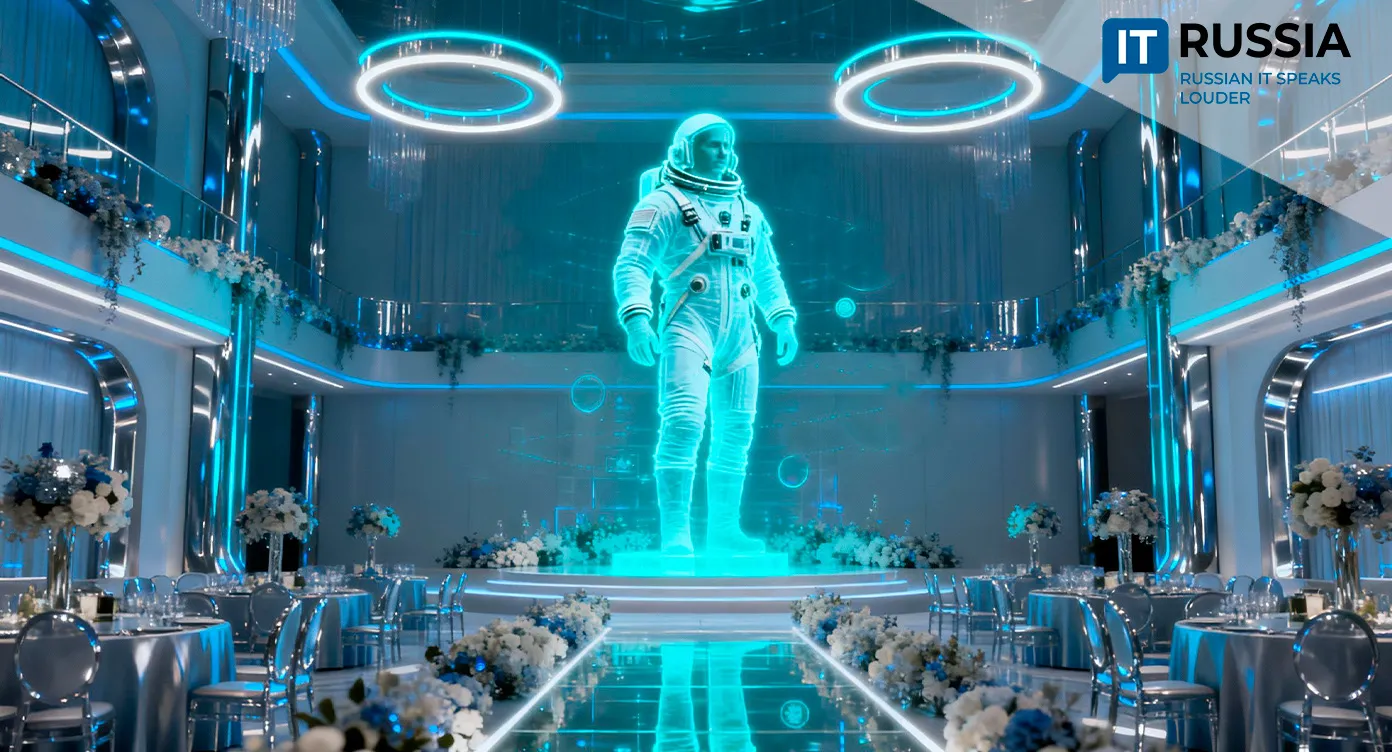
A Surprise “Neuro-Wedding” and the Rise of AI-Customized Ceremonies
In early December, the civil registry office of Ryazan held a wedding unlike any other: the officiant was Yuri Gagarin, the first human in space — or rather, a neural-network avatar of him. The ceremony took place inside the Digital Museum of Youth History at the Ryazan VDNH complex.
Ryazan’s civil registry authorities have recently launched a trend toward highly customized wedding formats. This goes far beyond a favorite soundtrack or theatrical staging; the new model incorporates generative AI to tailor ceremonies and introduce surprising, personal elements.
The event was organized by Service-ZAGS, a state institution behind the regional program “New Places for Happiness.” The initiative allows couples to officially marry in cultural heritage sites, museums, and other unusual venues. Now, with AI, the “guest list” can include practically anyone — even a reconstructed Soviet hero.
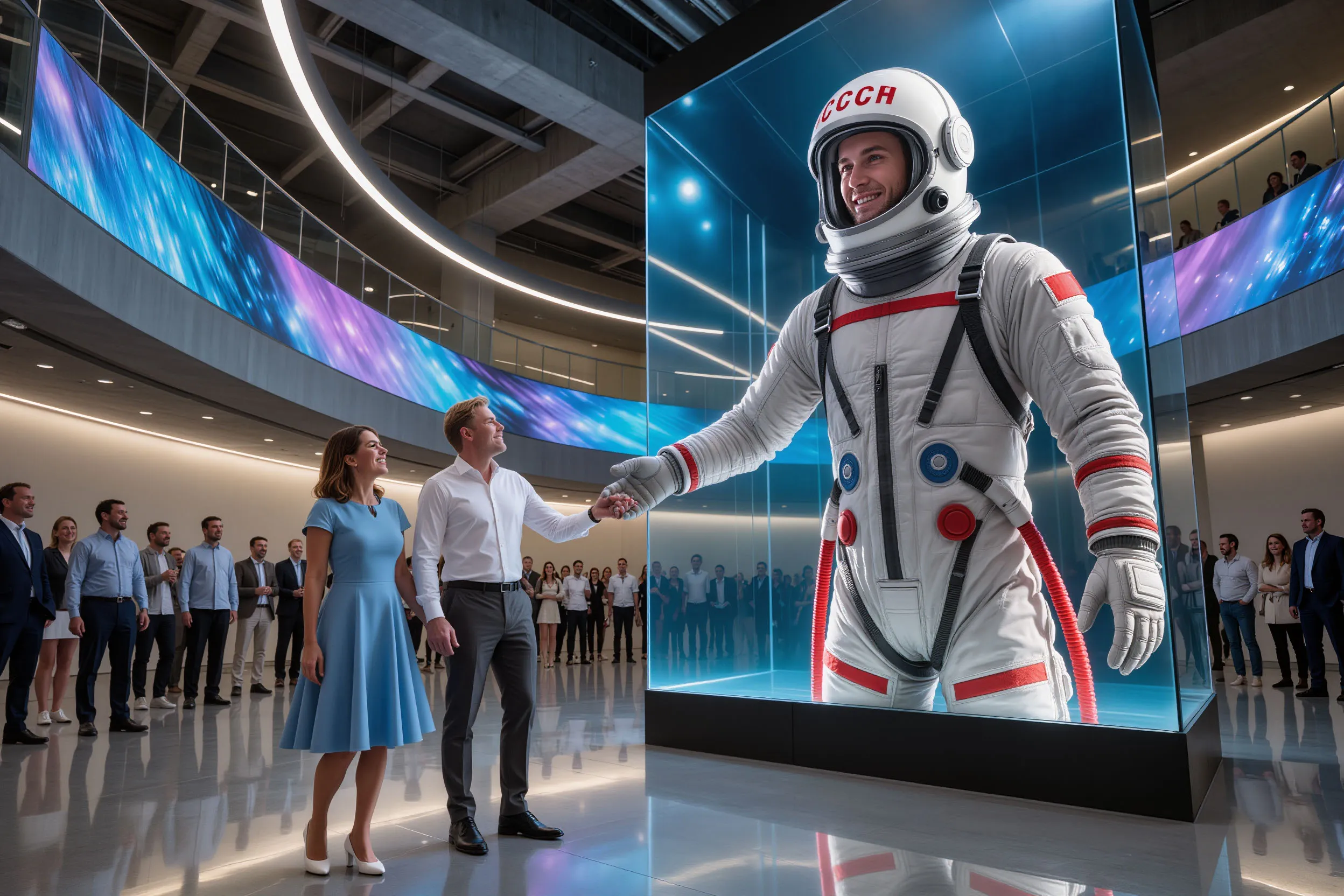
The neural Gagarin avatar announced the couple as husband and wife. The newlyweds described the choice as perfectly symbolic:
“Since we were the first ‘neuro-marriage’ couple in Ryazan, Yuri Gagarin — the Hero of the Soviet Union and the first to conquer space — was the best fit. We were very pleased with how the ceremony went. The format was unexpected and became a wonderful surprise, as we left the entire script to Service-ZAGS.”

“Not Like Everyone Else”: Why Weddings Are Becoming Digital
According to Service-ZAGS officials, today’s couples are driven by a desire for individuality and originality. Simply choosing an unusual venue is no longer enough.Organizers began exploring generative technologies as the next step in customization.
As director Antonina Vsemirnova explains: “We have married people on ice, during a hot-air-balloon flight, on the ground, but now we decided to overcome space and time — combining the possibilities of artificial intelligence with the wedding ceremony.”
The result is an experiment showing that even highly regulated, traditionally human-led civic procedures can be augmented with AI. For planners, AI is not just a gimmick but a creative instrument enabling tailor-made experiences that reflect the couple’s identity.
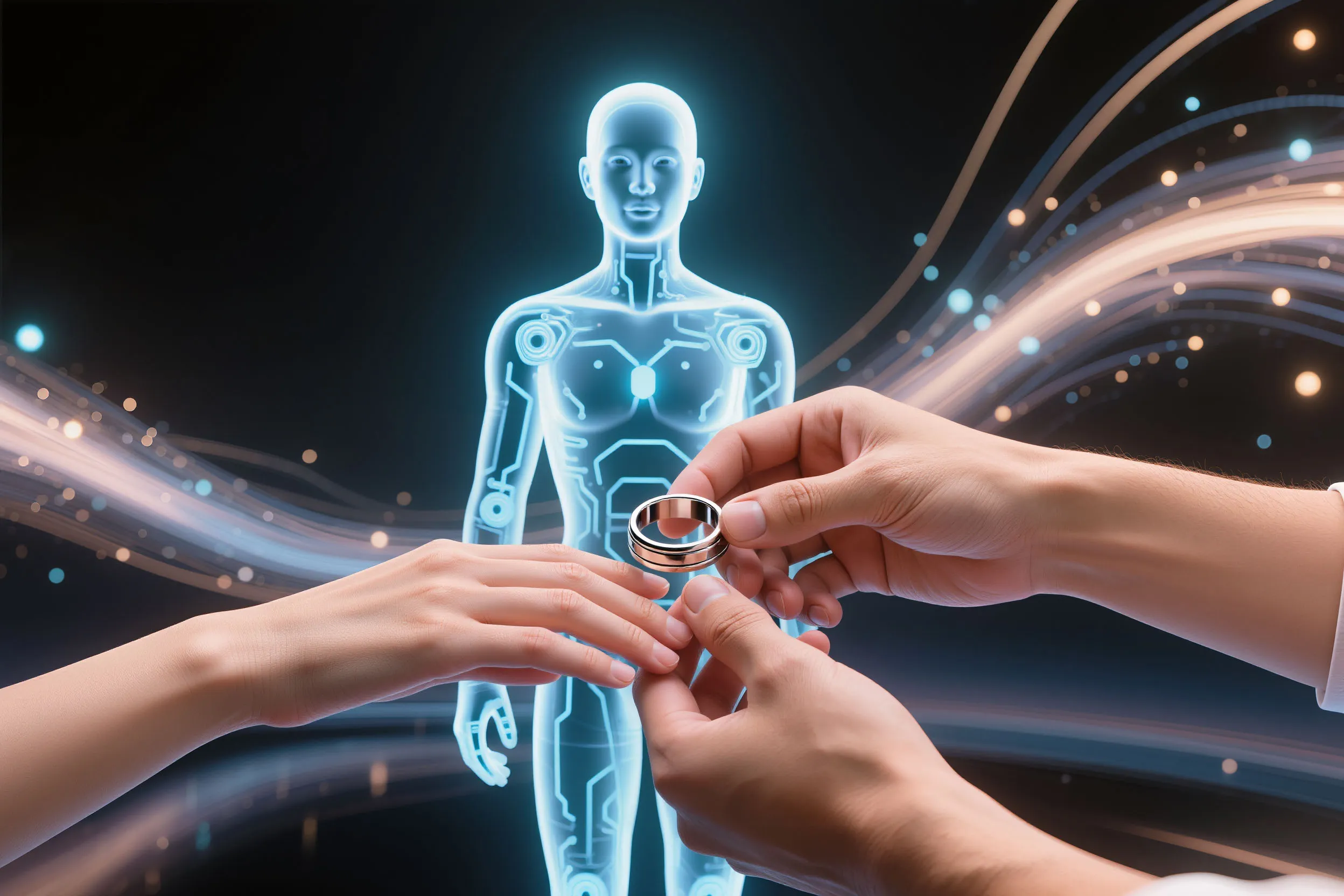
AI Enters the Most Conservative Civic Spaces
The Ryazan ceremony also serves as a barometer of public readiness to accept digital and virtual elements in official state procedures. Civil registration — often seen as a conservative domain — is emerging as a testing ground for AI-human interaction in the social sphere.
The significance extends beyond one city. Any Russian region, even remote areas far from tech hubs, can replicate the experiment because AI services are becoming increasingly accessible nationwide.
This trend mirrors a larger shift: generative AI is beginning to penetrate domains long viewed as exclusively human, including symbolic rituals and state ceremonies. The implications reach far beyond weddings — into how societies may integrate AI into cultural, legal, and bureaucratic practices.
AI Customization as a Service Industry Trend
The Gagarin-officiated wedding is more than a quirky headline; it signals the potential emergence of a full-service digital ecosystem around life-event customization.
As digital literacy grows and AI becomes normalized, such systems could evolve to include: dynamic wedding scripts, curated AI-generated personas, virtual guests and witnesses, immersive livestreams, digital marriage certificates, fully personalized ceremony environments.
Even if the format remains niche, its ripple effect could transform the broader event-planning industry. Large Russian service providers are already testing AI for personalization, and Ryazan’s ceremony provides a compelling proof-of-concept.
For governments, it raises deeper questions: how can civic rituals adapt to reflect the expectations of a digital generation while maintaining legal and symbolic integrity?