AI Model Developed in Perm to Support Geologists
Scientists at Perm Polytechnic, working with colleagues from China, have developed a hybrid AI model that predicts horizontal stresses in rock formations during well drilling. The model relies on standard geophysical logging data, making it compatible with existing industry workflows.
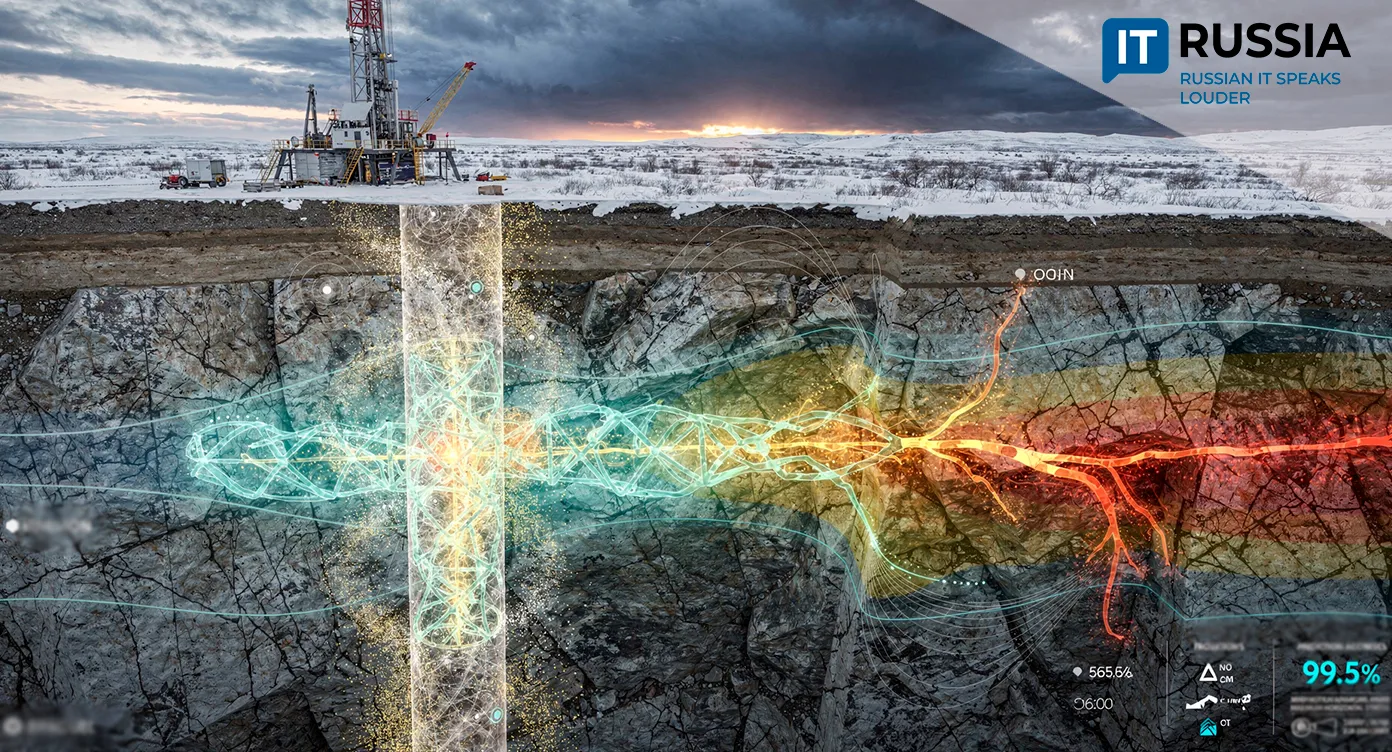
The algorithm analyzes nine continuously changing parameters collected during geological surveys, including acoustic velocity, rock density, electrical resistivity, natural radioactivity, porosity, and other indicators. Based on these inputs, the system calculates the minimum and maximum horizontal stress in a formation. The model achieves an accuracy of 99.5%.
For the industry, accuracy is critical. If drilling fluid pressure is too low, wellbore walls can collapse and equipment may fail. If it is too high, the risk of formation deformation and blowouts increases. Precise knowledge of horizontal stresses, which arise from tectonic plate movements, is also essential for hydraulic fracturing, as fracture direction depends on stress distribution.
Horizontal stresses are measured using several methods. One reliable approach, though limited to specific intervals, is core extraction followed by laboratory analysis. However, once the core is removed, natural stress conditions dissipate and can only be approximated. Another method involves well logging tools lowered into the borehole, but the calculations based on these measurements rely on simplified assumptions.
Against this backdrop, neural networks offer a promising alternative. They have proven effective at detecting hidden patterns in large datasets. However, while they perform well on known wells, their accuracy drops on new ones, typically reaching about 85%, and in some cases as low as 65%. Another limitation is speed, with calculations taking tens of seconds – a delay that is significant in modern drilling operations.
The new development introduces a hybrid algorithm that combines two approaches. The neural network is self-tuning, while an applied mathematical method enables it to quickly identify the most accurate solution.
Learning Without Limits
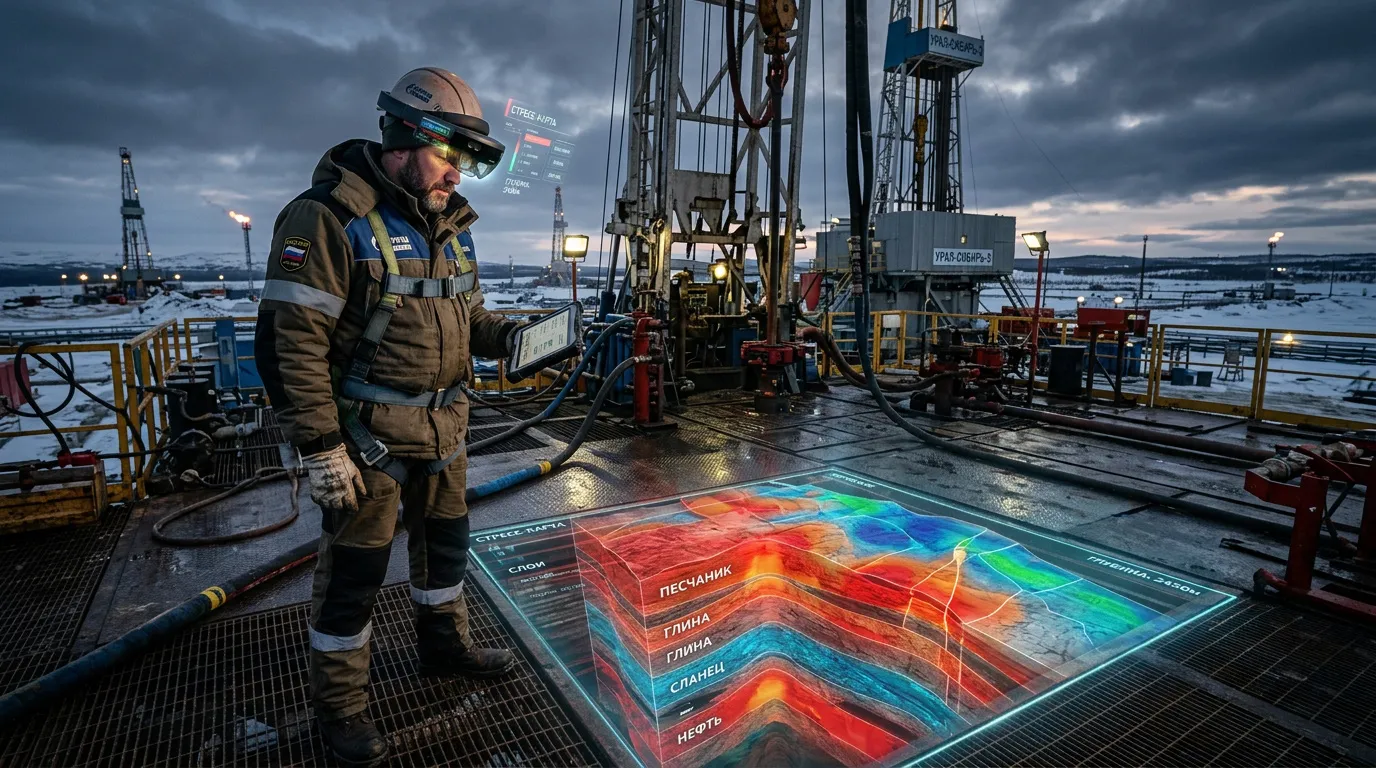
To train the model, researchers used more than 10,000 measurements from three wells in the Junggar Basin in northwestern China, a region known for complex fault systems and uneven rock compression. Similar geological conditions exist across Russia, including in Siberia, the Urals, the Caucasus, and offshore Sakhalin.
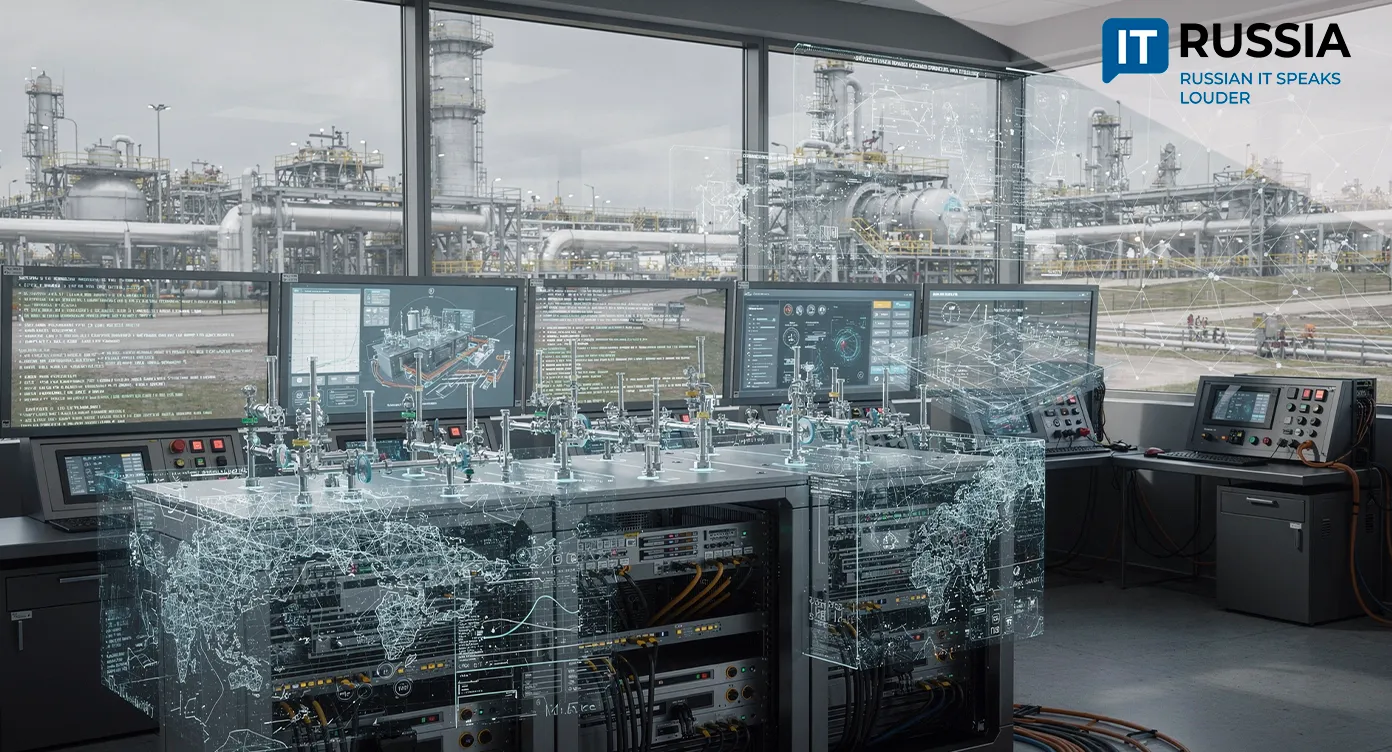
Traditional calculation methods often struggle under such conditions. The new model independently determines which of the nine parameters influence horizontal stress and which introduce noise. Notably, computation time has been reduced by 87% compared to existing approaches. Because the system relies on standard well logging data, it can be deployed without building new measurement infrastructure. Instead, it can be integrated directly into existing geological and drilling data workflows. If validated in Russian conditions, the technology could become a widely adopted component of domestic oil and gas software platforms.
A Defining Trend for the Decade
Globally, machine learning for stress estimation in wells has been developing for years. In Russia, similar efforts are underway. In 2025, Gazprom Neft, Innopolis University, and Nedra Digital announced the development of an AI-based digital system for geomechanical modeling of oil and gas fields. The platform supports subsurface analysis, reserve estimation, productivity assessment, and the selection of development strategies.
In this context, the Perm Polytechnic model could find its niche as a specialized module – for example, in evaluating formation stress and enabling safer drilling design.
In 2022, Messoyakhaneftegaz deployed an AI-enabled software system in drilling operations. The system operates in autopilot mode, managing the process based on formation characteristics and predefined parameters. This marks a broader shift in Russia’s oil and gas industry from analytical models toward systems that directly influence real-world drilling operations.
The Perm Polytechnic development reinforces this transition, moving the industry away from manual engineering calculations toward AI-driven systems capable of faster subsurface assessment and reduced drilling risk.