An AI Tutor Created in Yekaterinburg Is Changing How Students Learn
Instead of solving homework for school students, a new AI tutor encourages them to think independently. The platform is already being tested in three schools.

Sergey Yeltsin, a native of Yekaterinburg, had long wanted to build an IT project that would become more than another email marketing service or game. His goal was to create technology with a human-centered purpose. When generative AI began gaining momentum, he realized it offered the right opportunity. “Unlocking human potential is our mission,” the developer says. He points to a challenge that is difficult to ignore: millions of children, especially those living in rural communities and small towns, still lack access to high-quality education because qualified teachers are in short supply. If talented students receive meaningful academic support, the benefits could extend far beyond the classroom.
AI Helps Students Manage Stress
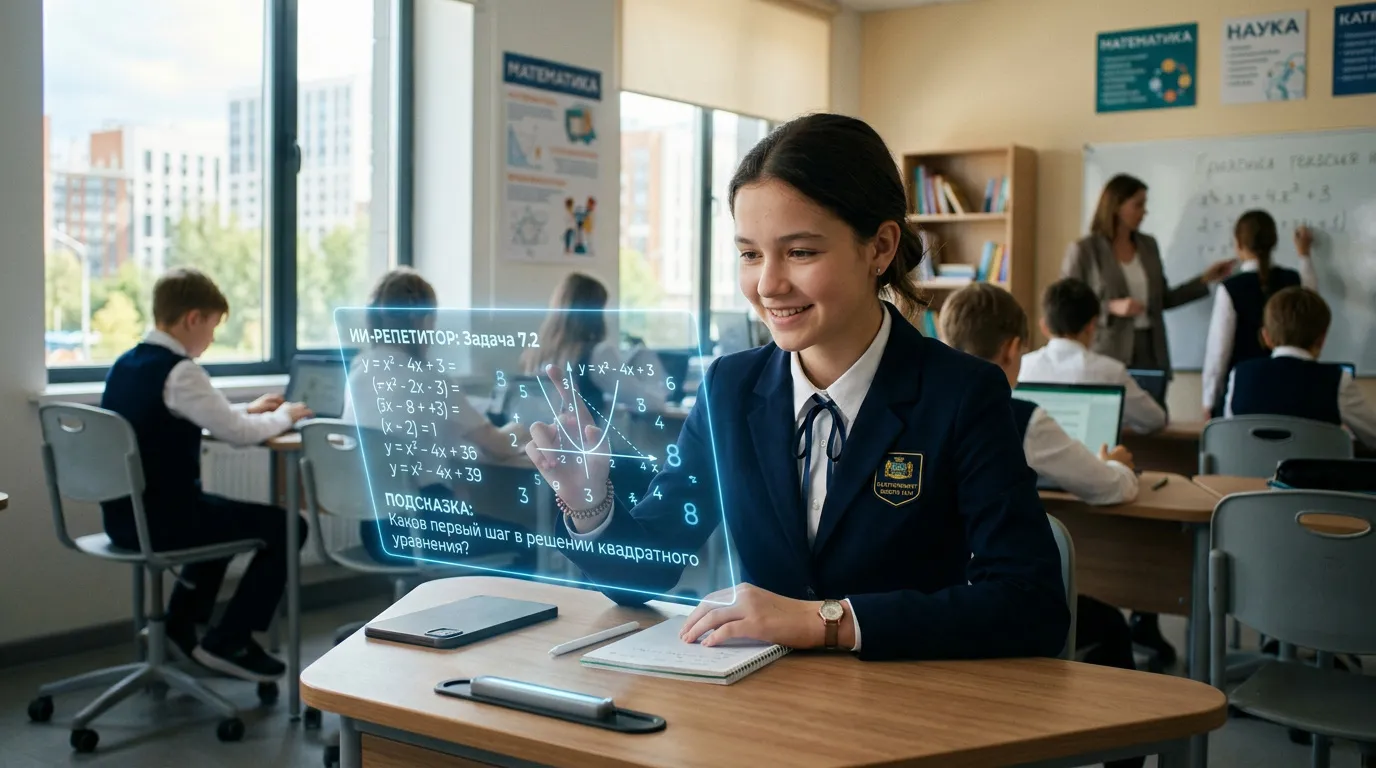
The project is currently being piloted in three Yekaterinburg schools: School No. 68, Gymnasium No. 9, and Gymnasium No. 212. Conversations with the AI tutor are intentionally designed to feel natural, much like chatting with a friend in a messaging app. The virtual assistant deliberately refuses to provide ready-made answers. Instead, it asks guiding questions and gently leads students toward finding solutions on their own. One of its most unexpected capabilities goes beyond academics. If a child mentions experiencing bullying, for example, the AI helps reduce stress, offers emotional support, and encourages the student to seek help from trusted adults. It is technology designed not only to teach, but also to provide support.
Teachers at Gymnasium No. 212, where the platform was introduced earlier than at the other schools, say the results have been encouraging. Music teacher Svetlana Polyakova and visual arts teacher Nadezhda Burtseva used the AI tutor while preparing a ninth-grade student for Russia's National Olympiad in Art (World Art Culture). The student went on to become a prize winner at the regional stage, marking the first time a student from the school had achieved that result in the subject.

Trust, but Verify
For teachers themselves, AI has become a practical time-saving tool. An assistant principal at the gymnasium uses it to gather information for educational projects and even draft scenarios for school events. The algorithms generate an initial framework, leaving educators to refine and implement it. Elena Nagumanova, assistant principal at School No. 68, adds that AI-powered resources also make it possible to create individualized learning pathways. Students who miss classes can use such resources to catch up on coursework.
Even so, some educators remain cautious about the experiment. Their concerns largely mirror those of parents: reduced cognitive effort, declining motivation, and the risk that children become passive consumers of ready-made solutions. Data from the Russian Public Opinion Research Center (VCIOM) support that concern. Nearly one in two Russians say they would not allow their child to use AI for homework. Only 16% of respondents fully support the use of AI across all school subjects.
Elena Tomalak, assistant principal at Gymnasium No. 212, openly admits that she was initially skeptical about AI simply because she knew very little about it. After working with the project, however, her opinion changed. In her view, AI inspires new ideas, helps complete tasks quickly, and supports high-quality work. The key, she says, is to stop being afraid of the technology and start learning how to use it effectively.
Elena Nagumanova also warns that using AI comes with hidden pitfalls. She personally encountered an error when she asked the digital tutor to solve an assignment based on a photograph. The algorithms misinterpreted the image and suggested the wrong solution path – a classic example of an AI hallucination. Even so, she does not see that as a reason to distrust the technology. On the contrary, she believes such mistakes demonstrate why students must develop critical thinking skills and learn to distinguish correct information from incorrect information. Fortunately, AI performance continues to improve. While large language models solved school mathematics tests with about 60% accuracy three years ago, that figure has now reached 99% to 100%.
Talking About AI
In 2021, the National University of Science and Technology MISIS, together with the Vklad v budushcheye (Contribution to the Future Foundation), launched a project introducing AI education in Russian schools. At that stage, the focus was primarily on AI literacy, helping students understand what neural networks are and how they work. In 2024, the government updated the National Artificial Intelligence Development Strategy through 2030. That same year, the nationwide Razgovory o vazhnom (Important Conversations) classroom program featured a dedicated lesson titled “Artificial Intelligence and Humans: A Strategy for Working Together.” Sberbank partnered in the initiative, introducing students to AI development trends and everyday applications.
The year 2025 brought several major developments. First, VCIOM published research examining public attitudes toward AI in schools, highlighting how sensitive the topic had become. Second, Yandex launched Yandex Uchebnik (Yandex Textbook) with AI-powered preparation for the Unified State Exam in mathematics through the Alice AI-based Repetitor AI (AI Tutor). Interestingly, its learning model closely resembles the approach developed in Yekaterinburg. Rather than providing answers outright, the service explains each step and gradually guides students toward the solution.
Interest from students is also reflected in academic competitions. During the 2025-2026 school year, the Artificial Intelligence track of the National Technology Olympiad became one of the competition's most popular categories, attracting more than 7,500 students from grades 8 through 11.
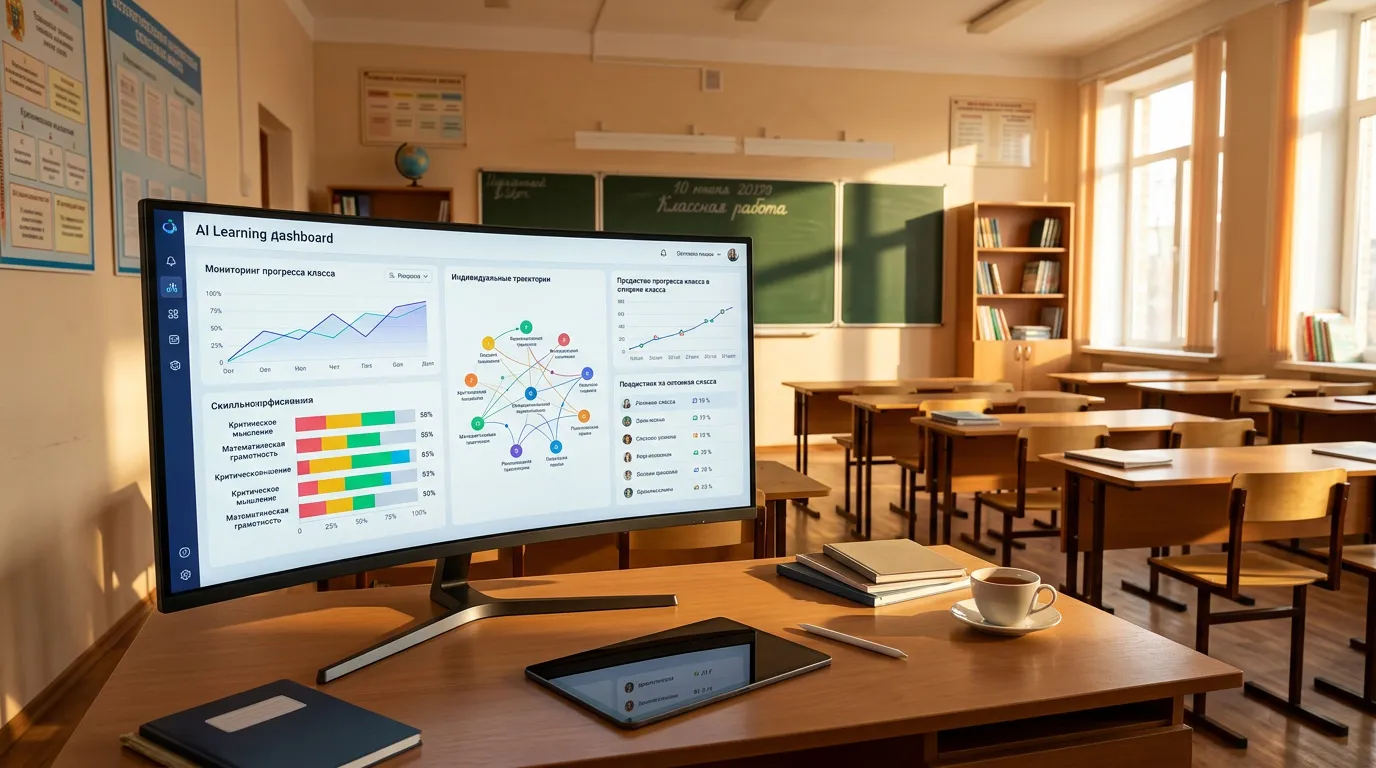
Beginning on September 1, 2027, Russia's updated Federal State Educational Standard for upper secondary education will take effect. The revised framework places greater emphasis on practical learning, creating new opportunities for AI-powered educational tools. The model now being tested in Yekaterinburg could eventually serve as the basis for a nationwide approach, provided the new system continues to leave room for teachers, whose empathy, judgment, and ability to recognize students' individual needs remain irreplaceable.