Digital Calm: St. Petersburg Launches Next-Generation Training Simulator for Marine Engineers
St. Petersburg Marine Fisheries Vocational School has deployed a Russian training simulator that lets students practice emergency scenarios on digital twins of ships without putting lives or equipment at risk.
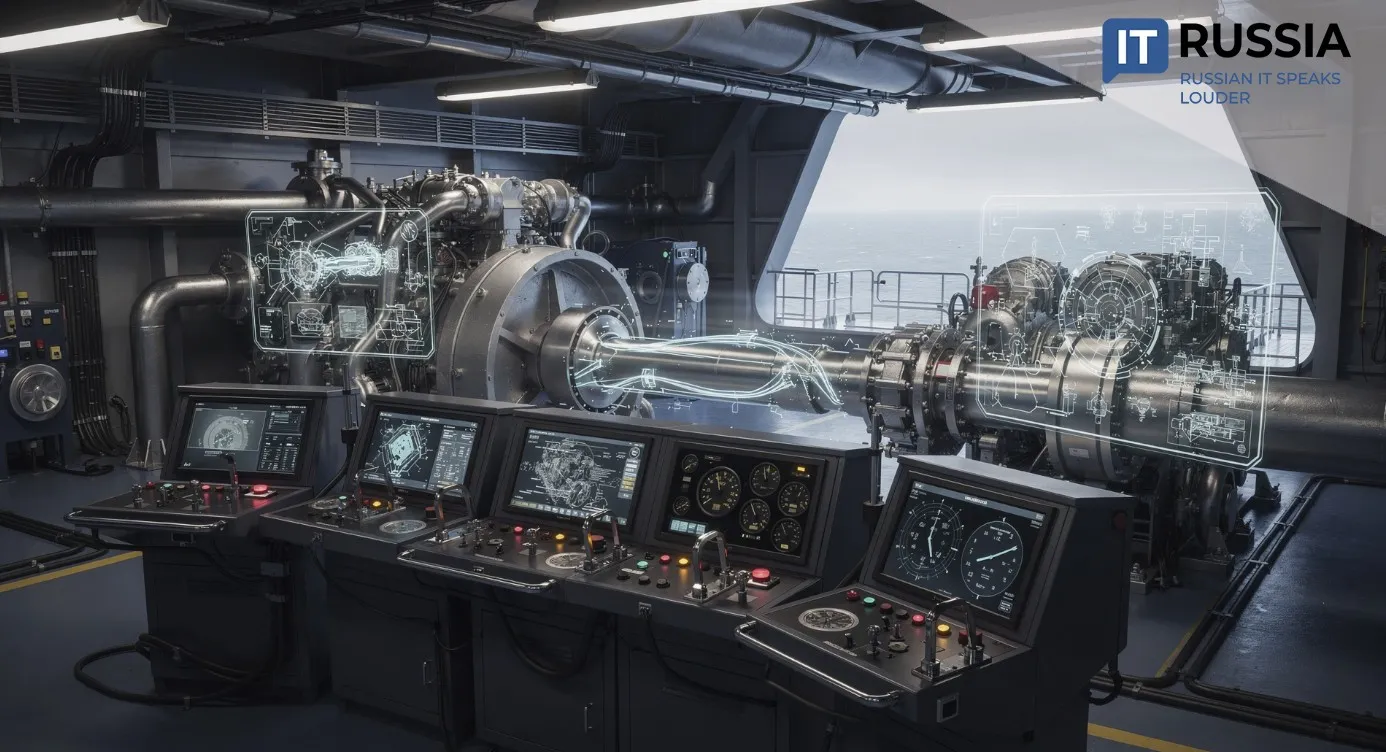
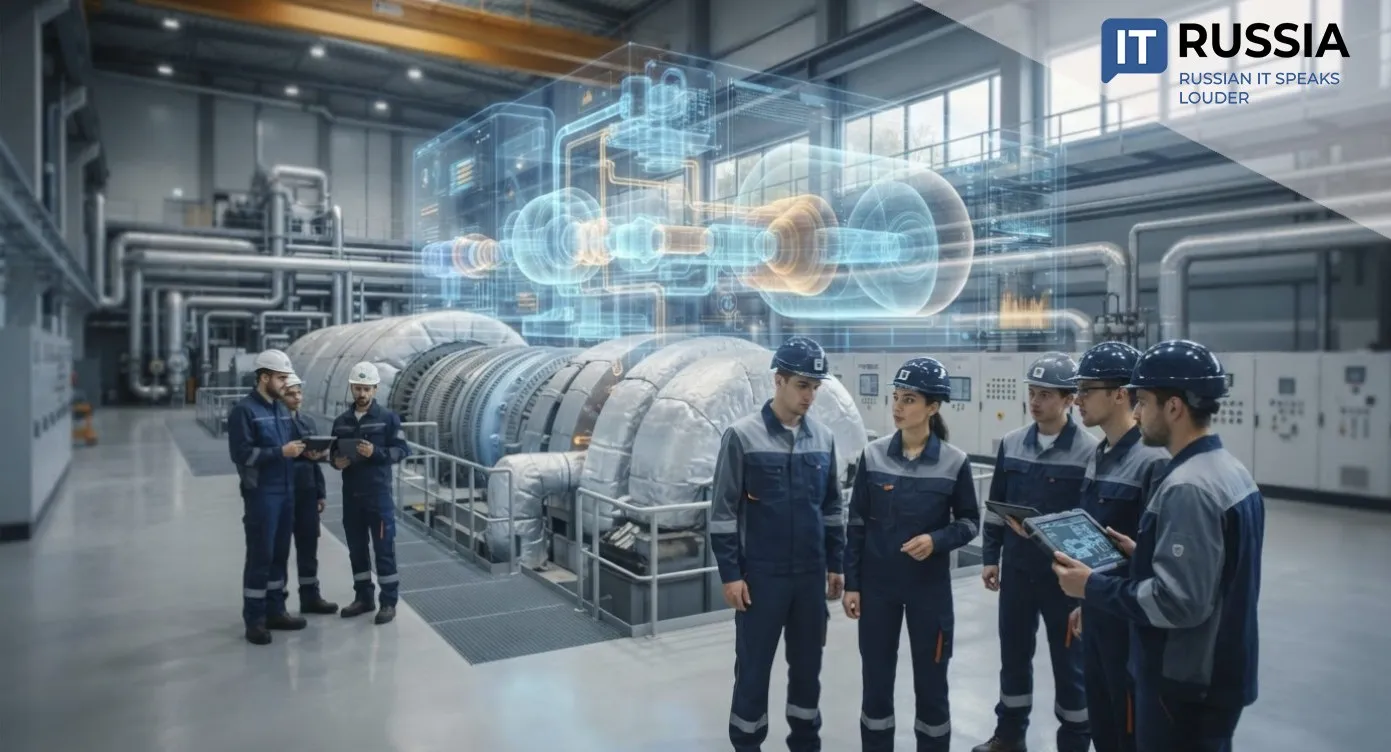
In the classic Soviet film Only “Old Men” Are Going Into Battle, pilots train on the ground so they can survive in the air. The same principle now applies to seafarers, except aircraft cockpits have been replaced by digital twins of engine rooms, while training on outdated physical rigs is giving way to practicing abnormal scenarios in virtual replicas. At the heart of the new complex is the ERS TECHCORE engine-room simulator, developed by St. Petersburg-based Evolyutsiya morskikh tsifrovykh tekhnologiy (Evolution of Maritime Digital Technologies, EMTsT). The system connects 10 workstations over a local network and uses 3D visualization and virtual control panels to simulate the operation of shipboard equipment in minute detail.
Fleet and Code
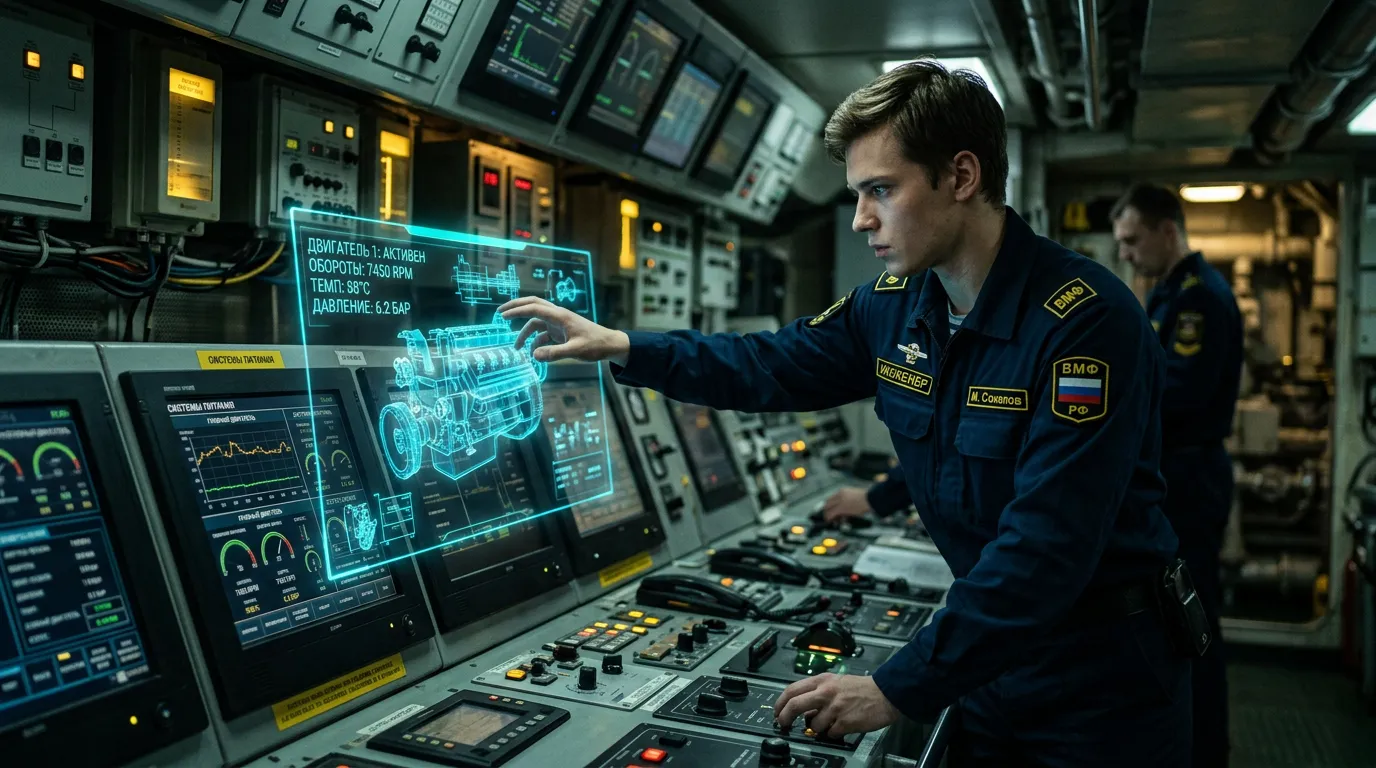
Software plays the central role. It can reproduce the operation of pipelines, pumps, valves and propulsion systems, introduce malfunctions and emergencies for training purposes, configure PID controllers and help crews sharpen teamwork. The simulator teaches students to interpret mimic diagrams, operate propulsion systems in manual and automatic modes, troubleshoot equipment and respond properly to emergencies.
Engine-room resource management and risk assessment during watchkeeping receive particular attention. The software was developed in Russia and is officially listed in the Mintsifry (Ministry of Digital Development, Communications and Mass Media) software registry.
The simulator comes with Modelnyye kursy 2.07 (Model Courses 2.07), a set of 36 ready-to-use topics with exercises that will form the basis for training and assessing marine engineers. The simulator complies with current international standards, including the STCW 95 Convention, the BWMC governing ship ballast water management, MARPOL for the prevention of pollution from ships, and the Polar Code for operations in ice.
High Voltage
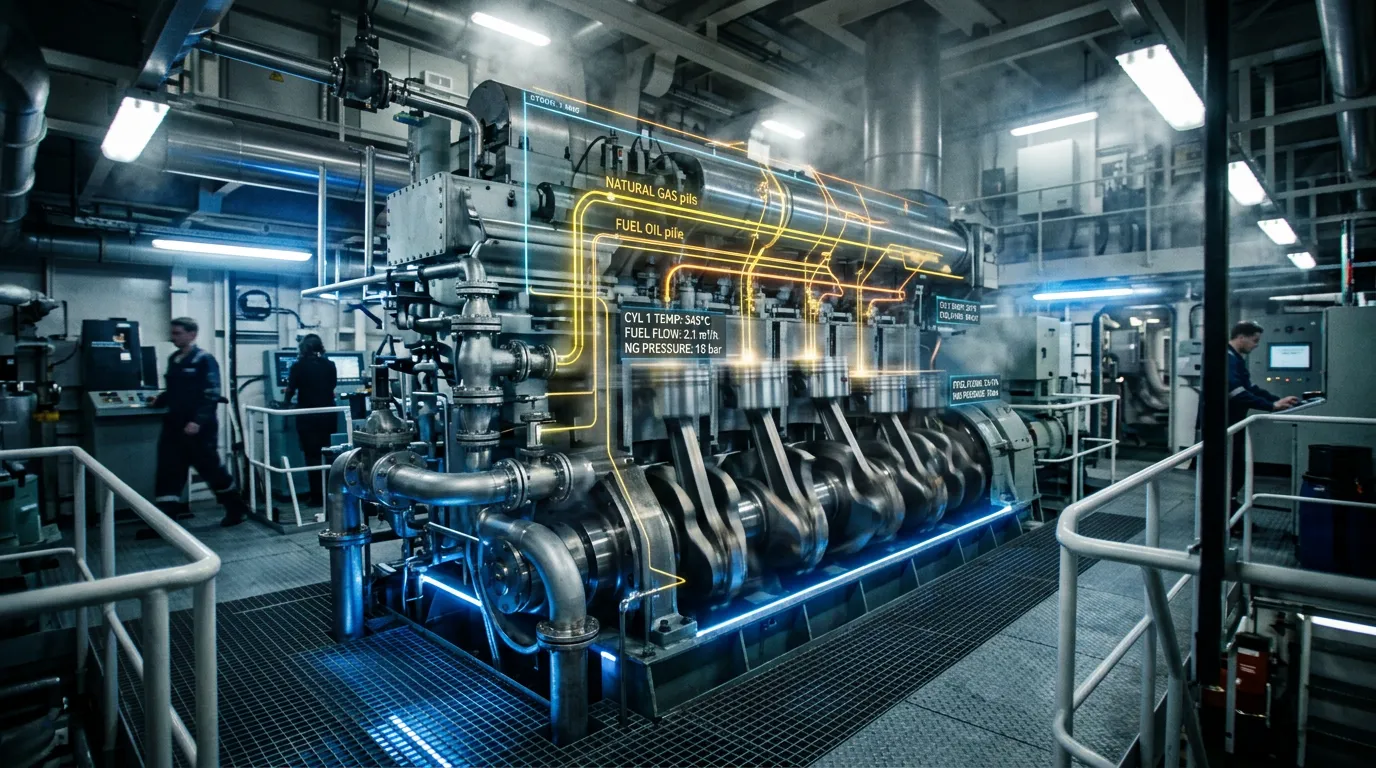
What sets the complex apart is how closely it replicates a real engine room. Training realism comes from 3D visualization that reproduces every pipeline, pump and valve in detail, allowing students to operate machinery from both virtual control panels and local control stations. Each of the 10 workstations has its own controls and tools for monitoring ship-system parameters.
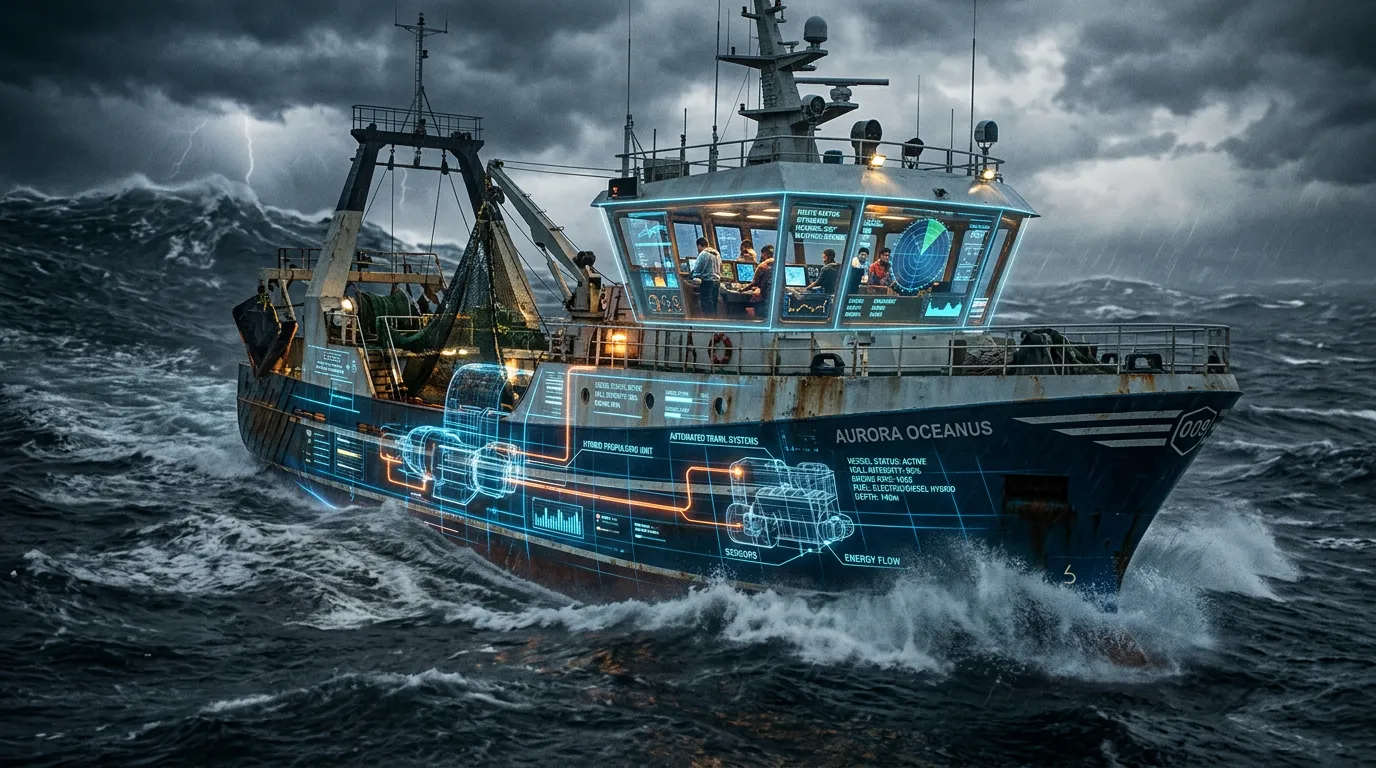
The simulator places particular emphasis on modern, environmentally focused technologies. Its models include a dual-fuel diesel-electric gas tanker and a trawler with a hybrid propulsion system – types of vessels that are already being built and entering service. Valery Tikhonov, head of technology simulators at EMTsT, explains: “Today, the IMO strategy for reducing greenhouse gas emissions directly affects what kinds of ships are built and how they are operated. New marine propulsion systems, sophisticated controls, and stringent requirements for fuel efficiency and environmental performance are unquestionably changing the work of marine engineers as well. A graduate who has already mastered these scenarios in college steps aboard not with abstract theory, but with practical skills for safely operating modern shipboard systems. These are exactly the professionals the industry is looking for today.”
Before and After Evolyutsiya
Russia’s first VR simulator for ship navigators appeared relatively recently, in 2023. Sitronics KT developed the MAYAK VR-NT (BEACON VR-NT) software and hardware complex. After completing testing, the simulator was approved for use at educational institutions under Rosmorrechflot (Federal Agency for Maritime and River Transport) to train operators of maritime autonomous surface ships. In parallel, the Russian Maritime Register of Shipping certified Navigator PRO 6000. This software and hardware simulator is also designed to train crews for autonomous shipping and remote-control centers.
In 2025, the Admiral Makarov State University of Maritime and Inland Shipping opened a Project 22220 universal nuclear-powered icebreaker navigation bridge simulator developed by Evolyutsiya morskikh tsifrovykh tekhnologiy. Using photorealistic graphics, the complex recreates both the equipment and visual environment of the ship’s navigation bridge. It allows crews to practice some of the most challenging operations encountered in Arctic conditions.
Meanwhile, the industry is deploying specialized VR tools for tasks such as helicopter reception and well-control training for drilling crews.
From the Baltic to Manila
Notably, EMTsT’s technologies are already attracting interest from international partners. In April 2026, the company hosted a delegation from the Philippines. The visitors were shown its latest developments in autonomous navigation and simulator technologies for training professionals to work aboard vessels using alternative fuels. The two sides agreed to build on their cooperation.