Dmitry Fofanov: Russia Needs to Build a Positive Image for Its IT Industry
Russia's IT industry is helping shape a new image of the country while advancing Russian technological expertise abroad. Giving domestic developers greater international visibility could strengthen technology partnerships and broaden awareness of what the country's tech sector has achieved.
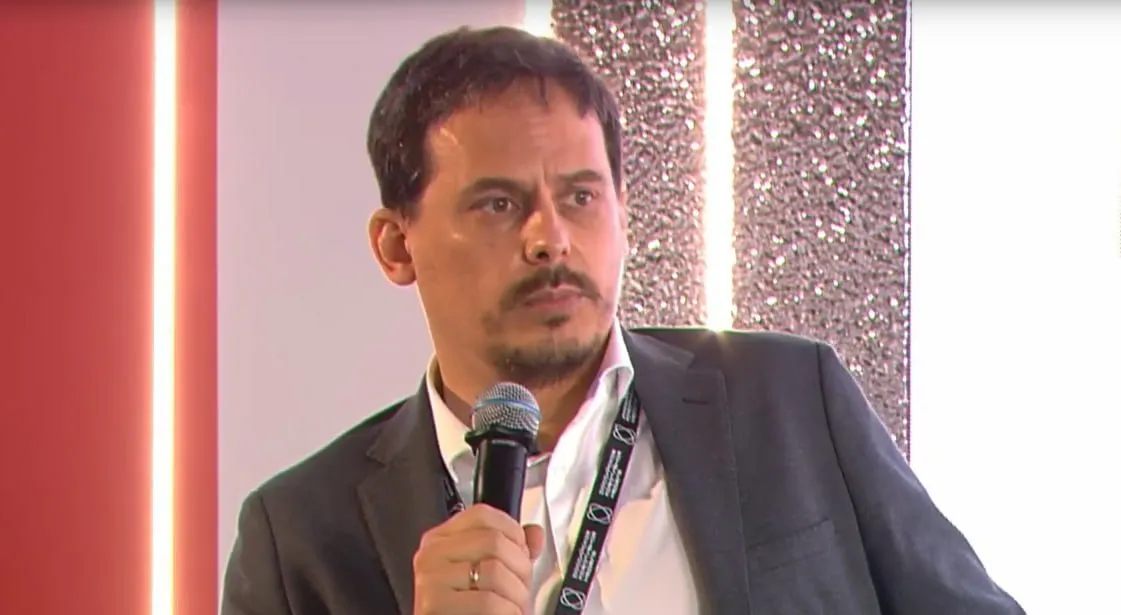
During the seventh Russian Creative Week festival and forum at Moscow's Gorky Park, Dmitry Fofanov, editor-in-chief of the online publication IT Russia, explained in an exclusive interview what needs to be done to reshape perceptions of Russia's IT industry and help Russian technology solutions gain traction in international markets.
– Russian mathematicians and Russian IT professionals are among the people driving the digital transformation of the world that we are all experiencing today. That is an important point to recognize. Many of those building this new technological era on a global scale come from the Russian mathematical tradition and the Soviet scientific school. Meanwhile, many stereotypes about Russia still persist internationally, and those perceptions need to change.
It is essential to build a positive image of Russia's IT industry, one that accurately reflects reality. I realized how necessary this was about a year and a half ago while working with international audiences. Abroad, people are accustomed to hearing stories that portray Russia as a threat, focusing on Russian superweapons or Russian hackers.
When you work internationally, you realize how important it is to introduce Russia's IT industry to the world again. In many countries, people are genuinely surprised to learn that Russia has advanced artificial intelligence and rapidly growing digital transformation sectors. That information needs to reach professionals across the global technology industry.
Our outlet, IT Russia, is dedicated to promoting Russia's IT industry and science as a whole, primarily for international audiences. We currently publish in Russian and English, with Chinese and Spanish editions planned. Even today, about half of our traffic comes from outside Russia.
As we continue developing IT Russia, our goal is to support the country's IT industry and technology exports. Our portal is more than a news website. While news accounts for about 30% of our content, another 30% consists of expert opinions. We interview leaders across the IT industry and bring their perspectives to audiences around the world.
We also devote significant attention to other sectors because digital transformation is reshaping every industry, including culture, where digital technologies and artificial intelligence have opened a new stage of development while presenting a profound challenge. Many screenwriters, directors, and cinematographers are now asking how they should adapt, continue working, and grow professionally. In practice, there is only one path forward – mastering these technologies. I am convinced they will ultimately become valuable creative tools.
I have a good example of promoting the IT industry in Africa. As part of a Russian delegation, I took part in a visit to Tanzania, where we discussed digital media and creative industries from the perspective of young people. Keep in mind that roughly 70% of Tanzania's population is young. That makes it a youthful, highly promising country whose people view Russia positively.
Tanzania is also strategically important geographically. The country positions itself as East Africa's gateway to the rest of the continent. We held a series of meetings, including discussions on jointly shaping the international image of our countries' IT industries. Tanzania has a commission responsible for developing the ICT sector, headed by Mr. Muasaga. Representatives of Rossotrudnichestvo helped organize those meetings. We are now preparing a memorandum on mutual coverage of IT events. We will highlight Russian technological achievements in Tanzania and across Africa more broadly. At the same time, about 20% of our own content already covers the achievements of IT industries in friendly countries, and we will also publish information about their accomplishments. That represents an important step in expanding our work across the continent.