Mining Granite With a Neural Pickaxe: Yandex and Minecraft Turn Exam Prep Into a Game
Yandex has launched an exam-prep camp inside Minecraft, where students mine “granite of knowledge,” battle monsters named Panic and Procrastinator, and receive guidance from Alice AI.
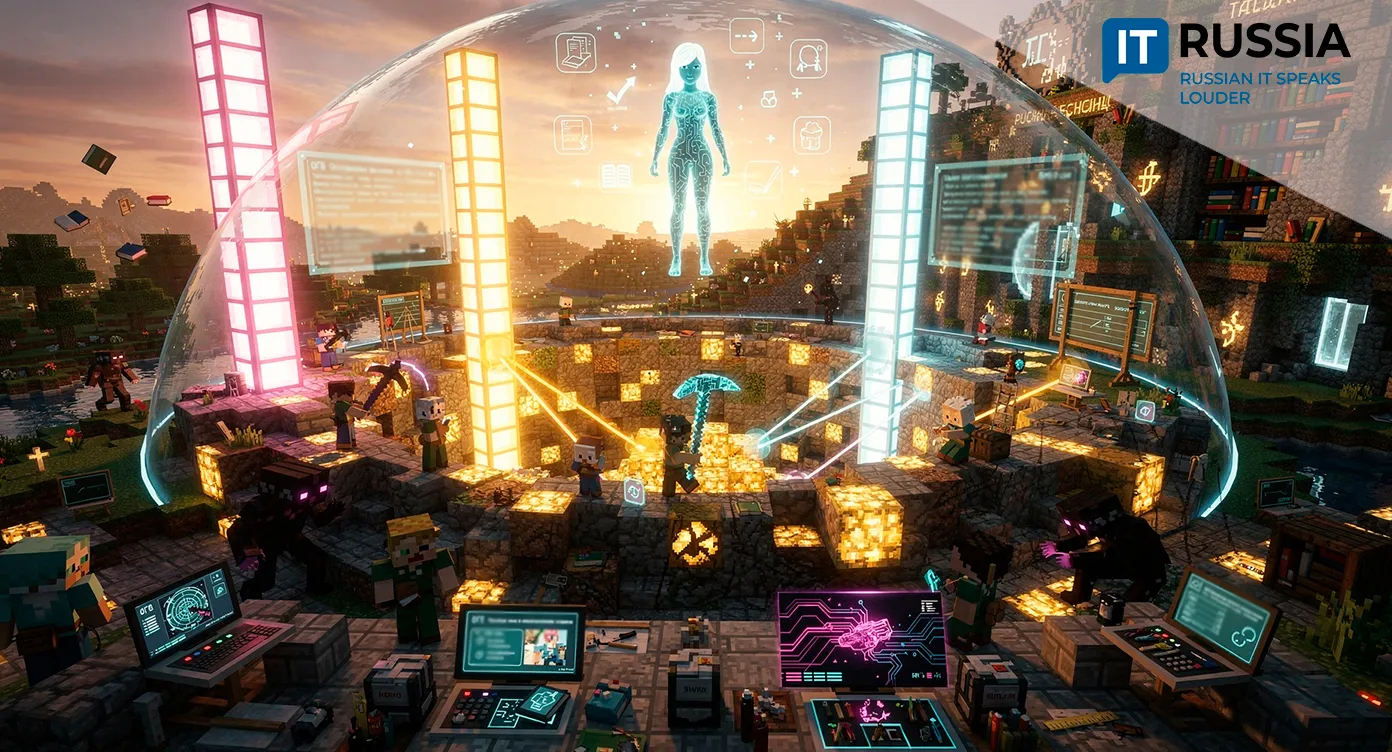
What if exam preparation no longer meant cramming for hours, but simply logging into Minecraft instead? For millions of teenagers, the game already feels like a second home. Now it is unexpectedly becoming a training ground for Russia’s OGE and EGE standardized exams. It sounds almost futuristic. For players inside Posledny blok (The Last Block), however, that future has already arrived.
Inside a Cave Filled With Knowledge Craters
Yandex has done something that would probably make conservative educators uneasy. The company did not simply combine a neural network with a popular game. It built an educational metaphor that immediately makes sense to students. Players enter a closed zone protected by a giant dome that symbolically shields them from procrastination and chaos.
As Alice AI creative producer Andrey Shirokov explained, the initiative is built around “the idea of gradually overcoming the difficulties students face.” That concept is reflected directly in the project’s name, Posledny blok. Players move level by level and block by block until they reach the final stage.
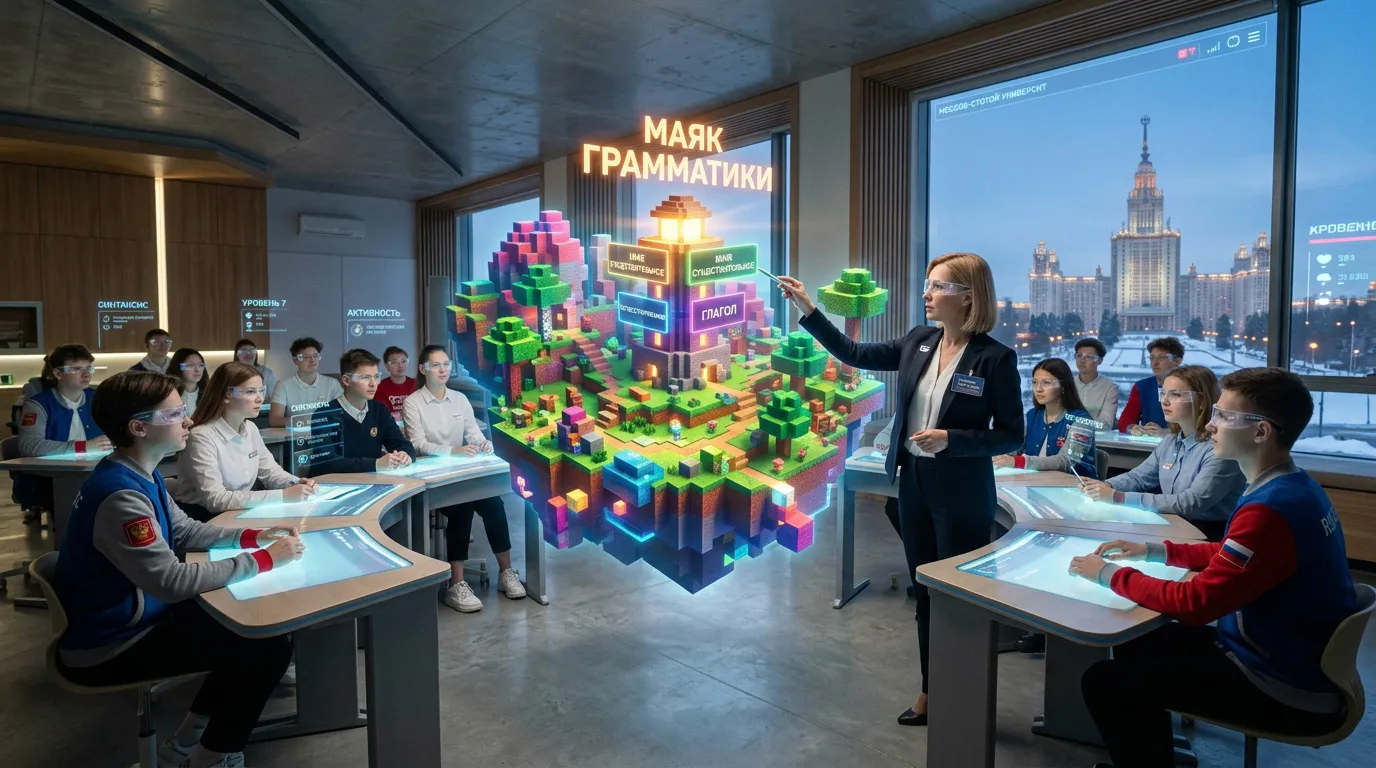
Inside the server is an entire educational universe. Students mine the “granite of knowledge” in a cave filled with knowledge craters. There are also three beacons dedicated to Russian language, mathematics and social studies. Sessions last 20 to 30 minutes. Players need to gather resources, activate a beacon and complete an assignment. All of this takes place in multiplayer mode. Users can see one another, but they cannot interact directly. The result is a sense of shared presence without the distraction of constant chatting.
Monsters, Armor and an AI Mentor
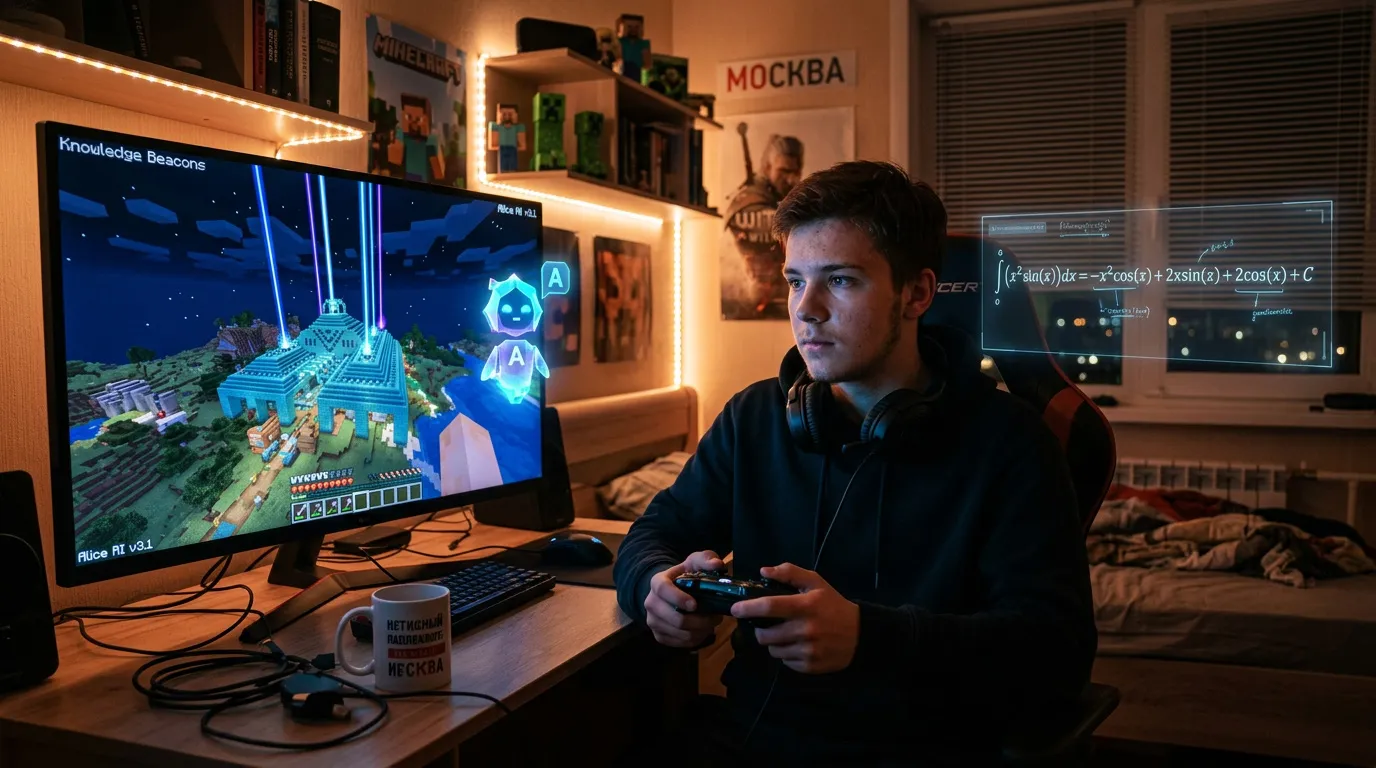
Alice AI does not provide ready-made answers. Instead, it helps students understand problems and suggests possible paths toward a solution. The process becomes harder because of two monster types called Panic and Procrastinator. They represent the psychological barriers students commonly face while preparing for exams and directly affect gameplay dynamics. When players encounter one of these enemies, they need to stay focused or risk losing progress. To help them push forward, developers added special tools. Students can obtain neural armor that protects against attacks from Panic and Procrastinator, as well as a neural pickaxe that speeds up the extraction of the “granite of knowledge.”
Assignments attached to the beacons are based on real exam materials. They include equations and inequalities, spelling and punctuation exercises, as well as analysis of legal and social scenarios from the social studies curriculum. Completing tasks affects both personal and group progress. Correct answers also earn players points for a weekly leaderboard ranking among users. That competitive element is designed to keep students coming back.
Block by Block
Yandex launching a project like this is not especially surprising. The company has spent years methodically building an ecosystem in which a neural network acts as a friend, assistant and tutor. In October 2025, Yandex launched Repetitor AI (AI Tutor), a system designed to help students prepare for advanced mathematics exams required for university admission. The platform relied on a large ML model trained on real exam assignments with participation from 150 educators.
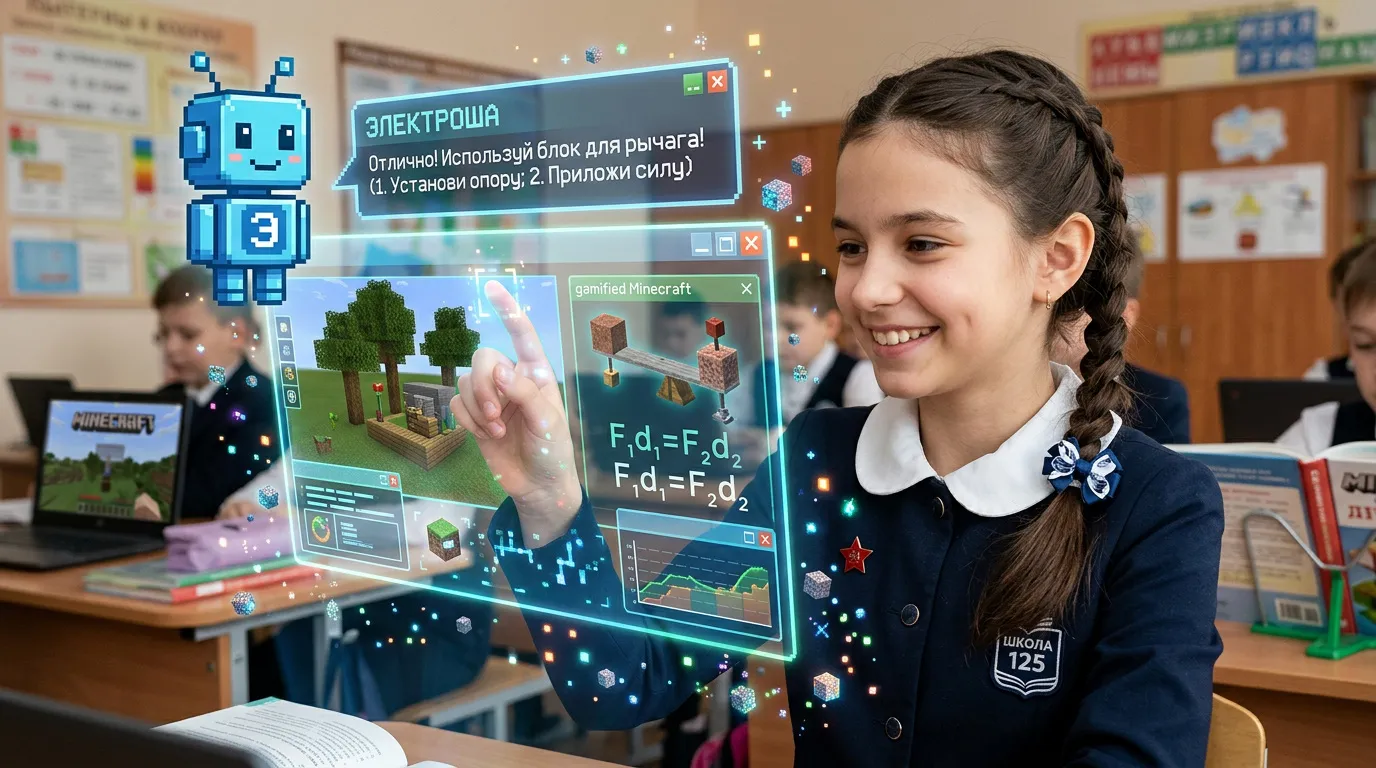
Then, in April of this year, Yandex added a “Tutor” mode for grades 5 through 11 inside chats with Alice AI. The feature explains material through dialogue, guiding questions and step-by-step problem solving.
Two weeks before announcing the Minecraft server, Yandex also introduced a new feature inside its browser and mobile app. Alice AI learned how to analyze school assignments. The feature became available through a split-view interface with an “Ask Alice AI” button that displays multiple windows or content areas side by side. The functionality was aimed not only at students, but also at parents trying to refresh their own knowledge while helping children with homework. The platform was also adapted for visually impaired and blind students, allowing them to prepare for exams with AI assistance as well.
That means Posledny blok is essentially the newest and most visually ambitious layer built on top of an already mature educational technology stack. The split-view system and browser tutor demonstrated how Yandex had been testing the idea of “guided help nearby” before moving it into a three-dimensional world filled with neural armor and monsters.
Yandex Enters the EdTech Battleground
According to analytics firm Smart Ranking, Russia’s market for OGE and EGE exam preparation is enormous. Online schools generated 11.6 billion rubles in revenue during 2024 alone (approximately $148 million). In 2025, online education for children surpassed adult online learning to become the largest segment of the market, accounting for roughly 36%.
While competitors continue offering courses, lessons and webinars, Yandex is trying to build something closer to a digital habitat. The platform is not static and is expected to evolve throughout the entire exam season. In practice, the project also sends a strong signal to the broader EdTech market. The race for student attention is moving into a new phase. Success may depend less on who has the largest test library and more on who can sustain engagement through game mechanics such as rankings, resources, crafting systems, beacons and protective artifacts. The idea of gradually overcoming challenges is no longer just a gaming mechanic. It is becoming a broader educational philosophy.
Posledny blok is a bold experiment. If the model proves successful, next spring students may spend less time panicking about exams and more time fighting virtual enemies alongside Alice AI with neural armor on their shoulders and a neural pickaxe in hand.