Physicists at MEPhI Build a System to Measure Magnetic Fields in Fusion Reactors
Researchers at the National Research Nuclear University MEPhI have developed an experimental platform for high-precision measurement of magnetic fields in spherical tokamaks.
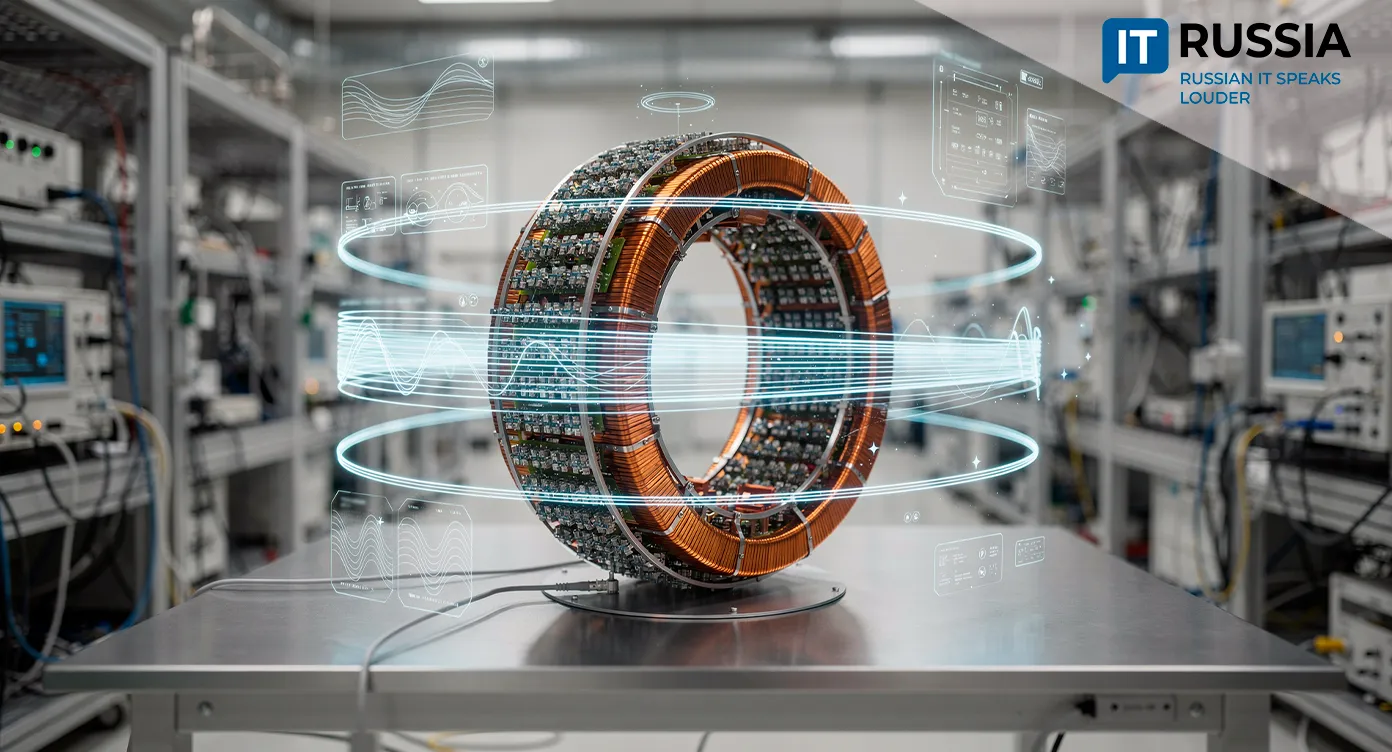
The new system can detect weak parasitic magnetic fields that arise from microscopic assembly imperfections and distort the shape of the plasma column. The findings, supported by the Russian Science Foundation, were published in the peer-reviewed Bulletin of the Lebedev Physics Institute.
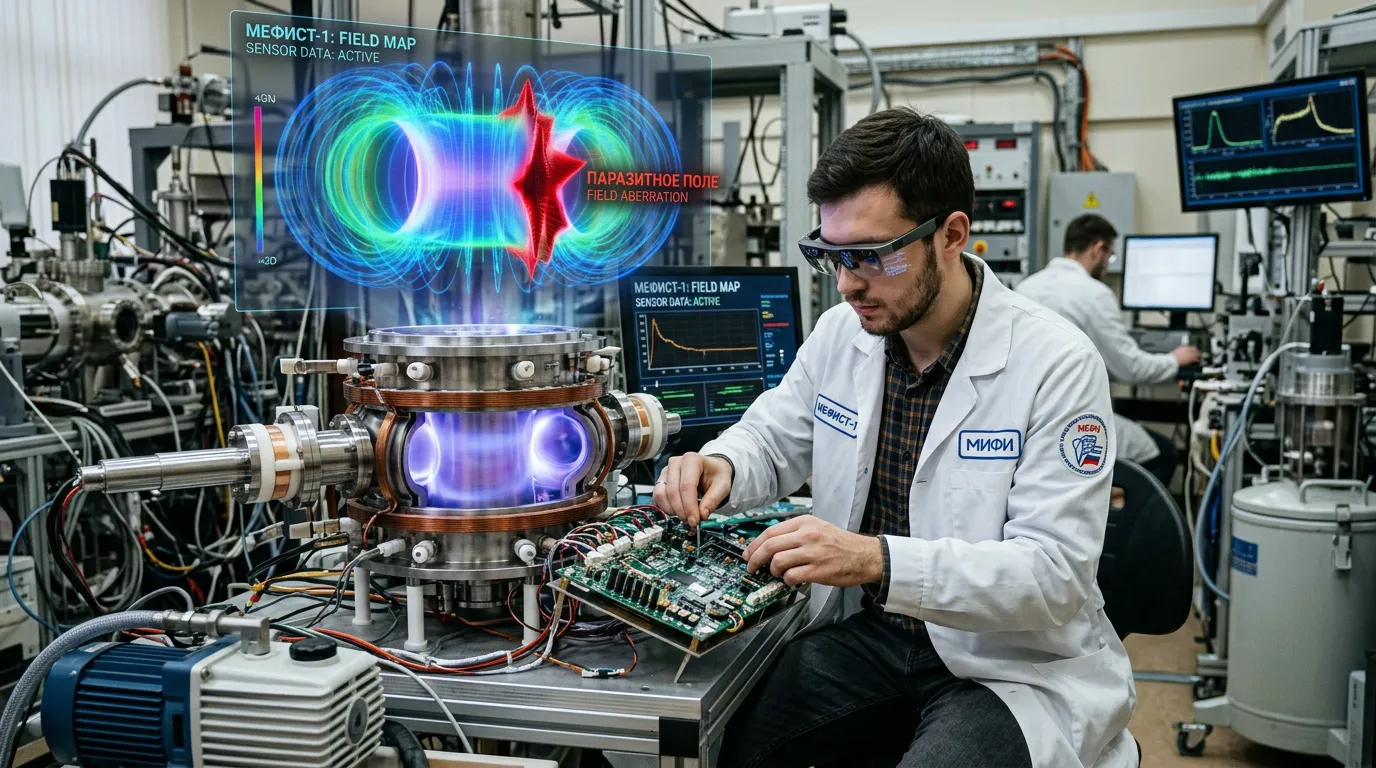
The Invisible Trap and Plasma's Hidden Enemies
Spherical tokamaks are widely regarded by the international fusion research community as one of the most promising approaches to controlled thermonuclear fusion. Their compact design and improved plasma confinement characteristics could make them a foundation for future commercial fusion power plants.
Every fusion reactor relies on a magnetic field to confine superheated plasma and prevent it from touching the reactor vessel walls. The strength and geometry of that field directly determine plasma stability and, ultimately, the reactor's power output.
Yet conventional magnetic coil designs inevitably introduce manufacturing imperfections. Even slight shifts in wire position during winding, thermal deformation, or small alignment errors during assembly generate unwanted vertical and radial magnetic field components. These parasitic fields trigger plasma instabilities, eject charged particles from the magnetic confinement region, and eventually extinguish the fusion reaction.
Engineers typically rely on computer simulations, but real hardware introduces physical effects that models cannot fully capture. Microscopic manufacturing defects and the effects introduced by power supply cabling cannot be predicted entirely through calculations, making experimental measurements on physical prototypes essential.
A One-to-Three-Scale Testbed
To investigate the problem, the researchers built a one-to-three-scale model of the MIFIST-1 tokamak. The structure consists of a modular ring produced on a 3D printer with precision-machined grooves for copper winding. Its modular design provides unusual experimental flexibility: the configuration can be reassembled, measurement modules can be installed in different cross-sections, and researchers can track how parasitic magnetic fields evolve as the winding angle changes. The sensor cassette can also be removed without dismantling the entire assembly, significantly accelerating measurement cycles in ways that are impossible on full-scale reactors.
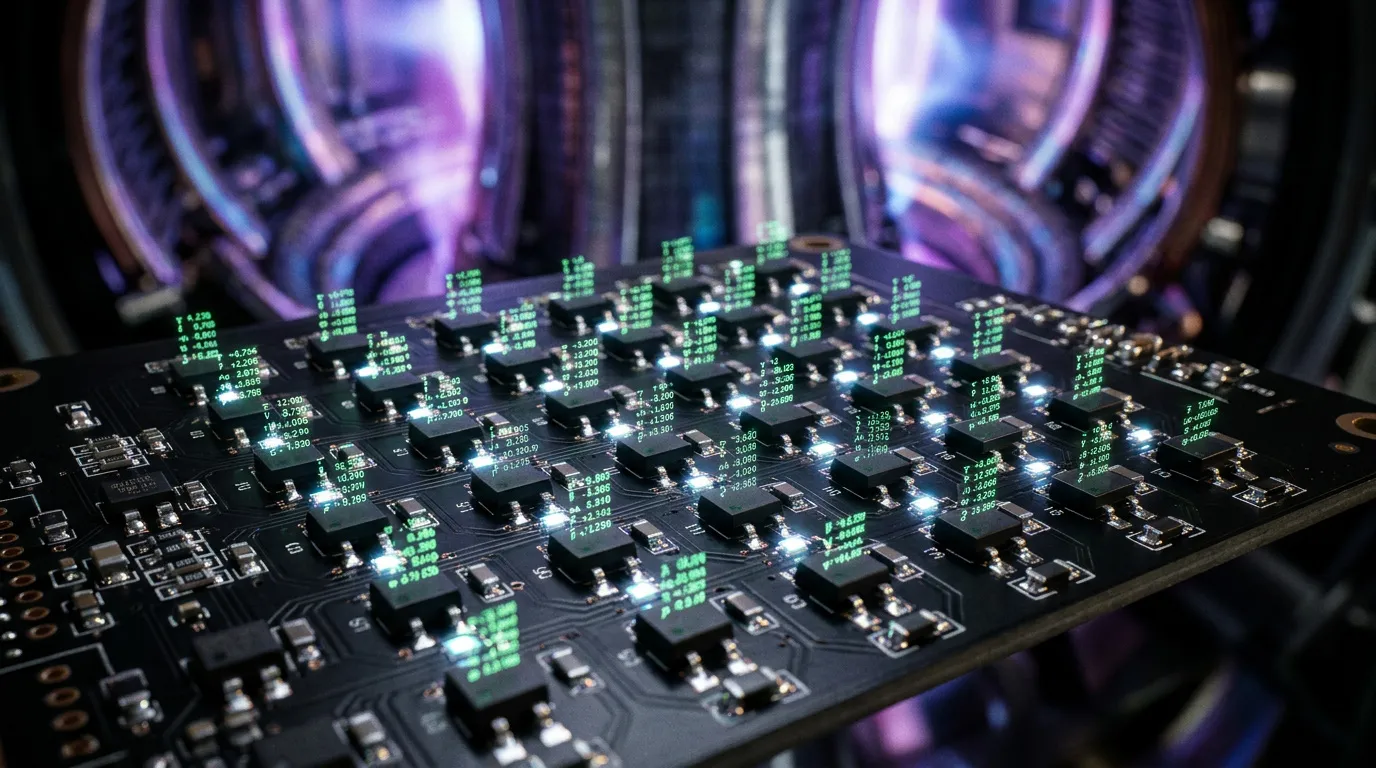
The core of the experimental platform is a custom-designed printed circuit board carrying an array of 36 three-axis digital Hall sensors arranged in four horizontal rows and nine vertical columns. An autonomous acquisition system polls every sensor simultaneously 1,000 times per second while recording the resulting datasets in onboard memory.
The principal engineering challenge was detecting extremely weak parasitic magnetic components against the much stronger toroidal field. Each sensor offers sensitivity better than 0.3 millitesla, comparable to identifying a faint anomaly amid intense industrial background noise. At a current of 180A, the weak distortions remained buried in measurement noise. Increasing the current to 1,200A revealed a clear picture: the dominant parasitic component proved to be the vertical magnetic field, broadly matching theoretical predictions.
Bridging Simulation and the Real Machine
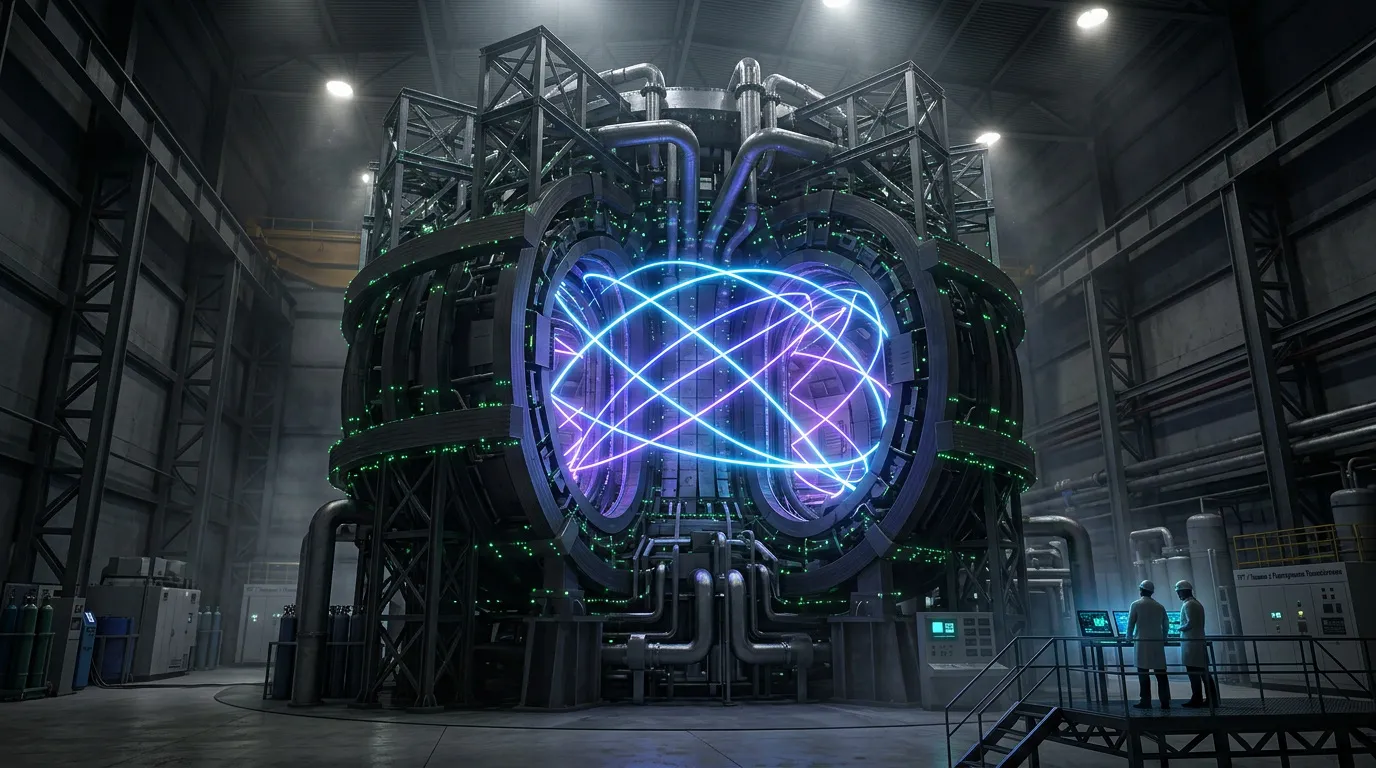
The experiments showed that the geometry of the primary toroidal magnetic field closely matches computer simulations. At the same time, however, the ratio between parasitic fields and the main magnetic field turned out to be several times higher than predicted. Power supply cables, microscopic winding misalignments, and even minute tilts of the sensors themselves all made measurable contributions to the overall distortion of the magnetic configuration.
Rather than representing a failure of theory, the discrepancy provides valuable engineering data. The new methodology makes it possible to determine the assembly tolerance beyond which plasma loses stability and to refine the design of magnetic coils for future reactors before critical distortions emerge.
The platform also gives engineers a way to incorporate compensation mechanisms into reactor architectures at the design stage. Understanding which structural elements contribute most strongly to parasitic magnetic fields makes it possible to optimize power cable routing, tighten winding tolerances, and introduce active magnetic correction systems where they will have the greatest impact.