Rosatom Uses AI to Accelerate the Synthesis of Next-Generation Materials
In 2025, Rosatom engineers created test samples of new materials using artificial intelligence to automate and accelerate the synthesis process.
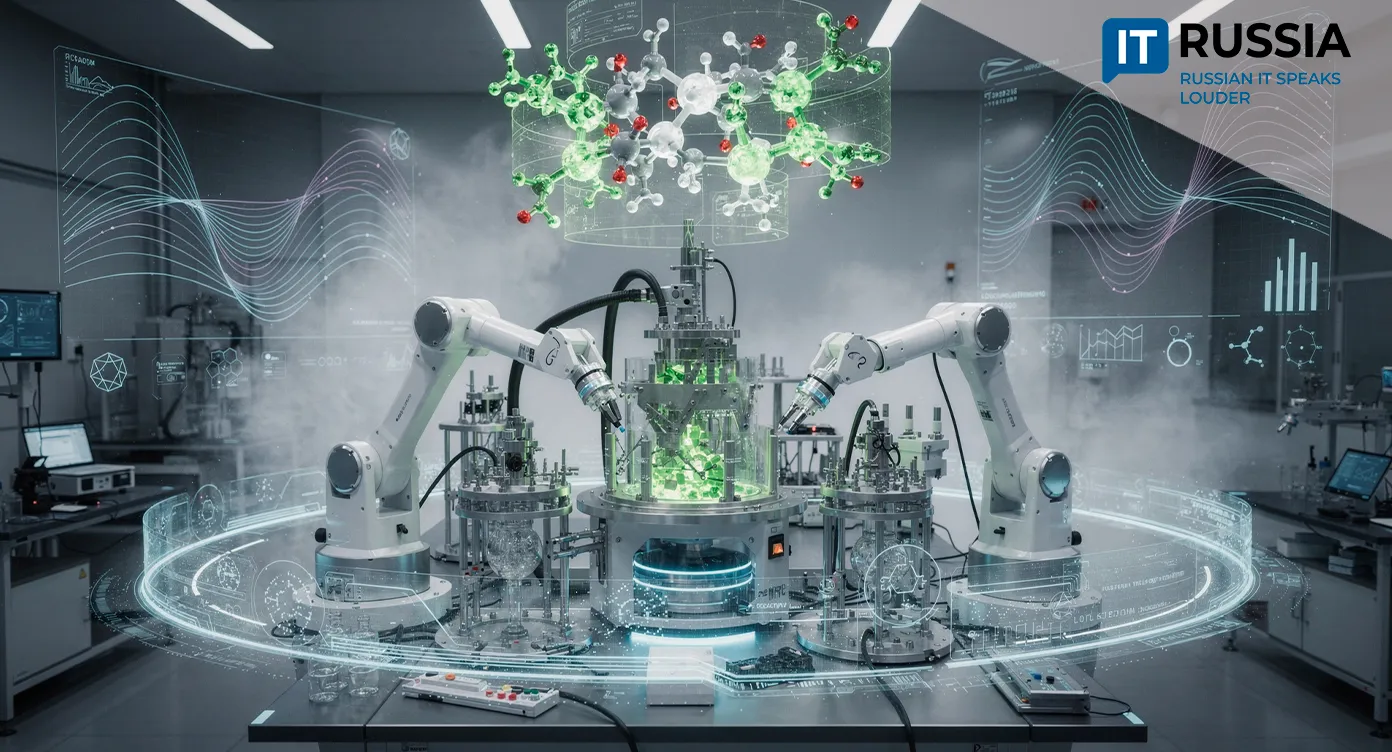
The achievement was disclosed by Atomenergoprom in its annual report. The project illustrates a shift toward using neural-network systems to tackle highly complex applied problems in physics and chemistry.
From Concept to Physical Samples
The company developed a conceptual design for a technological line capable of automatically synthesizing new materials with the help of AI. Engineers went beyond digital modeling alone. They conducted full-scale tests on prototype versions of the future production line's key modules, validating the performance of the hardware before launching a complete industrial system.
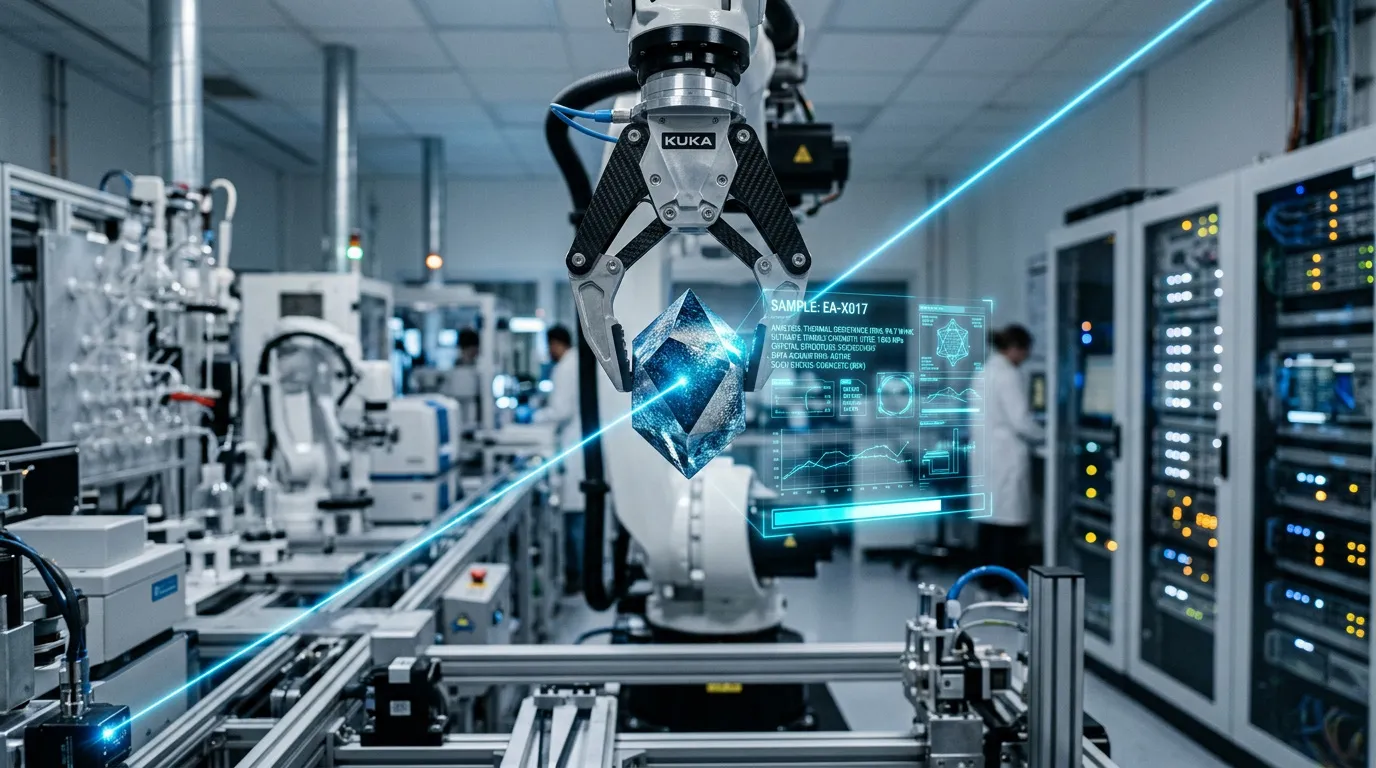
At the center of the process is a neural-network algorithm that takes on functions traditionally performed by researchers. The AI independently selects optimal material compositions and crystal structures for promising candidates, then directly controls the equipment used to synthesize them. Once a sample is produced, the system automatically evaluates its properties, creating a closed-loop workflow of hypothesis generation, production, testing, and parameter adjustment, all without continuous human involvement.
Computing Power That Changes the Rules
The primary advantage of applying AI to materials science is the dramatic reduction in development time. The technology is designed to create and test up to ten unique structural-material compositions per day. Traditional research methods often require weeks or months to prepare, synthesize, and analyze each new sample. The automated line accelerates that process by roughly a factor of 50.
That level of throughput fundamentally changes the economics of research and development. In the past, identifying an optimal alloy with a specific set of characteristics could take years. Now, evaluating thousands of combinations of alloying elements becomes a routine computational and manufacturing task. This capability is especially important when developing materials designed to operate under extreme conditions, including ultra-high temperatures, chemically aggressive environments, or intense neutron irradiation.

Why It Matters for Nuclear Energy
The nuclear industry has historically been one of the main drivers of advanced materials science. Structural materials used in reactor cores, nuclear fuel cladding, and coolant circuits must meet an exceptional combination of requirements. They must withstand radiation exposure for decades without degrading, swelling, or losing their mechanical strength.
The creation of automated synthesis lines allows Rosatom to significantly reduce the time required to bring new grades of steel and composite materials to market.
That has direct implications for both safety and economic performance across existing nuclear power plants and future projects, including fast-neutron reactors and closed nuclear fuel cycle technologies. The more advanced the materials available to withstand extreme operating loads, the higher the efficiency and safety of power-generating units.

Impact Beyond the Nuclear Sector
The technology was developed for the nuclear industry, but its applications reach far beyond power generation. Advanced structural materials are also critical to the aerospace sector, where every gram of weight and every additional degree of engine operating temperature can have a significant impact. Automated synthesis makes it possible to identify optimal trade-offs between strength, heat resistance, and component weight.
The technologies validated on prototype production modules could also be adapted for pharmaceuticals and specialty chemicals. Over time, developments of this kind could support the emergence of an entire class of Russian companies offering high-throughput screening and custom synthesis services.
Looking Ahead
Integrating AI into research and manufacturing processes remains one of the most technically demanding areas of artificial intelligence development, but it is also among the most promising.
Rosatom's results suggest that Russian engineers are capable of building advanced hardware-software platforms at the technological frontier. In an era of global competition, the ability to shorten research and development cycles by an order of magnitude is becoming a key factor in maintaining technological sovereignty.