Stepping Into a Fairy Tale: Russia Is Building an AI-Driven Video Game Inspired by Folk Legends
A new computer game called Neurobayun is being created with extensive use of modern technologies. Players will be able to talk to characters whose speech is modeled by AI assistants and adapts depending on the player’s age. The release is planned for 2026.

Nonstandard Use of AI
At the Moscow International Video Game Week, developers presented the game Neurobayun for the first time. Set in Ancient Rus, the game combines action-RPG mechanics with an interactive fairy tale. AI adjusts the storyline, dialogue and events to the player’s decisions, creating a unique narrative with every playthrough.
The project is being developed by Madness Studio with support from the Presidential Fund for Cultural Initiatives. The game itself is crafted manually: all models, sounds and music are made by human creators. The innovative twist lies in the fact that AI is not used for routine tasks but instead for shaping dialogues and gameplay mechanics, making the project more flexible and interactive.
A Fairy Tale With Meaning
Players will be able to speak to the AI using a microphone, and characters in the game will respond differently depending on the speaker’s age.
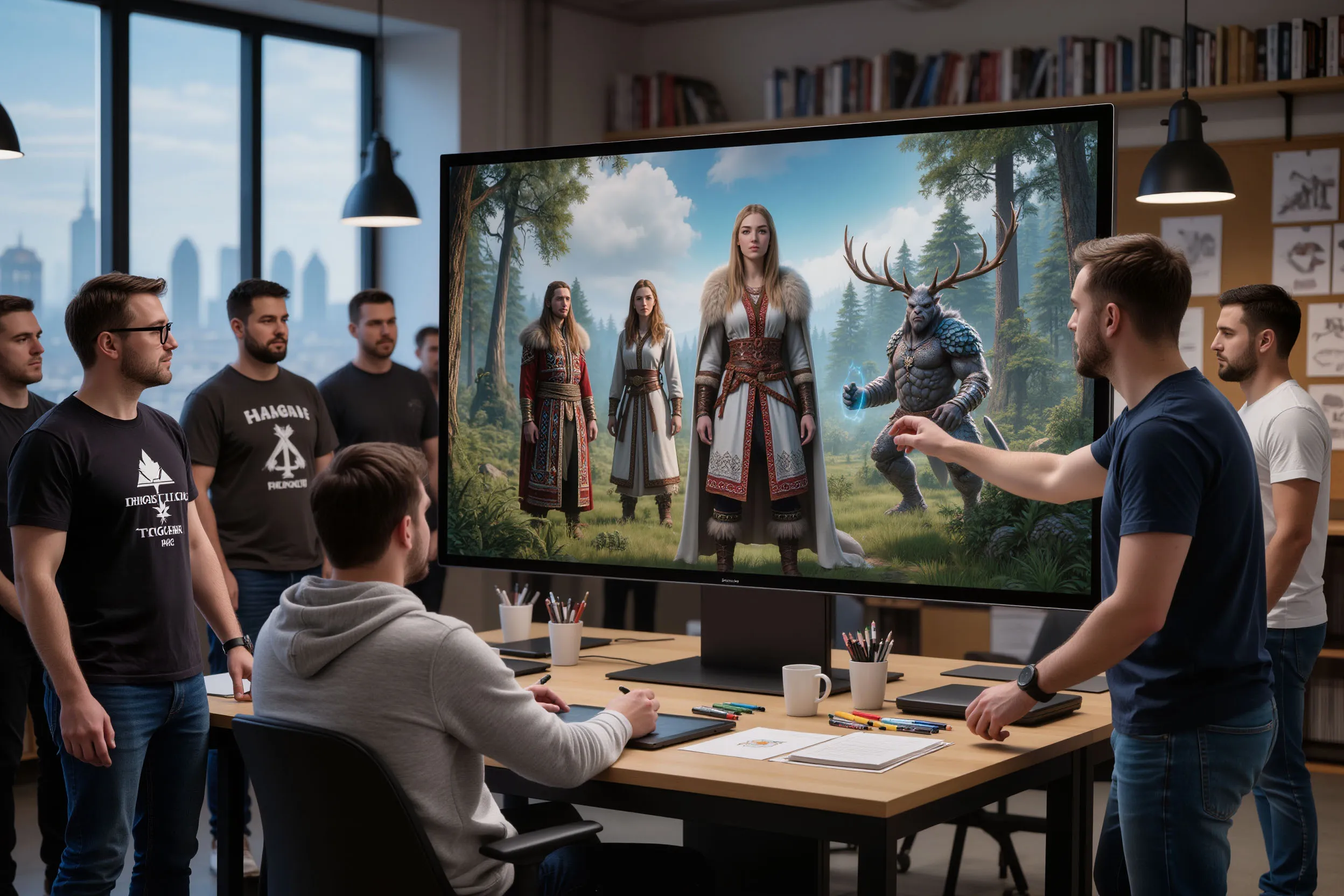
“We are creating two modes – a children’s mode and a family mode. The children’s mode is simplified and sensitive to younger audiences and was developed with the help of education experts. Characters are shielded from ‘adult’ topics: they simply avoid inappropriate conversations, ensuring a safe environment for all players,” explained project lead Ivan Klenov.


Equally important is that the storyline is inspired by Russian folk tales – not only in content but in values. Each player makes choices that affect outcomes. The creators built an educational component into the game: it shows the consequences of decisions. Just like in traditional folklore, good deeds are rewarded while harmful behavior leads to failure. And the central fairy-tale figure is a talking cat.
Growing Popularity of Slavic-Inspired Action Games
Recent years show that Russia has a strong demand for historical games. For example, in 2024, the Russian historical RPG Smuta, set during the Time of Troubles, was released. Earlier, in 2017, a small Russian studio launched The Mooseman, dedicated to Finno-Ugric mythology.

In 2025, the experimental project God’s Innovation Project was presented – a game with AI-driven procedural world generation, where landscapes form from players’ text prompts. This illustrates that the ideas behind Neurobayun align with global trends in using generative AI in video games.
Project Outlook
A dynamic storyline generated with AI represents an entirely new approach in Russian game development and may attract the attention of the global industry. The project demonstrates the maturity of Russia’s IT sector, readiness to experiment with AI in gaming and interest in the country’s own history.
Russian video games enjoy popularity both at home and abroad, reflecting their quality and the creativity of their developers. Neurobayun may join the list of Russian games played worldwide.
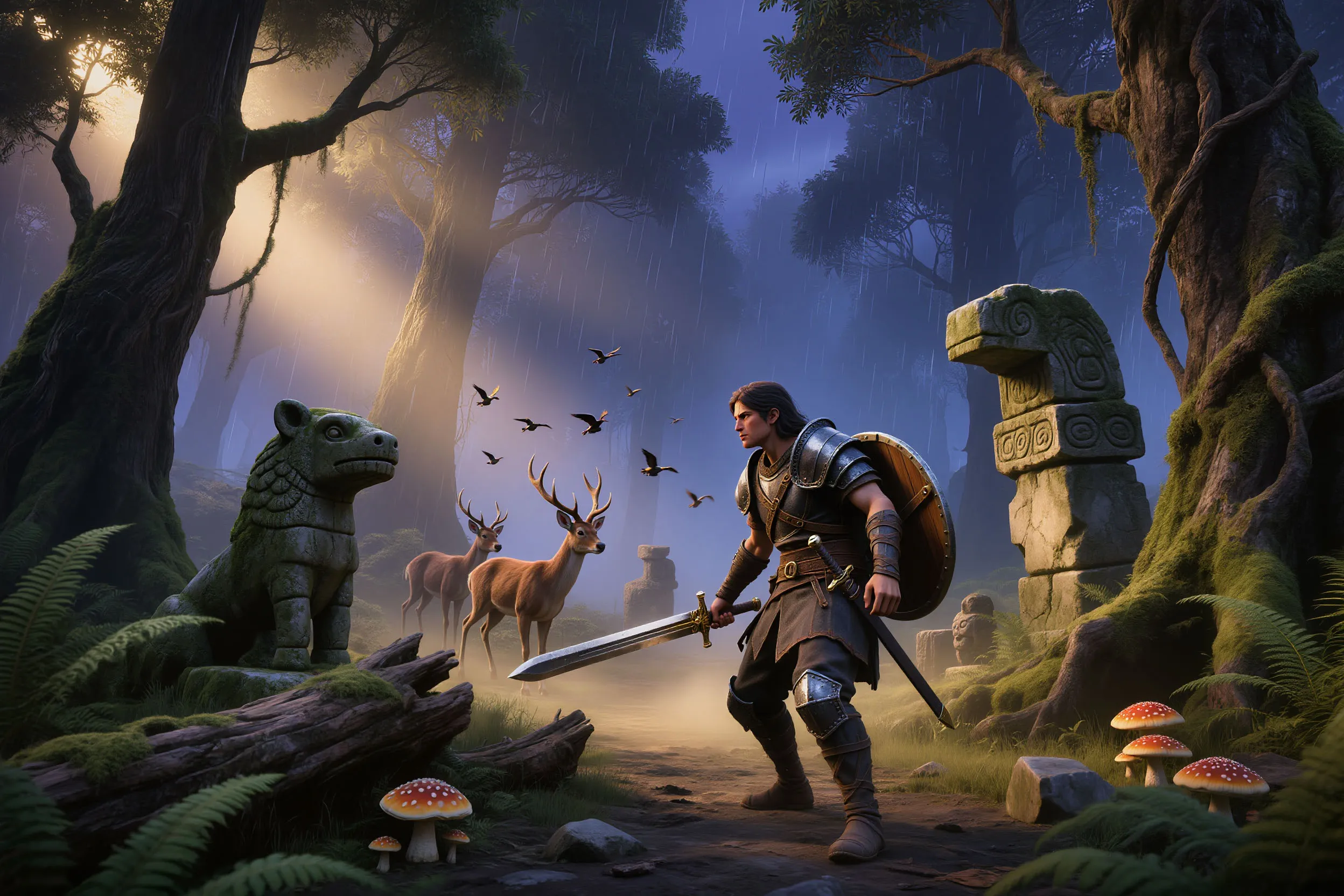
The project’s success may encourage the creation of other AI-based games with Russian cultural context, merging mythology, folklore and history, expanding the cultural and technological range of “Russian” games.
Given the global trend toward generative AI in gaming, Neurobayun could become a bridge between the Russian industry and the global market if the interface and content are localized effectively and the game proves appealing to international audiences.