AI Helps Restart Production at Field After Five-Year Shutdown
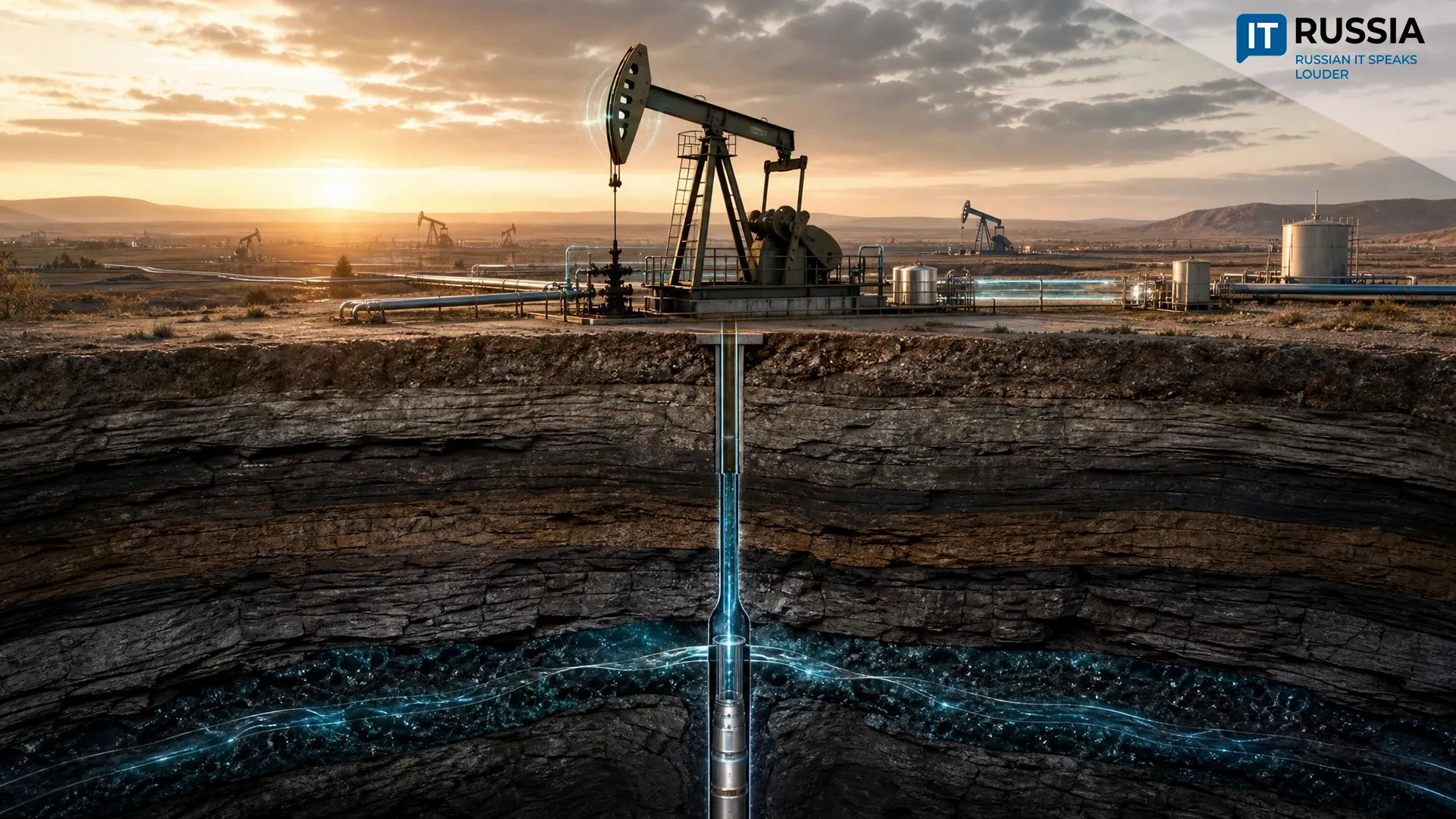
Gazpromneft-Khantos has resumed drilling at the Orekhovo-Yermakovskoye field. The return to production of an asset developed for about 40 years was made possible by digital technologies, AI and a new interpretation of geological data.
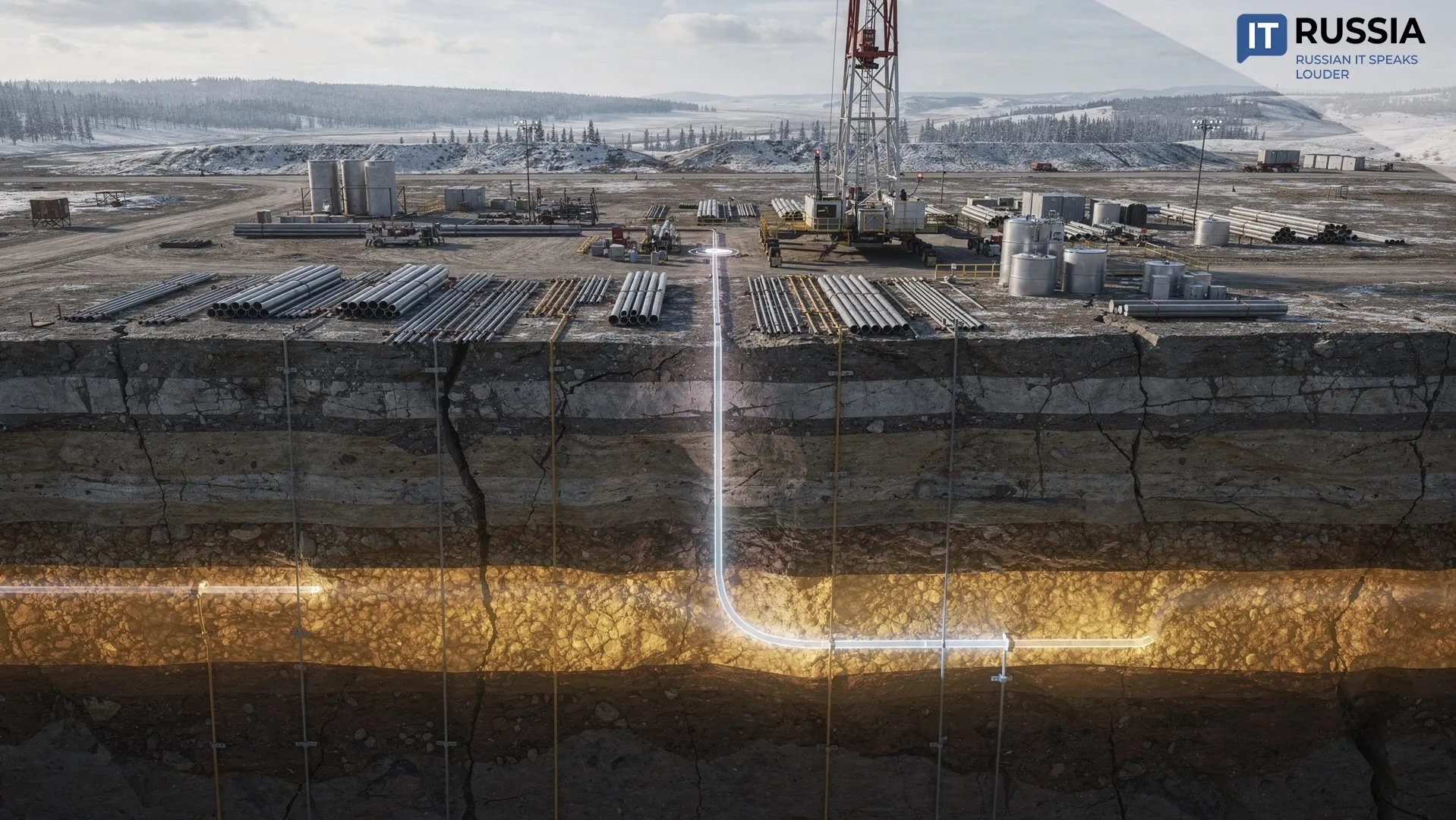
AI is helping operators rediscover mature assets and find new deposits in areas that had already been studied in detail. Production at the Orekhovo-Yermakovskoye field in the Khanty-Mansi Autonomous Okrug–Yugra has resumed and increased by 70%. Daily production at the site now reaches 90 tons.
A key element in the field's new chapter was the reinterpretation of geological data accumulated over decades. AI-enabled algorithms analyzed the full history of exploration and development. In addition to the Orekhovo-Yermakovskoye field, previously overlooked prospective formations were identified at depths of more than 3 km at the South Priobskoye field, which is also operating in the region. Combined reserves at the two fields have exceeded 4 million tons. Initial test wells have already confirmed the presence of oil.
The Next Resource Is Already in the Subsurface
Gazpromneft-Khantos, part of Gazprom Neft, accounts for more than 20% of the company's liquid hydrocarbon production. Yugra, where the Orekhovo-Yermakovskoye field is located, remains a key oil-producing region, accounting for more than 40% of all Russian oil production.
The company's balance sheet includes more than 60 million tons of uneconomic or hard-to-recover reserves, or about 70% of its total reserves. These include thin formations, water-saturated reservoirs and deposits with extremely low permeability. Each year, the company uses digital technologies to bring more than 3 million tons of these reserves into production. Because mature fields already have established infrastructure, including pipelines, power supplies and prepared well pads, development can begin quickly without major additional capital investment. The approach is about getting more value from infrastructure that is already in place, where conventional methods had produced limited results.
Tools and Methods
The results were achieved through a broad set of approaches that combines conventional tools with the work of geologists, engineers and production professionals. AI, however, has given oil and gas teams new ways to analyze data volumes that cannot be processed manually.
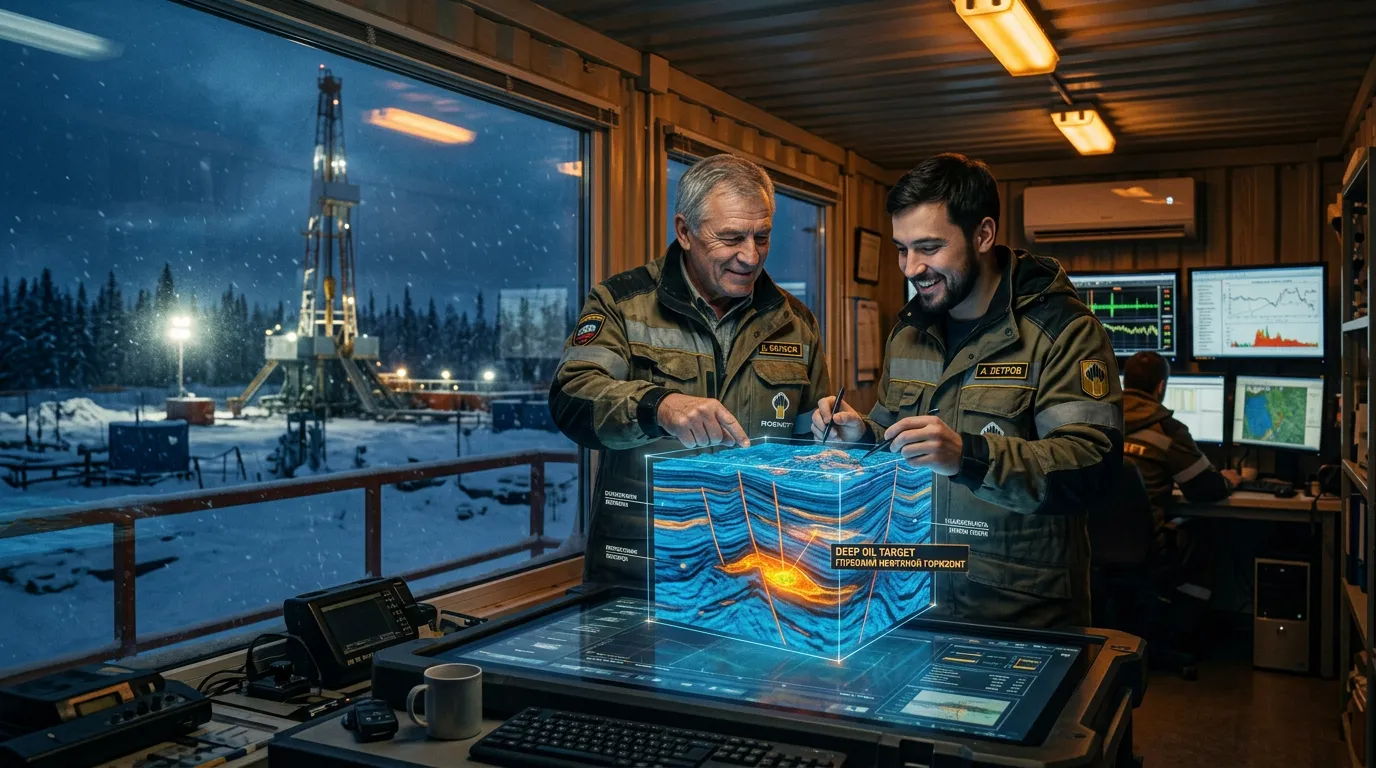
One digital tool that has changed the prospects for the Orekhovo-Yermakovskoye and South Priobskoye fields is GeoMate. Developed by engineers at Gazprom Neft's Research and Technology Center, the product is a key part of the data reinterpretation process. It brings together all geological and geophysical information on the company's fields, including seismic data, maps, well and core-study results. Its mathematical framework accounts for more than 200 geological parameters and combines about 80% of the operations involved in analyzing geological and geophysical information.
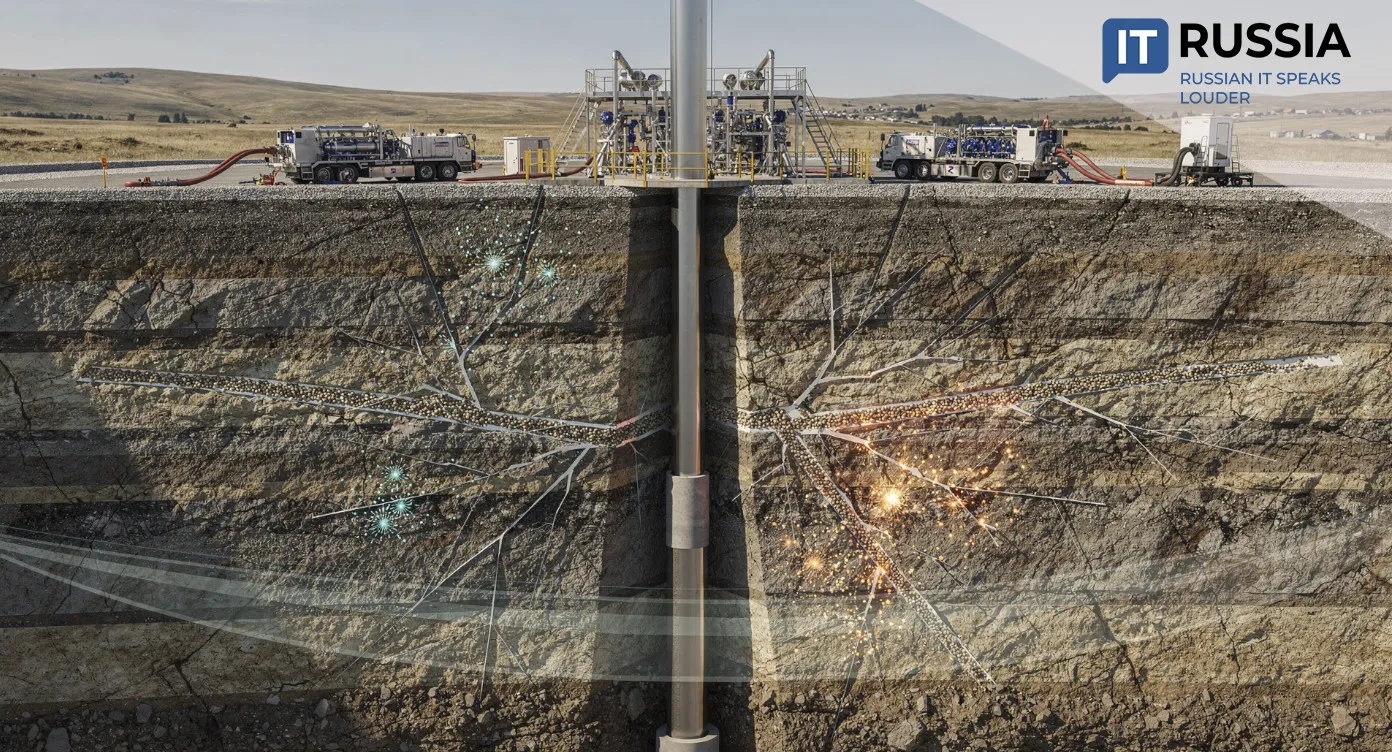
KiberGRP (Cyber Hydraulic Fracturing), the company's proprietary digital hydraulic-fracturing simulator, models the formation of underground fractures and selects optimal fluid formulations and hydraulic-fracturing scenarios. The product is included in the Russian Ministry of Digital Development's software registry. More than 2,000 hydraulic-fracturing operations have been performed at Gazpromneft-Khantos fields using the product. Its use can increase production from each well by as much as 5%. Notably, KiberGRP operates 10 times faster than foreign equivalents.
The oil and gas teams also use an AI agent for well design. It has been trained on terabytes of hydrodynamic simulation data and can model up to 1,000 well-placement options per hour. A team of three to five professionals would spend at least a week on the same task. The AI agent uses reinforcement learning: rather than following rigid instructions, it searches for an optimal strategy by analyzing errors and adjusting its calculations. The technology has been tested at three fields in the Khanty-Mansi Autonomous Okrug–Yugra and Yamalo-Nenets Autonomous Okrug.
A Range of New Technologies
Another new technology deployed at the fields is a digital waterflooding simulator, the first industry-specific product of its kind. By forecasting fracture formation during water injection and selecting optimal operating parameters, it can increase production efficiency by up to 7%.
The software is supported by three specialized Gazpromneft-Khantos centers. The Production Control Center monitors and optimizes the active well stock, which includes about 4,000 wells and 3,000 km of pipelines. The Well Construction Management Center plans and supports drilling operations. The Hydraulic Fracturing Engineering Center has conducted more than 25,000 hydraulic-fracturing operations and participates in more than 80% of Gazprom Neft projects aimed at increasing oil recovery.
The company estimates the combined effect of these centers and digital technologies at about 1.2 million tons of additional production and 10 billion rubles (about $117 million). The effort is an example of import substitution and the development of homegrown engineering platforms in Russia.