

Russian IT Companies Begin Playing on the Global Stage
As foreign software vendors exited the Russian market, local developers accelerated the creation of a broad range of digital products that now compete directly with international platforms. Russian tech firms are increasingly bringing their own solutions to overseas markets, gaining traction across regions from Latin America to Africa and Asia.

Algerian IT company Engisoft.net and the Russian technology group VOXYS have signed a cooperation agreement aimed at launching joint digital initiatives. The partnership will focus on several strategic areas – urban transformation, the maritime economy and industrial digitalization. The companies plan to develop platform products together, including multichannel digital communications systems, tools for managing customer and operational data, AI-driven solutions and technologies designed to digitize industrial workflows using speech recognition.
Under the agreement, VOXYS technologies will be adapted to meet the technical and regulatory requirements of Algeria’s infrastructure and enterprise projects. The partners plan to launch pilot initiatives and integrate new technologies with national information systems. In particular, the industrial voice-technology platform VOXYS.Tekhno (VOXYS.Techno industrial voice platform) and the customer data management system Afina CDP will be customized for Algeria’s infrastructure and industrial projects, including shipbuilding, maritime logistics and emerging industrial clusters.
The Kaliningrad branch of the VOXYS group regularly hosts foreign business delegations. In February, the company signed another agreement with Indonesian firm PT. Terre Tech Nusantara to localize omnichannel solutions and AI-based products for Indonesia’s digital ecosystem. The partnership opens access to Southeast Asia for VOXYS, where the company plans to deploy technologies including AI solutions for telecommunications and multilingual robotic agents for call centers.

VOXYS is already one of the leading providers of customer communications and digital platforms in Russia and the CIS. Last year the company expanded into Latin America, supplying products to Bolivia, Cuba and Argentina, with plans to enter the Mexican market next. Indonesia, home to roughly 250 million people, is also viewed as a major growth opportunity for the company’s technology portfolio.
Code of Trust
In recent years Russian IT companies have stepped up efforts to expand into international markets. Export growth is concentrated primarily in Asia and the Global South. Overseas customers are particularly interested in Russian technologies in cybersecurity, telecommunications and financial infrastructure, where local developers have accumulated strong engineering expertise.


In 2009 the cybersecurity company Kaspersky opened its regional office in South Africa. In 2023 the firm launched Africa’s first Transparency Center in Kigali, Rwanda – a facility where visitors can review the source code of the company’s products and services, strengthening trust in cybersecurity tools and demonstrating transparency in software development.
Another Russian cybersecurity company, Positive Technologies, is implementing large-scale projects in North Africa across the energy, banking and government sectors. As part of its international work the company provides not only technical solutions but also training programs – educating cybersecurity professionals, running workshops and advising organizations on digital security practices.
Meanwhile the Russian developer RTSIM exports its technologies to Nigeria, where it builds digital models of industrial processes used to train plant operators and engineering students. Robotics education company Robbo has launched school programs in Nigeria using its educational robotics kits.

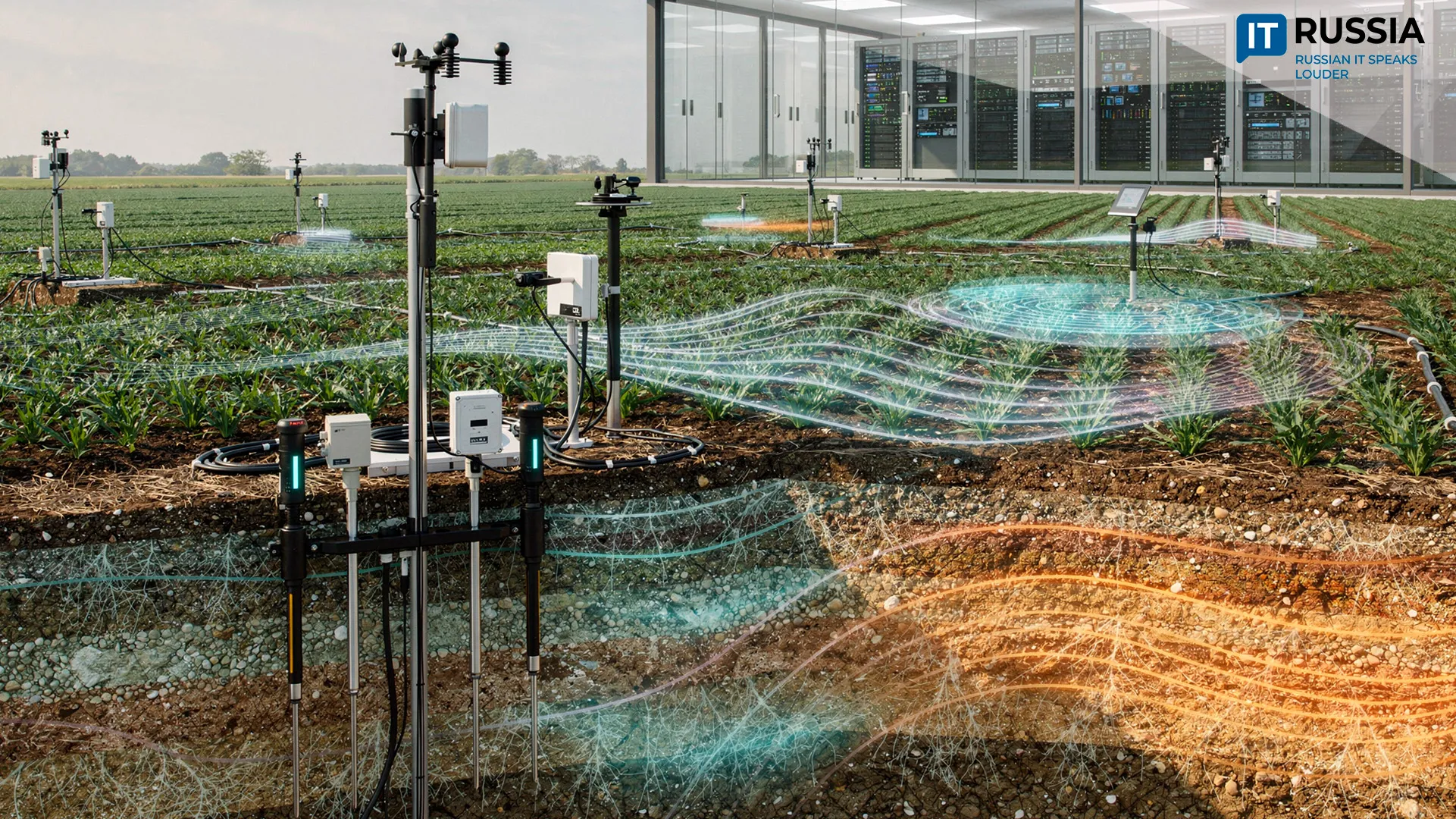
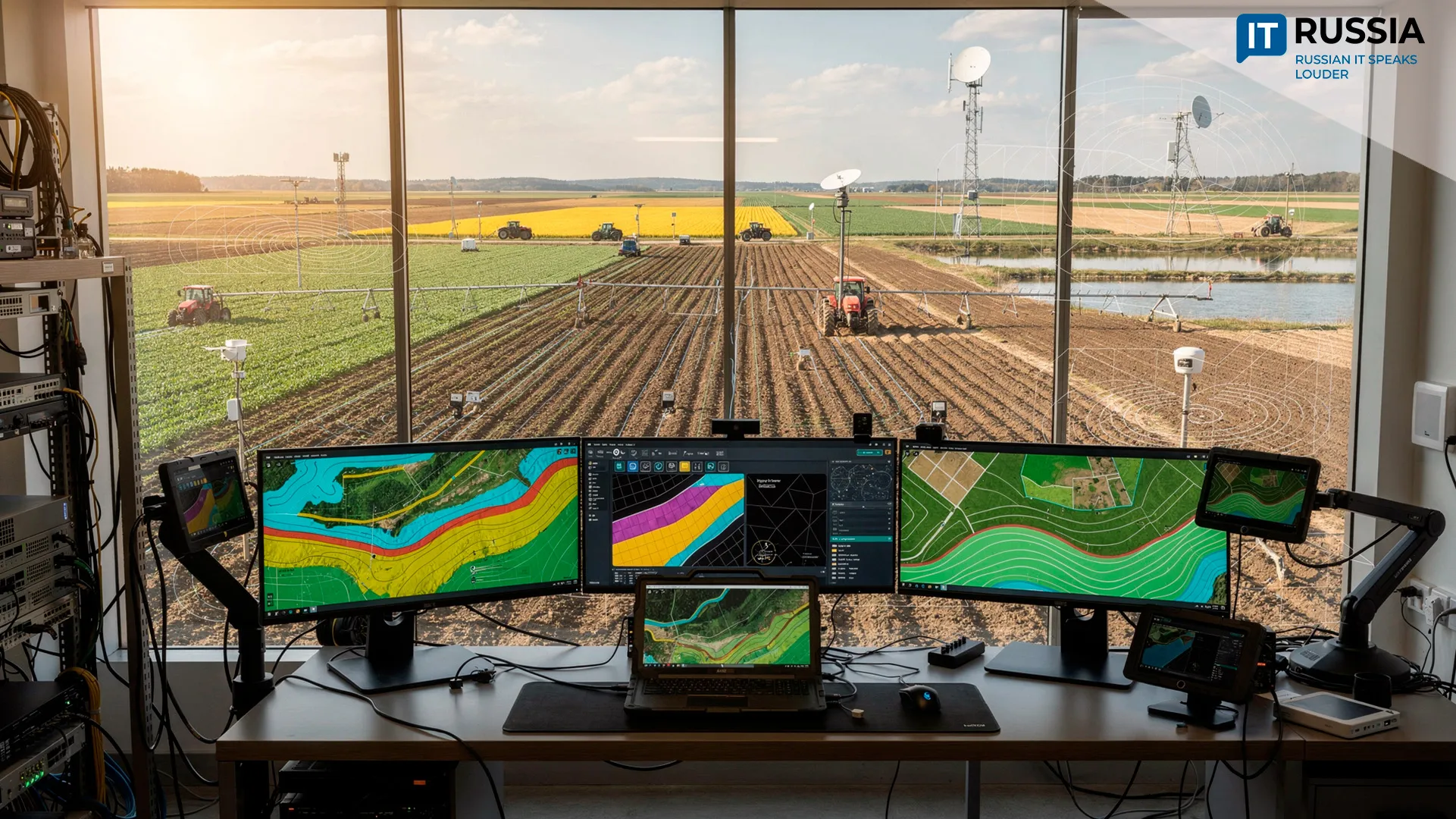
Russian agricultural technology developer AgroSignal, part of the Uralchem group, has digitized a farm in Uganda. Specialists are currently testing a digital platform across 500 hectares growing key regional crops – corn and soybeans. The project could later scale across Africa, which has more than 350 million hectares of arable land, making digital agriculture tools particularly valuable for improving productivity and food security.
In 2025 the Russian software industry association Otechestvennyy soft (Domestic Software Association) and the Algerian Digital Actors Alliance signed a memorandum on creating joint IT and cybersecurity companies based on Russian technologies. The initiative aims to enter Algerian and wider African markets through local production, knowledge exchange and regular collaboration sessions between Russian and Algerian tech firms.
A Push Toward Global Competition
According to estimates by the Russoft Association of Software Developers, at least 5,100 stable companies in Russia are professionally engaged in software development. Roughly 3,000 of these firms already have experience operating in international markets.

In 2025 revenue earned by Russian software developers abroad reached about 800 billion rubles (approximately $9.6 billion), representing a 46% increase compared with the previous year.
The strategy adopted by Russian technology companies – combining partnerships, product localization and pilot projects – suggests that the country’s tech sector could significantly strengthen its position in global digital markets within the next three to four years. This trajectory creates the conditions for Russian platforms to compete with the largest international players, including hyperscale technology providers.