

Digital Helm for the Arctic: Okean System Certified for Nuclear Icebreakers
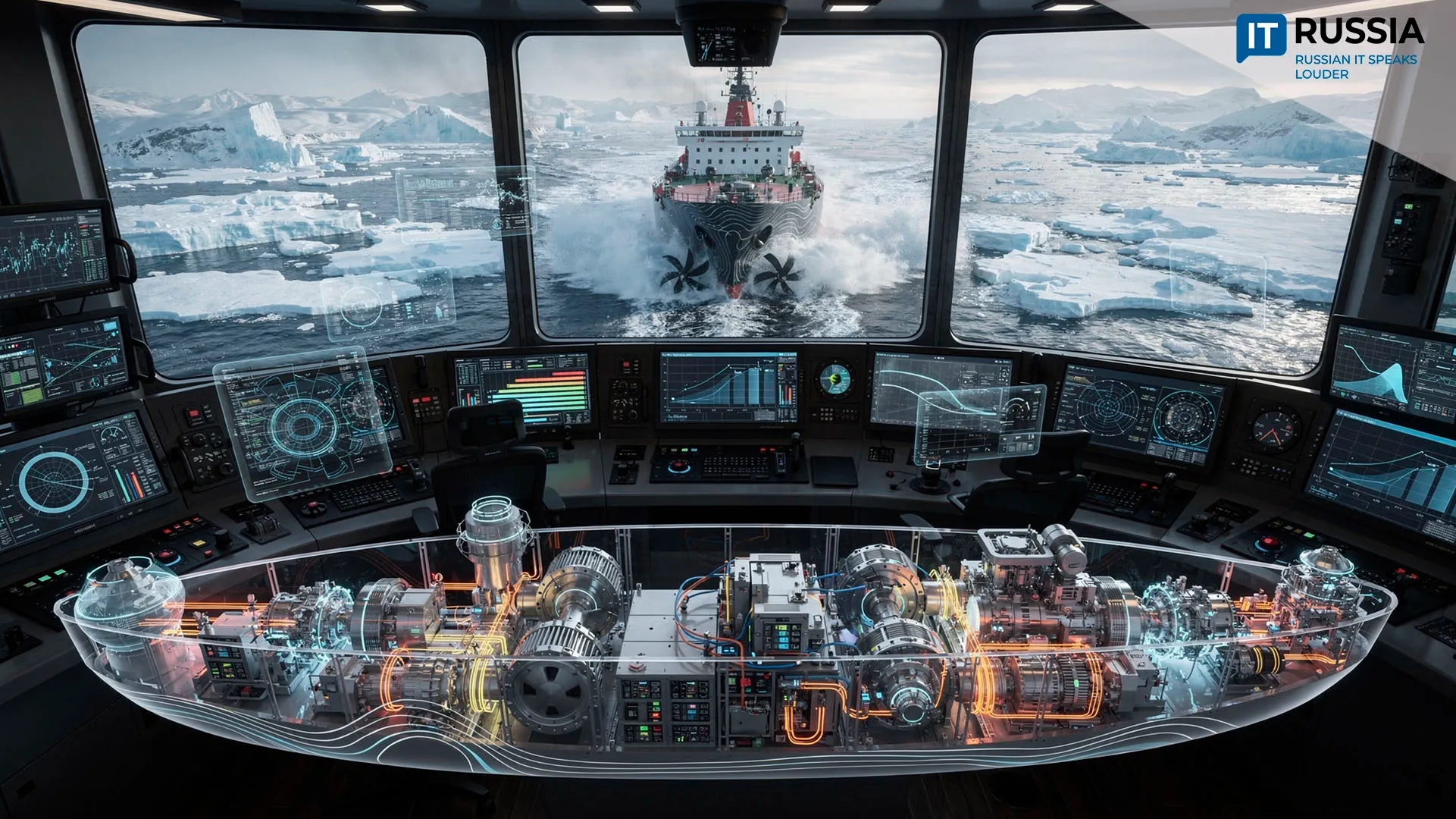
The automatic electric propulsion control system Okean (Ocean control system) has completed certification by the Russian Maritime Register of Shipping. The technology will support reliable operation of Project 22220 nuclear icebreakers under the extreme conditions of Arctic navigation.
A Power Platform for the World’s Largest Icebreakers
Project 22220 nuclear icebreakers are the largest and most powerful vessels of their class in the world. Three ships – Arktika, Sibir and Ural – are already in service. A fourth vessel, Yakutiya, is preparing for commissioning, while Chukotka, Leningrad and Stalingrad are currently at various stages of construction at the Baltic Shipyard in St. Petersburg.
A defining feature of the project is its versatility. These icebreakers can operate both in deep waters along the Northern Sea Route and in the shallow estuaries of Siberian rivers thanks to a variable draft ranging from 8.5m to 10.5m. The capability is achieved through a ballast control system: when approaching shallow areas, the vessel releases water from ballast tanks, reducing draft without compromising stability.
At the core of the vessel is the integrated RITM-200 nuclear power plant developed by Opytnoe konstruktorskoe byuro mashinostroeniya imeni I. I. Afrikantova (Afrikantov Design Bureau of Mechanical Engineering). Two reactors with a combined thermal capacity of 350MW generate steam for turbine generators, which in turn power three propulsion motors rated at 20MW each. The total output of the main propulsion system reaches 60MW.
The reactors use uranium-235 enriched to up to 20% and are designed to operate for seven years without refueling. Over a service life of approximately 40 years, the vessel will require only five refueling operations, enabling months of autonomous operation in Arctic waters.
Okean Control System – Precision in Extreme Conditions
The automatic electric propulsion control system Okean provides remote control, protection and monitoring of the vessel’s main power plant. It prevents peak loads on the reactor and steam-turbine systems during rapid changes in operating conditions – for example when the ship encounters thick ice or transitions from deep water to shallow coastal areas.


The system is built on a redundant fiber-optic ring architecture, ensuring stable data transmission even if one communication channel is damaged. Such resilience is critical for vessels operating far from coastal infrastructure where full technical maintenance is not available.
Safety and Operational Autonomy
One of the system’s key capabilities is enabling emergency propulsion using backup diesel generators. If the primary power system fails, the icebreaker retains maneuverability and the ability to exit hazardous zones. This capability is essential when operating in ice up to 2.8m thick, where a loss of movement could trap the vessel and risk structural damage.
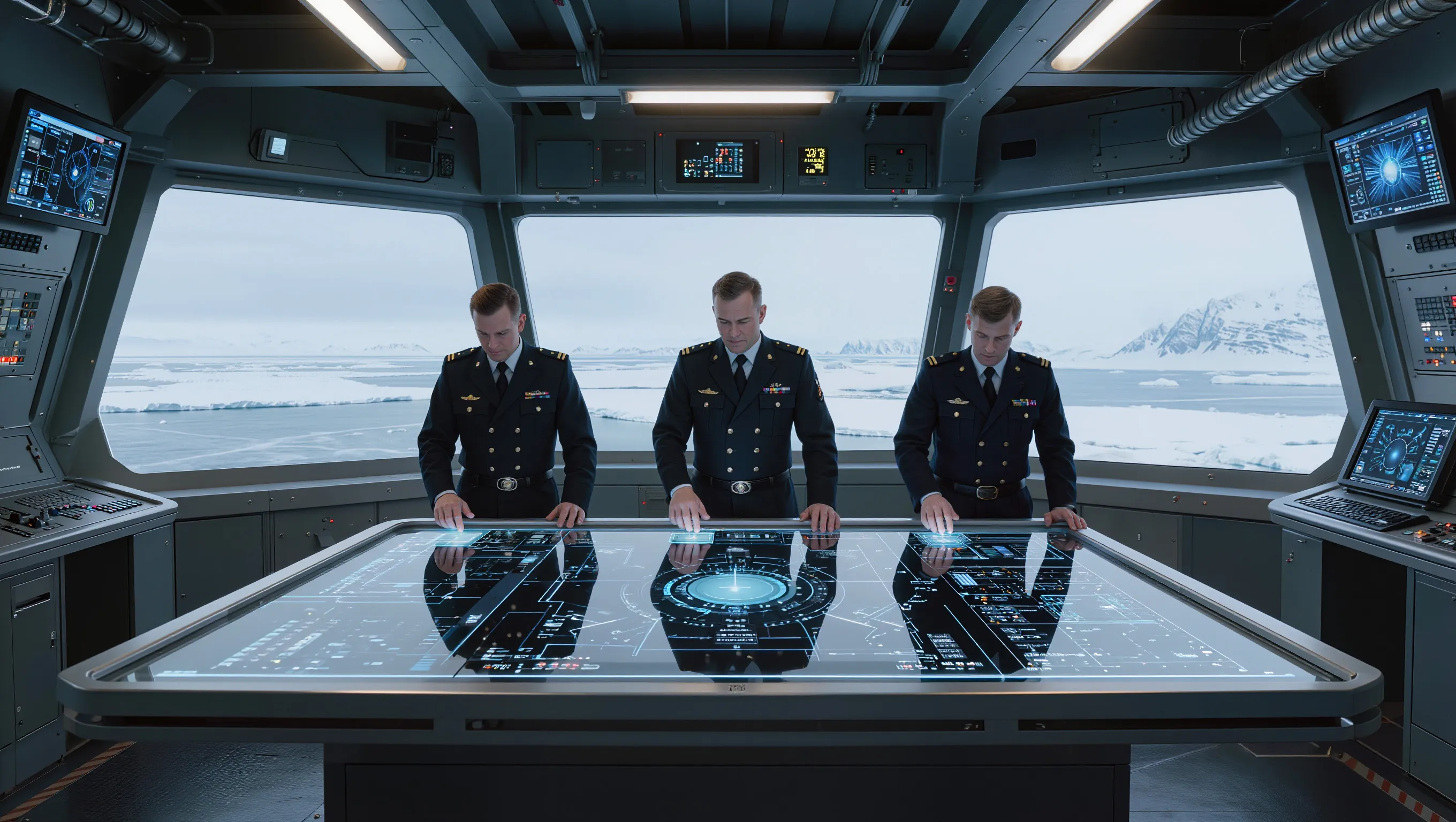
The system also manages power distribution between the three propulsion shafts depending on ice conditions. In open water, energy is distributed evenly to achieve cruising speeds of up to 22 knots. In heavy ice, the system automatically redistributes load, concentrating power on the central shaft to maximize the vessel’s ability to break through dense ice fields.
Future of the Arctic Fleet
Project 22220 nuclear icebreakers are a central component of Russia’s strategy to expand the Northern Sea Route. Their mission is to ensure year-round navigation between Murmansk and Vladivostok, effectively cutting the shipping distance between Europe and Asia by roughly half compared with routes passing through the Suez Canal. Cargo traffic along the Northern Sea Route has been growing by approximately 20%–30% annually in recent years.
Digitalization and automation of power-plant management systems significantly increase the reliability of nuclear icebreaker operations and navigation. This is particularly important during the polar night, when visibility is limited and navigation relies heavily on digital ice-mapping systems.
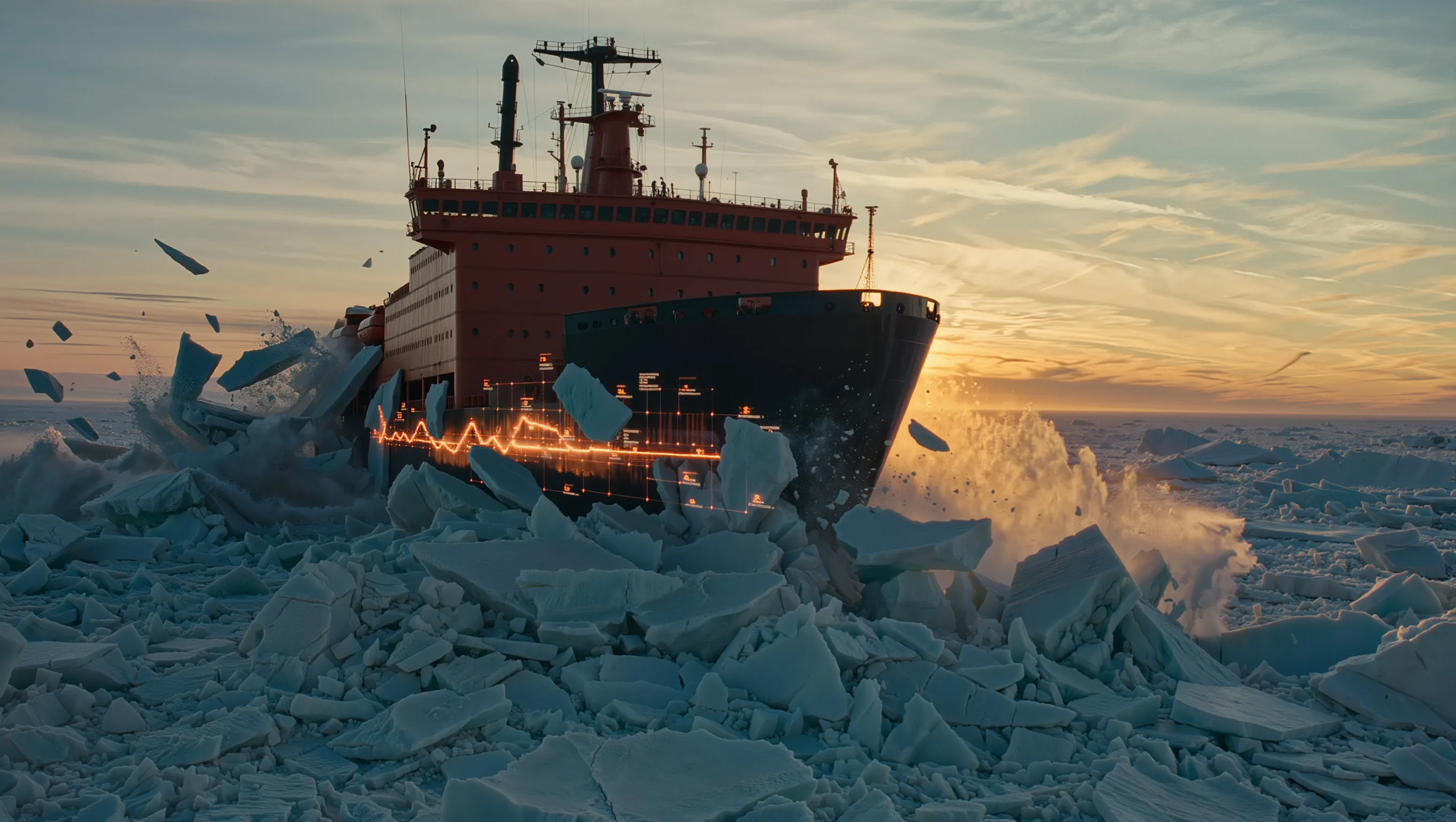
Successful certification of the Okean system opens the way for its installation on all new Project 22220 icebreakers currently under construction. In the longer term, the control technologies may also be adapted for the next generation of vessels – Project 10510 Lider (Leader-class icebreaker program) – designed to enable year-round escort operations across the entire Northern Sea Route.
Russian shipbuilding continues to maintain global leadership in Arctic development, supported by domestic engineering expertise and advanced digital control systems.