

Data Centers to Shift Toward Their Own Power Generation
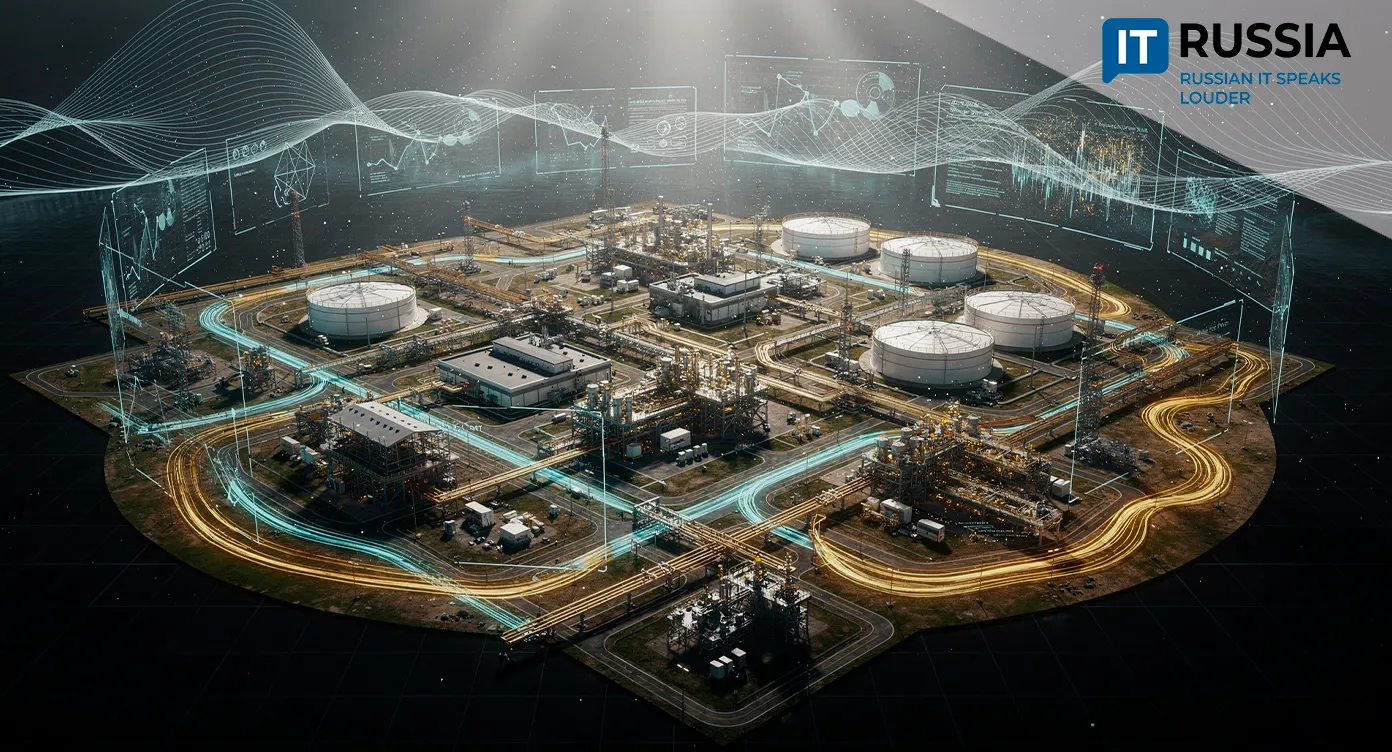
Russia's Ministry of Digital Development and Ministry of Energy are developing measures aimed at removing a key bottleneck in the construction of new data centers. Under the proposal, new facilities could enter operation provided they secure their own power generation capacity.
The initiative would require significant changes to the long-term energy development plan for Moscow and the Moscow Region. Available grid capacity in the area has already been largely exhausted. Since February 2026, grid operators have stopped signing new power-allocation agreements for additional data centers, while the remaining capacity has already been reserved through 2028 by major operators.
This poses a serious challenge for Russia's digital economy. Data centers have become foundational infrastructure for cloud services, AI deployment, banking systems, and industrial applications. Limited power availability is emerging as a major constraint on further growth. According to Russia's Analytical Center under the Government, data centers are expected to consume at least 2.5 times more electricity by 2030 than they do today. At the same time, demand for AI-focused facilities already exceeds the number of existing server racks by a factor of two.
To address that technological bottleneck, Deputy Minister of Digital Development Yevgeny Filatov has proposed building autonomous data centers with dedicated power generation. At the legislative level, authorities also propose formally separating the definition of a data center from equipment used for cryptocurrency mining.
Where the Market Is Heading: Regions, AI, and Export Potential
The shift toward a new data-center model would reduce dependence on the extreme concentration of facilities in Moscow and the surrounding region. Future data centers are likely to be built where spare power capacity is available or where local resources can support dedicated generation projects.
In practice, the market is already moving in that direction. According to GreenMDC LLC, Russia's modular data-center market grew by 20% in 2025, while demand from prospective customers increased by one-third. For manufacturers, retailers, and logistics operators, dedicated data centers located close to operations are often a practical requirement.
In modern GPU clusters, a single rack can require 25-40 kW of power, significantly above the traditional 7-10 kW range. Autonomous generation offers a way to bypass connection limits within existing grids. Russia's experience in developing both gas-fired and nuclear generation could also create opportunities to offer integrated "data center plus energy" solutions to international customers.

The Road to Autonomous Data Centers
Building data centers with autonomous power generation is not a new concept in Russia. Initially, however, the focus was not on fully autonomous facilities but on locating data centers close to existing large-scale generation assets. In 2017, the Oblako Sibiri (Siberia Cloud) data center was launched at the Novo-Irkutsk Combined Heat and Power Plant. By 2021, computing centers were being built in Siberia near hydroelectric power stations.
A fundamentally new approach emerged in Yakutia in 2025. A pilot data center began operating in the republic's Vilyuysky District near a natural gas field. This represents a case where the facility not only has access to dedicated generation but also sits directly adjacent to the energy resource itself.
Gazprom is also planning to develop data centers at its production sites. As a result, the Ministry of Digital Development's proposals build on trends already taking shape in the market. Once formal regulations are adopted, the construction of autonomous data centers is expected to operate under a unified set of rules.
A Shift Toward a Hybrid Model
A new phase is beginning in the development of Russia's digital infrastructure. Over the next several years, a hybrid model is likely to emerge. Data centers located in regions with surplus generation capacity will continue to connect to existing grids, while facilities in energy-constrained or remote areas will increasingly rely on their own generation and greater operational autonomy.
The key point is that the goal extends beyond adding electrical capacity. The broader objective is to support the continued expansion of digital services. The goal is not simply to add power capacity. To achieve that, Russia is developing an IT infrastructure that is less vulnerable to grid-congestion constraints.