

Smart Robot Will Pick Only Ripe Tomatoes
Scientists in Russia’s Stavropol Krai are testing an agricultural robot designed for greenhouse operations. A machine-vision system will allow the platform to handle a wider range of crops.
Russian agricultural robots are beginning to change how fruits and vegetables are grown in controlled environments, where workforce availability has traditionally been one of the major challenges. These shortages are particularly acute during demanding seasonal work, such as harvesting.
This is where digital technologies can help. Russian robotics developers are offering automated platforms that can minimize human involvement in harvesting fruits and vegetables.
AI Distinguishes Five Stages of Tomato Ripeness
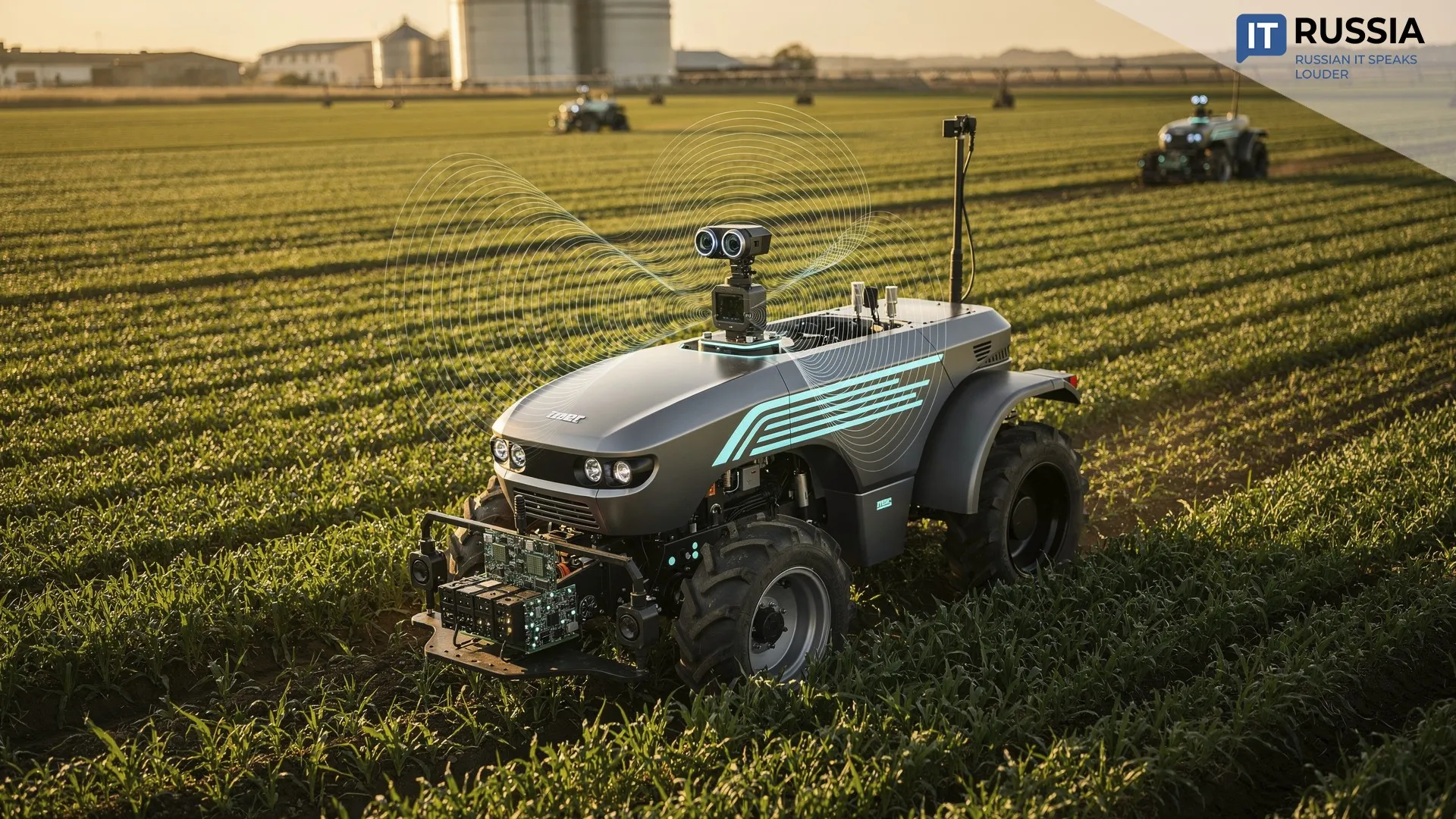
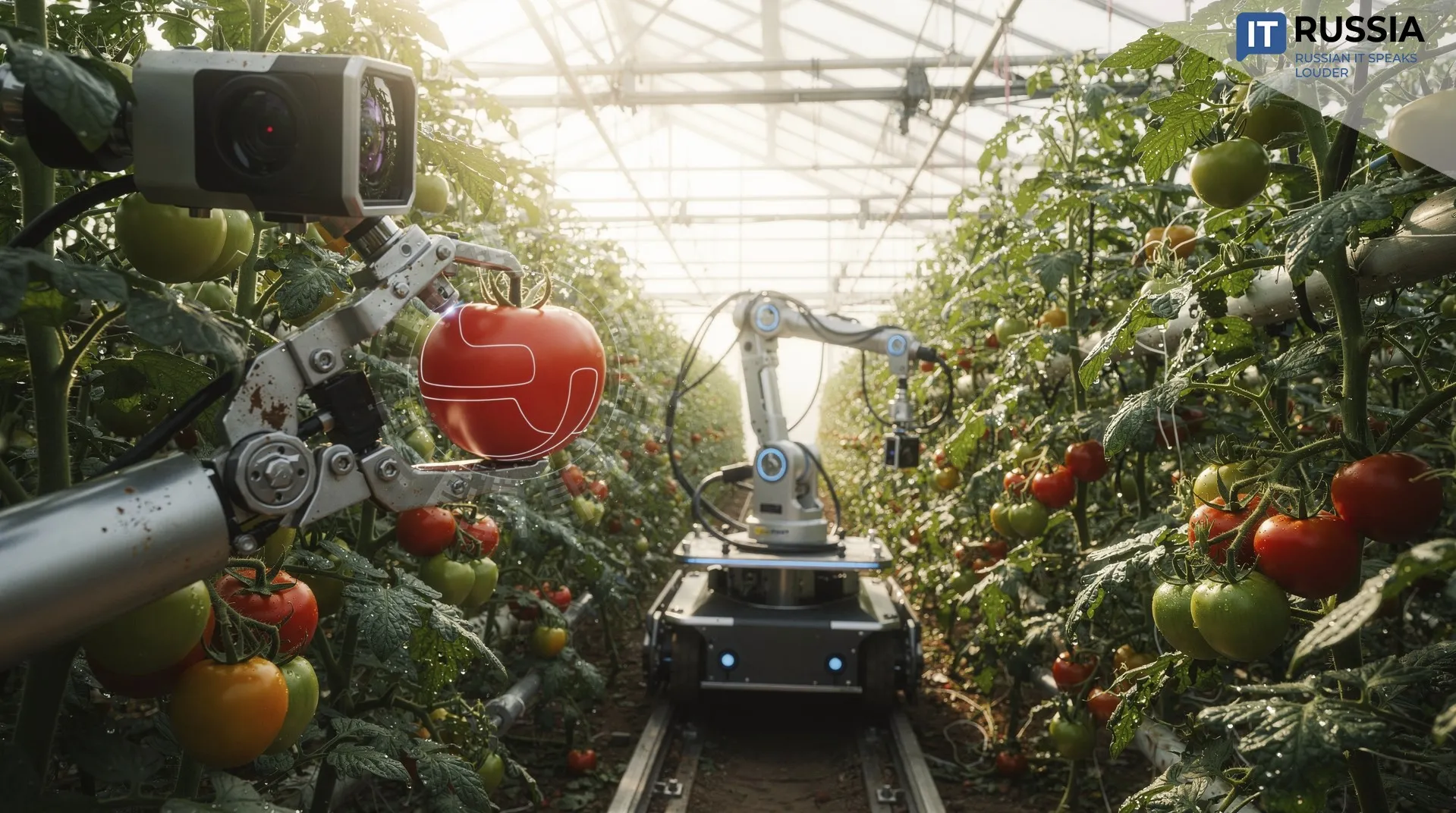
Russian company Agrobotics Alpha demonstrated a tomato-picking robot for commercial greenhouses during the 2026 International Youth Festival in Yekaterinburg. Essentially, it is a robotic harvester equipped with artificial intelligence (AI) and four manipulators.
The main challenges are determining fruit ripeness and navigating complex greenhouse conditions. Tomatoes grow at different heights and distances, ripen at different times and are often obscured by leaves. The developers trained the neural network using their own database of images showing plants at different stages of development. The robot uses a five-level ripeness scale, while its computer-vision system selects the fruit that is ready to be picked.
“AI determines the level of tomato ripeness required for logistics and shipment to retail shelves. In most cases, that means the third or fourth stage of ripeness,” said Maxim Maksimov, commercial director of Agrobotics Alpha.
The system assesses tomato ripeness with up to 99% accuracy. It also recognizes other objects in its field of view, allowing the neural network to guide the manipulator to the fruit without damaging neighboring plants. Even the gripping force is adjusted according to the characteristics of the selected fruit.
Does the Work of Four
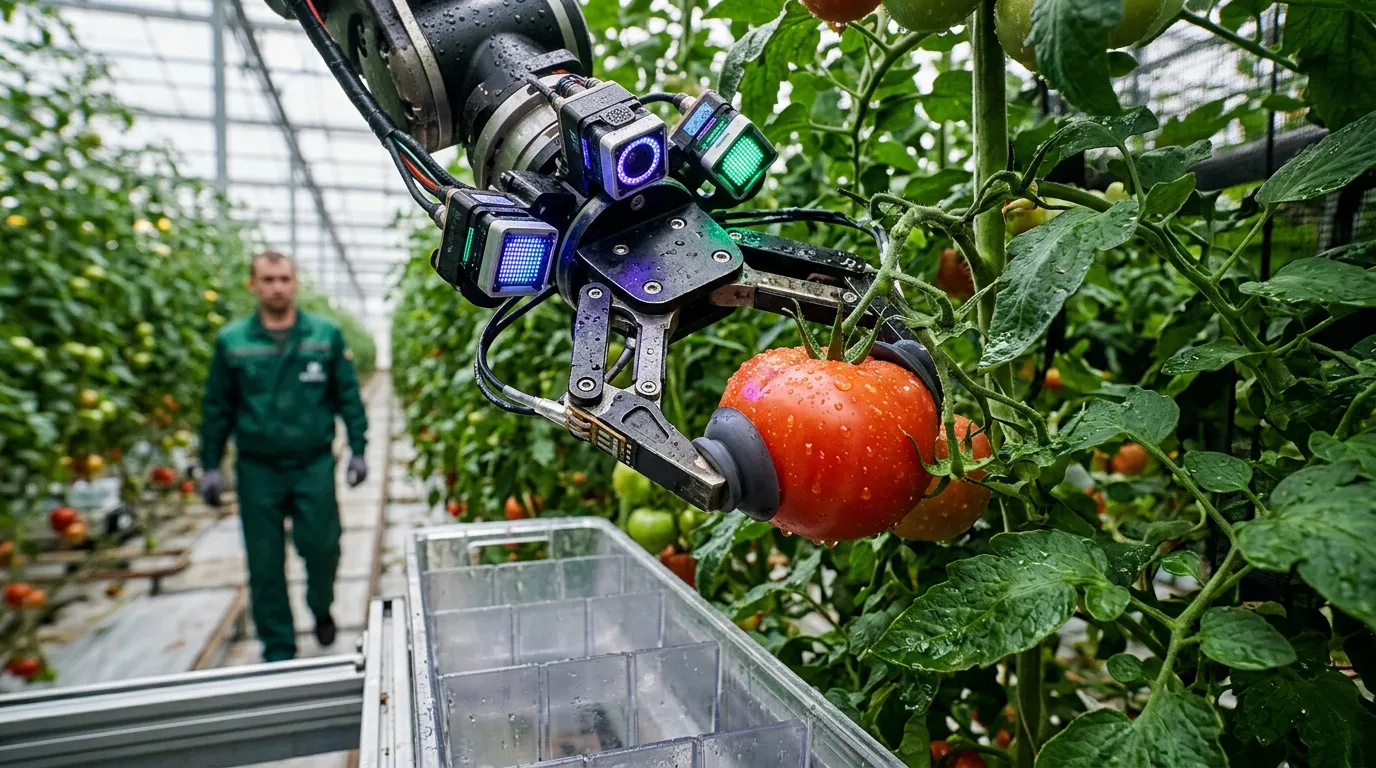
The agricultural robot operates around the clock without losing concentration, making it highly efficient. It can move easily through a greenhouse, use the pipe rails traditionally installed between rows and, once outside a row, travel across a conventional surface.
“The robot harvests tomatoes in greenhouse complexes. At first glance, this may seem like a simple task, but it is actually much more complicated. A robot like this brings together engineering, programming and mathematics. It consists of a large number of interconnected modules, each with its own software layer, and the machine as a whole contains about 200,000 parts,” said Vladimir Antonov, CEO of Agrobotics Alpha LLC.
According to the developers, the robot can harvest up to 4.5 metric tons of tomatoes per day, compared with 1.2 metric tons for a human worker. It will not completely replace people, however. The machine is expected to harvest about 80% of the tomatoes, while workers will handle the remaining 20% that grow in hard-to-reach locations beyond the manipulator’s reach.
The developers currently estimate that a mass-produced machine will cost 8–10 million rubles (about $95,000–$120,000). “For a greenhouse operation, the payback period is no more than two and a half years at the productivity level we have stated,” Maksimov said.
The robot will eventually be trained to work not only with tomatoes but also with other crops, including cucumbers, peppers, berries and fruit.
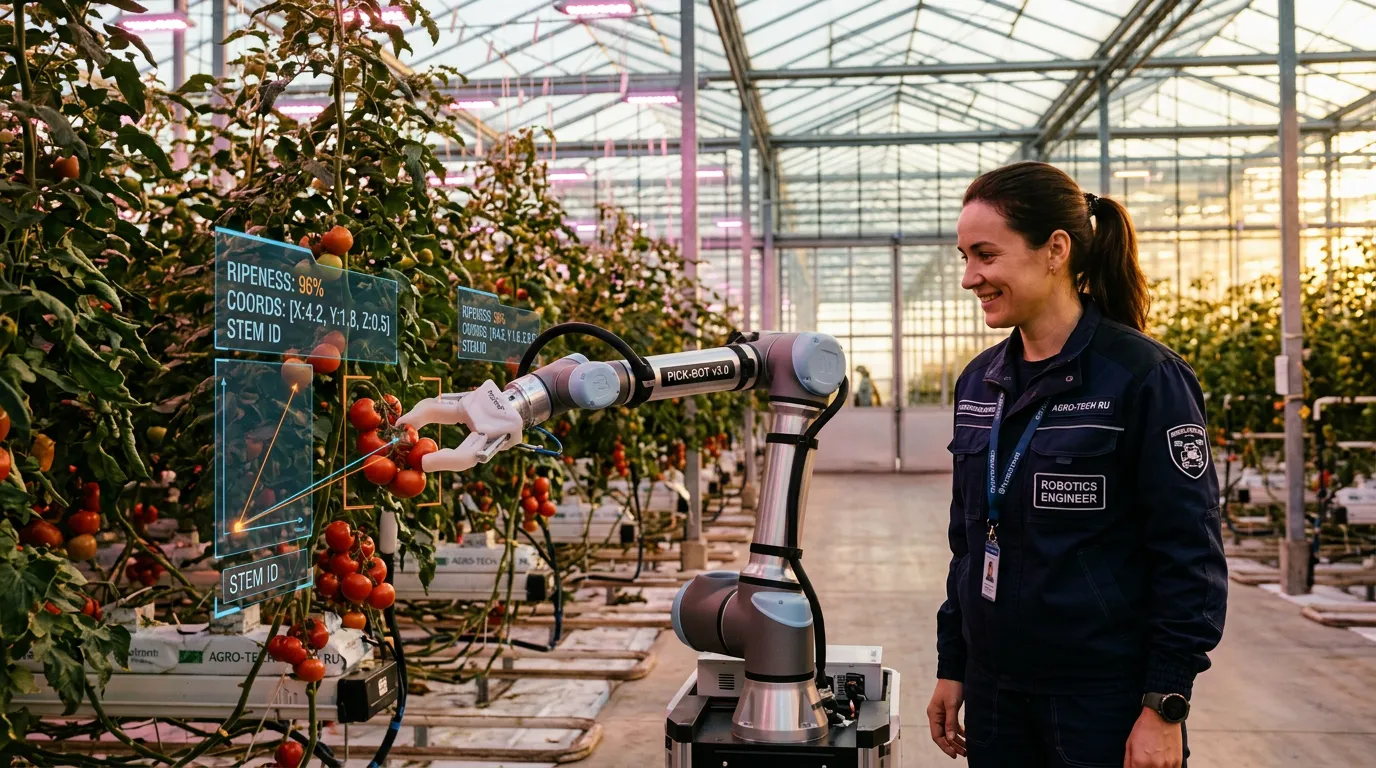
Smart Greenhouses with Robotic Arms
The next step for the technology is integration with other precision-agriculture systems. In practice, this will be another stage in the development of Russia’s automated greenhouse platforms and so-called “smart greenhouses,” where robots prepare the soil, perform planting operations, treat plants and then harvest and transport the produce. A neural network controls the platform.
Russia is gradually moving these technologies from experimentation into real-world production. In 2020, the Financial University under the Government of the Russian Federation and the Federal Scientific Agroengineering Center VIM developed a robot for harvesting apples. In 2025, the K. A. Timiryazev Moscow Agricultural Academy developed the Vavilov robot to diagnose plant conditions. A platform for automated banana care in greenhouses was tested in Krasnodar Krai. At the 2026 St. Petersburg International Economic Forum, guests and participants were shown a robot from Electromotive that uses computer vision to identify trees with ripe fruit and gently harvest apples, pears and mandarins.
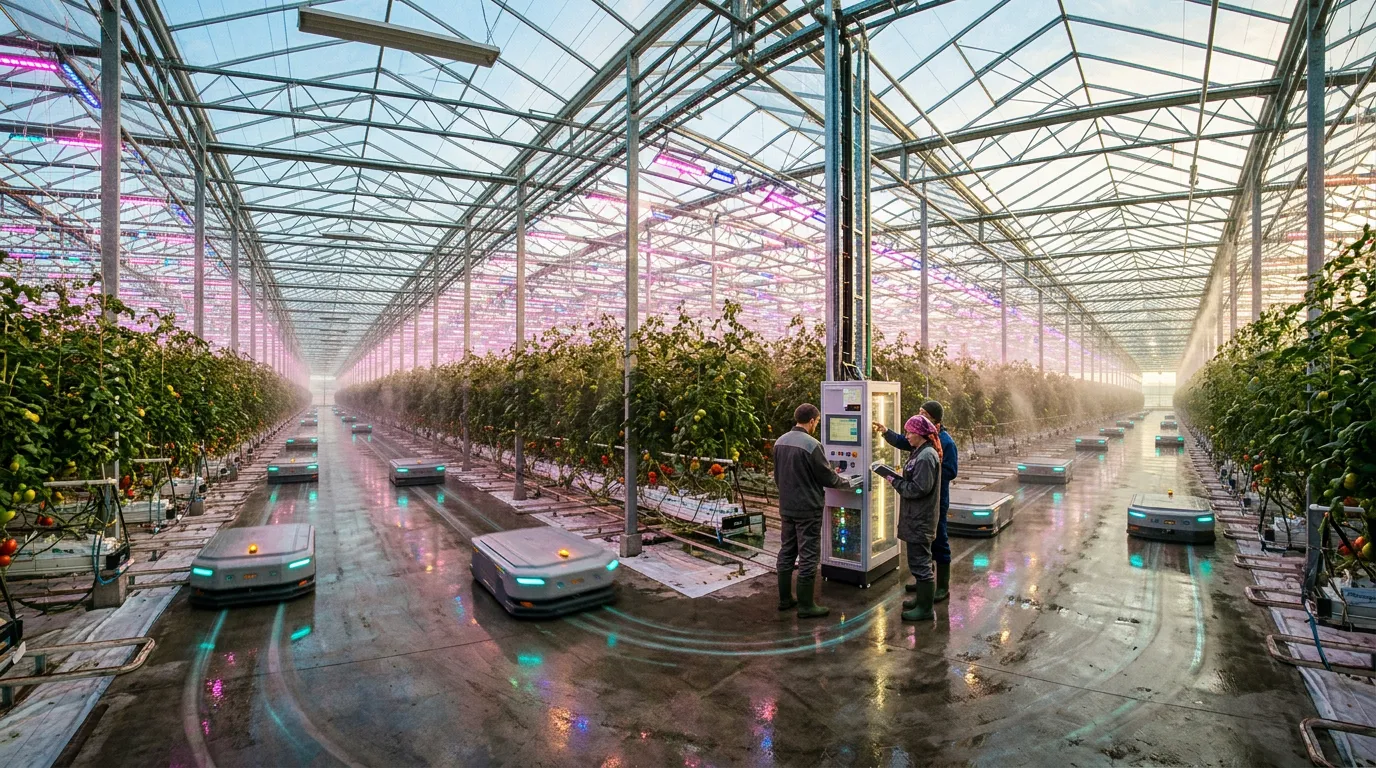
These projects are expanding Russia’s expertise in industrial robotics and intelligent control systems, raising farm productivity to a new level. The new generation of specialized agricultural robots is expected to find a market both as standalone equipment and as part of larger smart-farming systems for controlled environments, not only in Russia but also in friendly countries seeking to increase domestic food production.