In the Country of Lessons Learned: Yandex Introduces an AI Tutor Mode for Students
In Alice AI, a new “Tutor” mode is designed not to give answers, but to guide students toward solutions through targeted questions – much like a real teacher would.
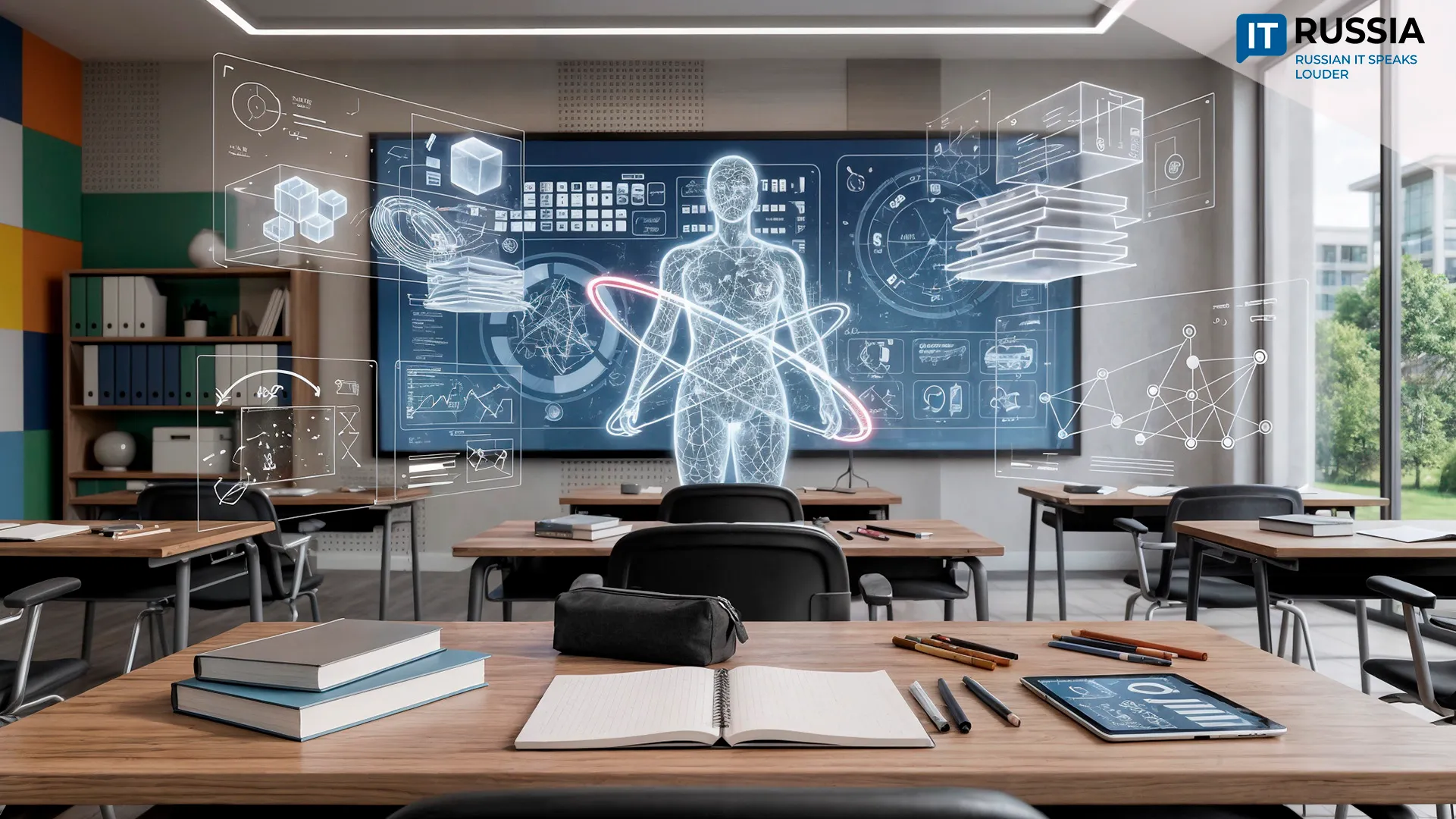
Is an educational neural network just a shortcut to answer keys? For those who think so, Yandex is offering a different approach. The company has launched a dedicated “Tutor” mode within its Alice AI chat. The feature runs on LearnLM, a model developed by Yandex Education together with teachers and instructional designers. Its core principle is simple: no direct answers, only guided questioning.
From Simple Tasks to Deeper Understanding
Developers are aiming to teach the system to understand conversational context. That means a student does not ask a single isolated question, but engages in an ongoing dialogue. If a learner works through several problems in a row, Alice retains context – the student’s knowledge level, preferences, and even how they approached earlier tasks. Yandex illustrates this with a familiar classroom example: the AI tutor can walk a student through a basic problem about calculating the volume of boxes of cucumbers and tomatoes, then just as smoothly move on to explaining quadratic equations. It first identifies what the student finds unclear, explains key concepts such as the discriminant, and encourages the learner to calculate it independently.
One nuance the company emphasizes is worth understanding. The Tutor mode is not an exam-prep drill. It is designed to help students understand material they have not fully mastered. To start, users simply open the chat and select the Tutor option – questions can be asked in text or by voice.
Not Just a Shortcut
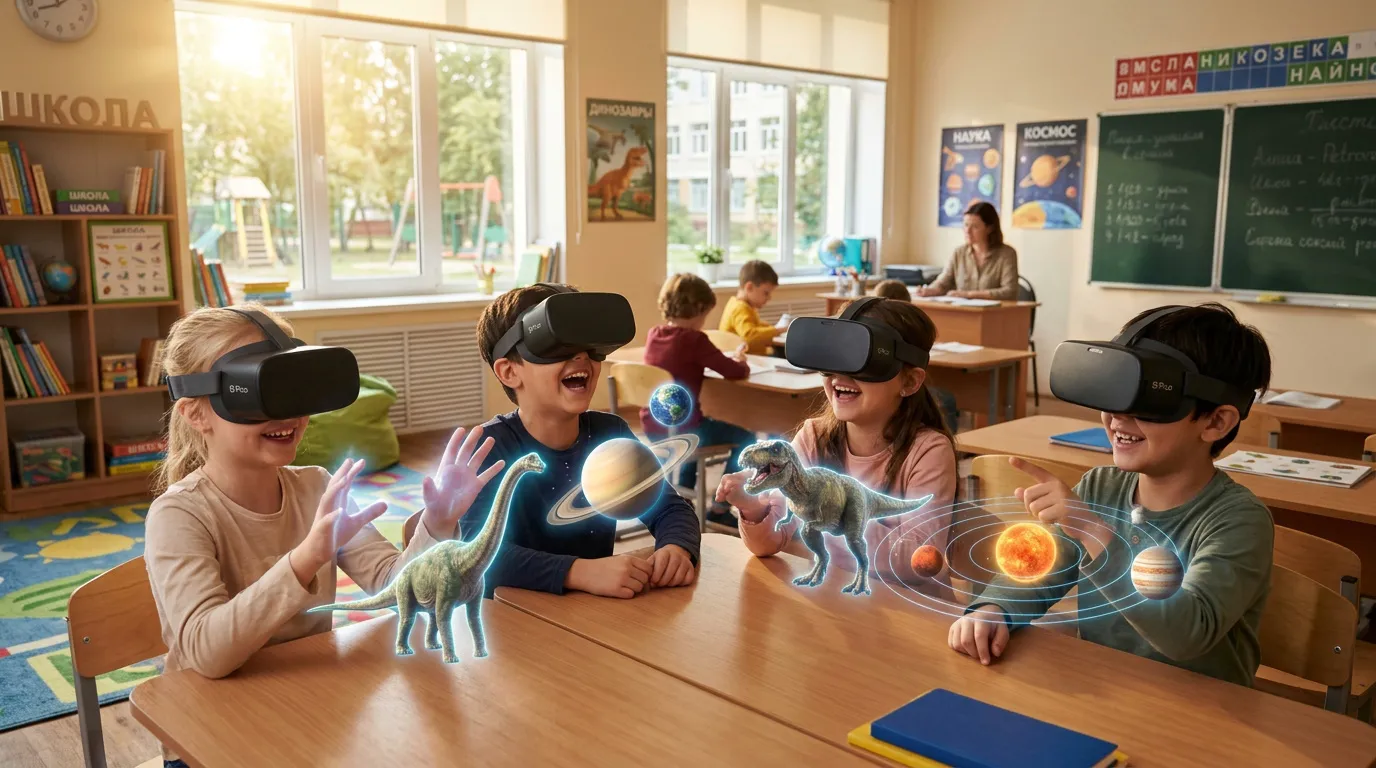
Experts are already split in how they interpret the release. Ivan Menshikov, a mathematics teacher, sees clear potential. He views the tool as a strong equivalent to after-school teacher consultations. He even suggests that educators could actively direct students to such an AI tutor for homework support. In his view, learning opportunities today are broader than ever. The key is whether students use them to build deep understanding rather than to cut corners.
Anastasia Antipova, a neuropsychologist and director of an innovation-focused school in Khimki, takes a more cautious stance. “At the level of a specific problem, it looks like help,” she says, “but I am not convinced that if you later change the conditions, the student will solve it independently.” She argues that AI risks undermining the development of independent thinking processes. If AI provides guidance, the teacher may see a perfectly solved problem, but the student has not made the natural mistakes that reveal where their reasoning breaks down. “A child’s brain absorbs information better through live interaction,” Antipova concludes.
A more balanced position comes from Dmitry Konnychev, director of the boarding school Lyceum of Natural Sciences. He believes the tool will be most effective for students with medium to high motivation. Those looking for shortcuts, he notes, will find them with or without AI.

The Rise of “Explainable” AI in Education
The release of GPT-4 reshaped expectations across the education sector. In 2023, Khan Academy launched Khanmigo, an AI tutor built on OpenAI models. The approach was similar: instead of giving answers, it prompted students with clarifying questions and hints. By the end of that year, more than 40 school districts and 28,000 students had participated in pilot programs, marking a bold early test of AI-assisted learning.
In 2025, Yandex introduced Repetitor AI (AI Tutor for math exam preparation), designed to support students preparing for the Unified State Exam in mathematics. More than 150 teachers contributed to training the model. The platform went beyond chat, combining a task database with automated grading. At the time, 120,000 computer science graduates used Yandex training tools. The data revealed a clear gap: 44% of students lacked access to a patient, always-available mentor.
Research from Harvard University adds another perspective. In one experiment, physics students were split into two groups: one attended traditional lectures, while the other studied with AI at home. Students using AI absorbed more information in less time and achieved higher test scores.
Meanwhile, data from Khan Academy offers a reality check. While Khanmigo recorded more than 108 million interactions, only about 15% of students with access use the tool regularly. That highlights a broader challenge: deploying technology is not enough. Schools and students must also build habits around consistent use.
That shift also reflects a broader transition: the era of experimentation is gradually giving way to an era of rules. Russia’s Ministry of Education, Ministry of Digital Development, and the Agency for Strategic Initiatives have convened companies including Yandex and Sberbank to establish common frameworks. The goal is to ensure that AI supports learning rather than replacing it.

Socrates in a Smartphone
What one can grasp from this mix of enthusiasm and caution is a clearer picture of AI’s role in education. Tools like this will not replace schools or human interaction. Antipova’s point stands: the brain learns best through live engagement. But as a supplementary tool, especially for reducing frustration when studying alone, AI can be highly effective. If a student wants to copy answers, they will find a way. If they want to understand, the Tutor mode can act as a personal Socrates.
Even Yandex’s own example, about solving problems with boxes of cucumbers and tomatoes, signals a practical focus. The goal is not to overwhelm students with abstract innovation, but to teach them how to think through everyday problems. The Tutor mode is now live.