

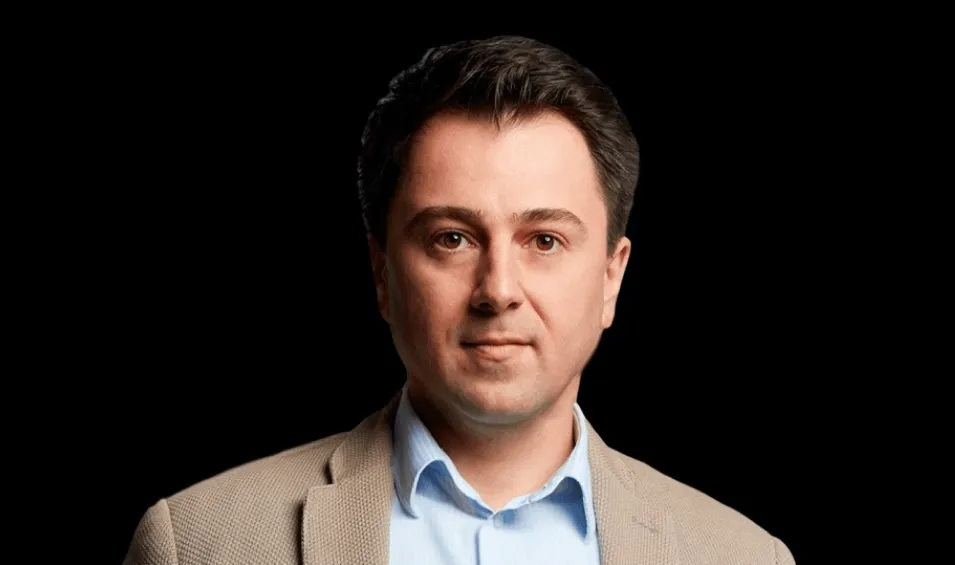
Alexander Demidov: “It’s Not Just Us Helping AI – AI Is Helping Us Too”
How Neural Networks Are Transforming the Electronics Industry

Neural networks are playing an increasingly prominent role in electronics, reshaping how devices are designed, manufactured and tested. What role do they already play across the industry? Do they help businesses, or do they create new challenges? Alexander Demidov, business development manager at Novye platformy, shared his perspective with ITRussia.
– AI development involves every segment of the IT industry. What role does electronics play in this ecosystem?
– Everyone has a role to play in advancing AI, and electronics is absolutely indispensable. Those well-known AI accelerators have to be installed somewhere, and that is where we come in. Electronics engineers design and build the AI servers that make those accelerators usable. If we fail to create an AI server capable of handling high-intensity computing workloads and delivering reliable power to those accelerators, then any AI model will end up operating far below its potential.
Our job is also to provide fast, reliable communication between accelerators and high-performance processors so there are no bottlenecks in the system, while at the same time removing the enormous amount of heat it generates. We are talking about power levels of roughly 8 kW. By comparison, a typical home computer consumes about 300–500 W, while a dual-socket general-purpose server uses around 1.2 kW.
In practice, nearly all of the electricity consumed by computing equipment is converted into heat. Electronics engineers must design systems that can efficiently remove that heat from the chassis. Only then can the equipment operate reliably and maintain stable performance over long periods.
However, it is not just us helping AI – AI is helping us too. The use of advanced algorithms accelerates the development and commercialization of new engineering solutions by enabling complex calculations to be performed faster and with greater accuracy.

– How much does partnership with the AI industry help move the electronics sector forward, both globally and in Russia?
– The first aspect is technical. AI is making a noticeable difference in the development process by accelerating it. As a result, employee productivity increases, product quality improves, and some of the pressure created by the shortage of highly qualified specialists is alleviated.
On the financial side, however, AI has also planted a rather large landmine under the entire electronics industry. By absorbing virtually all available memory chips for its own needs, it drove prices up by more than 1,000%. That ultimately led to the suspension of many tenders and development investments because costs rose so sharply. At the same time, AI created an entirely new direction for the industry, which means a new market and new opportunities to generate revenue within it.
– What factors can help the electronics market grow, and what factors are holding it back?
– As in any business, the market is ultimately driven by money, or more specifically by effective demand. However, there are several challenges. The first is the sharp increase in the cost of memory and storage devices, while the second is shrinking budgets. For the most part, the Russian electronics industry serves government or government-affiliated customers. When demand contracts, the electronics market contracts along with it.
For example, our company is growing without relying on borrowed capital. We have both the technical expertise and the organizational capacity to develop new products, launch new business lines and enter markets that are new to us. However, without an actual project and a committed customer, any developer faces significant limitations. Given the current market contraction and the high cost of financing, we have no desire to burn through everything we built over previous years only to end up bankrupt, with warehouses full of equipment that nobody will buy because potential customers do not have the funds either.

– Is AI already being used within the industry itself, whether in adjacent processes, manufacturing or other parts of the business?
– The electronics market is highly heterogeneous. In purely commercial segments, AI can be applied in a variety of ways, including cloud-based solutions. Neural networks can assist with writing firmware code, identifying design errors in hardware schematics and diagnosing potential causes of failures. AI can also be used to prepare testing environments and analyze the resulting data.
– Which technologies are shaping the industry overall today?
– Right now, there is growing interest in higher-speed devices housed in compact form factors for lower-price segments, as well as in powerful high-performance systems for which Russian manufacturers previously had no alternatives. However, the sharp increase in memory prices has created significant disruption. In the past, memory costs played only a minor role in the final price of a product. Today, they can account for more than 50% of a device’s total cost.
As a result, when competing products differ in price by only a few percentage points but show substantial performance differences, customers will most likely choose the more powerful option. It may cost only slightly more upfront, yet it gives them the ability to expand memory and storage capacity later if needed, resulting in a system that fully meets their requirements.
– What are your forecasts for the industry in the near future?
– The AI boom is not going to bypass anyone. It is an area that attracts broad interest, but it is also extremely capital-intensive. Given the high debt burden carried by many market participants, not everyone will be able to keep pace. However, we will undoubtedly see growth in projects developed with the help of artificial intelligence, and in some cases developed using AI alone. That trend will both improve and diminish project quality. AI is a tool, and in capable hands it can create tremendous value, but without proper oversight it can just as easily create serious problems.
The fact that our industry is among the most active in pursuing the country's technological sovereignty gives its development path a distinctive character. Significant investment is required both to create new technologies and to stimulate demand for them. However, not every company has access to the resources needed to do that. As a result, organizations that pursued independent growth strategies in the past and built up financial reserves now have an opportunity to accelerate their development and catch up with companies that currently lead the market. Meanwhile, the long-term trend toward a smaller number of competitors, greater market consolidation and higher barriers to entry goes on unabated.

– What would an ideal scenario for the industry look like if all current conditions remain unchanged?
– There is clearly a degree of caution across the industry today when it comes to government subsidies for new product development. The main reason is that, in many cases, it is extremely difficult to produce an accurate forecast of a project's commercial viability. Above all, the uncertainty revolves around potential sales volumes.
That said, there is still hope that a sharp rise in oil prices, and the resulting increase in budget revenues and allocations to the National Wealth Fund, could enable the government to provide a new boost to the industry through fiscal support mechanisms, similar to what we saw in 2020–2022. In addition, the largest equipment buyers would likely have more resources available, as they are currently among the primary beneficiaries of the geopolitical environment. Under such a scenario, companies operating in our sector would once again have an opportunity to expand output, increase revenue and improve profitability. In turn, that would help reduce debt burdens while creating the financial resources needed for further growth and development.






![Astra AI [Code] vs. Open Source: Why Deploying an Open Model in a Secure Environment Is Costly and Risky](https://storage.yandexcloud.net/itrussia/uploads/c3b5b6da-1bf7-49cb-817e-0bab1cea8cff.webp)