Sovereign AI Must Deliver Economic Value, Not Just a Sense of Control
Sovereign AI matters only if its value can be measured in productivity, operating costs, risk reduction, and return on investment.

Talking about independence, security, and control is no longer enough. For businesses and governments alike, the real question has become whether AI changes the economics of a process and makes an organization easier to operate.
Sovereign AI is too often discussed in Russia as a virtuous – and even soothing – idea. The infrastructure is domestic, the data stays under control, and dependence on external providers is reduced. All of that matters. But for me, it is no longer sufficient. If sovereign AI gives an organization nothing more than a sense of control without changing the economics of its operations, it is not growth infrastructure. It is an expensive exercise in self-reassurance.
I approach this issue not as an outside observer but as someone responsible for AI development at a major IT company. That perspective makes it easy to see where attractive rhetoric ends and difficult management work begins. Today, a serious conversation about sovereign AI is no longer centered on whether a model can be deployed inside a protected environment. Many models can. The real question is whether an organization can embed AI into its operating economics, its accountability model, its decision-making processes, and its operating model.

Not long ago, the greatest concern was access. Would there be enough computing power? Would suitable models be available? Would businesses become dependent on foreign providers? Those questions have not disappeared. Yet the market has already moved beyond the point where every challenge can be explained by technology shortages alone. According to McKinsey, 72% of organizations now use AI in at least one business function, while 65% regularly use generative AI. Half have already deployed AI across two or more functions. That tells us the shortage today is no longer AI itself. The shortage lies in an organization's ability to scale it, integrate it into core operations, and justify it in economic terms.
That is where the real dividing line of maturity now lies. It is not between organizations that have AI models and those that do not. It is between organizations that have learned to turn AI into measurable operational productivity and those still operating in pilot mode. On paper, both companies may claim that they have "implemented AI." In practice, one has transformed cycle times, operating costs, employee workloads, and decision quality, while the other is left with an attractive internal project that delivers little meaningful impact.
For a CFO, a sense of control has no value unless it reduces total cost of ownership and provides a clear payback period. For a CEO, what matters is not the mere presence of AI but the ability to scale it without creating new layers of managerial complexity. For the head of a government agency, success depends not only on model capabilities but also on data jurisdiction, verifiable outputs, operational resilience, and auditability. This is no longer a discussion about technology trends. It is a discussion about economics, governance, and the cost of getting decisions wrong.
To me, the most important number is not AI adoption itself. It is the gap between deployment and financial value. In McKinsey's research, only 46 out of 876 companies reported that generative AI could account for more than 10% of EBIT. That is the market's most honest signal. Many organizations have learned how to deploy AI. Very few have learned how to convert it into material financial performance. That is why I believe today's challenge is not the absence of AI, but the gap between demonstrating what AI can do and operating it successfully at production scale.

When I hear sovereign AI discussed purely through the lens of control, I almost always see the same management imbalance. Organizations debate the model but not the process. They debate the deployment environment but never calculate total cost of ownership. They debate capabilities but fail to answer a far more important question: how will the economics of a business process change six months, one year, or two years from now? Then they wonder why the initiative never scales.
For me, sovereign AI should deliver three distinct categories of value. The first is higher productivity. Not on presentation slides, but through shorter cycle times, faster approvals, lighter workloads for professionals, and greater process throughput. The second is lower operating costs. That means less manual work, fewer rework cycles, lower unit costs for routine operations, and reduced dependence on scarce expertise. The third is lower regulatory and operational risk. Where the cost of failure is high, control over the deployment environment, auditability, predictable operations, and transparent change management stop being mere paperwork and become part of the solution's economic value.
That is why I see sovereign AI not as an ideology but as a matter of pragmatism. When organizations deal with sensitive data, mandatory regulatory requirements, mission-critical processes, and costly incidents, the real question is no longer which model appears "smarter" in the abstract. The question is which system can be operated safely and predictably over the long term. It is also which system can be explained _ and justified _ to internal control teams, auditors, security officers, finance departments, and executive leadership.
McKinsey highlights another important signal. Forty-four percent of organizations have already experienced at least one negative consequence from deploying generative AI. The most common issues involve inaccurate outputs, followed by cybersecurity risks and explainability challenges. Meanwhile, only 18% reported having an organization-wide governance mechanism for these systems. I find that especially telling. The market has learned how to launch AI quickly. It is still considerably less capable of governing it effectively.

The same pattern appears in more operational research. DORA reports that more than 75% of respondents use AI for at least one daily professional task, while more than one-third report meaningful productivity gains. Yet the same report associates greater AI adoption with a 1.5% decline in software delivery throughput and a 7.2% reduction in delivery stability. That is a sobering reminder. Accelerating an individual task does not necessarily improve the system as a whole. Local productivity is not the same as systemic performance.
That is why I would spend less time debating sovereign AI as a symbol. Symbols matter in shaping public agendas. Management decisions, however, are not made on symbols. They are made on ROI models, total cost of ownership, payback periods, the cost of failure, and the ability to scale without losing control. Without those calculations, sovereign AI will almost inevitably remain an expensive initiative _ one that is difficult to justify during the budgeting process and even harder to turn into a sustainable operating environment.
From that perspective, the real question for large enterprises and governments is no longer, "Do we have sovereign AI?" It is, "Can we turn sovereign AI into an economic and managerial system?" If the answer is yes, sovereign AI becomes a genuine strategic asset. It raises labor productivity, lowers operating costs, reduces risk, and provides a stable foundation for long-term operations. If the answer is no, it remains the same costly pilot project _ simply wrapped in more patriotic packaging.
That is precisely why I believe a mature conversation about sovereign AI begins not with the rhetoric of independence but with measurable outcomes. The first question should not be whether the deployment environment looks architecturally correct, but what it actually contributes to an organization's P&L, governance, operational resilience, and reduction in the cost of failure. Everything else is an intermediate stage.

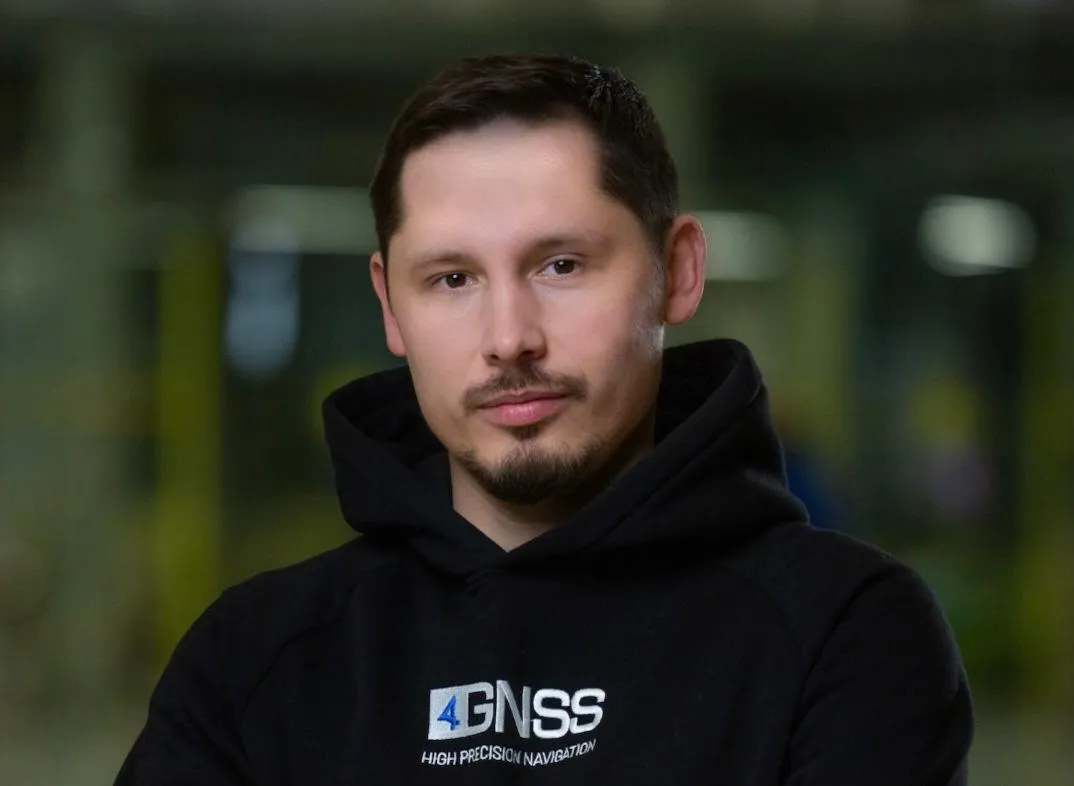
Stanislav Yezhov, AI Development Director, Astra Group PJSC











![Astra AI [Code] vs. Open Source: Why Deploying an Open Model in a Secure Environment Is Costly and Risky](https://storage.yandexcloud.net/itrussia/uploads/c3b5b6da-1bf7-49cb-817e-0bab1cea8cff.webp)