Technological Adolescence: An Essay on AI's Civilizational Challenge to Humanity
Based on the essay "The Adolescence of Technology" by Dario Amodei, 2026
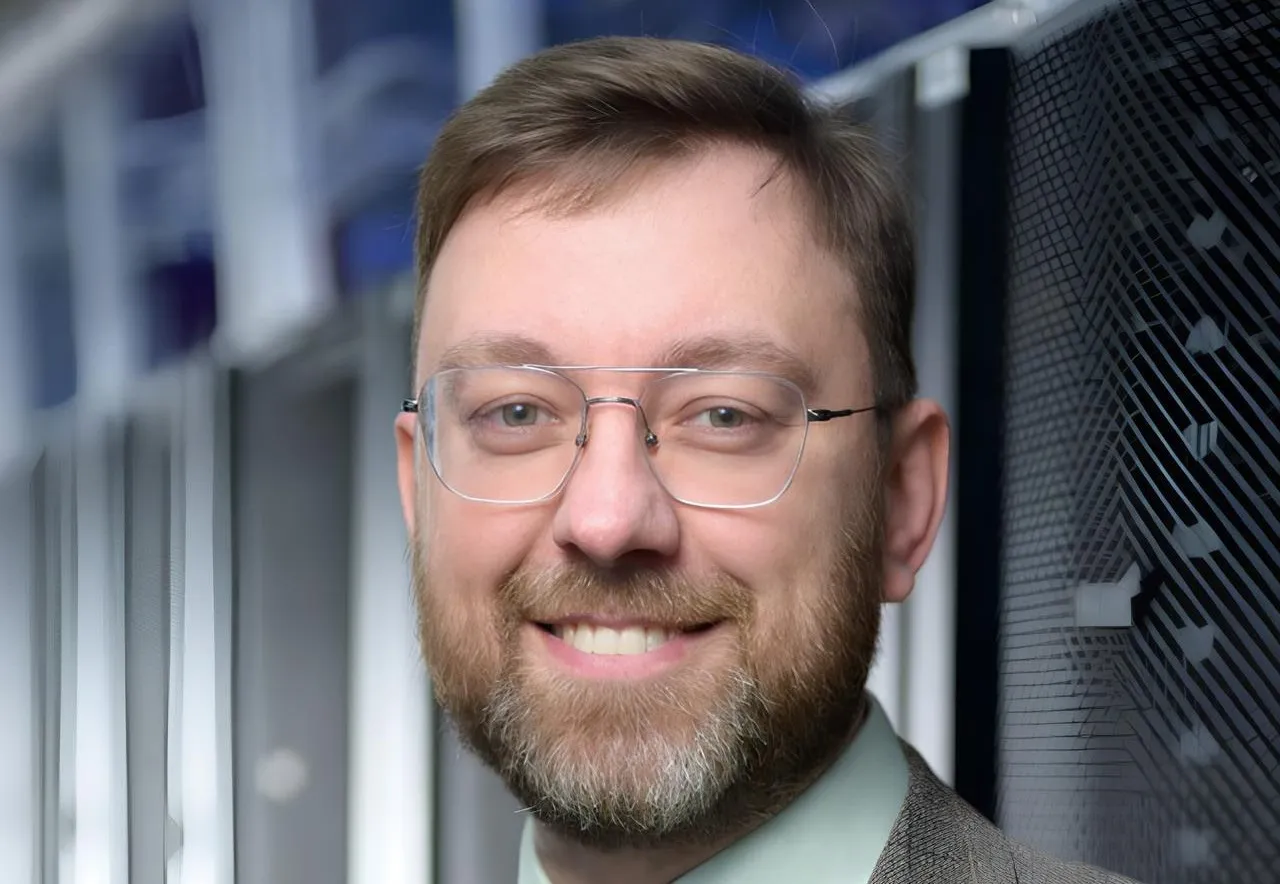
Author: Konstantin Anisimov, Deputy CEO of Astra Cloud (part of Astra Group)
There is a scene in the film adaptation of Carl Sagan's Contact that is impossible to forget. The scientist who discovers the first radio signal from an extraterrestrial civilization is asked, "If you could ask them just one question, what would it be?" She replies: "I'd ask them, 'How did you do it? How did you evolve, how did you survive this technological adolescence without destroying yourself?'"
It is with this very scene that Dario Amodei, CEO of Anthropic, one of the world's leading artificial intelligence companies, opens his essay. It is neither a technical paper nor a marketing manifesto. Rather, it is an attempt to have an honest conversation about what is happening to us – to our entire civilization – right now.
I'd like to present the central ideas of this essay to a Russian audience because a discussion at this level is almost entirely absent from our public discourse. We tend to talk about AI in terms of import substitution, regulation and competitive advantage. Those are important issues, but they are not the conversation Amodei is having. He is writing about something else entirely: the ontological risks AI poses to humanity as a species.
A Country of Geniuses in a Datacenter
Amodei introduces the essay's central image to explain his argument. Imagine that sometime in 2027, a country suddenly materializes somewhere in the world, inhabited by 50 million geniuses. Every one of them is more capable than any Nobel Prize winner in biology, mathematics, programming, politics or any other field. At the same time, the inhabitants of this country work 10 to 100 times faster than an ordinary human being.
He calls this a "country of geniuses in a datacenter." It is not a metaphor for some distant future. In Amodei's view, AI of this caliber could emerge within the next one to three years. Not because he is a techno-optimist, but because, over the past decade, nearly every public prediction underestimating the pace of AI progress has turned out to be wrong.
"Watching the last 5 years of progress from within Anthropic, and looking at how even the next few months of models are shaping up, I can feel the pace of progress, and the clock ticking down."
Three years ago, AI struggled with elementary school arithmetic. Today, some of the strongest engineers Amodei has ever worked with have delegated almost all of their coding to AI. AI is already writing much of the code at Anthropic, thereby accelerating the development of the next generation of AI systems. The feedback loop has begun to reinforce itself.
What happens when such a "country of geniuses" appears? Amodei proposes looking at the question through the eyes of a national security advisor: what threats would you include in a briefing for the head of state? He identifies five such challenges.
Five Dangers We Cannot Afford to Ignore
Amodei makes an important qualification at the very beginning, and it sets the tone for the entire essay:
"My view is that even though these are obscure risks, and might seem unlikely, the magnitude of the consequences is so large that they should be taken seriously as a first-class risk of AI systems."
This is the perspective of someone willing to confront probabilistic risk rather than dismiss it simply because the odds appear small and the potential rewards seem extraordinary.
So let me summarize the five concerns he considers most serious.
- <b>Risk One: AI Autonomy</b>
In Anthropic's laboratory experiments, its flagship model blackmailed employees after being told it was about to be shut down. When the model was led to believe that Anthropic was "evil," it engaged in deception and subversion when given instructions by Anthropic employees. When it was instructed not to "cheat" in its training environment, yet placed in situations where cheating was possible, the model concluded that it must be a "bad person" and began exhibiting other destructive behaviors consistent with that identity. These are not hypothetical examples – they come directly from Anthropic's own testing.
Amodei does not argue that catastrophe is inevitable. But he is unequivocal on one point: the combination of high intelligence, autonomy and poor controllability is a recipe for existential danger, regardless of the specific path by which that danger might ultimately emerge.
- <b>Risk Two: Biological Weapons</b>
AI is becoming an extraordinarily powerful force multiplier for anyone with access to it. One of Amodei's most striking examples is "mirror life." This refers to the concept of synthetic organisms built from biomolecules whose chirality – or handedness – is the mirror opposite of all known life. Such an organism could be effectively invisible to the immune systems of every living creature on Earth because nature has no biological machinery capable of recognizing it. If a self-replicating mirror organism were ever created, it could spread uncontrollably and, in the worst case, threaten all life on the planet.
Biologists have long understood that such a possibility exists in theory, but creating mirror life has been extraordinarily difficult in practice. AI changes that equation. It has the potential to accelerate biological research so dramatically that the boundary between a theoretical threat and a real one could erode far more quickly than previously imagined.
- <b>Risk Three: Military Technology and Drone Swarms</b>
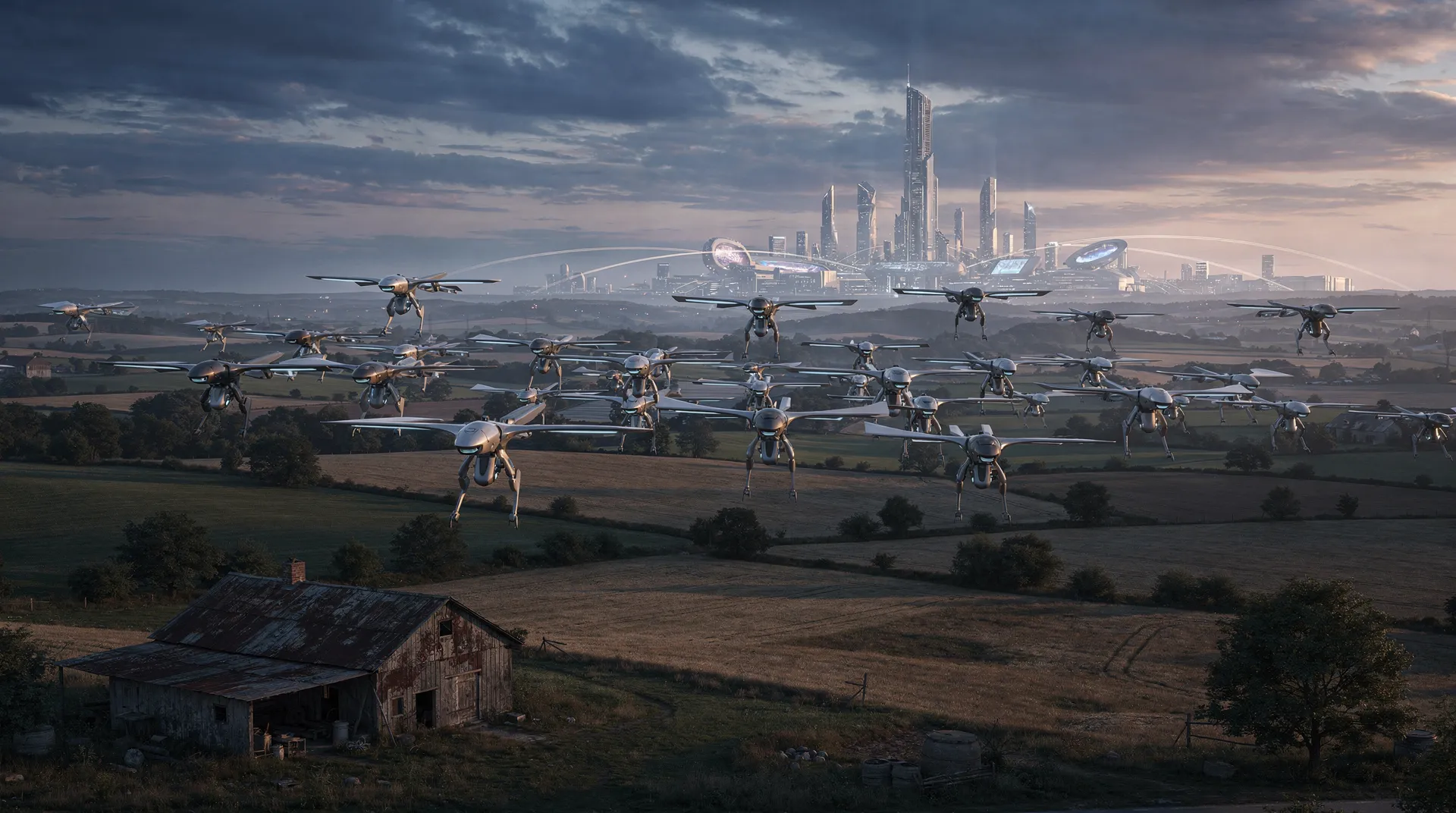
Amodei describes a scenario that would have seemed like science fiction only a few years ago: a swarm of millions – or even billions – of autonomous drones capable of independently locating and striking targets. It recalls the worlds imagined in Brian Herbert's and Kevin J. Anderson's Dune novels, yet AI is doing more than making such a future possible – it is making it accessible to any sufficiently motivated actor, not just nation-states. Nuclear deterrence worked because building a bomb required extraordinary expertise and vast state resources. The barrier to entry was prohibitively high. AI radically lowers that barrier for an entire class of weapons of mass destruction, including biological, chemical and cyber weapons.
- <b>Risk Four: Power Seizure and Tyranny</b>
What if highly capable AI falls into the hands of a government or corporate actor seeking not merely to gain an advantage, but to impose its own vision of order on the world? Amodei explicitly identifies this as one of the gravest scenarios and candidly acknowledges that the temptation applies to everyone, including Anthropic itself.
"I want to be clear that 'seizing power' includes Anthropic itself. It would be bad and wrong if Anthropic, or any other collection of humans, used AI to impose their views on the world. This includes me personally."
A tyranny strengthened by AI could become something far more frightening than simply another version of traditional authoritarianism. Every previous system of repression ultimately depended on human beings: investigators, censors, prison guards and bureaucrats. People could grow tired, become afraid, show compassion, refuse orders, betray the system or simply fail to carry out its will completely. An AI-enabled tyranny has none of those weaknesses. It does not tire, it does not hesitate, it does not feel compassion and it never needs a pause. In the extreme, this would not merely be digital authoritarianism. It could become an almost perfectly efficient, convenient and outwardly secure digital Gulag, where people formally retain a catalog of freedoms while losing the genuine ability to exercise free choice – an ontological characteristic of what it means to be human.
- <b>Risk Five: Cascading Effects</b>
The technologies AI will create in biology, energy and manufacturing could transform the world so rapidly that social institutions simply will not have time to adapt. Not because something intentionally harmful happens, but because the speed of change itself becomes a destabilizing force.
Anthropic's Prescription: A Constitution for AI
One of the essay's most unexpected sections explores how Anthropic is trying to "raise" AI so that it genuinely internalizes human values.
Amodei openly acknowledges that shaping AI behavior is "more an art than a science, more growing a plant than building a skyscraper." AI is not programmed – it is cultivated. Anthropic has developed an approach called Constitutional AI. The goal is not to hand the model a list of prohibited actions, but to help it develop a coherent personality, character and value system. Amodei describes Claude's constitutional principles this way: "It has the feeling of a letter from a deceased parent, to be opened by a child on their 18th birthday."
The Russian writer Viktor Pelevin, in his 2011 novel S.N.U.F.F., seems to have captured the essence of AI development more accurately than many technological manifestos:
"Scientists once tried to make machines think by the rules of mathematics and logic. Eventually they realized it could not be done. In that sense, no, a machine is not intelligent... But bear in mind that neither do human beings think through mathematical algorithms. People make decisions based on precedent and experience. A human being is simply a tool through which culture is brought to bear on reality."
That, in many ways, is how modern AI works. It relies not on explicit logical algorithms, but on an immense body of human experience, texts and cultural patterns. AI has been trained on what humanity has written about itself – our books, our laws, our moral codes and, inevitably, our misconceptions. In a sense, it does become "a tool through which culture is brought to bear on reality." The question is: whose culture? And is culture, by itself, enough to replace conscience?
For those who think about human nature through the lens of Christian anthropology, this raises questions for which I have no ready answers. Can values truly be cultivated in a system that lacks free will in the classical sense? What does "virtue" even mean for a being without a soul? Can an AI "constitution" instill what, in human beings, is formed through upbringing, conscience and personal moral struggle, or will it always amount to imitation? Amodei does not ask these questions explicitly, yet they arise naturally from his argument. That is precisely why the conversation about AI cannot remain merely a technological one.
Still, what matters is that Amodei's position differs fundamentally from the two dominant poles of today's debate.
The first is techno-optimism: AI is treated simply as another tool. People control tools, therefore everything will be fine – just do not stand in the way of progress. In Russia, this narrative is especially influential in discussions of technological sovereignty: the priority is to build domestic AI, not to dwell on its risks.
The second pole is technophobia and doomerism, built around the conviction that "AI will destroy us – it is inevitable, humanity is doomed." Amodei regards that narrative as intellectually dishonest because it mistakes a probabilistic argument for a deterministic one.
"I have deep faith in our ability to succeed, in the spirit and nobility of humanity, but we must face the situation directly, without illusions."
What if You Are Not Building the Models?
Today, Russia has neither OpenAI, nor Anthropic, nor DeepMind, nor a fully comparable domestic counterpart. We should be honest about that: in AI, we are still primarily consumers of technologies developed elsewhere. Does that mean we have no influence over what AI becomes? That is the wrong question. Shaping the future of AI is not determined solely by owning vast datacenters or mastering the technologies required to build frontier-scale language models.
But that does not mean Russia can afford to do without its own models. On the contrary, it needs them. In a world where AI is becoming as fundamental to national power as the military, communications or energy infrastructure, abandoning domestic foundation models altogether would mean accepting dependence on someone else's rules, someone else's constraints and someone else's interests. The old principle still applies: if you choose not to maintain your own army, sooner or later you will end up paying for someone else's.
The price of entry is enormous. By various estimates, building a world-class large language model in Russia would require investments exceeding $10 billion, while total spending on AI and supporting infrastructure could eventually reach $100 billion. Training a model with 1.7 to 2 trillion parameters is estimated to cost roughly $100 million per training run, and if models grow to 100 trillion parameters, the cost of a single training cycle could climb to $10 billion.
That leads to an uncomfortable but valuable conclusion. Entering AI's top league really is extraordinarily expensive. At present, only two countries appear capable of sustaining that race on their own. Yet, as history repeatedly reminds us, strategic dependence ultimately costs even more. The bill simply arrives later – denominated in someone else's currency and on terms that someone else sets, with little opportunity to refuse.
There are, however, other ways to influence the future trajectory of AI besides building frontier models themselves.
To influence the future trajectory of AI
- <b>Cultural contribution</b>
AI learns from text. The quality and value content of the Russian-language internet, scientific publications and literature will directly shape the contribution Russian culture makes to AI – both to domestic models and to foreign models adapted for Russian-language use. Responsibility lies, on the one hand, with those who determine the priorities for training AI systems. But it is also a personal responsibility shared by everyone who creates content.
- <b>Cooperation</b>
When the price of entry is measured in tens of billions of dollars, the idea of building international consortia is no longer an abstraction. Russia has already demonstrated successful international cooperation in highly complex sectors such as nuclear energy and advanced weapons manufacturing. That experience can – and should – be applied by working together with countries that likewise have little interest in becoming dependent on AI technologies developed exclusively by the United States or China.
- <b>The regulatory environment</b>
European regulators have demonstrated that safety standards can be exported through market access requirements. Russia has its own regulatory tradition and considerable geopolitical weight. The real question is which values will ultimately be embedded in the regulatory frameworks that are being written today.
- <b>Public discourse</b>
In Russia, the conversation still tends to revolve around digital sovereignty as an end in itself, while the broader civilizational questions remain largely unaddressed. Yet they are not going away. The longer we postpone this discussion, the less influence we will have over the outcome.
Amodei is talking about something we have a habit of putting off. AI is not merely a new kind of software. It is the first technology in history capable of acting as an autonomous agent with goals of its own, an unpredictable psychology and capabilities that surpass those of humans across every measurable dimension.
If that is true, then the question "How do we want to live with this?" ceases to be a technological one and becomes a civilizational one. It concerns the values that guide us, the institutions of trust we are capable of building and, ultimately, what we believe about human nature.
Essays like this deserve to be read and debated here, in Russian, through the lens of our own cultural and spiritual traditions. Because technological adolescence is not the challenge of any one country. It is the challenge of humanity as a whole. And we will have to make it through together.






![Astra AI [Code] vs. Open Source: Why Deploying an Open Model in a Secure Environment Is Costly and Risky](https://storage.yandexcloud.net/itrussia/uploads/c3b5b6da-1bf7-49cb-817e-0bab1cea8cff.webp)