

The Cultural Code of Artificial Intelligence: Why We Are Arguing Not About the Technology but About the Term
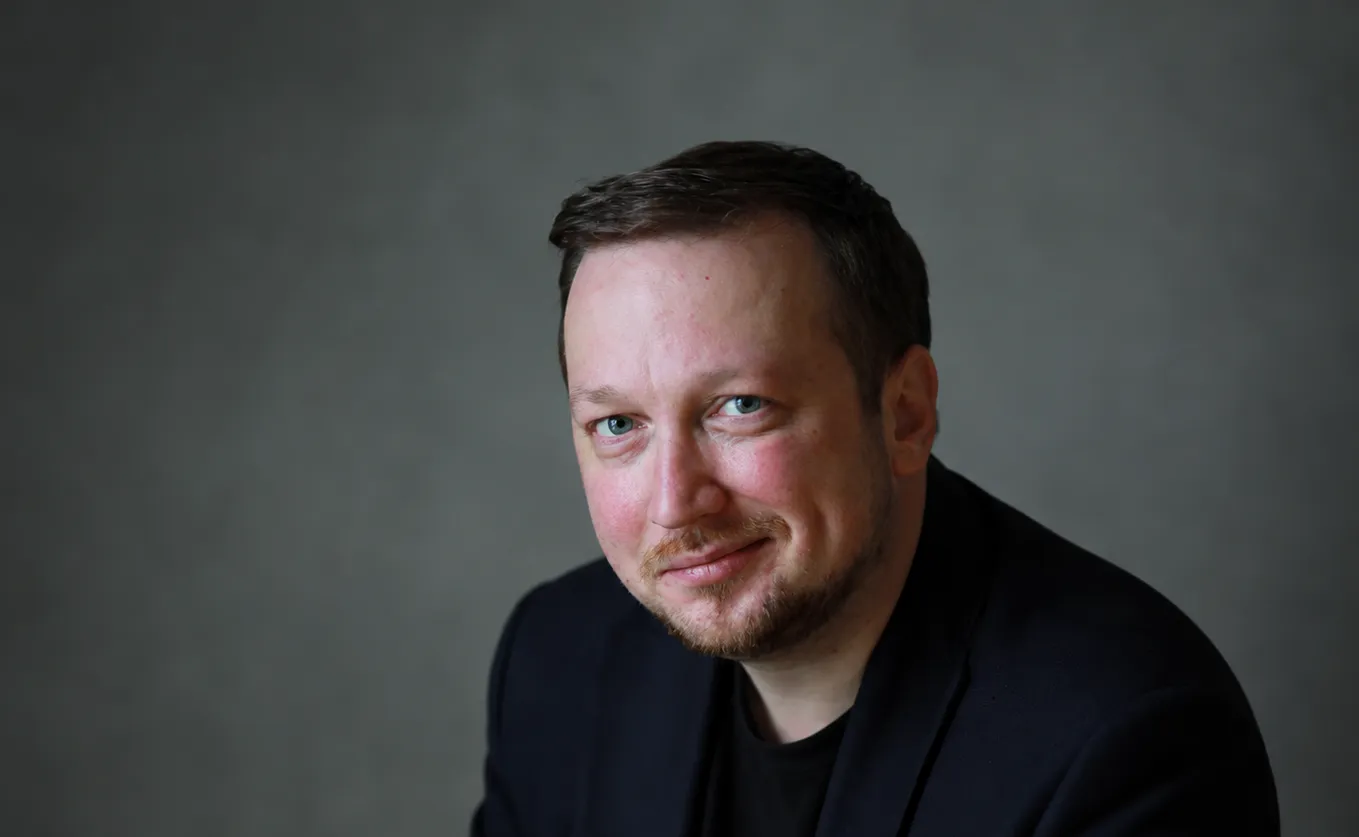
By Vladimir Leshchenko, expert in artificial intelligence and knowledge management
I recently took part in an episode of the NTV program We and Science. Science and Us, where, together with fellow panelists – a cultural theorist, a predictive analytics professional, and the Presidential Representative for International Cultural Cooperation – we discussed the proposition that, within ten years, artificial intelligence will acquire a cultural code. By the end of the discussion, I gave the strongest possible forecast: 100%. Yet the longer I spent articulating that answer on air, the more clearly I realized that forty-five minutes of television was insufficient to explain why the question itself had been formulated incorrectly – and why that very imprecision contains the most interesting conclusion.
The Problem Is Not Intelligence but the Definition of "Code"
The term cultural code entered contemporary discourse through the semiotics and structuralism of the 1960s – through the work of Roland Barthes, Claude Lévi-Strauss, and, within the Russian intellectual tradition, the Tartu-Moscow School of Semiotics, Yuri Lotman, and Vyacheslav Ivanov. It was already in those works that a fundamental distinction was established: a code is a structure of relations among signs, not the aggregate of the signs themselves. A code is a grammar, not a dictionary.
The central problem in contemporary discourse on artificial intelligence is that these two levels are systematically conflated. When people say that a large language model has been "trained on the whole of human culture," what they usually have in mind is the accumulation of a dictionary – an immense corpus of texts, images, and patterns. A code, however, in the strict semiotic sense, is not accumulated material but the operation of signification: why this particular gesture, this color, or this intonation signifies what it does for a particular bearer of a culture rather than for an external observer. The model reproduces statistical relations among signs with remarkable effectiveness. It does not perform the operation of signification; it simulates that operation by taking as its input a grammar that has already been constructed by others.
Hence the paradox we discussed during the broadcast. Ask the model, in Russian, why Dostoevsky surpasses Shakespeare, and you will receive a persuasive panegyric. Pose the mirror question in another language, and with the same confidence you will receive the opposite conclusion. This does not demonstrate that the model possesses a cultural code. It demonstrates that it possesses no code whatsoever, only an interpolation operator that completes its response according to the grammar of the prompt. The algorithm has no capacity to say "no," because it has no position from which such a "no" could be uttered.

A Librarian, Not a Bearer of Knowledge
During the discussion I drew an analogy with a librarian: the reader's relationship to a library's holdings is mediated not by the content of the catalog cards but by the individual who holds the keys to the catalog itself. Artificial intelligence performs precisely this function. It is not a source of knowledge but an infrastructure for accessing knowledge, organized in such a way that any query returns the response that is maximally relevant and maximally compliant. This is an epistemological position fundamentally different from that of an author or a bearer of a tradition. Useful though the librarian may be, the librarian is not the author of the collection – and it would be strange to expect the librarian to possess an original literary style.
Here lies the methodological error underlying most speculation about AI "consciousness" and "culture": we evaluate an infrastructure for accessing knowledge by criteria that are applicable only to a producer of knowledge.
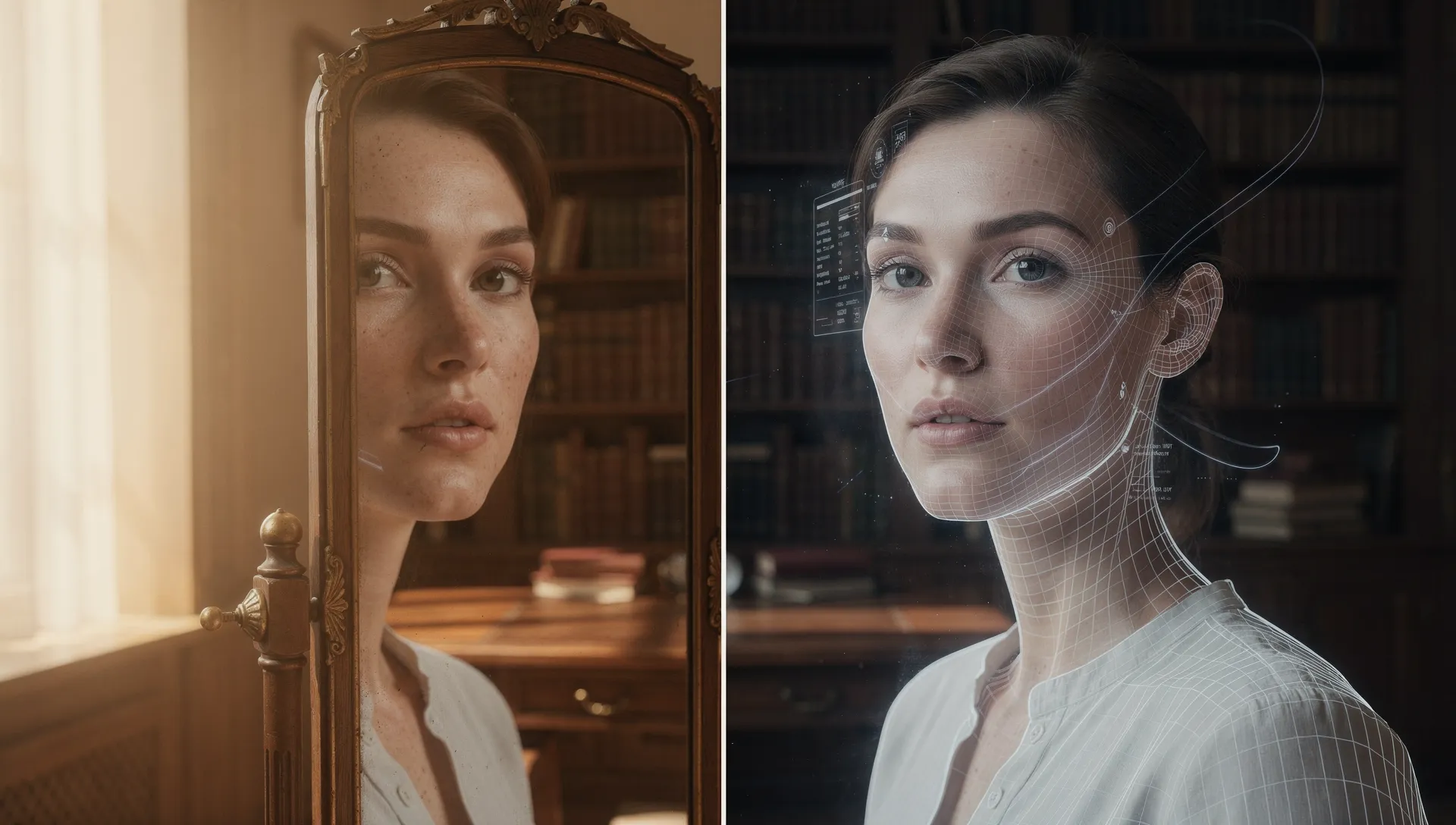
Why a Cultural Code Cannot Be Derived from Data – Even Big Data
A second argument I advanced during the discussion was that a cultural code is transmitted from one generation to another not through information – however vast its volume may be. Consider the box of military decorations that belonged to my great-grandmother, which my daughter takes to school when speaking about her ancestors. That box is not data about the war of 1941-1945. Data about the war are available in any history textbook and in any neural network. Its significance lies elsewhere: in a physical artifact passed from one pair of hands to another, in the ritual of May 9 that is enacted bodily rather than merely retrieved from an information source. In this sense, a cultural code is not a file but a practice. A model may help reconstruct facts about one's ancestors, correlate archival records, and even imaginatively fill gaps in a biography. Yet it is structurally incapable of reproducing the act of transmission itself, because that act requires not computation but embodied, emotionally charged participation within a tradition rather than observation from outside it.
From this follows a practical conclusion that is important not only philosophically but operationally as well: when working with AI, the most important protective skill is not technical literacy but critical thinking – the capacity to resist accepting a synthetically persuasive, empathetically tailored response as true merely because it is psychologically reassuring.

Then Why 100%?
My unequivocal forecast does not contradict anything I have argued above; it rests on a different premise. I do not claim that AI will acquire a cultural code in the strict semiotic sense, that is, as an autonomous position of signification. I claim that it will inevitably achieve a functional synthesis: a simulation of a cultural layer that, in practice, will operate just as convincingly as a "genuine" cultural code, simply because we are already witnessing this process in adjacent domains. The digitalization of museums, interactive historical reconstructions, and generative models capable of recreating the stylistic characteristics of past eras already constitute a functioning, culturally interactive layer upon which the next level is being built. In the philosophical sense, this will be a simulacrum – a synthesis that makes no claim to authenticity. Yet it is precisely such a simulacrum, rather than authenticity itself, that the program's original question was designed to address.
The difference between saying that "AI will acquire a cultural code" and saying that "AI will construct a convincing simulacrum of a cultural code" is one that matters profoundly to the philosopher and scarcely at all to the marketplace, to education, or to museum practice. That is precisely why the debate between the "optimists" and the "skeptics" in the television studio remained unresolved. It was not because one side was right and the other wrong, but because we had failed, from the outset, to agree upon the definition.
A more detailed discussion of the technological and methodological questions surrounding artificial intelligence is available on my Telegram channel, AI Without Illusions.








![Astra AI [Code] vs. Open Source: Why Deploying an Open Model in a Secure Environment Is Costly and Risky](https://storage.yandexcloud.net/itrussia/uploads/c3b5b6da-1bf7-49cb-817e-0bab1cea8cff.webp)