Heavy-Lift UAV from Ekvizhn Targets Mining Sector Demand
A heavy drone is currently under development for Russia’s extractive industries: an octocopter with a maximum takeoff weight of 750 kilograms and a payload capacity of up to 150 kilograms. The use of artificial intelligence and digital design tools has reduced development costs by a factor of three.
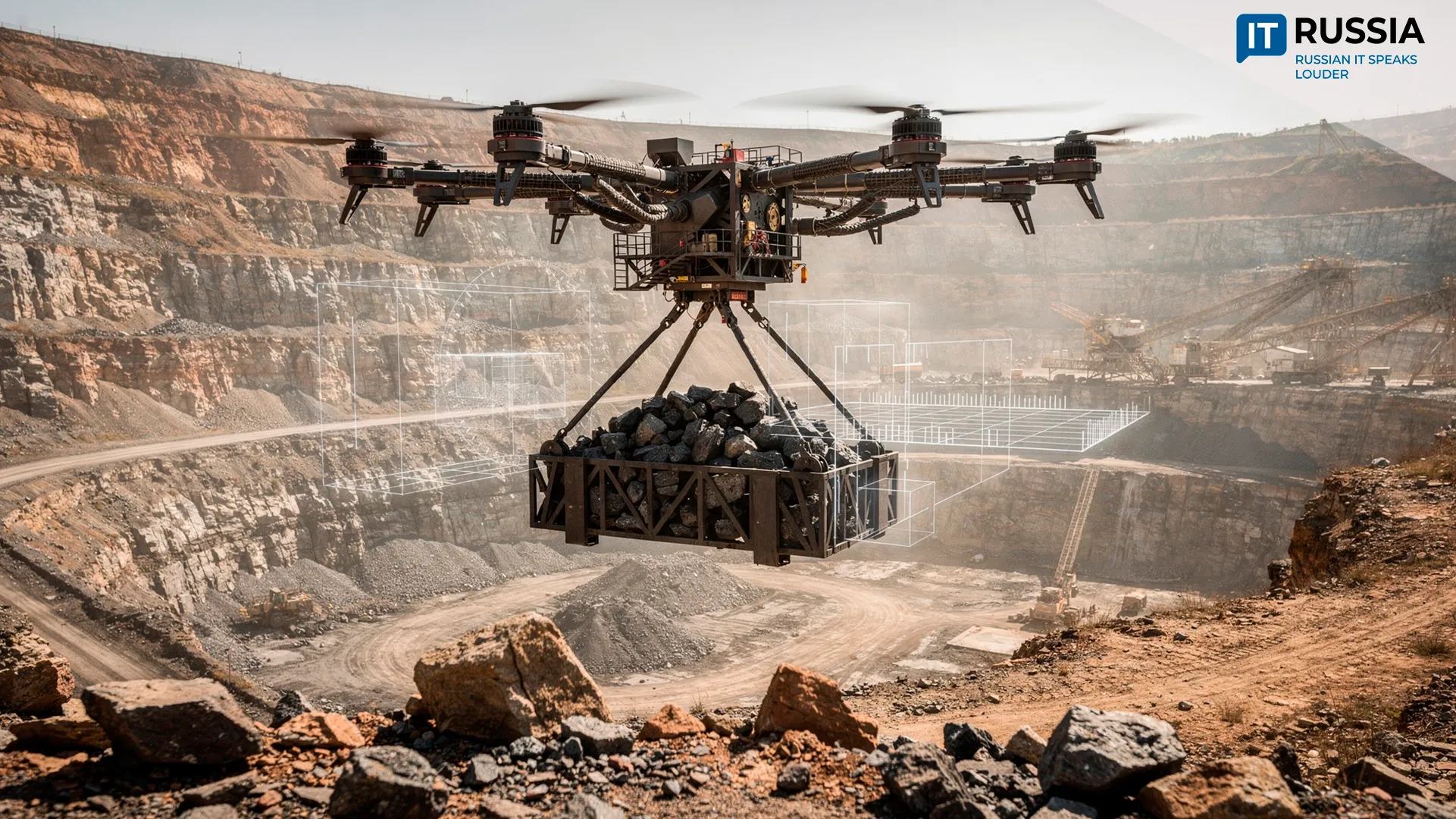
The system is being developed by the Russian company Ekvizhn. The project is nearing completion: the propulsion system has been finalized, and certification of individual components, including the engine, is underway. Full certification of the UAV platform is expected by the end of the year.
The heavy UAV is being designed in line with both Russian and international aviation standards. The company aims to certify the drone as a civil aircraft and plans to launch production with a high share of domestically sourced materials and components. The project is being implemented with support from Aeronet market experts within the National Technology Initiative.
The Last-Mile Challenge
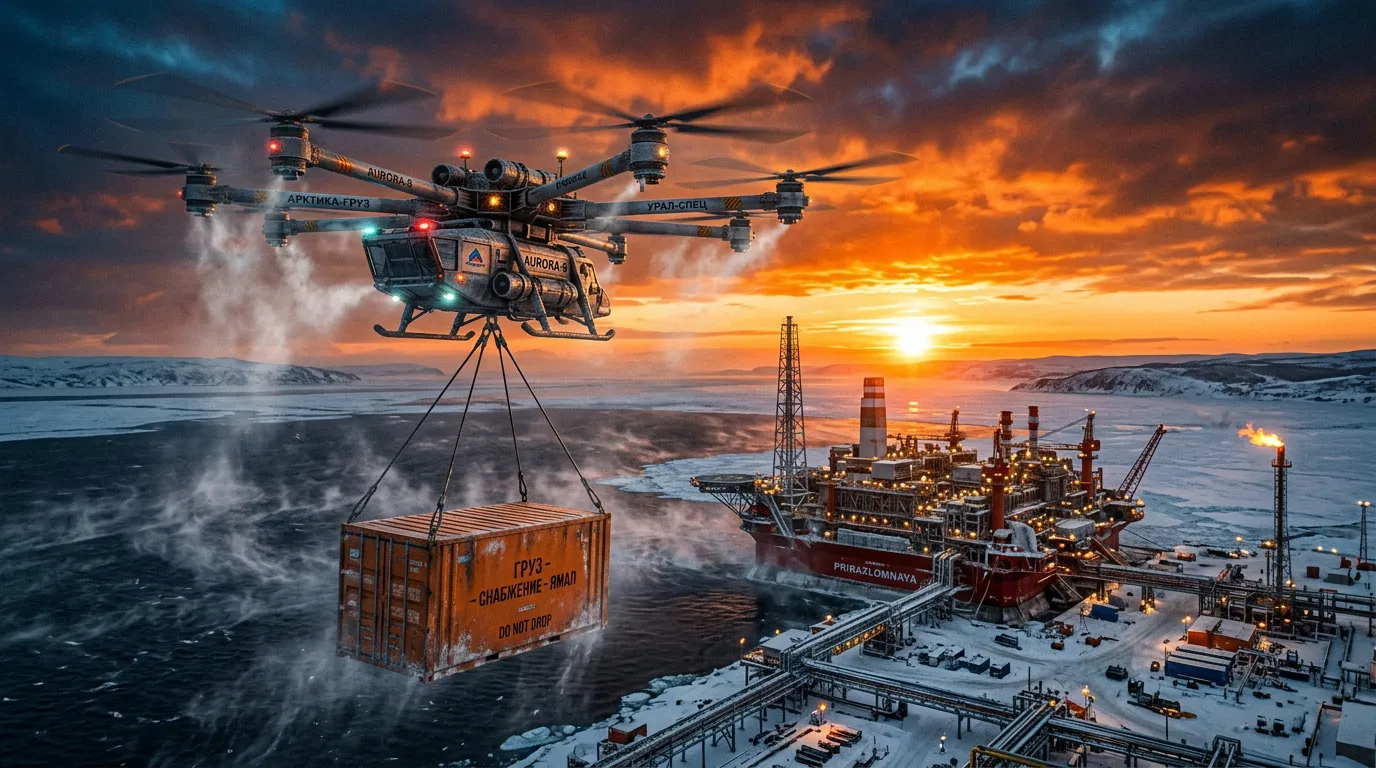
Reducing last-mile logistics costs at remote deposits, open-pit mines, rotational camps, and linear infrastructure has remained an unresolved issue for years. For the mining sector, the development of a cost-efficient heavy unmanned aerial system capable of supplying remote sites – where logistics costs are particularly high – is a clear priority.
The industry has already established strong demand for UAVs in monitoring, mapping, and inspection of pipelines and industrial sites. Companies such as Gazprom, Rosneft, Lukoil, Surgutneftegaz, SIBUR, and Gazprom Neft are actively using or testing drones for pipeline monitoring, surface infrastructure inspection, and environmental control. Their experience is gradually shifting drones beyond the role of “flying cameras” toward multifunctional industrial tools.
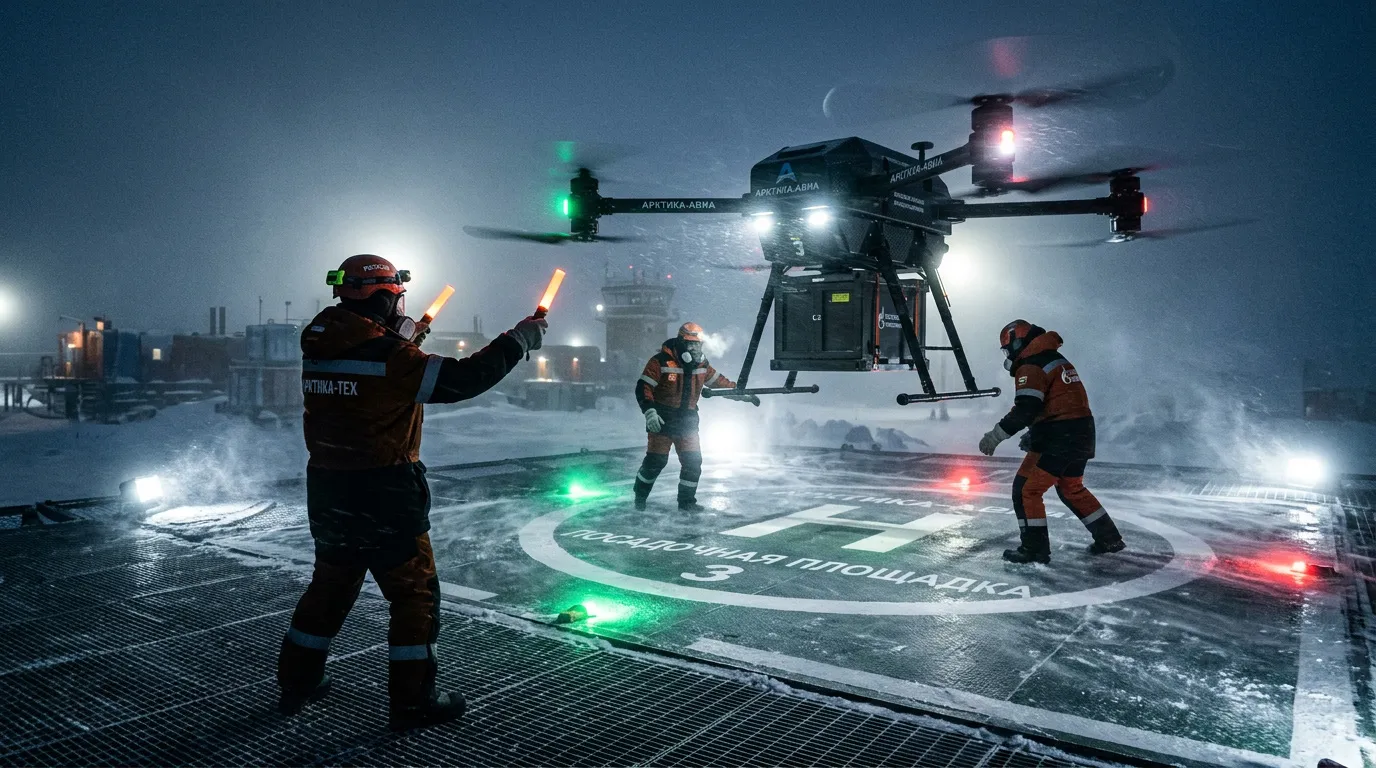
Today, UAVs are equipped with thermal imaging cameras and gas analyzers, enabling detection of leaks, pipeline damage, ground subsidence, and landslides. They are also used to monitor power lines, support geological exploration, and generate terrain models for infrastructure planning and construction. Logistics and cargo transport, however, remain emerging use cases.
Industrial UAV Applications
In 2025, the Russian civil UAV market reached 26 billion rubles (approximately $280 million). According to estimates by the Ministry of Industry and Trade, it is expected to grow to 32 billion rubles (around $345 million) in 2026, with production volumes reaching 8,000 units. The largest share of demand comes from the oil and gas sector. At the same time, global demand for UAVs is also growing. Even conservative projections suggest that by 2028 the market will double compared with 2024 levels.
Russia’s UAV development strategy and national programs are focused on stimulating demand, advancing domestic platforms, and expanding real-world use cases across civilian industries.
In 2025, the Russian Government approved an extension of the experimental legal framework for UAV operations through 2028 in Kamchatka Krai, Khanty-Mansi Autonomous Okrug - Yugra, Chukotka Autonomous Okrug, and Yamalo-Nenets Autonomous Okrug. The initiative was originally proposed by Russian Post. The operational experience gained is expected to be replicated across other regions. The framework itself has already been updated to reflect accumulated operational data, evolving regulatory approaches, and technological progress.

A Practical Logistics Solution
For the mining sector, the most realistic near-term scenario is the niche deployment of heavy UAVs for high-value cargo and urgent deliveries. These include situations where equipment or materials weighing tens of kilograms must be delivered quickly to remote sites without waiting for winter roads, helicopters, or ground convoys. For deposits, drilling operations, exploration teams, and pipeline infrastructure, such drones could become a new operational tool.
Integration into the digital ecosystem of a mining site is another promising direction. A heavy UAV could combine logistics with pipeline monitoring, industrial site inspection, environmental control, and 3D terrain modeling.
The pieces will come together once the economic case is proven. The industry is waiting for clear answers on reliability, lifecycle, weather limitations, cost per flight hour, maintenance, localization of components, and flight safety near industrial facilities. The Ekvizhn platform represents a promising prototype that could evolve into a fully deployable industrial solution.