Russia’s First Mobile EV Charging Robot Hits the Road
At the Renwex-2026 international exhibition, the fuel division of Rosatom presented the country’s first autonomous mobile EV charging station. The system was developed by the division’s management company, TVEL.
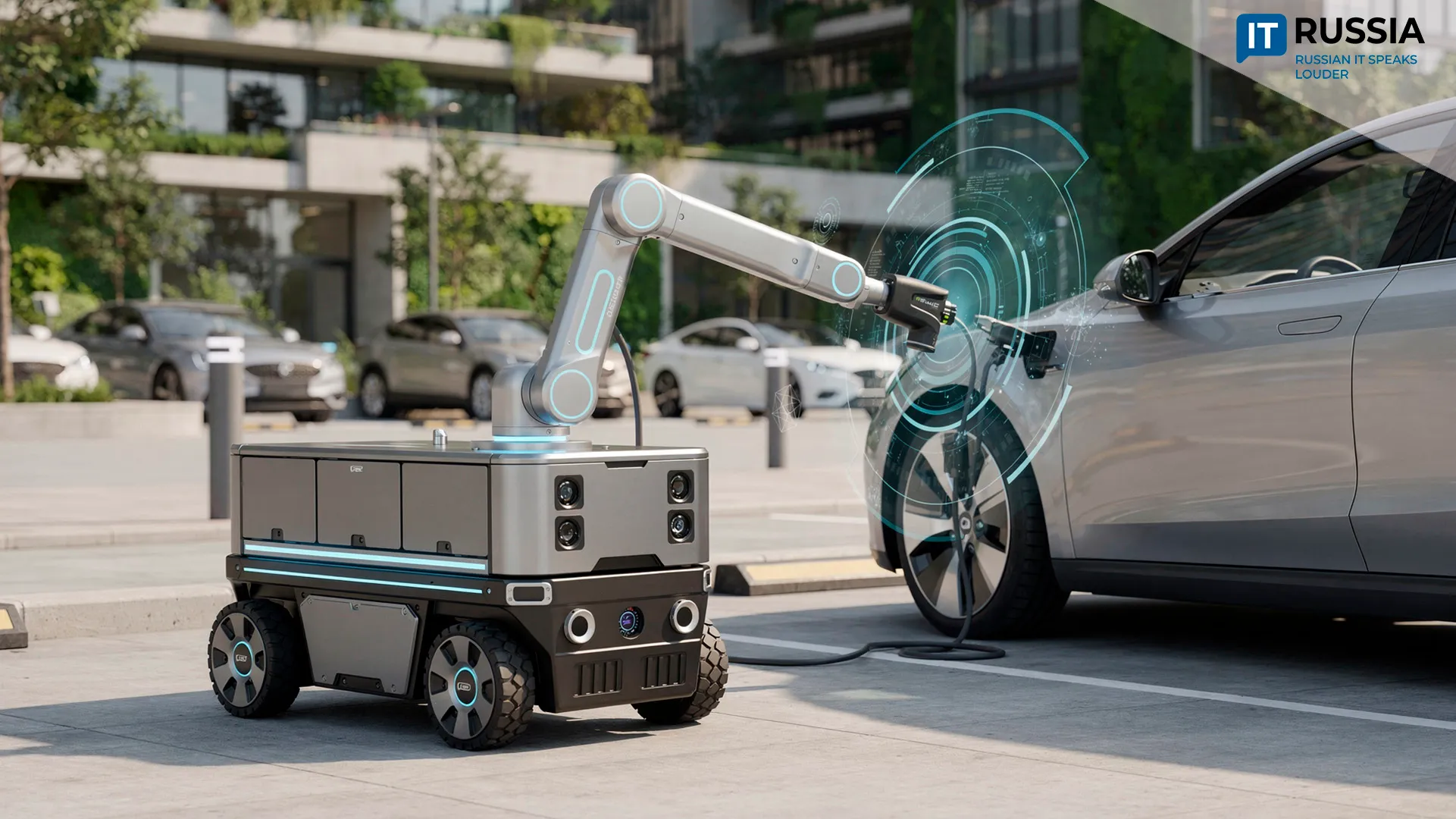
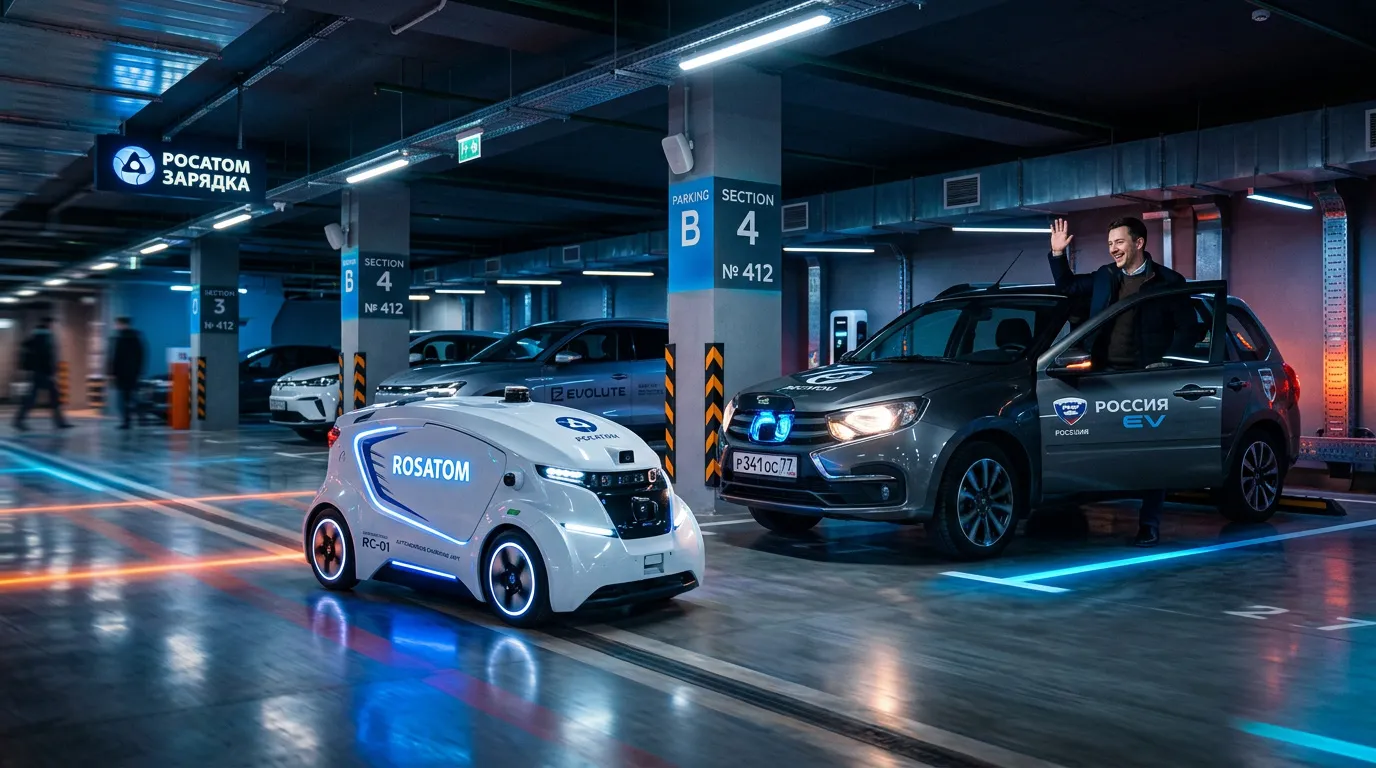
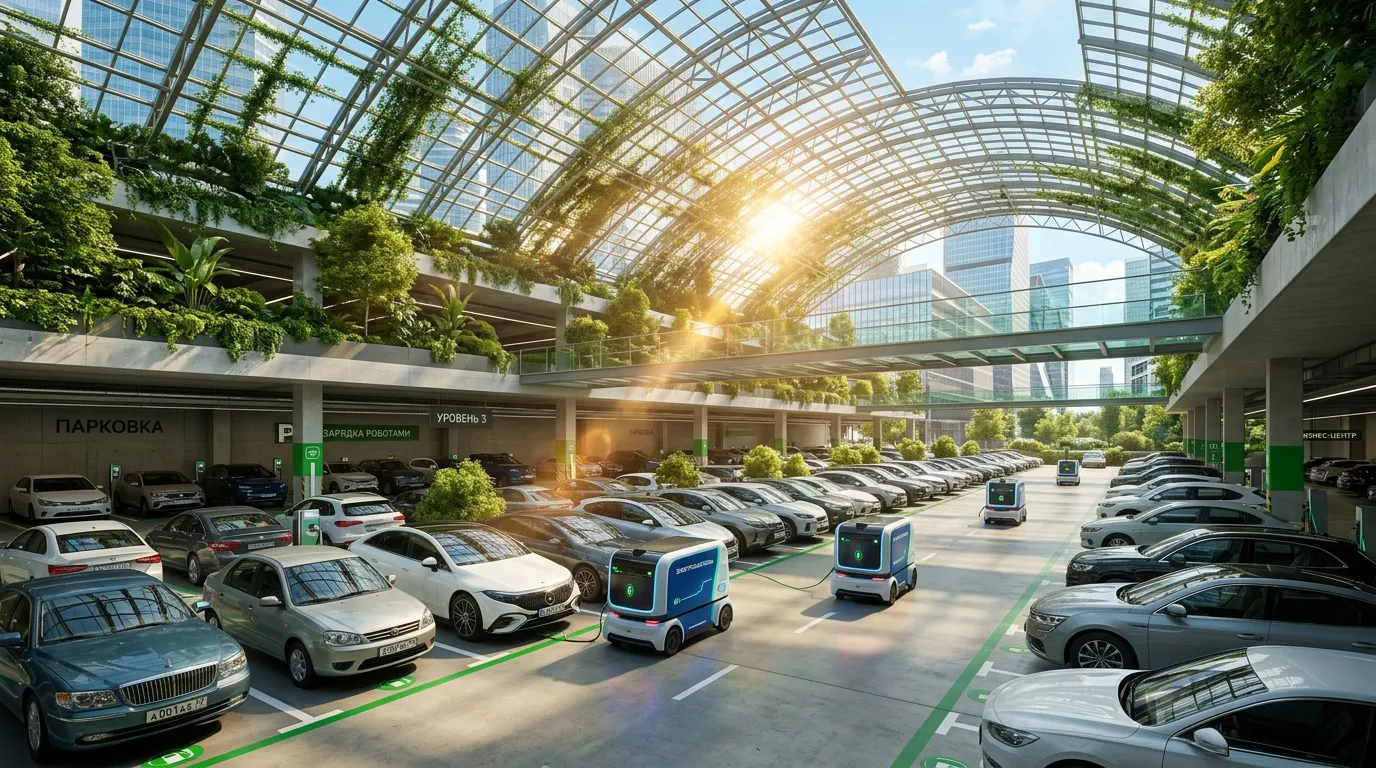
The device is a self-propelled platform on a wheeled chassis capable of navigating parking areas independently. Drivers summon the unit through a mobile app, after which the robot travels to the vehicle, connects the charging cable, and begins delivering power. Once charging is complete, the station automatically returns to its docking module, where it recharges via a pantograph with capacity of up to 22 kW.
This approach addresses several persistent challenges for EV owners, including limited availability of fixed charging points, constrained grid capacity, and tight parking conditions. The mobile unit can operate even in enclosed parking facilities, handling slopes and uneven surfaces at speeds of up to 10 km/h.
Second Life for Batteries
A key advantage of the system is its reliance on domestically produced components, including traction lithium-ion batteries manufactured by Rosatom’s fuel division. These batteries are already used in Russian electric buses. Thanks to this standardization, developers can repurpose batteries that have completed their primary lifecycle in public transport but still retain at least 80% of their capacity.
This significantly reduces component costs, lowers environmental impact through reuse, and improves overall system efficiency. Pilot units are equipped with batteries rated at 35 kWh, while production versions will reach up to 105 kWh – enough to fully charge a depleted electric vehicle.
From Nuclear Expertise to Urban Mobility
For Rosatom, this project is part of a broader push into electric mobility. The corporation says its enterprises can manufacture up to 60% of EV components – including batteries, electric motors, rare-earth magnets, microelectronics, and composite materials. To date, Rosatom operates 293 EV charging stations across 16 regions in Russia, including 30 owned directly by its fuel division.
The mobile charging robot is aimed at property management companies in both commercial and residential real estate, as well as major charging network operators. The solution is particularly relevant in business districts, residential complexes, and roadside locations where EV adoption is outpacing the rollout of fixed infrastructure.
The Future of Electric Transport
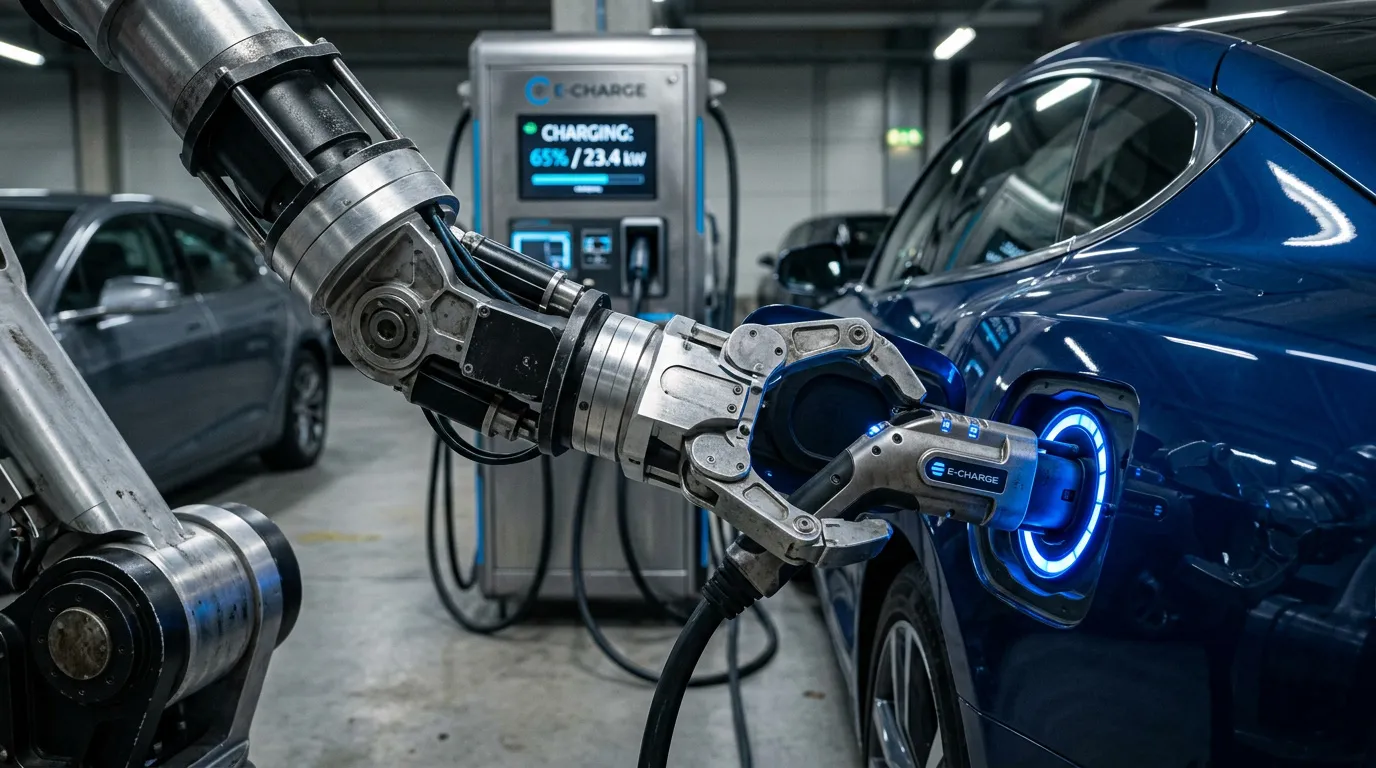
The system is particularly useful in large cities, where limited parking and grid access still slow EV adoption. The autonomous charging robot offers a flexible alternative, delivering power without requiring a fixed charging point.
For Rosatom, the project marks another step in its transition into a diversified technology group, offering solutions not only for the energy sector but also for everyday urban mobility.