Robots at Shipyards
Velesgard, a leading developer of high-tech protective coatings for extreme operating conditions, is set to complete certification by the end of the year for a robotic system that simultaneously performs abrasive cleaning and painting of ship hulls.
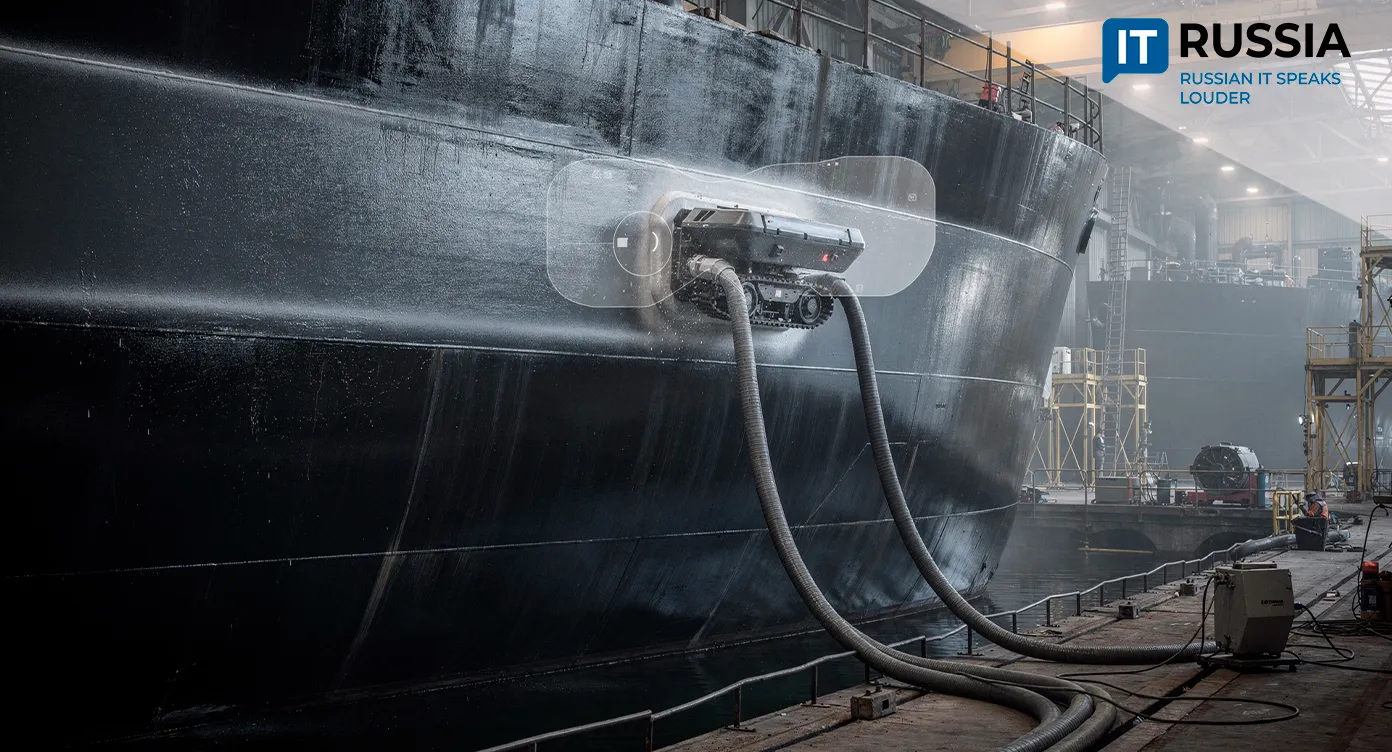
The new equipment will combine mechanical surface preparation with the spraying of coatings, including epoxy and polyurethane enamels and anticorrosive primers, in a single continuous cycle. This addresses a key problem in conventional repair work: the risk that freshly cleaned metal will begin to oxidize before it can be painted. The robot will bring the surface to the strict international Sa 2.5 standard and apply the protective layer almost immediately, helping ensure strong adhesion.
Closed-Loop Technologies
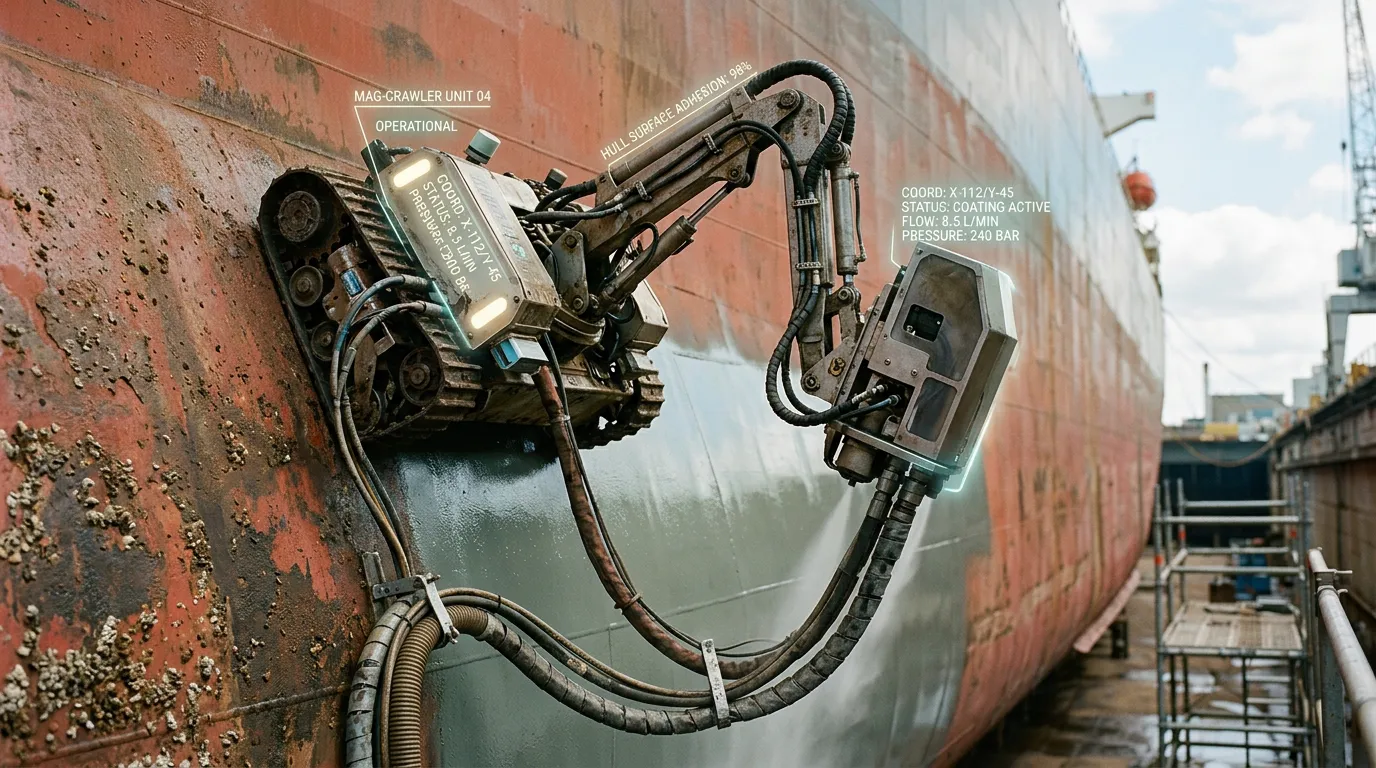
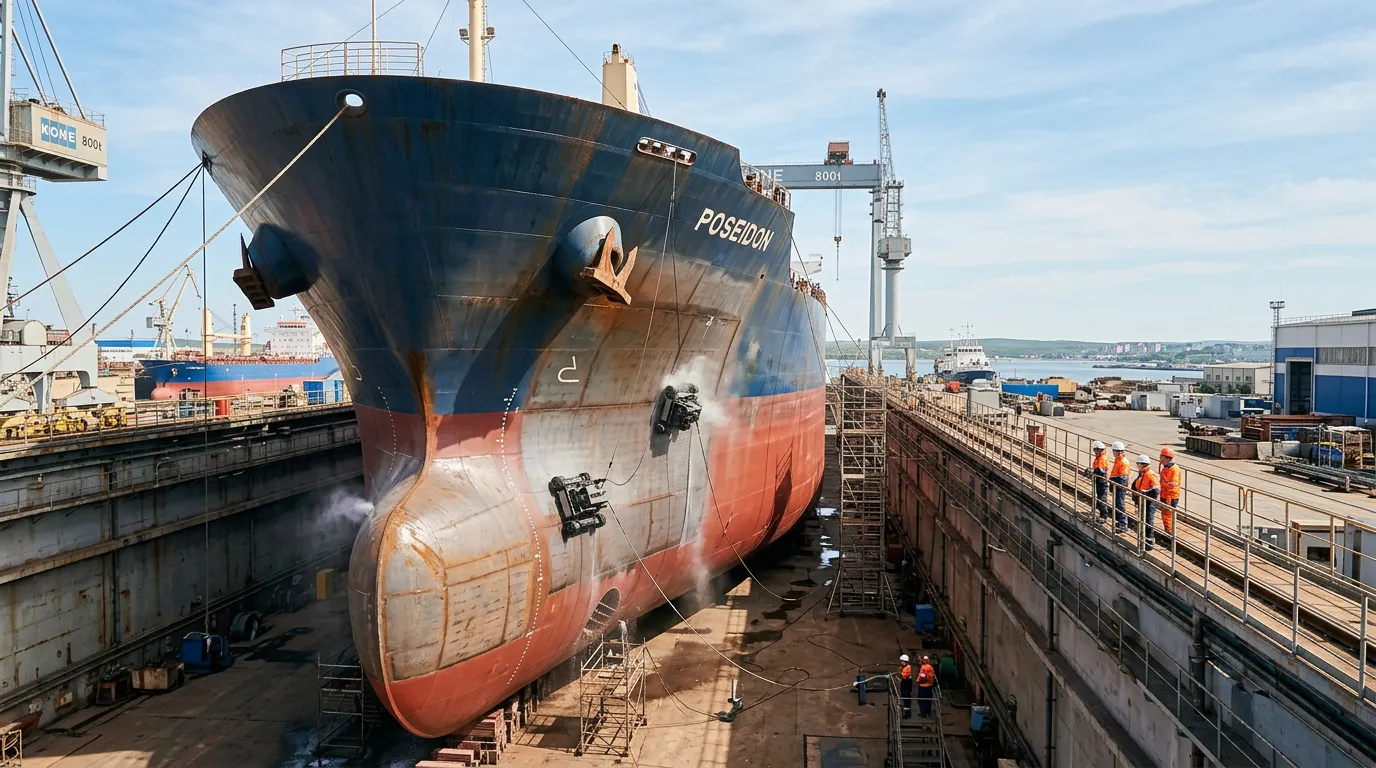
Two specialized robots operated by a technician are already in use at ship repair facilities. The first performs abrasive treatment using sand, shot or copper slag. The second is designed for high-pressure water cleaning at ultrahigh pressure. The choice of machine depends on the specific job. The units stay securely attached to vertical surfaces through magnetic adhesion and are designed to work on ferromagnetic surfaces with metal thicknesses of at least 6 millimeters. The technology is already being used in practice in Astrakhan, where specialists from a contractor working with Velesgard used the equipment to carry out comprehensive repairs and corrosion protection on the self-elevating floating drilling unit Briz.
A key design feature of these systems is their closed-loop waste collection. The working medium is delivered through one hose, while a second hose forcibly removes the old coating and resulting debris. This approach prevents harmful substances from entering the environment and eliminates the need to install additional containment structures. According to Velesgard's calculations, deploying such systems cuts overall work costs by 70% and raises productivity by an average of 20–25%. The equipment can clean not only ships but also the exterior walls of tanks, cisterns and large steel structures.
Demand for Robots and New Skills
Statistics for 2025–2026 show that shipbuilding has become one of the leaders in automation growth across Russia's manufacturing sector. Against a 14% increase in the overall industrial robotics market, which reached 7.86 billion rubles (about $93 million), shipbuilding and ship repair yards rank second in demand for robotics: 29% of companies in Russia's industrial robotics market work with businesses in this sector.
Under the Shipbuilding Industry Development Strategy, more than 500 billion rubles (about $5.9 billion) is slated for industry modernization through 2030. Meanwhile, a national project aimed at developing production equipment calls for overall robot density in Russia to reach 145 units per 10,000 workers. For shipyards, that translates into a systematic modernization of their robotic equipment.
Practical Solutions for Shipyards
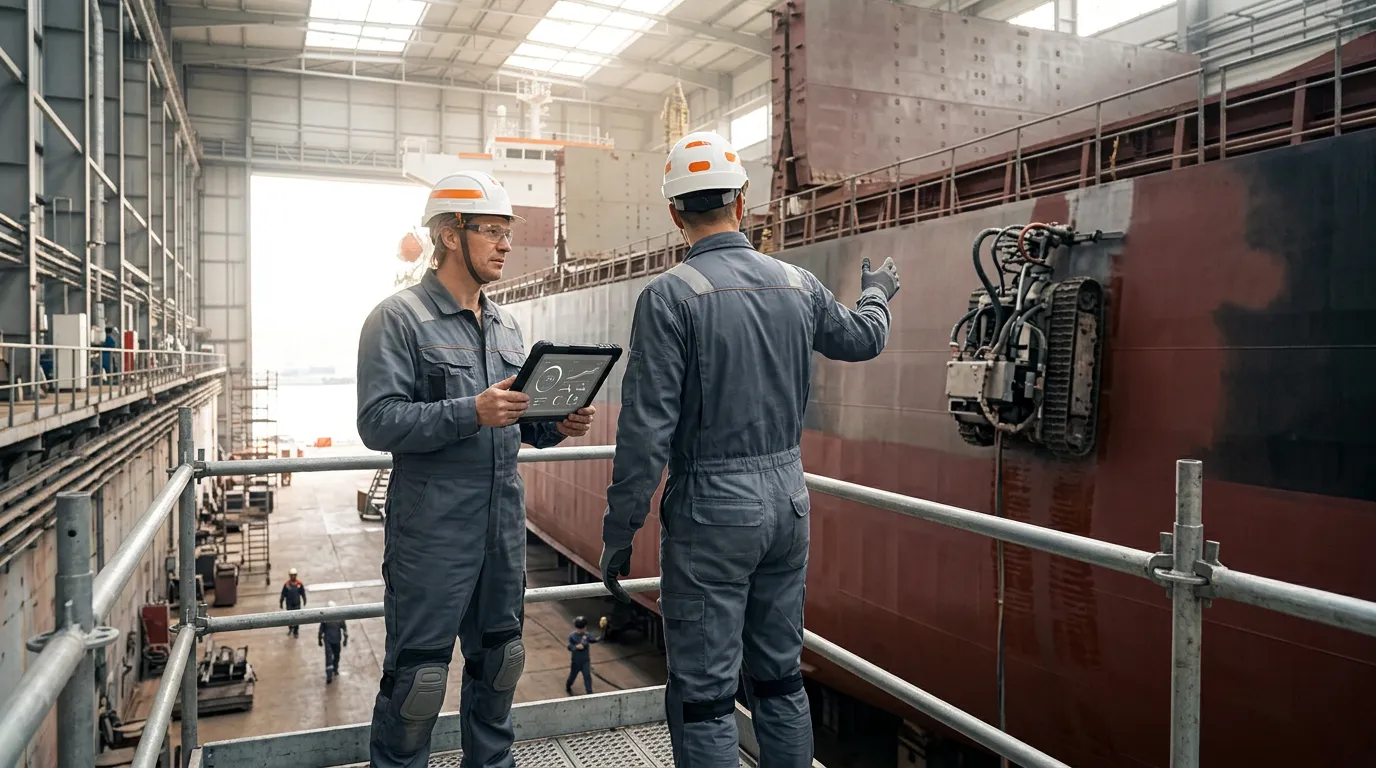
Russia's marine robotics sector is steadily moving from experimental prototypes to practical industrial applications. In 2023, a joint project by the Institute for Problems in Mechanics of the Russian Academy of Sciences and the Saint Petersburg State Marine Technical University produced a technical design for a robot that can remove biofouling, including algae and barnacles, from above- and below-water sections of a hull without requiring the vessel to enter dry dock. Work is now underway to build a working prototype.
Mirrico Group offers the mobile MARTin system for cleaning tanks, with separation modules that divide recovered waste into different fractions. Innovative Industrial Technologies LLC (IST-Russia) manufactures equipment for automated dust-free abrasive cleaning of interior spaces that is approved for use in hazardous areas. Russian laser equipment manufacturers Metorn and Smart Laser LLC are integrating noncontact modules into automated manipulators. In June 2026, specialists from Moscow State University of Technology "STANKIN" presented a modular system based on a collaborative manipulator that can operate autonomously on inclined surfaces and save up to 20% of materials. In September of the same year, the Saint Petersburg Machine-Building Plant announced plans to launch its own robotic system for cleaning and painting ship structures, adapted for work in the confined conditions of ship holds.
From Mechanics to Intelligence
In the near term, the most promising direction is expected to be the development of integrated systems that can not only perform physical operations but also independently assess the condition of structures using sensors, computer vision and artificial intelligence. As these solutions prove effective, their use is likely to spread to adjacent sectors, including metallurgy, energy and oil and gas, where large areas of ferromagnetic surfaces also need to be processed quickly and safely.