Russia Develops the "Eyes" of the Spectr-UV Space Observatory
Researchers at the Institute of Astronomy of the Russian Academy of Sciences (INASAN) and the Y. E. Sedakov Research Institute of Measuring Systems (NIIIS) in Nizhny Novgorod have developed the hardware for the readout unit of Russia's Spectr-UV space observatory.

The space race of the 21st century is being driven not only by powerful rockets but also by increasingly sophisticated microprocessors. While the world focuses on crewed lunar missions, Russian laboratories are building the technological foundation that could shape both Russian and global astronomy for decades to come. The latest achievement by Russian researchers provides a compelling example of that trend.
A Breakthrough in Orbit: Smart Electronics Replace Raw Data Streams
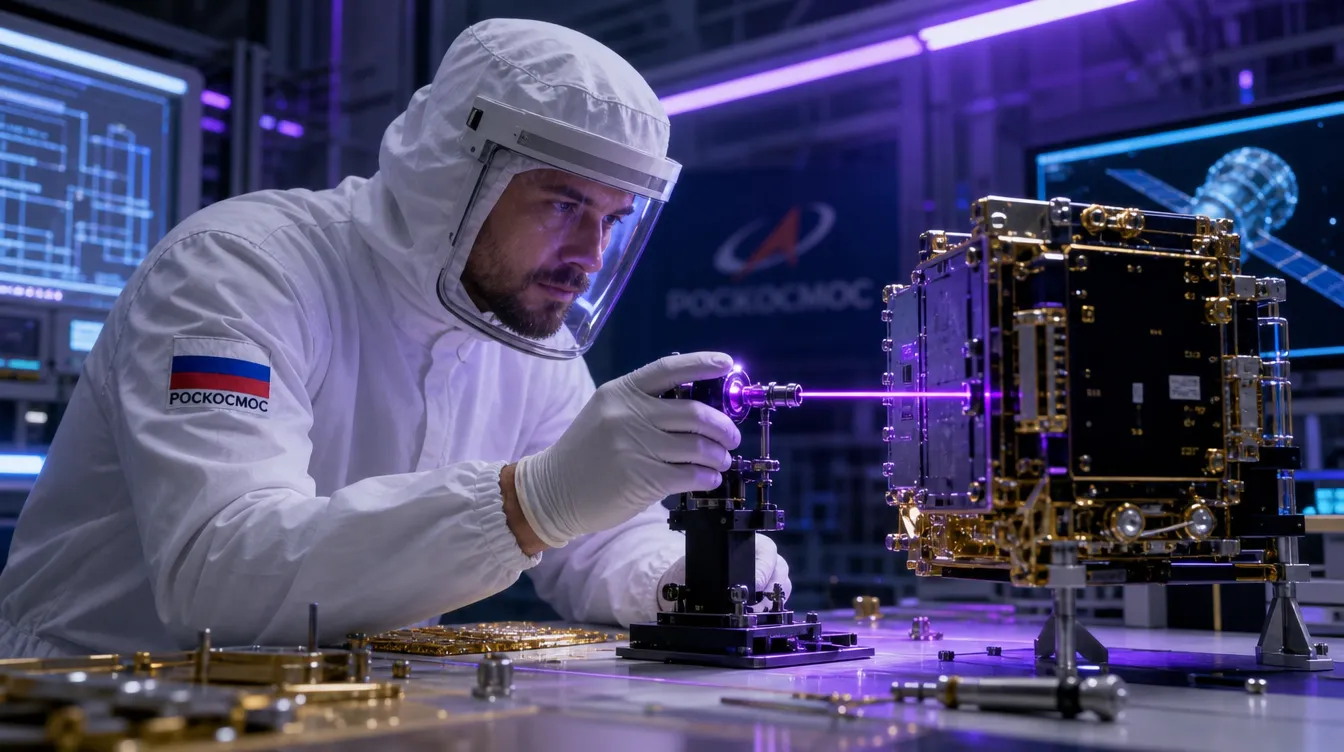
The new system developed by INASAN and the Y. E. Sedakov NIIIS is designed to detect individual ultraviolet photons and perform their initial processing directly aboard the spacecraft. Far more than a technical subsystem, it is a mission-critical component of one of Russia's largest scientific space projects, eliminating a major technological risk created by international restrictions.
The engineering challenge was both complex and representative of a broader issue facing modern spaceflight. The system analyzes images from an image intensifier at roughly 100 frames per second. The raw data stream exceeds 1Gbps, whereas the radio link to Earth provides bandwidth measured only in megabits per second. Transmitting the complete data stream is physically impossible because it would overwhelm the communications channel. Instead, the device independently detects photon events, calculates their coordinates, and transmits only the time and location of each detection, reducing the data volume by orders of magnitude.
The hardware was built entirely on Russian radiation-hardened electronic components, replacing a unit that had originally been developed by the Spanish side.
A Challenge for the IT Industry: Algorithms at the Edge of What Is Possible
Developing this instrument posed a significant challenge for Russia's IT sector because it sits at the intersection of microelectronics, high-performance image processing, embedded software, and space instrumentation. Its greatest value lies in the ability to process an enormous stream of data in real time despite severe hardware constraints. Space-qualified processors differ fundamentally from commercial chips: they must withstand radiation, which inevitably limits their clock speeds. Writing software capable of extracting meaningful photon signals from gigabits of noise within fractions of a second on processors operating at only a few hundred megahertz represents the highest level of software engineering. Solutions of this kind also create lasting technological expertise and a highly specialized workforce that will remain in the country long after the mission concludes.
From Import Substitution to Technological Sovereignty
In 2021, Spectr-UV was envisioned as an international observatory with significant participation from Spain and Japan, including discussions about installing a Japanese spectrograph for studying exoplanet atmospheres. Following geopolitical developments after 2022, however, Russia accelerated work on domestic replacements for key technologies.
In 2025, researchers at the Institute of Semiconductor Physics of the Siberian Branch of the Russian Academy of Sciences announced the development of efficient domestically produced photocathodes for radiation detectors using the specialized Cosmos synchrotron beamline in Novosibirsk. During the same year, the mission was officially included among Russia's priority fundamental space research programs. In July 2026, the development of the single-photon detection system marked another major milestone.
Rather than replacing a single imported component, the project creates a complete domestic production chain for space electronics, spanning radiation-hardened microchips and photocathodes through specialized software and scientific data storage systems.
Significance for Russia and the World: A Worthy Successor to Hubble
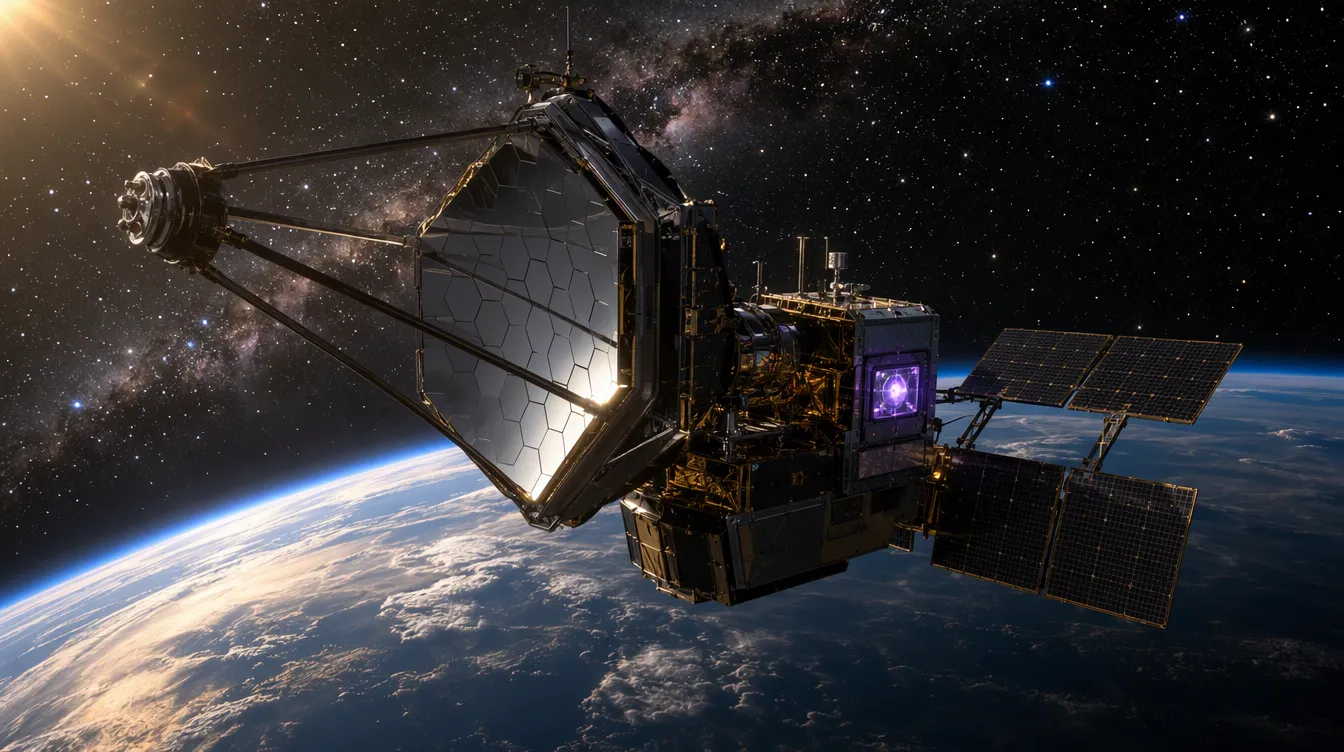
Spectr-UV is currently scheduled for launch on October 24, 2031. The observatory will be placed into a high orbit approximately 35,000km above Earth to conduct fundamental research on stars, galaxies, black holes, planets, and exoplanet atmospheres. As the legendary Hubble Space Telescope approaches the end of its operational life, the Russian observatory could become the world's only major orbital instrument conducting systematic observations in the ultraviolet spectrum, giving it exceptional importance for global astrophysics.
Notably, the project includes an open international observing program under which astronomers from other countries will be able to submit proposals. In that sense, the telescope is expected to become a powerful instrument of scientific export, strengthening Russia's role in international research, supporting joint publications in leading scientific journals, and facilitating collaboration with leading experts worldwide.

Prospects and Risks: A Five-Year Path to Orbit
The immediate priority is to mature the device into a flight-qualified unit, integrate it seamlessly with the image intensifier, and complete testing as part of the scientific payload. Engineers must demonstrate that the system can withstand intense radiation, extreme temperature fluctuations, launch vibrations, and years of autonomous operation. The onboard data selection and compression technology is also expected to find applications in other space missions, including Earth observation systems, X-ray telescopes, and satellite early-warning networks. Russia's export potential today lies not in mass-produced hardware but in supplying radiation-hardened optical data processing modules and unique engineering expertise.