Sakhalin Tracking Station Communications Systems Ready for Operation
The antenna complex and unified technology module of the Sakhalin tracking station have successfully completed all testing. The equipment will support launch operations from the Vostochny Cosmodrome.
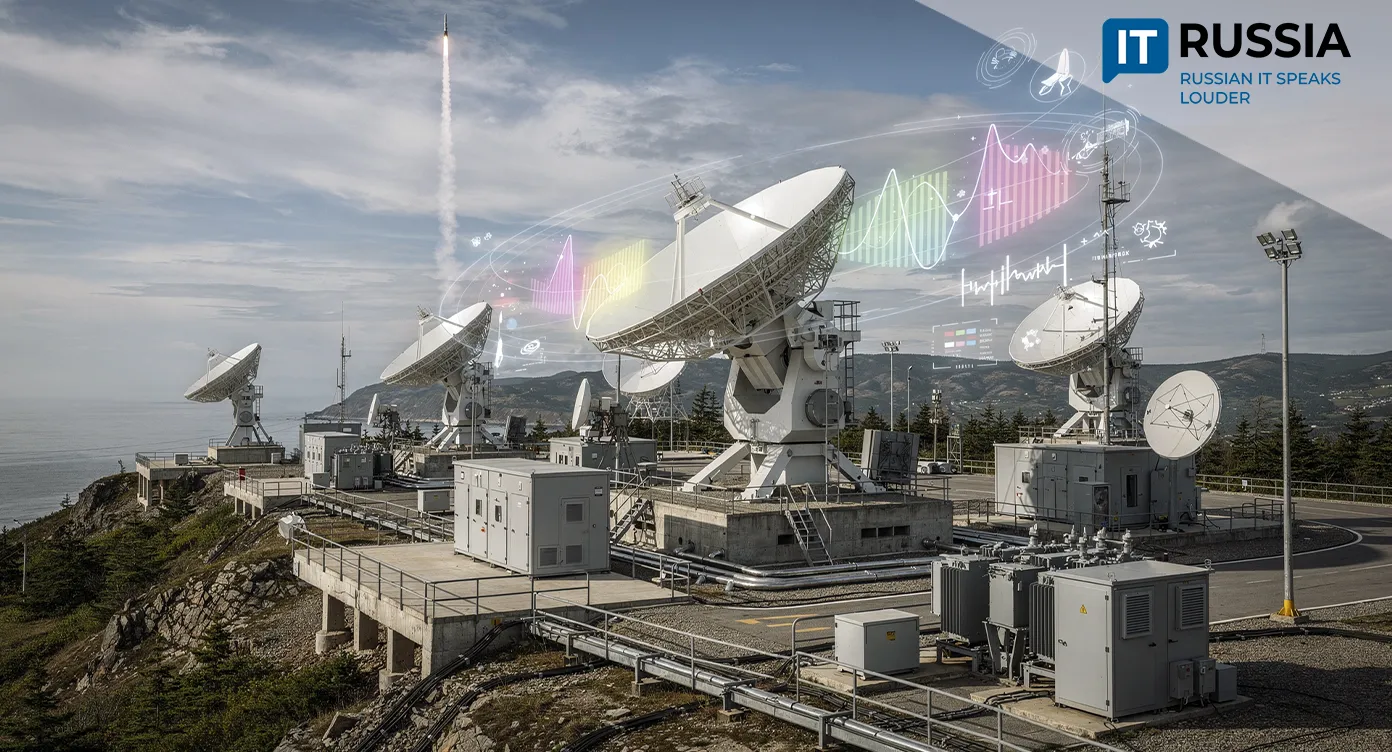
Russia continues to expand the Vostochny Cosmodrome, strengthening the country's ability to conduct independent access-to-space missions. One of the key prerequisites for that goal is a reliable communications infrastructure.
Adapted for the Toughest Conditions
Russian Space Systems (RKS) has successfully completed testing of the antenna complex and unified technology module for the Sakhalin tracking station. The equipment is designed to collect telemetry from launch vehicles and spacecraft during orbital missions while also supporting command and control operations. All systems demonstrated a high level of reliability. They are capable of operating even in dense salt fog and under conditions of elevated seismic activity.
The new tracking station in the city of Poronaysk, Sakhalin Region, is being built by Roscosmos. RKS, together with its subsidiaries – OKB MEI (Special Design Bureau of the Moscow Power Engineering Institute) and NPO IT (Research and Production Association of Measuring Equipment), which are responsible for antenna systems that receive telemetry from launch vehicles, upper stages, and spacecraft – is supplying, installing, and commissioning the station's technological equipment.

Access From Anywhere in Russia
The new tracking complex includes two modern TNA-12M tri-band antenna systems and one AS-M antenna system. All of them have completed the required testing program and are fully ready for operation. Another key component is RKS's peripheral satellite communications earth station.
"The technologies incorporated into these systems, together with modular software, make it possible to receive telemetry from various spacecraft, launch vehicles, and upper stages, while also enabling remote antenna control from any tracking station anywhere in Russia," says Konstantin Yemelyanov, General Director of OKB MEI.

All-in-One
The unified technology module follows an all-in-one design concept. It houses both hardware and software systems together with equipment that supports launch operations and monitors the flight of upper stages. The module's systems can also coordinate communications sessions and receive data from satellites of different classes, the International Space Station, and the future Russian Orbital Station.
Preparing the communications systems for commissioning marked one of the final milestones before the entire complex enters service. As of the end of June, overall construction was estimated to be 75% complete. Completion of all work is scheduled for the end of this year. Looking ahead, the Sakhalin tracking station could be expanded with a reception and processing complex for Earth observation satellites, command-and-measurement stations for controlling Russia's satellite constellation, and a new station capable of receiving distress beacon signals from the international COSPAS-SARSAT search-and-rescue system.

Ground Infrastructure for Future Programs
The deployment of new ground communications infrastructure will support continued implementation of the federal Sfera (Sphere) program, which aims to build a multifunctional low Earth orbit satellite constellation. The first satellite under the program was launched in 2022. By 2030, the constellation is expected to comprise approximately 640 spacecraft.
Equally important is Russia's transition to operating heavier-class spacecraft. In April 2024, the Angara-A5 heavy-lift launch vehicle lifted off from the Vostochny Cosmodrome for the first time. The site is considered significantly more advantageous for such launches than the Plesetsk Cosmodrome because it is located closer to the equator. However, further development has been constrained in large part by communications infrastructure limitations. Those constraints are expected to be overcome in the near future.
At this stage, it is essential that construction of the Sakhalin tracking station be completed on schedule. The project has experienced delays in the past for a variety of reasons. Once operational, the new complex will enable Roscosmos to make more effective use of the Vostochny Cosmodrome. That will not only expand Russia's capabilities for space exploration but also strengthen the country's technological sovereignty.