

From Flood Patterns to Smarter Oil Fields With a New Waterflooding Cell Model
Centicore Group has developed a prototype software system that automatically builds and visualizes waterflooding cells for oil fields. By analyzing the positions of production and injection wells, reservoir boundaries and geological faults, the solution helps engineers evaluate reservoir pressure maintenance systems. The technology has the potential to reduce manual calculations and ultimately improve the efficiency of oil production management.
Centicore Group began operations in 2013 as a telecommunications operator before shifting its full focus to software development in 2018. Even then, its customers included major oil and gas companies, among them Gazprom Neft. Throughout that period, one engineering challenge remained constant – the need for software capable of helping engineers and geologists plan waterflooding strategies to improve oil recovery.
Rock heterogeneity, faults and varying permeability all influence how injected water moves through a reservoir. Simply dividing a field into uniform geometric "cells" between wells using averaged rock properties cannot produce even an approximate representation of actual reservoir behavior. Both geological geometry and engineering constraints must be taken into account. Traditional workflows, which rely heavily on manual analysis, do not always adapt efficiently as new data becomes available. The industry needed a more accurate tool, and now one is available.
From Prototype to Product
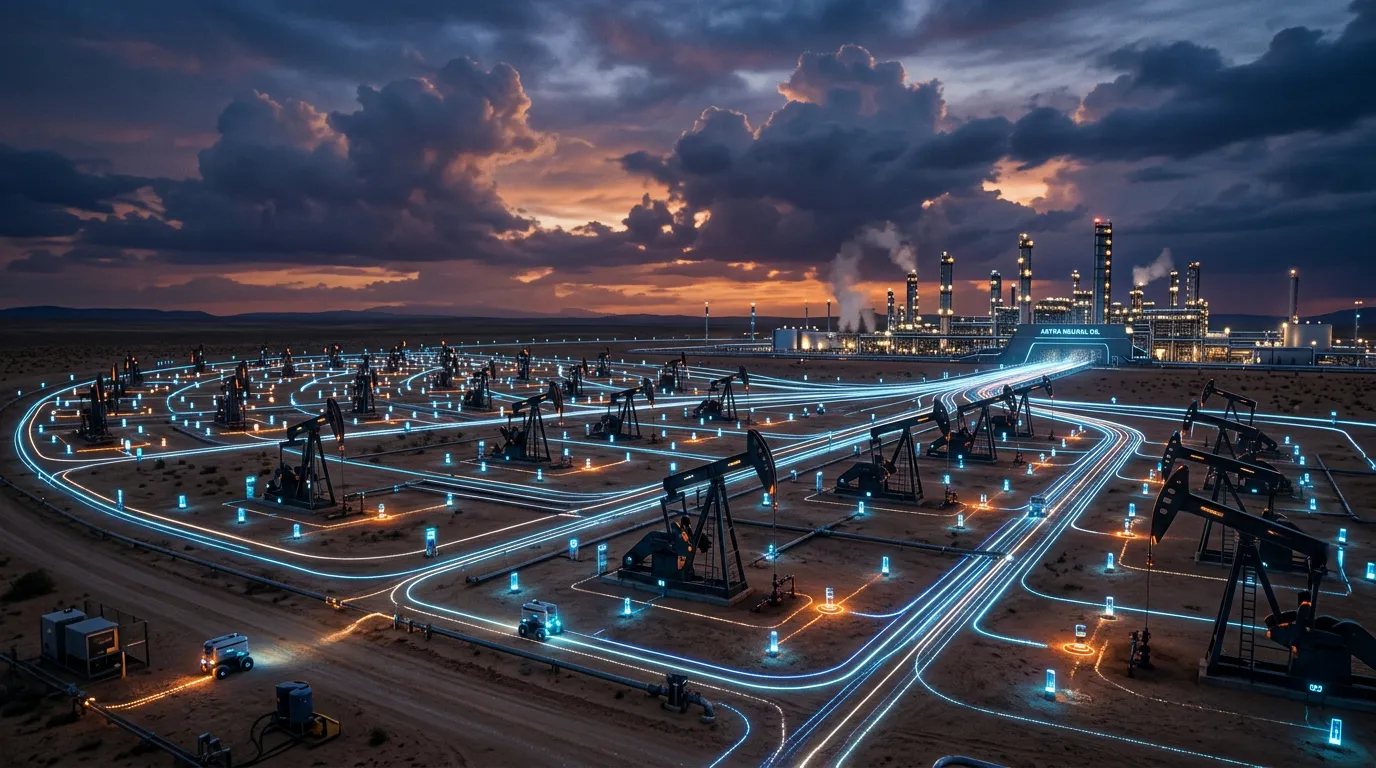
At this stage, the system is still a software prototype. It was developed in just two months for a Russian system integrator serving the oil and gas industry. The solution is built on clustering and spatial analysis algorithms, while visualization is provided through an interface based on Qt Framework and Matplotlib. The library's architecture has been designed for future expansion and integration into industrial decision-support systems.
The development aligns with the broader effort to build Russian industry-specific software and reduce reliance on foreign engineering platforms. For Russia, the technology could become an important tool for improving the performance of mature oil fields, where a significant share of recoverable reserves has already been produced and water injection requires increasingly precise management.

Why the Development Matters
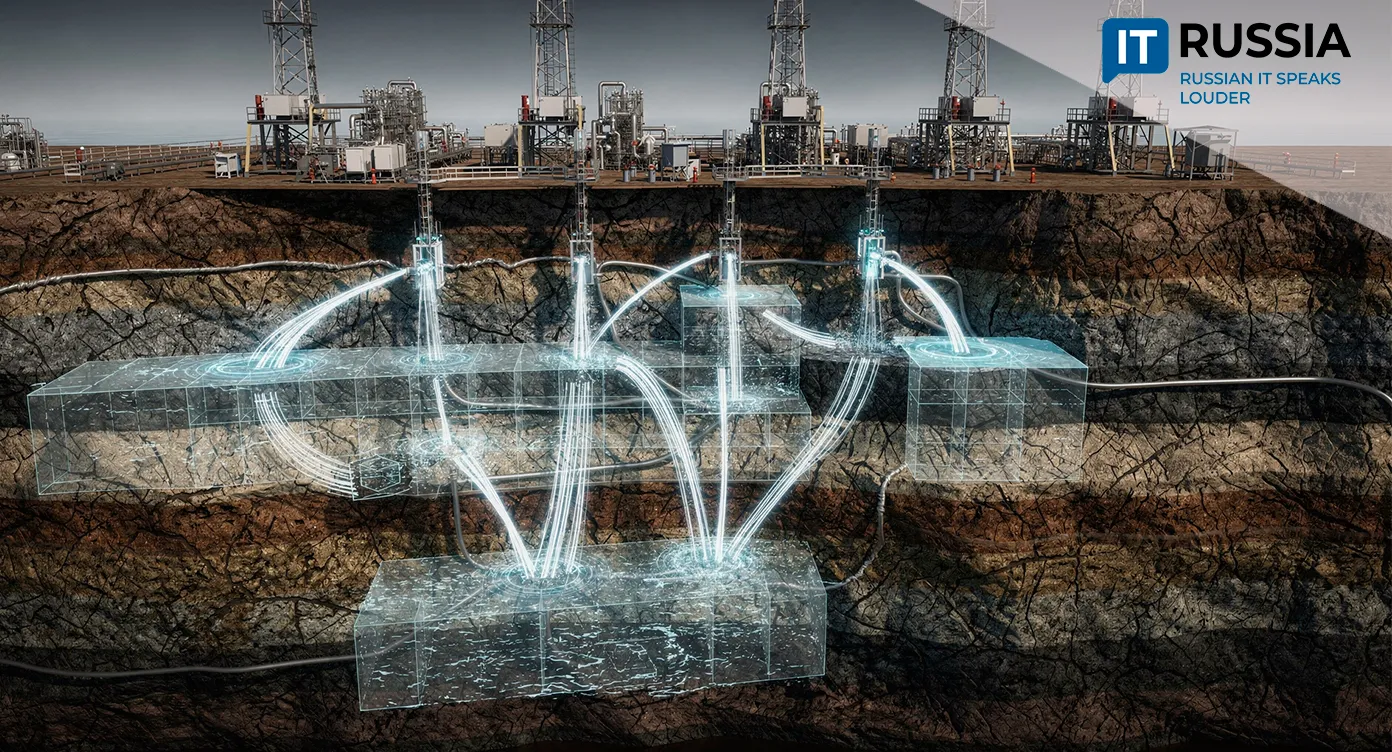
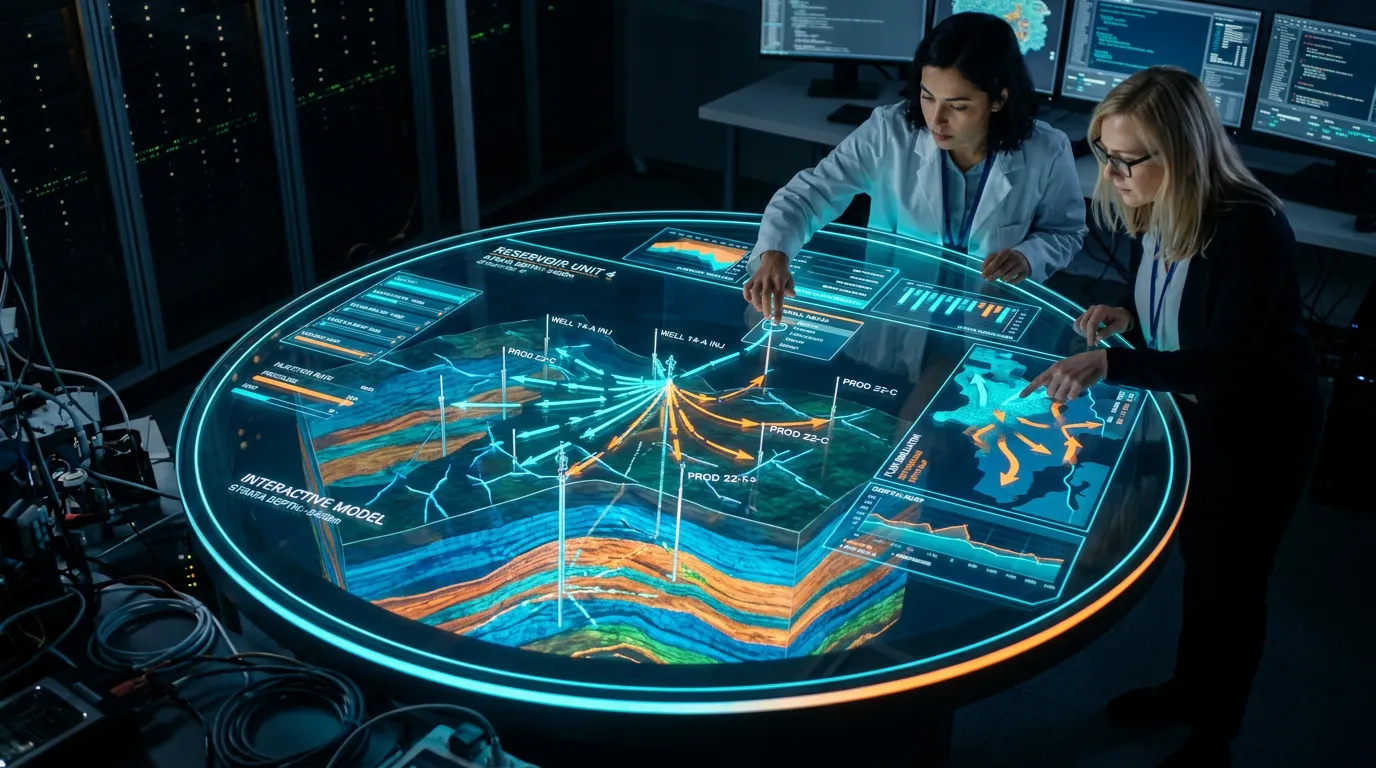
The software library created by Centicore automatically generates and visualizes waterflooding cells. It processes the coordinates of production and injection wells together with geological fault data and reservoir boundaries. The output divides the reservoir into cells, each associated with a specific injection-production well pair. At the same time, the final model accounts for the full range of geological complexities.
The developers initially attempted to solve the problem by creating a standalone application. However, implementation ultimately required much deeper work in data analysis. The team adapted clustering and spatial analysis algorithms so they would reflect not only mathematical relationships but also the engineering logic behind field development. Rather than simply displaying a map, the product overlays calculated results directly onto geological cross-sections and reservoir maps.
The architecture also makes future expansion straightforward. Additional geological data types will be incorporated over time, together with integration into industrial decision-support systems. Before the software can become a full-scale industrial module, it will need to be validated using operational data from multiple oil fields. Integration with corporate databases, geological models and production monitoring systems will also be required. Looking ahead, the developers plan to add waterflooding performance evaluation, production forecasting and recommendations for adjusting injection well operating modes.
Toward Greater Autonomy
The market for solutions of this kind is already taking shape in Russia. For example, Rosneft's RN-KIN software suite, introduced in 2022, enables engineers to build rapid two-dimensional models for analyzing reservoir depletion and the performance of reservoir pressure maintenance systems. The company is also developing its RN-KIM reservoir simulation platform.
In 2024, a team of developers at Gazprom Neft introduced a software module for planning and evaluating the efficiency of non-stationary waterflooding across the company's oil fields. The solution determines cyclic water injection parameters while calculating both actual and projected performance.
Companies are no longer using these engineering solutions solely for their own operations. They are increasingly commercializing their proprietary software and bringing it to the broader market for industry solutions. More broadly, the sector is moving beyond standalone geological and reservoir simulation models toward integrated systems that connect subsurface and surface operations while supporting production management throughout every stage of field development.