International Students Tackle Nuclear Industry Challenges at Summer University 2026
The international educational programme Summer University 2026 has concluded at Ural Federal University (UrFU) in Yekaterinburg, bringing together students from around the world to work on practical challenges for Russia's nuclear industry through a multidisciplinary project format developed in partnership with Rosatom.

The programme brought together 430 students from 16 countries. Its central component was HackAtom, a project-based competition in which international teams developed solutions to practical case studies provided by Rosatom, combining expertise in nuclear technologies, information systems, artificial intelligence, economics, and law.
Educational Tracks and Industry Partners
Summer University at UrFU featured seven educational tracks. These included nuclear power engineering and civilian radiation technologies, information technology and artificial intelligence, digital business transformation, food biotechnology, as well as humanities and economics. Courses were delivered in both Russian and English.
Project partners included the Beloyarsk Nuclear Power Plant and JSC Institute of Reactor Materials. Students enrolled in the nuclear track studied the advantages of nuclear energy and explored radiation processing technologies used in industry. Participants in the IT track focused on software development, database management, and the fundamentals of machine learning.
The project was supported by the Russian Ministry of Science and Higher Education. Participation was free of charge, with travel, tuition, accommodation, and a cultural programme provided for all students.

HackAtom: Multidisciplinary Teams for Rosatom Challenges
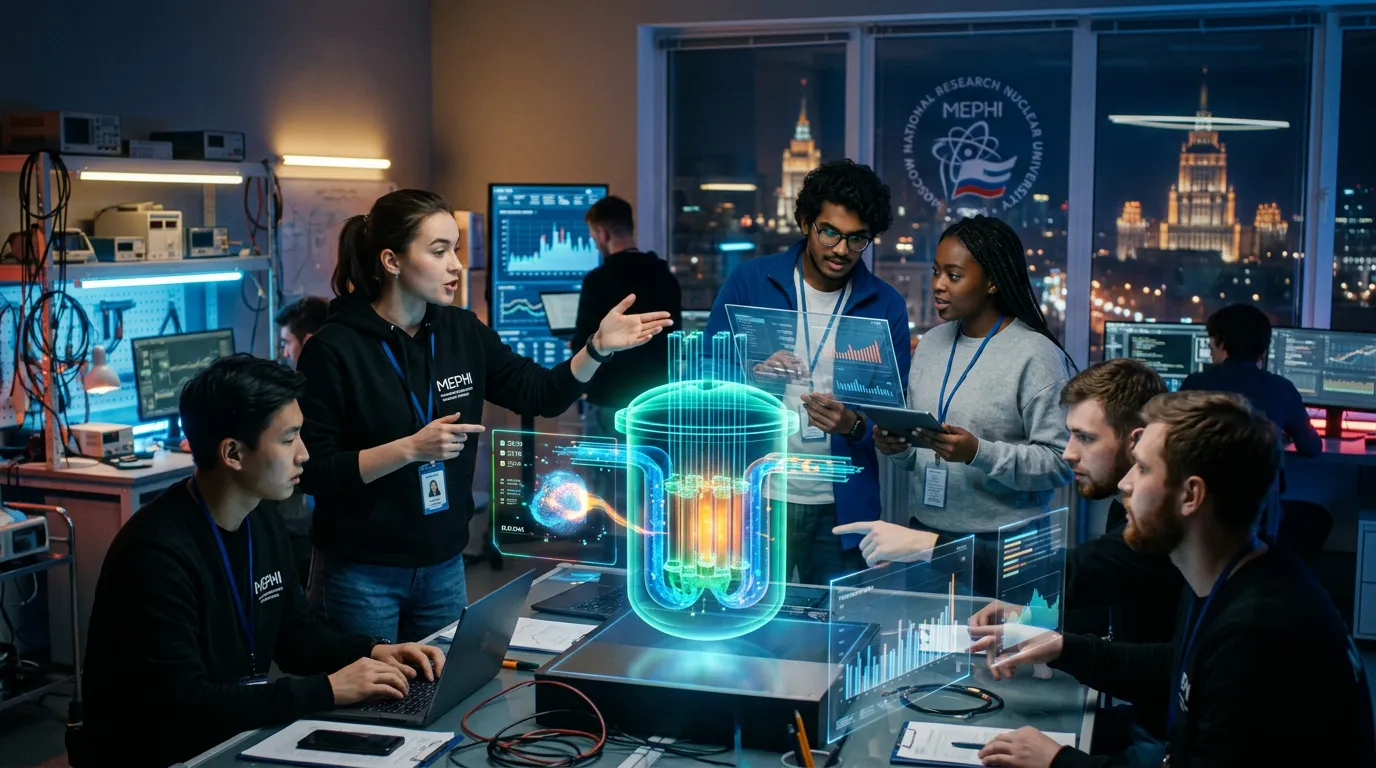
This year's project component of Summer University was organised in the HackAtom format. Students from different academic disciplines formed multidisciplinary international teams and worked on practical challenges presented by representatives of enterprises operating across Russia's nuclear industry.
The programme followed an intensive multi-day schedule. On the first day, teams worked with mentors to develop concepts and define solution architectures. On the second day, they prepared their projects and presentations. On the third day, the results were presented to a judging panel comprising experts from industry and business.
A defining feature of HackAtom was the integration of technical and non-technical expertise. Nuclear engineering students addressed the scientific and engineering aspects of each challenge, IT professionals developed software solutions, economists evaluated project viability, and law students examined regulatory and legal considerations. The strongest teams were recognised for the depth of their work, practical value, and innovative approach. Their projects may be implemented in practice.

The ObninskTech Industry Ecosystem
Summer University is an educational initiative of the ObninskTech (Obninsk Tech) International Research and Education Centre. It forms part of the broader workforce development system that Rosatom is building to support the nuclear industry.
Another element of this industry ecosystem is the international GlobalHackAtom student championship. In 2026, national qualifying rounds were held in 15 countries, including Russia, Kazakhstan, Hungary, Vietnam, Egypt, Brazil, and Armenia.
Winners of the regional competitions earn the opportunity to compete in the grand final, held in Yekaterinburg. The championship is designed to promote engineering and nuclear professions while helping students develop practical problem-solving skills applicable to real industrial projects.
Building a Talent Pipeline for Russian and International Nuclear Projects
Rosatom is implementing nuclear power plant projects in China, India, Türkiye, Egypt, Bangladesh, Hungary, and other countries. Supporting these projects requires professionals who can work effectively in multicultural environments while understanding not only the technical aspects of nuclear engineering but also the economic and legal dimensions of project delivery.
Summer University addresses that need during students' academic training. Participants from partner countries gain first-hand exposure to Russian technologies, build professional networks, and become familiar with operational standards in the nuclear sector. For Russian students, the programme provides cross-cultural experience that is essential for working on international nuclear projects.
Project-based learning through the HackAtom format allows students to progress from academic assignments to engineering-oriented project development. For industry partners, it provides access to motivated prospective employees who are already familiar with the sector's engineering tools and project culture. According to UrFU, by 2024, project-based learning had been incorporated into 75% of the university's educational programmes, while projects involving external industry partners accounted for 41% of all project activities.
Today, workforce development for the nuclear industry extends well beyond the traditional university curriculum, combining academic education, project-based learning, and international collaboration into a unified training model.