Gateway Through the Geoportal: Kuban Opens the Door to Foreign Investors
The Krasnodar Region has become the first Russian region to integrate its investment sites into the Commonwealth of Independent States Spatial Data Infrastructure Geoportal, giving investors across the CIS access to more than 1,000 opportunities.

Investment projects launched at the sites offered to investors could bring more than 1 trillion rubles (approximately USD 12.8 billion) into the regional economy. Available land parcels include locations suitable for tourism infrastructure both along the Black Sea coast and throughout the region's interior.
Investment Showcase
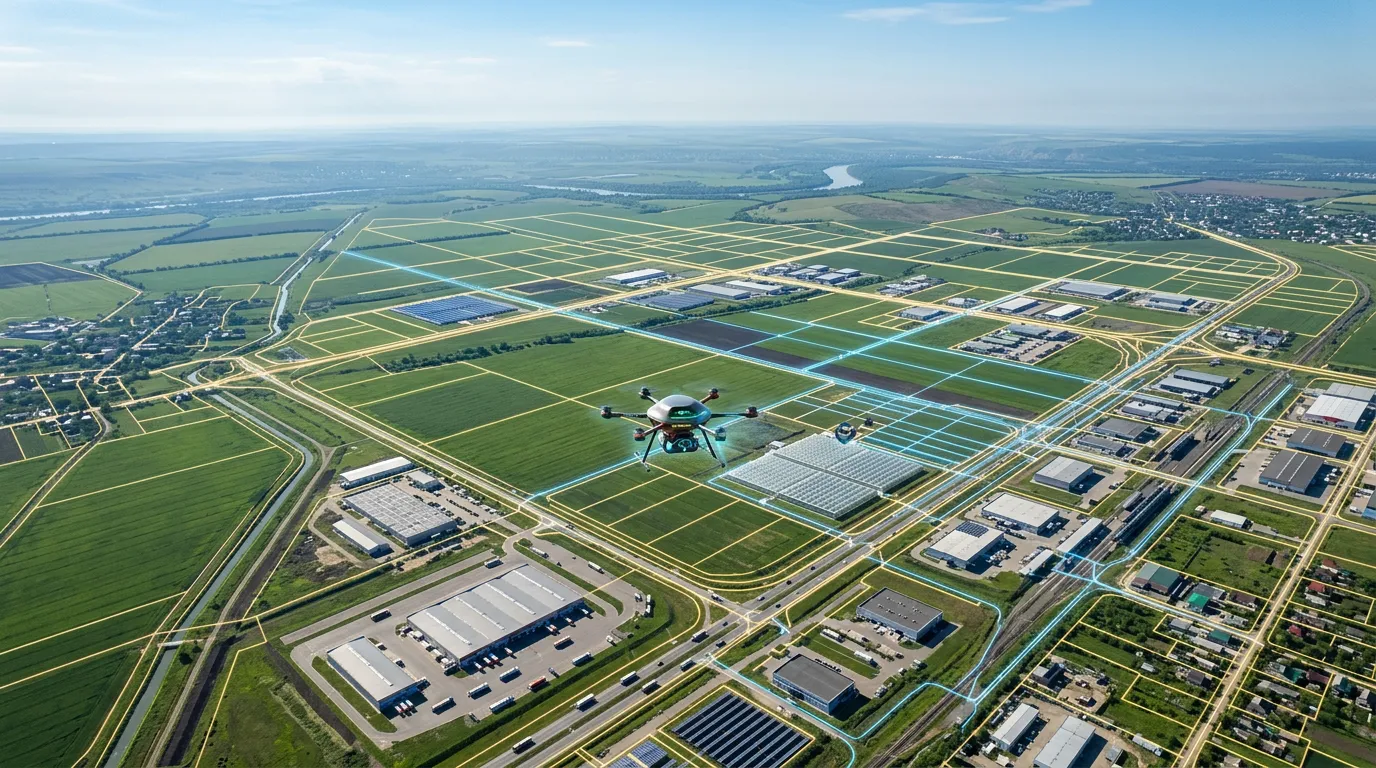
Integrating Kuban's investment sites with the unified geospatial platform enables investors from CIS countries to evaluate each property's location, transportation access, and existing infrastructure without submitting requests to multiple government agencies.
"As part of this information-sharing initiative, Roskadastr will not only place properties from the Krasnodar Region's land bank on the map but also help the agency convert investment site information into spatial data," said Marina Epifantseva, Director of the Krasnodar Region Investment Promotion Agency. Oleg Chashin, Deputy Director General and Head of the Roskadastr-Infotekh Digital Technology Center branch of Roskadastr, added that the region's investment sites will soon also be available through the Ya – Investor (I Am an Investor) service.
Today, users who select the "Investments" section from the map's side panel can view both available land parcels and real estate offered for lease, together with each property's intended use and price. The information is verified and has legal standing. That makes it easier for businesses to complete an initial screening of potential locations for future investment projects.
Standardization and Services
The CIS Geoportal is essentially a multifunctional digital atlas. It currently brings together spatial data from Russia, Belarus, and Kyrgyzstan, while Kazakhstan and Uzbekistan are expected to join later. As the volume of available information grows, the platform becomes increasingly valuable for international investors. New investment sites from additional regions and countries will continue to be added. Standardized descriptions of each property – including location, intended use, engineering infrastructure, and other characteristics – allow investors to compare opportunities on a consistent basis. Over time, the platform is expected to evolve beyond publishing property listings toward providing a unified digital investment support service, including automated site selection based on user-defined criteria, regulatory constraint checks, utility connection estimates, and electronic application submission.

Maps of Opportunity
The integration of the Krasnodar Region's investment sites into the Geoportal is not the only example of Russian regions expanding digital access for foreign investors. Since 2022, Russia has operated a unified Investment Map of the Far East and the Arctic, available not only in Russian but also in English, Chinese, Japanese, and Korean. The platform has developed into a comprehensive suite of investment services and has already supported the implementation of 1,406 business projects.
In 2024, Minekonomrazvitiya (Ministry of Economic Development of the Russian Federation) launched the Investment Map of Russia, building it from regional investment maps created as part of the Regional Investment Standard initiative. The platform allows investors to identify suitable investment sites while also exploring available government support measures.
In 2025, Rosreestr (Federal Service for State Registration, Cadastre and Cartography) launched the CIS Geoportal. By combining mapping data from Russia, Belarus, and Kyrgyzstan, it created a cross-border digital showcase of investment opportunities.

Digital Promotion of Regional Assets
The joint initiative by Roskadastr and the Krasnodar Region Investment Promotion Agency provides a model for digitally promoting regional investment assets across the CIS. In the medium term, the approach is expected to be expanded to other Russian regions seeking to attract new investment.
More broadly, the initiative marks a transition from regional and national investment portals to an interstate digital ecosystem in which geospatial data becomes a practical tool for economic cooperation. Russian GIS platforms are attracting interest beyond the country's borders and are helping bring more foreign investors to regional projects.