

Humanoid Robots Are Headed to the Farm
Students at the Timiryazev Academy are developing a humanoid robot designed to perform practical tasks on livestock farms, marking another step in bringing advanced robotics into everyday agricultural operations.
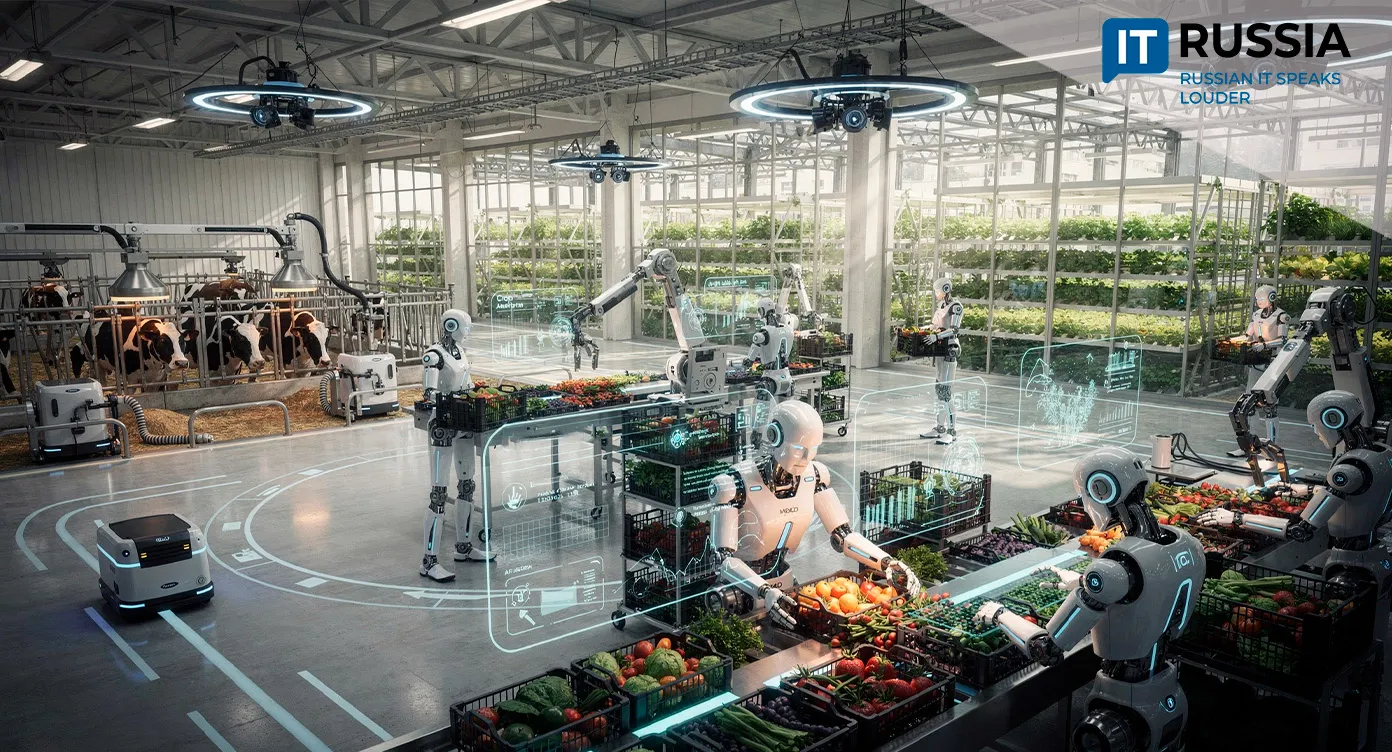
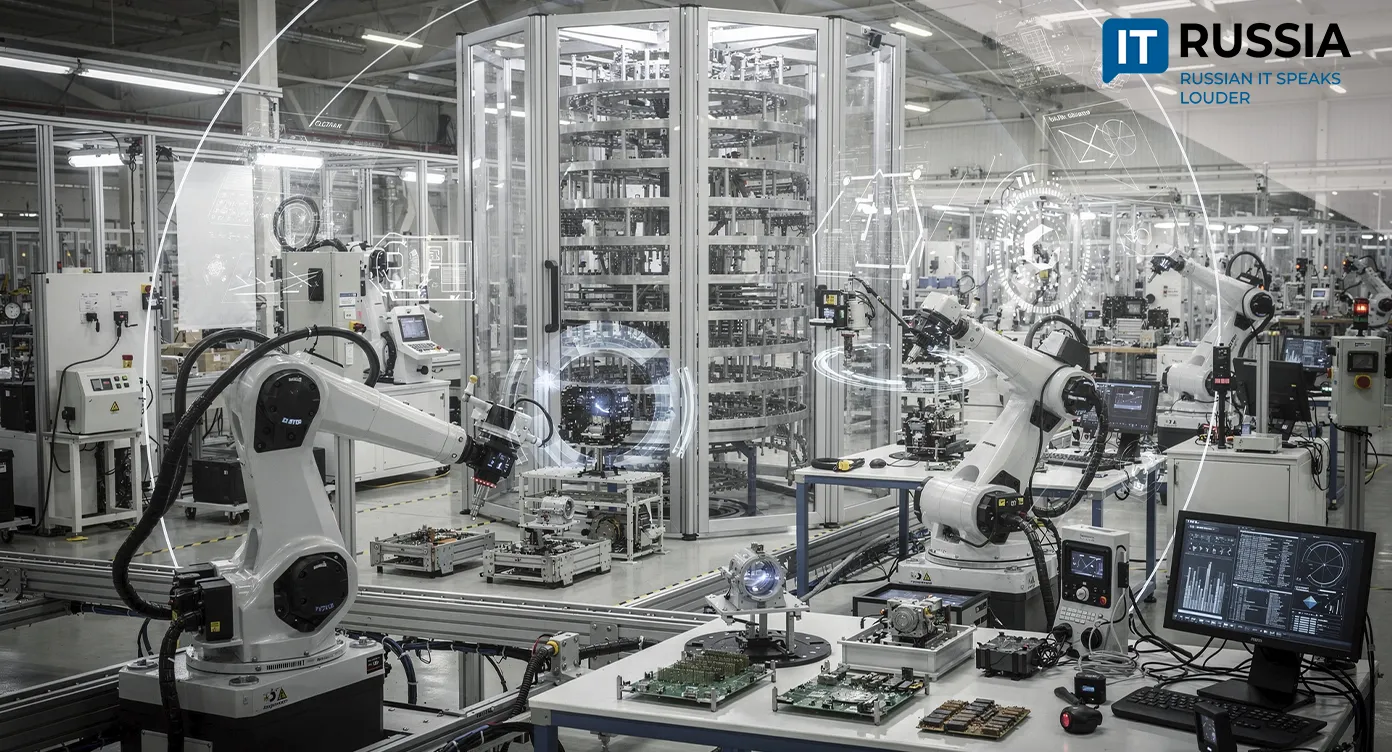
Russia continues to develop agricultural robots to support the farming sector. These systems are intended to address a growing workforce challenge that is expected to intensify over the coming decade. According to industry statistics, about 30% of agricultural workers could retire within the next 10 years, further deepening labor shortages. Without broader adoption of robotics in agricultural operations today, food production costs could rise significantly over the next decade, ultimately affecting food prices.
Built to Work Alongside People
During July and August 2026, the nationwide AgroHub agricultural hackathon is being held at the Istra Cheesemaking Farm, serving as a field laboratory where students collaborate directly with agricultural producers. This year's hackathon focuses on agricultural robotics. The project is supported by Rosagroleasing, the Russian Ministry of Agriculture, Rosselkhozbank, Yandex, and 3 Logic. Participants are tasked with solving real-world operational challenges identified by farmers.
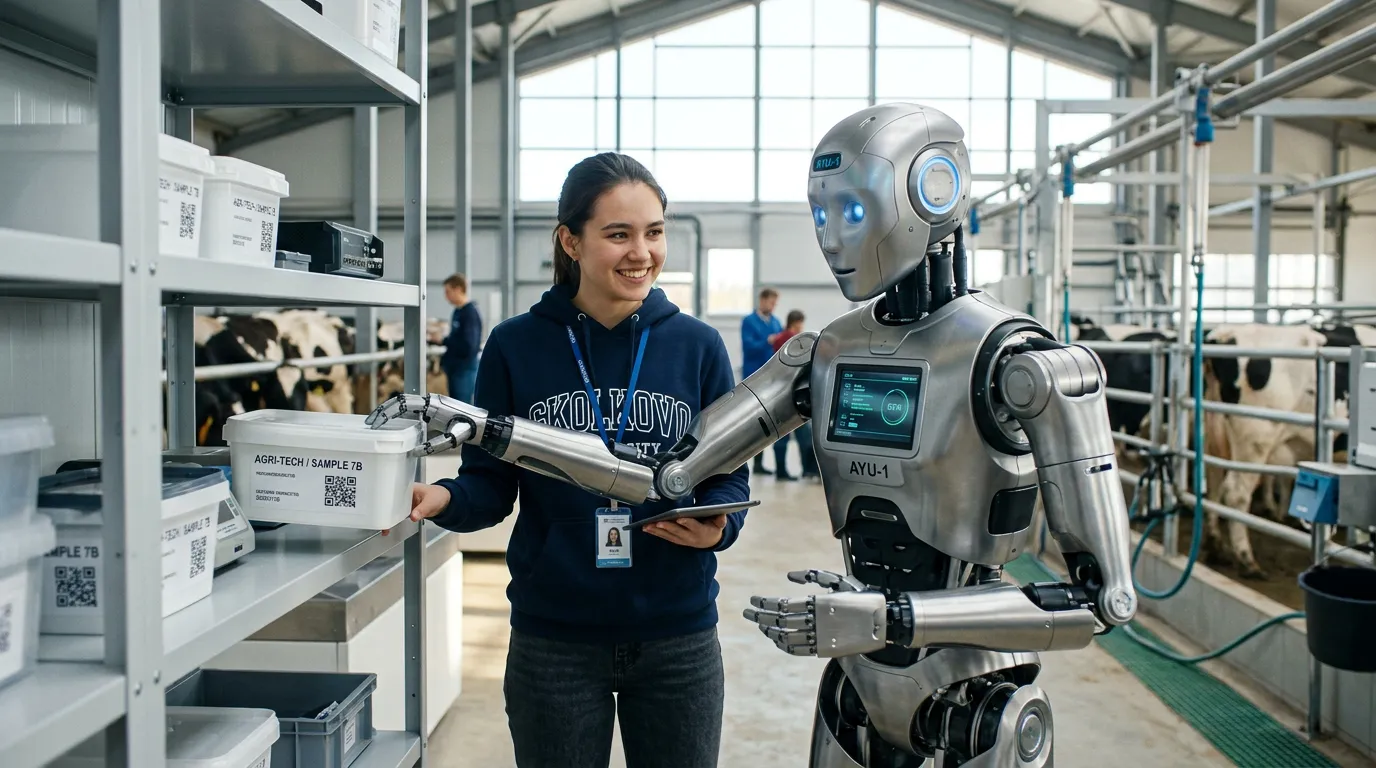
Dmitry Stepanov and Yegor Dzhioev, students enrolled in the Russian State Agrarian University – Timiryazev Moscow Agricultural Academy's advanced artificial intelligence programs, together with third-year Applied Informatics student Andrey Rodyagin, have been provided with a Unitree G1 Edu Ultimate D humanoid robot. Their assignment is to teach it delicate grasping, product sorting, and farm operation skills.
To accomplish that, the computer science students are developing algorithms that enable the robot to understand human commands, navigate precisely through its environment, recognize surrounding objects, plan sequences of actions, and interact safely with farm equipment.
Training a New Generation of AgTech Professionals
To solve these challenges, the students are using a large language model to enable communication between people and the robot, allowing spoken or written instructions to be converted into executable action sequences. The project also integrates artificial intelligence, computer vision, autonomous navigation, and intelligent control systems.
The project's creative concept imagines the robot as a restored Soviet-era machine that has been modernized and assigned a new mission – working on a digital farm.
In that way, Russia is beginning to educate professionals for digital agriculture with an entirely new combination of skills. Students are working not only with software code, but also with a fully operational platform that combines AI, a large language model, machine vision, autonomous navigation, and a physical humanoid robot.
Russian agricultural education is moving beyond teaching individual digital tools toward developing integrated systems in which artificial intelligence works directly with real equipment. As a result, the agricultural sector will gain professionals with expertise in programming, robotics, and the practical requirements of modern farming.
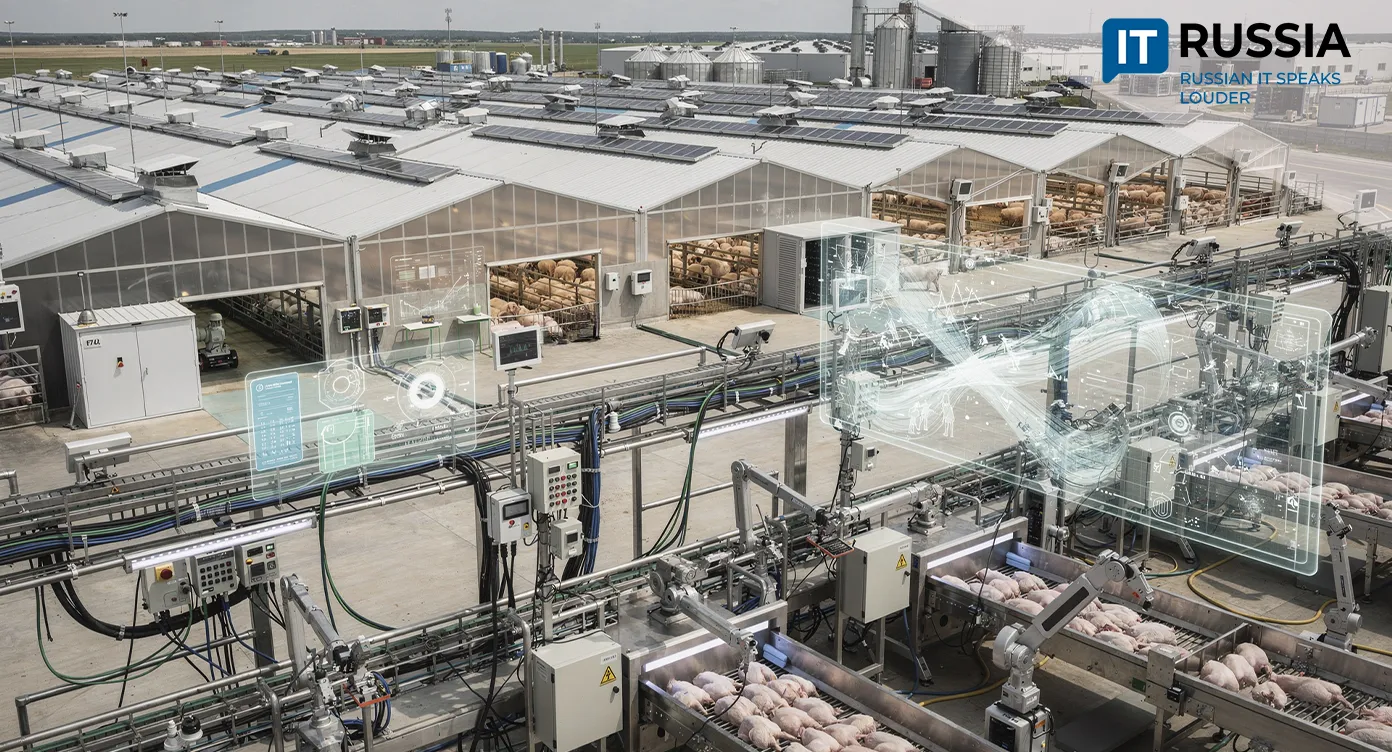
Also, the Timiryazev Academy project is expected to support the continued development of robotic systems capable of performing physically demanding work on livestock farms and in food processing facilities.
AI as the Farmer's Assistant
Development of agricultural robots is a national priority in Russia. The country is implementing the federal Iskusstvenny Intellekt (Artificial Intelligence) project under the national Tsifrovaya Ekonomika (Digital Economy) program. To accelerate digital transformation across agriculture, the InterAgroTech Association has launched the Umny Khleb (Smart Bread) initiative.
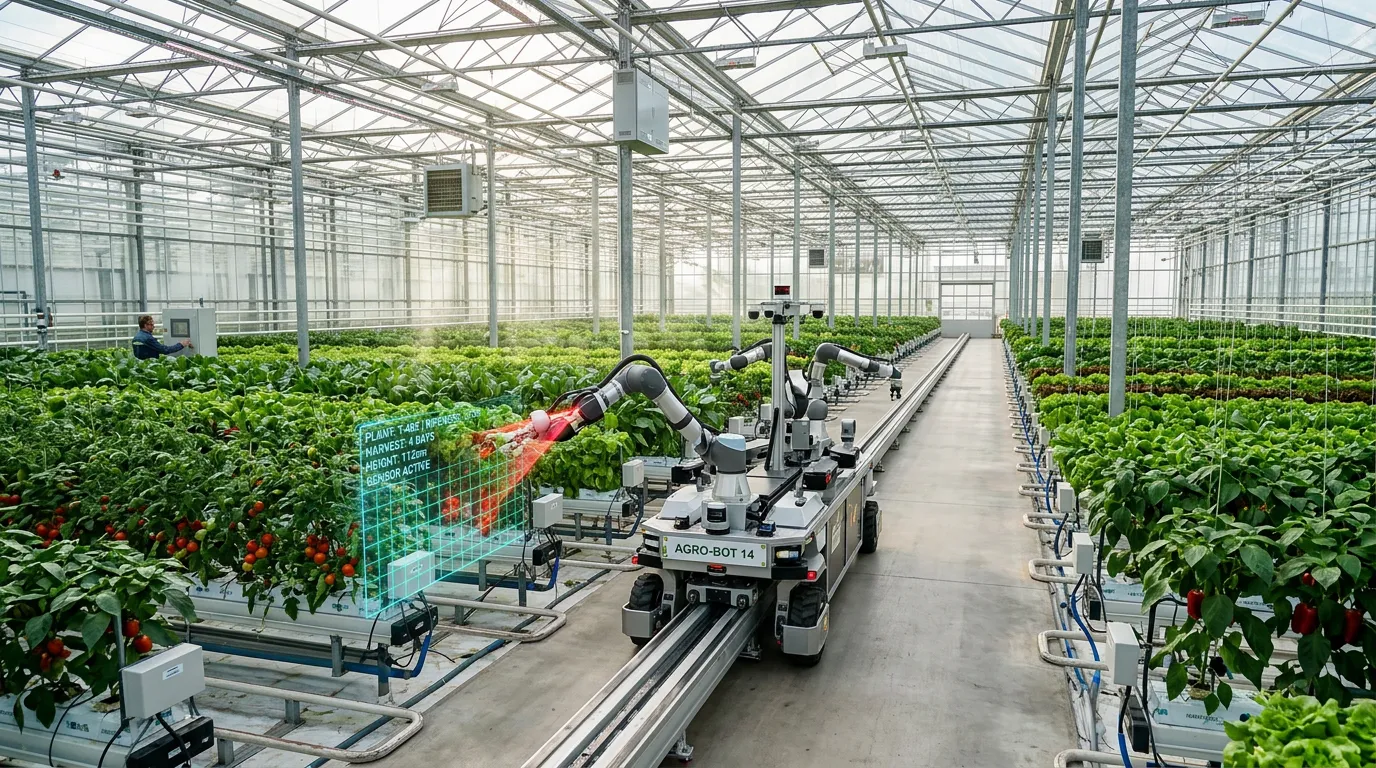
At the Gelendzhik branch of Southern Federal University, researchers have completed testing of a robotic soil sampling vehicle. At the Edelweiss dairy plant in Kazan, a collaborative robot, or cobot, works alongside employees, taking over physically demanding and repetitive tasks that quickly lead to worker fatigue. Students and graduates from Saint Petersburg State University of Veterinary Medicine and ITMO University have also developed the Tsifrovy Kentavr (Digital Centaur) autonomous platform for farms. The robot prepares and distributes feed using machine vision and can be integrated with a farm's existing digital management systems.
Meanwhile, industry experts emphasize that smart technologies will remain tools that assist people rather than replace them. "Our industry will never operate without people – that is simply impossible. Artificial intelligence, digitalization, and higher labor productivity are all tools that help us. The key decisions will always remain with people," Russian Minister of Agriculture Oksana Lut said.
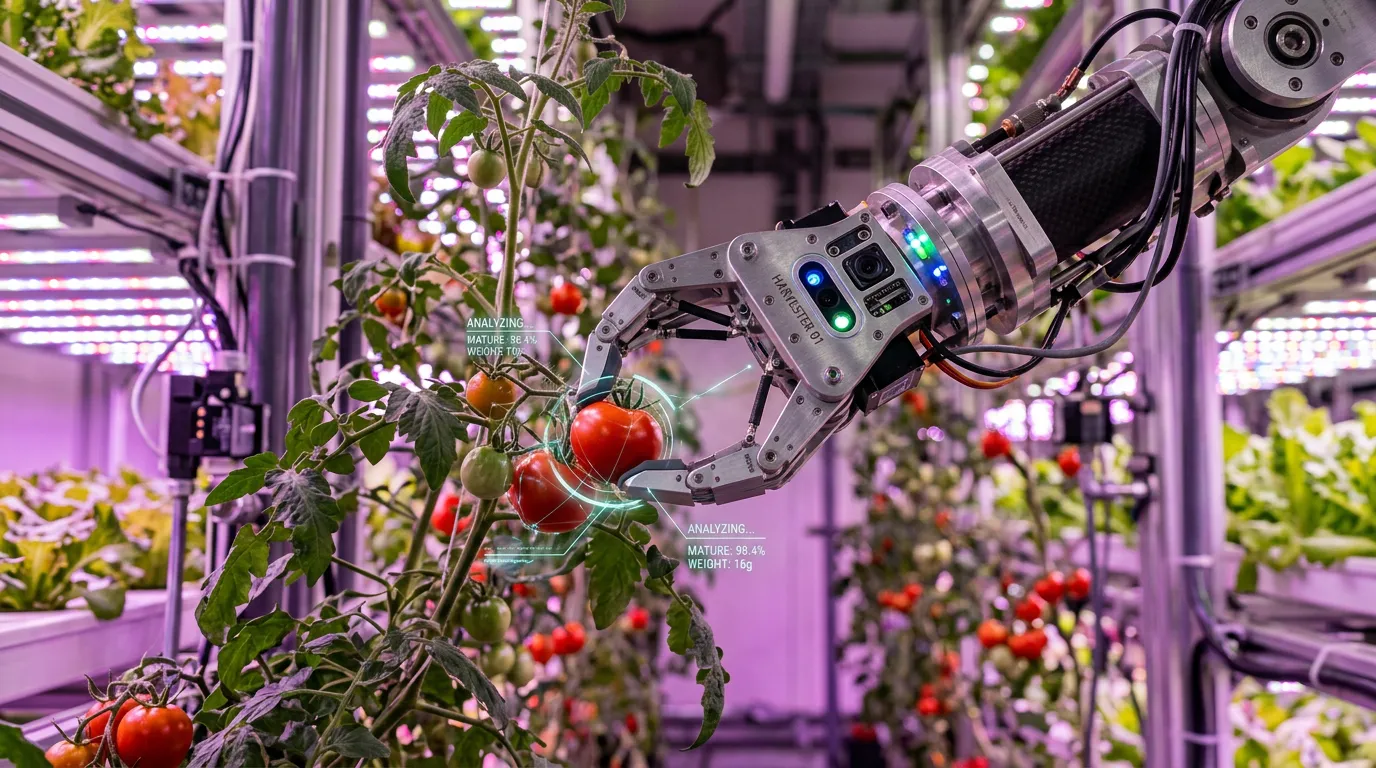
The Timiryazev Academy students' work represents another step in modernizing Russia's agricultural sector and advancing smart farming. As robotic technologies become more capable, they are expected to improve agricultural productivity and, ultimately, increase the availability of food products for consumers.