SILA Megafacility Becomes a Symbol of Russia's Technological Sovereignty
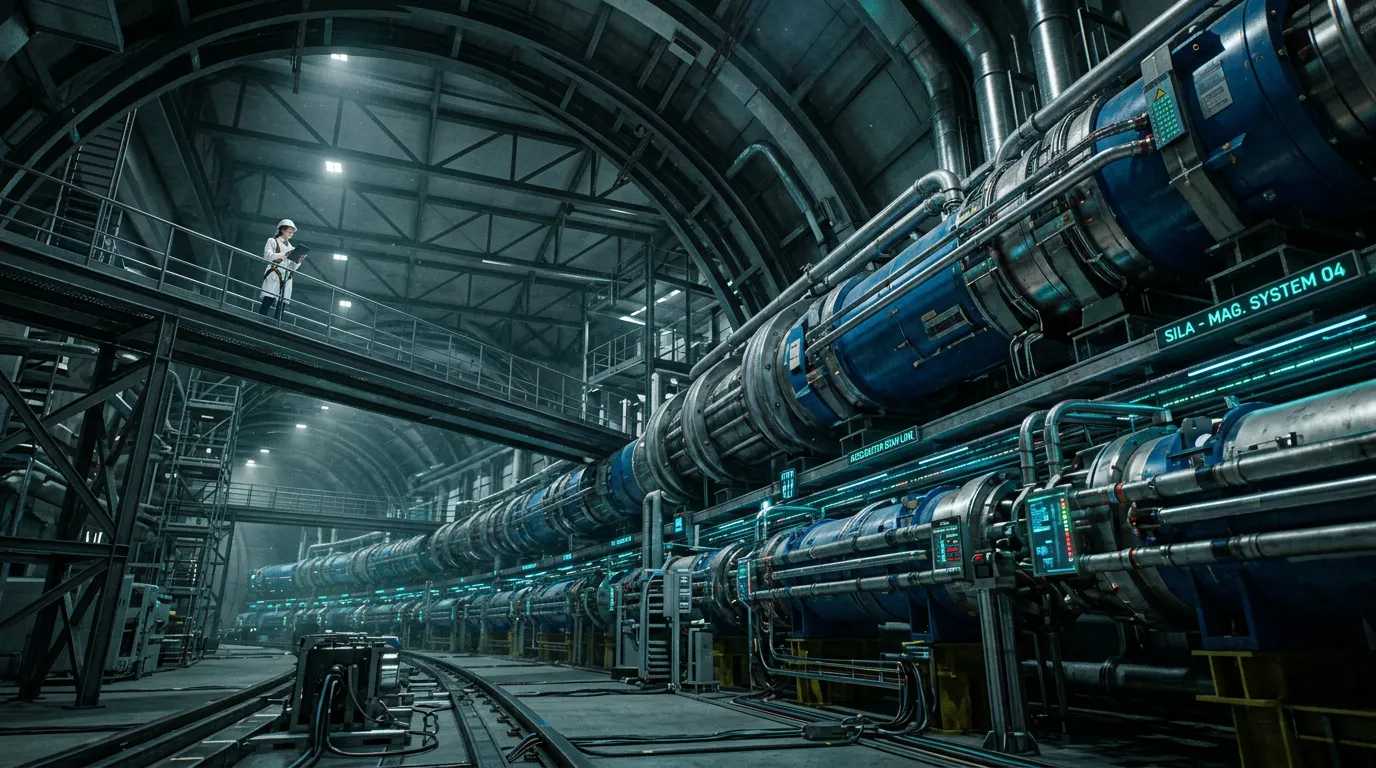
Russian scientists are developing the world's first megascience facility to combine a fourth-generation synchrotron radiation source with a free-electron laser. The SILA – SInkhotron – LAzer (Synchrotron – Laser) complex, now under construction at the National Research Center Kurchatov Institute in Protvino, Moscow Region, is expected to reshape research in medicine, energy, agriculture, and defense by allowing scientists to examine the structure and properties of materials at the subatomic scale.
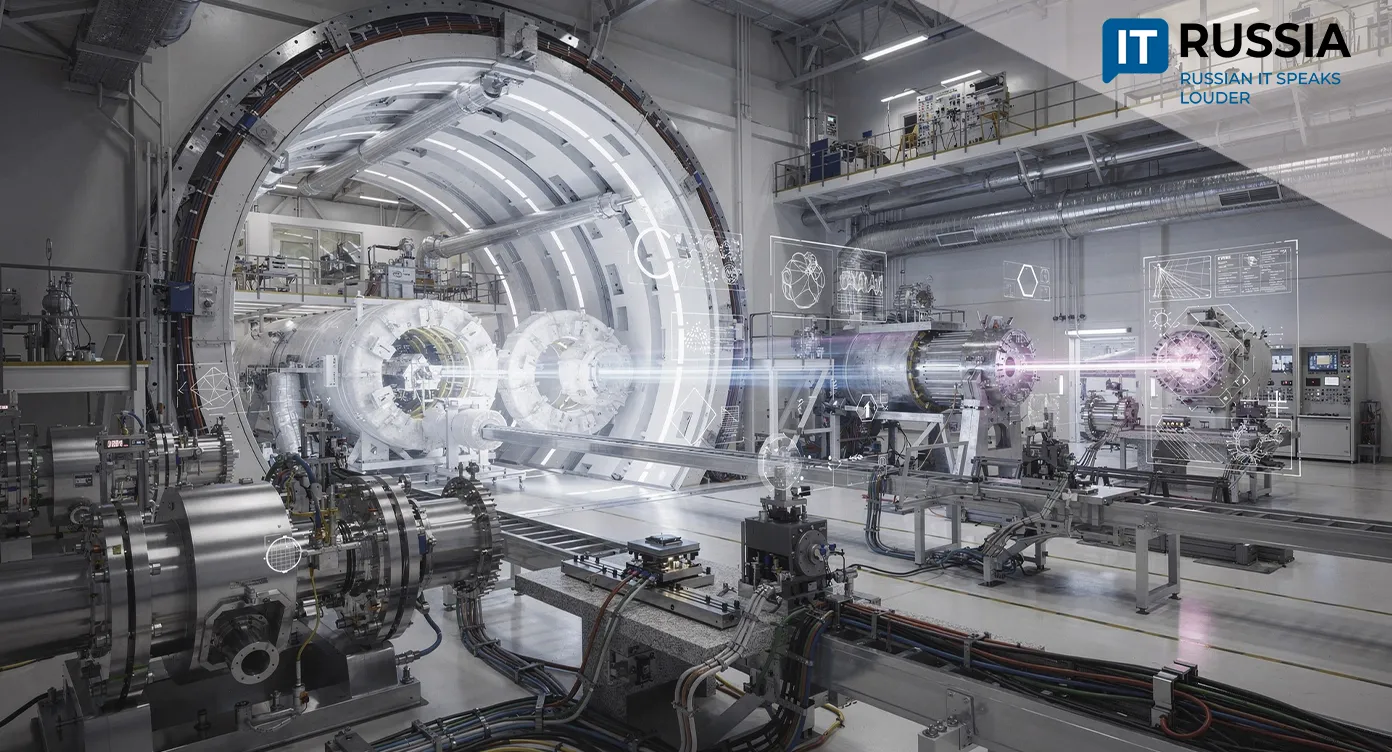
The National Research Center Kurchatov Institute has disclosed the current status of the SILA project. The world's first megafacility integrating a fourth-generation synchrotron radiation source with an X-ray free-electron laser is beginning to take shape in Protvino, near Moscow. The site has been prepared, prototype components have completed testing, and the project documentation is undergoing state review by Glavgosekspertiza (Main Directorate for State Expertise). Russia is building a world-class scientific instrument while relying almost entirely on domestic technologies. More than RUB 140 billion (approximately USD 1.8 billion) has been allocated to the project, which is expected to create more than 1,000 highly skilled jobs once operational.
Sovereignty in Every Component
SILA's significance lies in the unprecedented depth of its technological localization. About 90% of the experimental station components have already been replaced with Russian-developed equivalents, while the facility's control system is being built almost entirely on domestic technologies. Around 70 research institutions and commercial organizations across Russia are participating in the effort. The project is more than a major construction initiative. It is becoming a catalyst for the country's high-tech manufacturing ecosystem, from scientific instrumentation to specialized software. One example comes from Tomsk Polytechnic University, whose researchers have already developed digital power supplies for SILA's magnets that are ready for serial production.
What will a facility spanning more than 189,000 square meters mean for ordinary citizens? Its impact will be indirect but potentially transformative. The synchrotron's 46 experimental stations and the free-electron laser's six stations will operate around the clock, investigating everything from the structure of individual viruses to ultrafast processes measured with femtosecond resolution. That research is expected to lead to more effective medicines, new medical diagnostic techniques, ultra-strong materials for aerospace applications, advanced electronics, and safer food technologies. Project developers have already identified more than 12 industrial sectors and about 150 Russian companies prepared to solve manufacturing challenges using synchrotron radiation.
A Digital Ecosystem and Knowledge Exports
SILA represents more than concrete structures and magnets. It is also designed as an advanced digital ecosystem. Together with the Ministry of Science and Higher Education, researchers are developing a unified information platform for proposal submission, experiment scheduling, and cloud-based access to large scientific datasets. Pilot solutions are already being tested at the SKIF synchrotron facility in Novosibirsk, whose construction readiness exceeded 99% by 2026. The project's export potential extends beyond the facility itself into digital and engineering technologies. Russia could eventually supply integrated hardware and software control systems, vacuum equipment, and research services to international partners. SILA is also expected to become part of the International Center for Synchrotron, Neutron and Laser Research, involving Belarus, Uzbekistan, and Iran.
The Greatest Challenge Is Time
Looking back over the past several years reveals steady progress: the launch of the SKIF linear accelerator in 2024, the successful commissioning of the international NICA complex in Dubna in 2025, and the development of high-precision power supplies by researchers in Tomsk. Even so, the project's greatest challenge remains its timeline. While earlier estimates pointed to commissioning around 2033, project developers now acknowledge that construction and commissioning will require approximately ten years after the project receives final approval from the state expert review. It is important to remain realistic: physical construction has not yet begun, and the project is still completing its engineering and design phase.
Building the Foundation for the Next Decade
SILA is more than a scientific instrument. It is an infrastructure platform intended to support Russia's next wave of technological development. Even before construction begins, the project is already fulfilling part of that mission by stimulating serial production of domestically developed components, expanding engineering expertise, and establishing new models of collaboration between research institutions and industry. If the planned schedule is achieved, the Moscow Region megafacility could become not only a flagship of Russian science but also a globally relevant hub for advanced research. The future is being built today, and that future has a name: SILA.