


STECCOM Rolls Out New Maritime Emergency Communications Line
The devices can transmit emergency signals even in areas with no terrestrial coverage by relying on satellite communications channels.
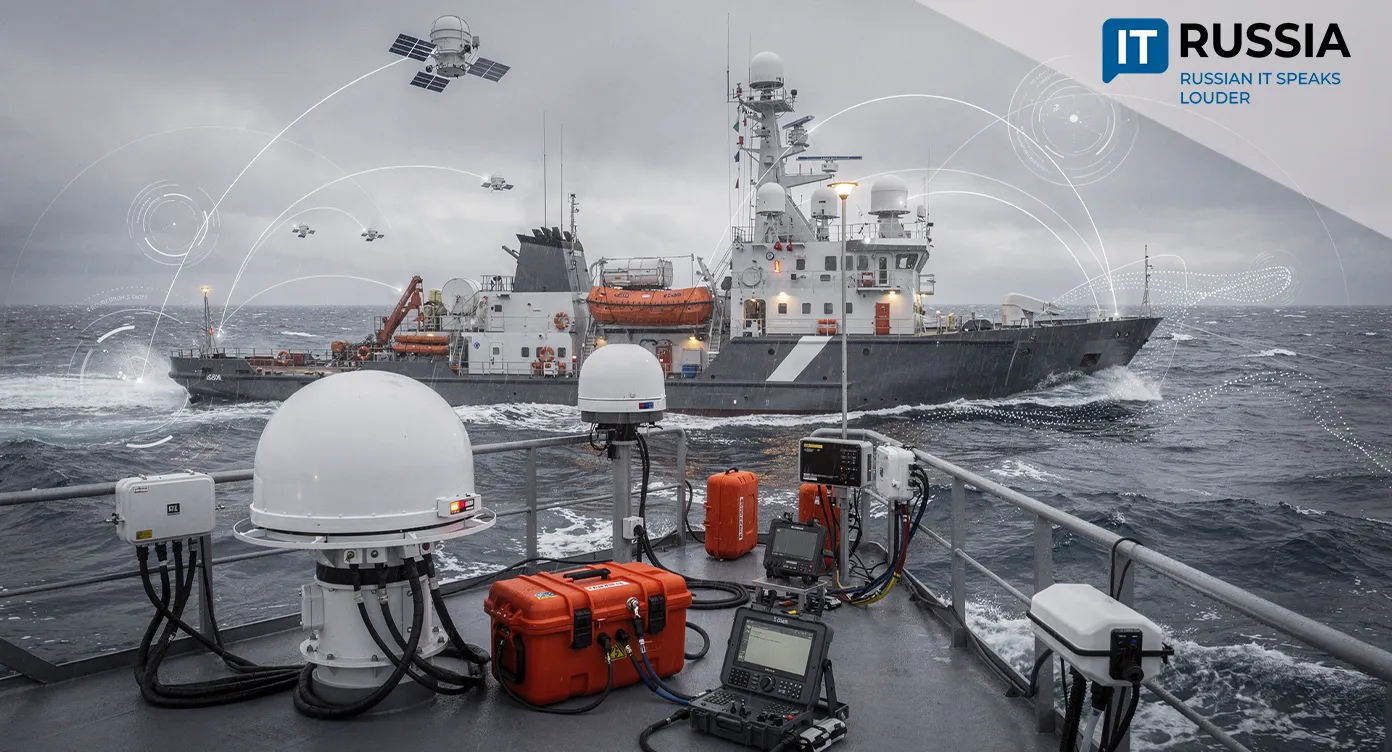
Reliable communications are a critical element of maritime safety for every vessel operating in open waters. Since foreign equipment suppliers exited the Russian market, domestic vendors have accelerated efforts to replace imported maritime communications technologies.
VSAT Modem Outpaces Foreign Alternatives
At the Maritime Congress – Far East 2026 exhibition, private satellite communications operator and space solutions integrator STECCOM presented a new portfolio of communications equipment designed for maritime users. In emergency situations, the systems are intended to help crews protect both themselves and their vessels.
The first product is the CTT-200 VSAT modem, which provides Internet connectivity through geostationary satellites. It supports two operating modes and is equipped with a compact antenna that enables network access in areas without developed terrestrial communications infrastructure. The modem remains operational where conventional communications equipment becomes ineffective. It also outperforms many foreign alternatives: the CTT-200 delivers data rates of up to 10Mbps, approximately 16 times faster than services such as Inmarsat FleetBroadband.

Emergency Communications Within Reach
Another new product is the company's personal emergency beacon built for the Cospas-Sarsat satellite search-and-rescue system.
"It is compact, reliable, and highly durable – the characteristics that matter most when no other communications are available. Activation is simple: users only need to position the antenna and press the distress button. Once activated, the beacon transmits emergency alerts directly to Russia's Ministry of Emergency Situations for 24 hours via the 406MHz satellite frequency while simultaneously broadcasting a 121.5MHz homing signal. It is also highly accurate, with positioning errors measured in just a few meters," said Mikhail Leyzerov, Commercial Director at STECCOM.
The third product introduced at the exhibition was the portable Stec Finder monitoring and communications system. Like the emergency beacon, it is designed to transmit user coordinates and distress alerts. When paired with a smartphone through a mobile application, it also enables users to exchange short text messages in areas with no communications coverage. The device is intended not only for mariners but also for professionals working in remote locations, emergency responders, dispatch centers, and organizers of extreme outdoor activities.

Location Tracking for an Entire Year
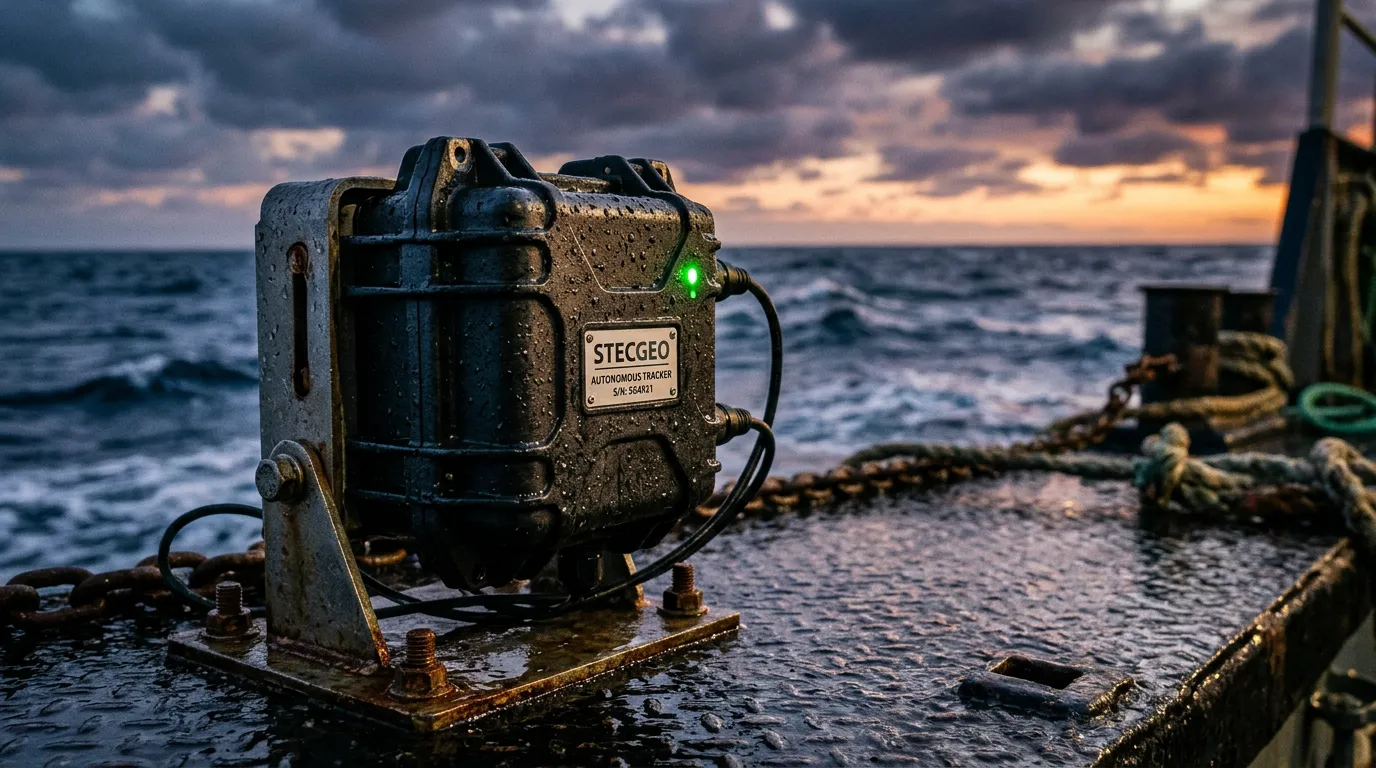
The company has also recently introduced the autonomous StecGeo vessel tracker. Housed in a ruggedized enclosure and equipped with a high-capacity battery, the device can transmit location data continuously for up to one year.
Demand for solutions of this kind is expected to grow because they can improve safety across commercial shipping, scientific expeditions, commercial fishing, and operations in the Arctic and the Russian Far East while reducing dependence on foreign telecommunications equipment.
Import Substitution Continues
Russia has been steadily expanding its Cospas-Sarsat infrastructure for several years. In 2023, a new emergency signal receiving station was commissioned in Khabarovsk, expanding the country's ground segment, which includes the International Mission Control Center in Moscow along with reception and processing stations in Arkhangelsk, Novosibirsk, Moscow, and Nakhodka.
In 2024, maritime VSAT adoption accelerated. The number of Russian vessels connected through the technology reached approximately 1,500, while STECCOM's solutions were deployed during a scientific expedition to Africa.
In 2025, Morsvyazsputnik (Maritime Satellite Communications) introduced a satellite communications network based on domestically developed spacecraft to reduce the risk of Russian vessels being disconnected from foreign communications services. Work is now underway to extend the network to global coverage.
Taken together, these developments point to an important shift in maritime emergency communications. The market is moving beyond standalone devices toward a multilayered digital safety architecture. At the same time, some dependence on foreign satellite communications channels remains. Addressing that challenge is expected to be one of the sector's priorities over the next several years.