

From Kindergarten to the Boardroom: Skolkovo's AI Education Ecosystem Takes Shape
Russia's industry is expected to need another three million professionals with artificial intelligence skills by 2030. At Skolkovo, that challenge is being treated not as a warning sign but as a blueprint for building the country's next-generation talent pipeline.
Three million AI-skilled professionals is an enormous target. One of the key messages delivered at INNOPROM 2026 during a session hosted by the Skolkovo Foundation was that the shortage cannot be solved through isolated training initiatives. Instead, Russia needs a continuous learning pathway that spans K-12 education through professional development while remaining grounded in real industry needs. Skolkovo is building that pathway as a unified operator rather than a collection of isolated courses.
From Kindergarten to Industry
Over the past 15 years, Skolkovo has built a complete educational pipeline spanning early childhood education through executive learning. The Foundation is now transferring that expertise to industry through workforce training and consulting services. The central message from INNOPROM was that education is becoming an industrial tool rather than simply an academic one.
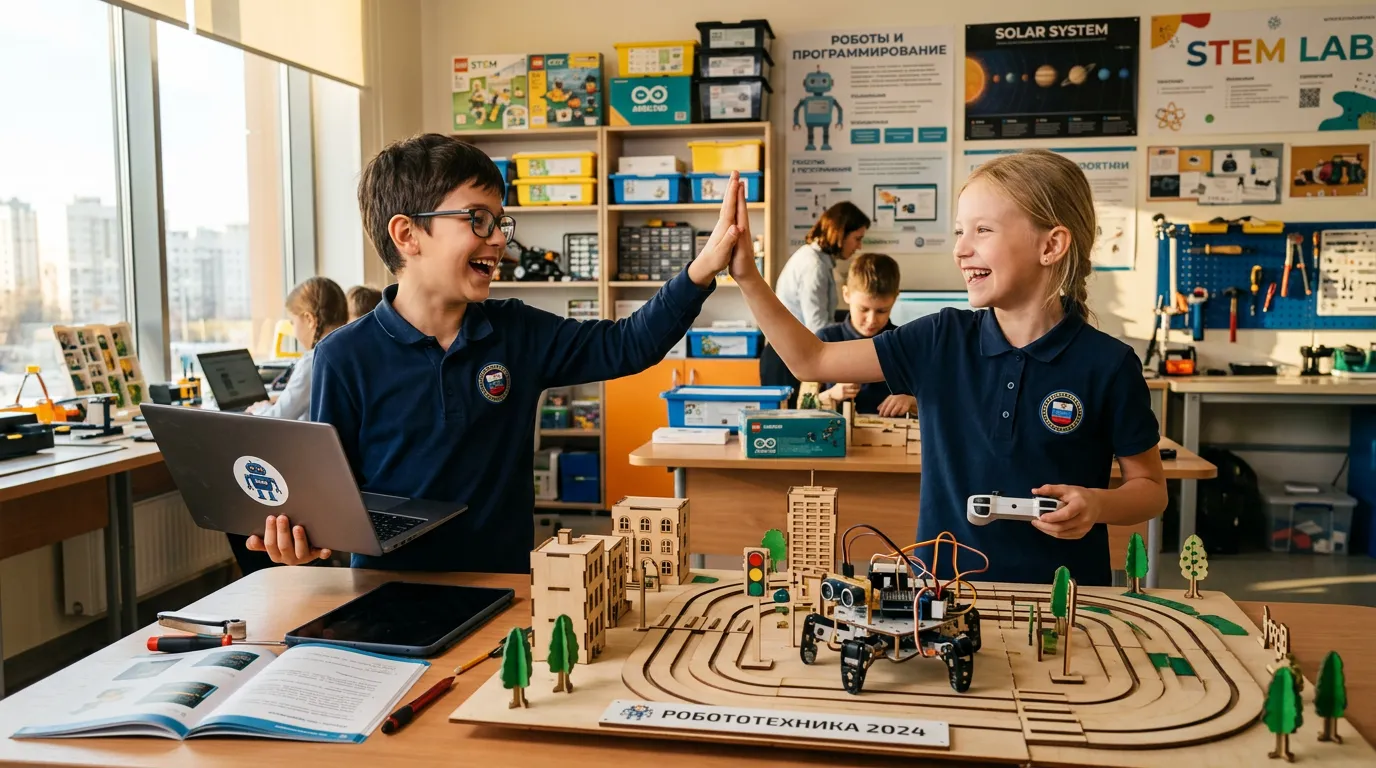
This year, the Foundation is launching three initiatives designed to address different stages of the learning journey. The first and largest is an open AI teaching methodology for schools. The Skolkovo Technopark team has introduced a curriculum for students in grades 1 through 4, and early adoption has been strong: more than 40 lessons were delivered during the first month, while 5,000 people across Russia accessed the educational materials. Programs for grades 5 through 8 and 9 through 11 are scheduled to follow. Notably, the methodology does not replicate Western instructional models. Instead, it is adapted to Russian educational standards, students' developmental stages, and the technical resources available in schools.
A Chinese Model Adapted for Russian Schools
The second initiative is an AI-focused mini MBA for executives, one of four educational programs the Foundation will deliver this year. The course teaches business leaders how to configure AI agents for company-specific needs and redesign business operations around emerging technologies. That approach can reduce costs across multiple budget categories. For senior executives, the program is positioned as a strategic management tool rather than simply another training course.
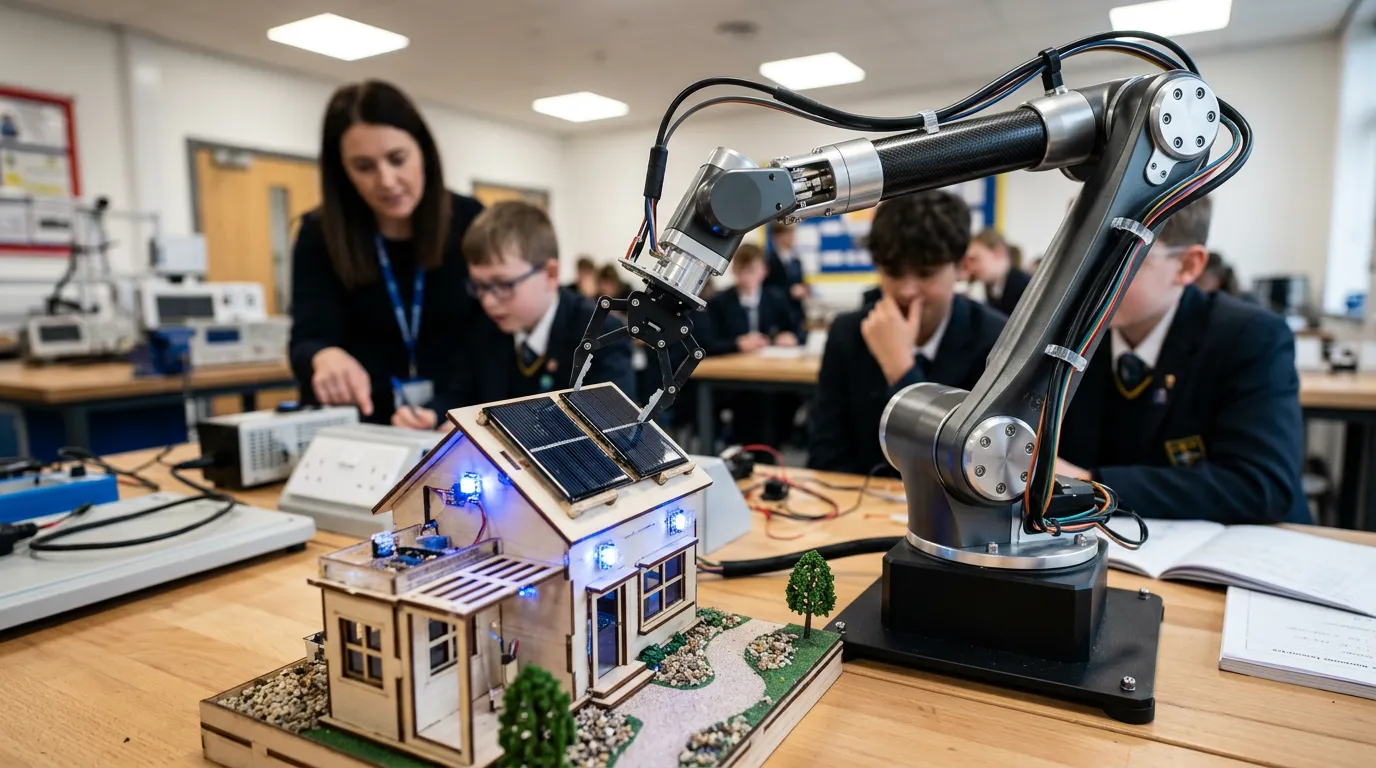
The third initiative adapts educational practices from China. Working in partnership with Peking University, Skolkovo is bringing a new instructional model into Russian schools, where students learn AI concepts through robotics and smart home technologies. The approach is already established in China, where AI has become a mandatory school subject.
The Era of Standalone Programs Is Over
The Foundation has evolved from running individual initiatives to building a full educational ecosystem. It began with clubs and programs for high school students before expanding into universities and continuing professional education. Over time, that ecosystem grew through teaching methodologies, accumulated expertise, and partnerships with industry. The turning point came when it became clear that isolated programs could not deliver systemic results. Industry needs more than individual professionals with AI skills – it requires entire talent cohorts. That realization gave rise to the idea of a continuous pathway extending from kindergarten through business school.
Today, the concept has become an operational model that the Foundation offers as a ready-to-deploy solution for industry. As Olga Slominskaya, Director of Technology Development and Educational Programs at Skolkovo Technopark, noted, schools and universities must develop not only digital skills but also critical thinking and digital literacy, encouraging students to verify AI-generated results rather than accept them uncritically.
Finding the Right Balance
The discussion at the Skolkovo pavilion extended well beyond technology itself. Participants emphasized the need for governments, businesses, and educational institutions to work together. They argued that this is the only way to ensure investment in education translates into economic growth and stronger competitiveness rather than simply higher spending.
And yet, public attitudes toward AI in education also reflect cautious optimism. According to survey data presented by Andrey Daudrikh, Director of Social Research at the Russian Public Opinion Research Center's Analytical Center (VCIOM), most Russians recognize both the opportunities and the risks associated with AI in learning. The greatest opportunities lie in expanding access to education and strengthening digital skills, while the biggest concerns involve declining cognitive abilities and reduced face-to-face interaction. Negative views about AI's impact on learning outcomes outweigh positive ones by 46% to 24%, suggesting that new technologies should complement rather than diminish the human element in education.
The discussion also included Maksim Grokhulsky, Director of the College of Digital Technologies, while Olga Franchuk, Head of Educational Programs at Skolkovo Technopark, served as moderator. Participants concluded that the future of education depends on balancing technological efficiency with the preservation of fundamental human skills. Skolkovo's model is designed around that principle.