One Drone, Three Environments
Russia's Skat amphibious drone is challenging the conventional boundaries of marine robotics by offering a single platform for inspection, search operations, and cargo delivery in locations that are difficult or hazardous for people to access.
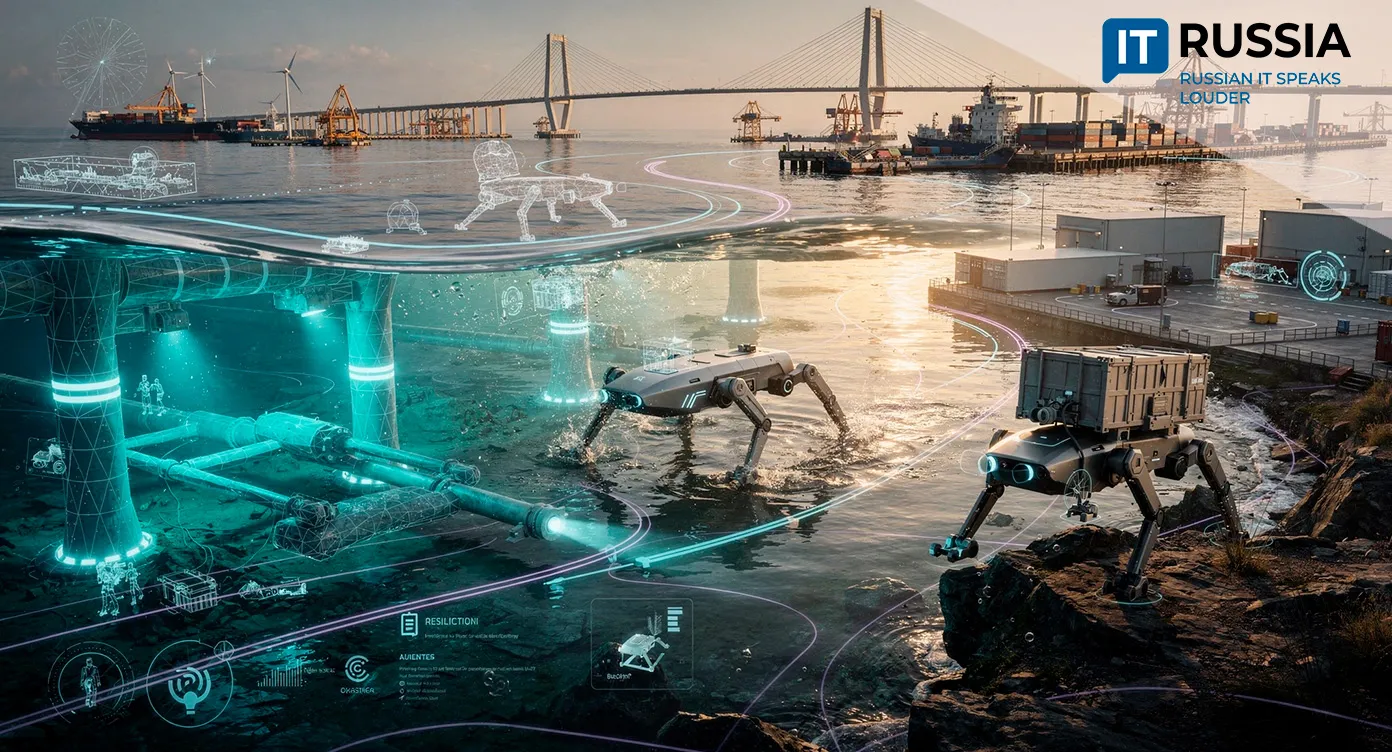
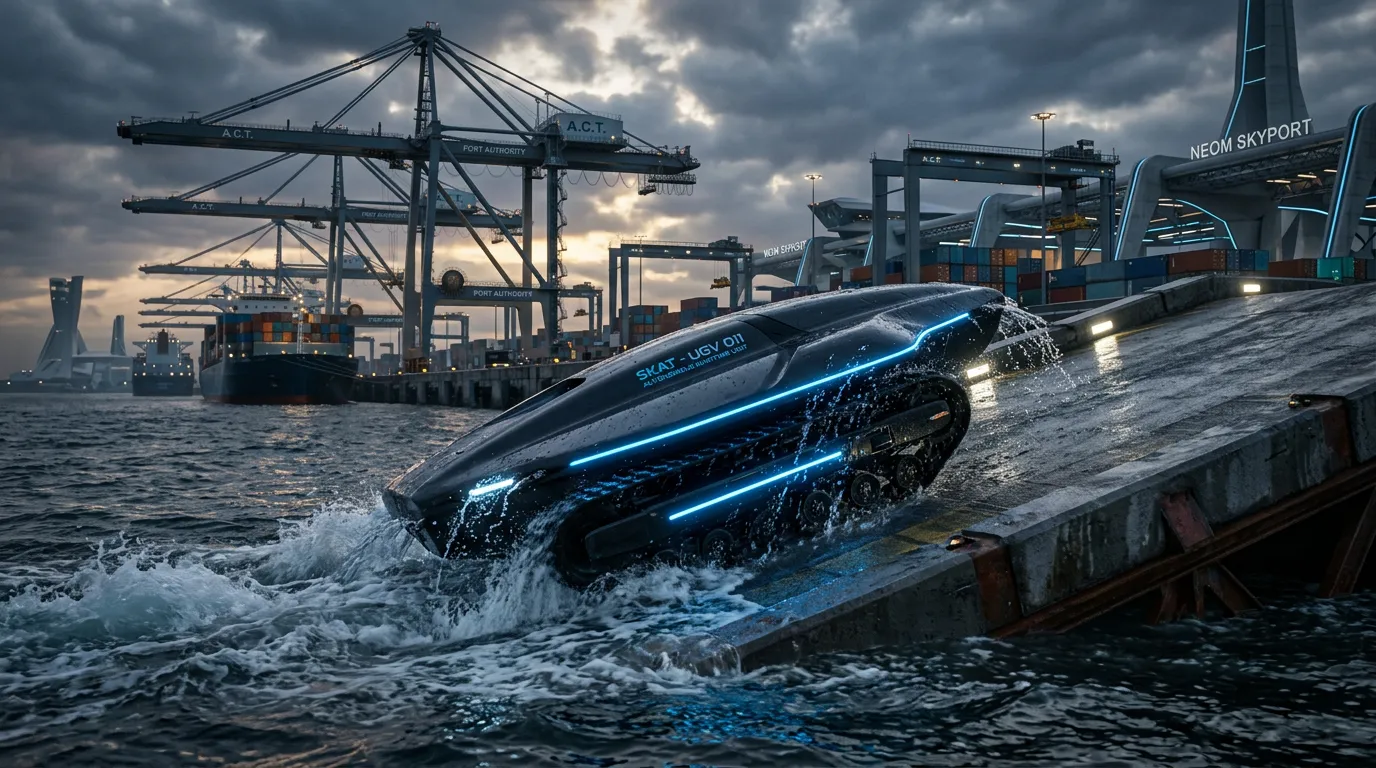
Russia has unveiled the Skat amphibious drone, a remotely operated multi-purpose vehicle capable of traveling underwater, across the water's surface, and over land. Its intended applications include monitoring underwater infrastructure, inspecting ship hulls and bridge supports, reconnaissance, search operations, and cargo delivery. The platform currently carries payloads of up to 50 kilograms, with developers aiming to increase that capacity to 200 kilograms.
The significance of the project lies in its concept as a unified transport and inspection platform. Most existing robotic systems are designed to operate in a single environment, whereas Skat is intended to perform multiple roles across different environments. That versatility is particularly valuable for inspecting long, complex assets ranging from port infrastructure to underwater pipelines. It could enable more frequent and more accurate inspections while allowing hazardous areas to be examined without deploying divers.
Where Skat Could Be Deployed
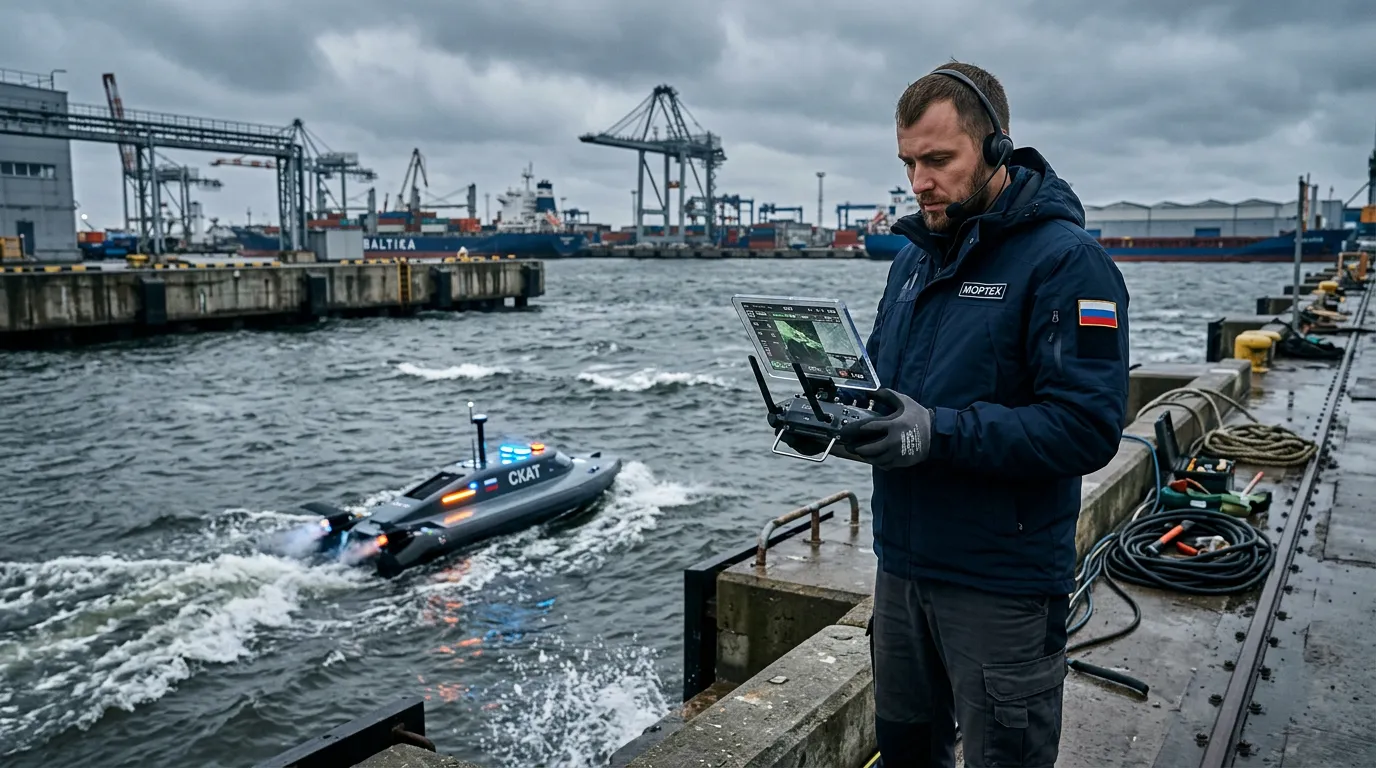
Within Russia, the most immediate applications for Skat include inspection of port and transport infrastructure, oil and gas facilities, hydraulic engineering structures, pipelines, communications cables, and ship hulls. MChS (Ministry of the Russian Federation for Civil Defence, Emergencies and Elimination of Consequences of Natural Disasters) could use the platform during search-and-rescue operations and emergency response missions, while security agencies could deploy it for reconnaissance, counter-sabotage operations, and equipment delivery.
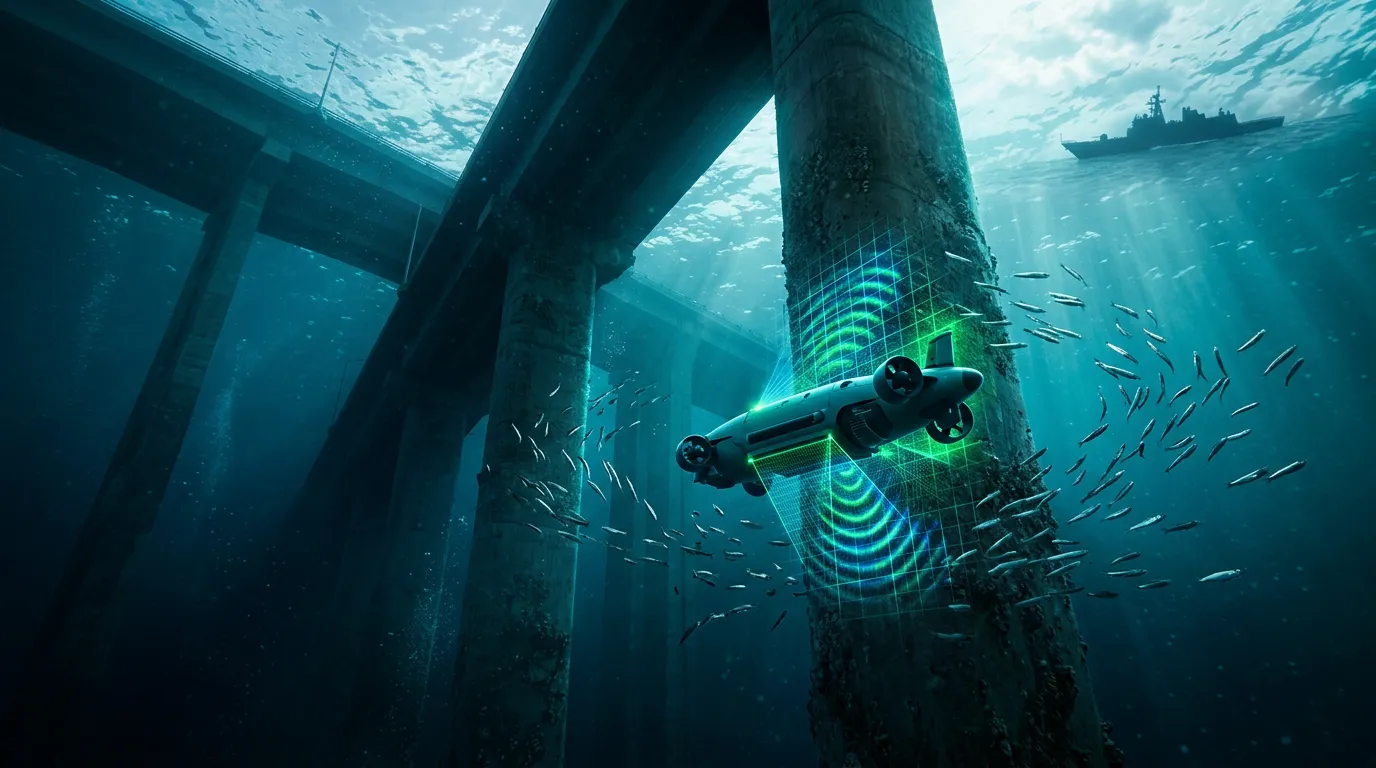
Before the project can move from the prototype stage to operational deployment, several engineering challenges remain. These include extending endurance, ensuring reliable underwater communications, maintaining stable performance in strong currents and low temperatures, and developing interchangeable payload modules. Integration of computer vision and artificial intelligence is considered particularly promising. Those technologies would enable the drone to detect damage automatically on bridge supports, ship hulls, and underwater infrastructure, reducing operator workload while improving the consistency and objectivity of inspections.
Skat also has export potential, as global demand for marine robotic systems continues to grow. Rosoboroneksport (Rosoboronexport) is already promoting Russian unmanned surface vessels and autonomous underwater vehicles in international markets, showcasing platforms equipped with artificial intelligence, advanced navigation systems, and configurable payloads. The most promising export opportunities are likely to come from countries seeking cost-effective, multi-functional robotic systems.
How Russia Is Expanding Its Fleet of Marine Drones
In 2023, the engineering company Spektr Engineering introduced a remotely operated underwater drone named Skat for monitoring hydraulic structures, reconnaissance, mine clearance, and recovering objects from depths of up to 100 meters. Despite sharing the same name, that vehicle was a specialized underwater system rather than a multi-environment platform.
At the Fleet 2024 exhibition, Rosoboroneksport first presented its family of unmanned surface vessels and autonomous underwater vehicles to international customers, including Vizir, Orkan, BEK-1000, and MMT-300. In 2025, RoboCorp conducted sea trials in Sevastopol of its five-meter BEK-R unmanned surface vessel designed for patrol and specialized missions. By 2026, the product portfolio had expanded significantly. Fleet 2026 featured the Briz, Orkan, BEK-6, the MMT-300 autonomous underwater vehicle, and other systems incorporating composite hulls, advanced navigation technologies, and artificial intelligence capabilities.
This progression highlights that Skat has not emerged in isolation but represents the next logical step in the evolution of Russia's marine robotics sector, moving from highly specialized underwater and surface vehicles toward more versatile, multi-purpose platforms.
From Demonstration to Serial Production
Skat is noteworthy primarily as an effort to develop not simply another drone but a universal robotic platform capable of operating across multiple environments. If testing is completed successfully, it could occupy a niche between compact underwater robots, ground-based cargo platforms, and unmanned surface vessels, becoming a valuable tool for missions that require seamless mobility between land and water.
For now, Skat should be regarded as a promising development rather than a production-ready system. If the project successfully completes all required development and qualification stages, it has the potential not only to strengthen Russia's marine robotics capabilities but also to offer the market a genuinely distinctive platform capable of operating confidently in three different environments.