Medical AI Learns to Detect Disease Without Human Labels
Russian researchers have developed an artificial intelligence system that can identify abnormalities on CT scans without relying on physician-labeled training images. The new approach could accelerate diagnostic workflows and help detect diseases that previously went unnoticed on medical imaging.
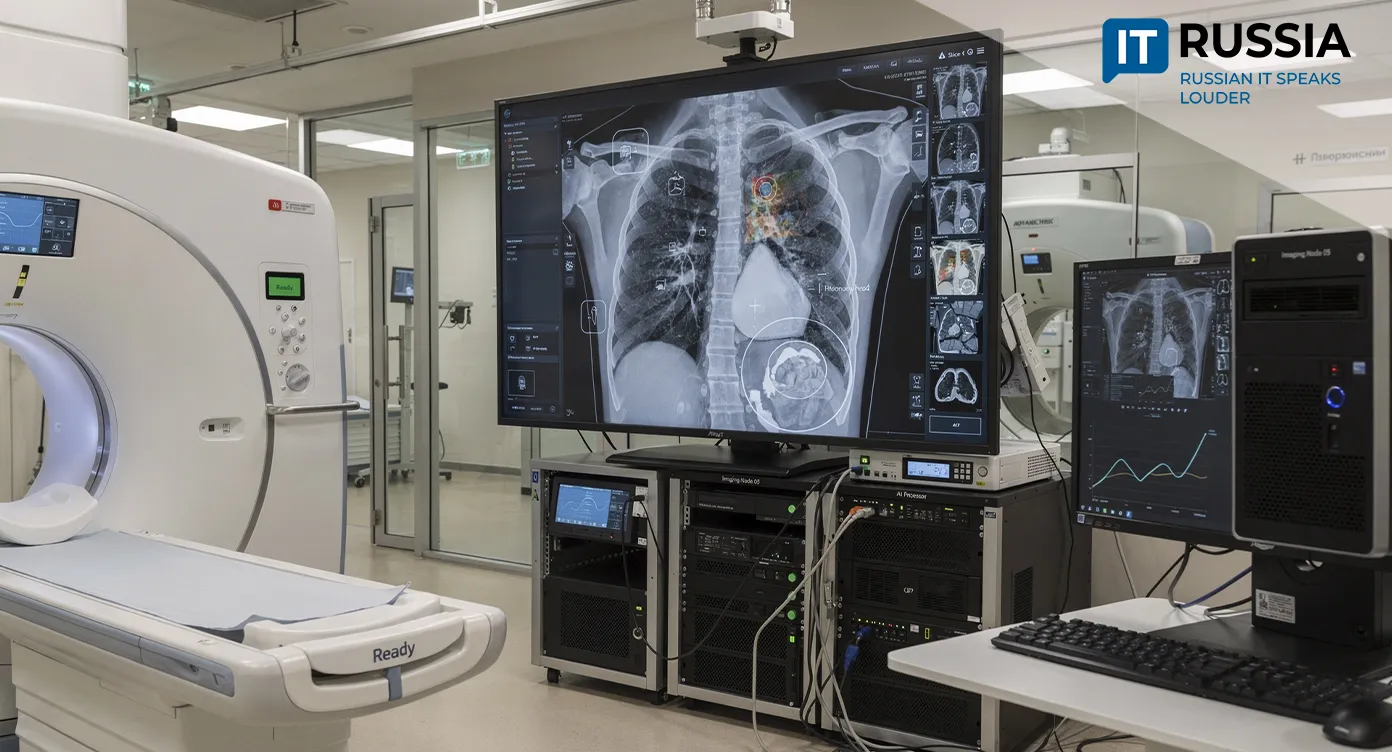
Researchers at the Tsentr iskusstvennogo intellekta (Artificial Intelligence Center) of Lomonosov Moscow State University (MSU) have developed Screener, an AI technology capable of detecting pathological changes on computed tomography scans without requiring physicians to manually annotate training images.
Today, most medical AI systems follow the same development model. Physicians first review CT scans and manually label tumors, inflammatory conditions, fractures, or other abnormalities. Only after that annotation process does the AI learn which findings it should recognize.
That approach has proved effective, but it comes with significant limitations. Building annotated datasets requires substantial time and effort. In addition, clinicians typically label only the diseases targeted by developers, meaning other pathological changes may remain unnoticed. Researchers at MSU's Artificial Intelligence Center set out to address that limitation by replacing the conventional training paradigm with one that teaches the neural network to identify any deviation from normal anatomy on its own.
How the New Technology Works
Screener is built on self-supervised learning methods. During training, the algorithm analyzed more than 30,000 CT examinations, none of which included physician-generated annotations.
Rather than searching for a specific disease, the system first learned the statistical characteristics of healthy human anatomy. It then became capable of identifying any region within a CT scan that differs from the expected norm. In practice, the neural network flags suspicious findings for the radiologist to review more closely. That strategy enables the detection of not only common diseases but also rare abnormalities that could otherwise escape visual inspection.
High Detection Accuracy
After training was completed, the developers evaluated the system using four independent medical datasets. In total, the algorithm analyzed 1,820 CT examinations covering a range of diseases, including lung cancer, liver tumors, kidney tumors, and pneumonia.
The results showed that the anomaly detection approach outperformed several existing automated pathology segmentation methods. The research was presented at ICLR 2026, one of the world's leading conferences on artificial intelligence, held in Brazil.

Earlier Detection for Patients
While reviewing CT scans, the algorithm can automatically highlight suspicious regions before the radiologist begins a detailed assessment. That capability is particularly valuable when imaging specialists face heavy workloads and must interpret hundreds of examinations each day. Over time, technologies like this could reduce the likelihood of missed abnormalities, shorten CT interpretation times, and improve diagnostic accuracy.
Moreover, the approach could also help physicians identify uncommon abnormalities that the neural network was never explicitly trained to recognize. Looking ahead, it may accelerate the development of universal AI assistants for radiologists while expanding the adoption of digital technologies across Russian healthcare organizations.
The developers view Screener primarily as a tool for the preliminary assessment of medical images. The next stage of development will be clinical trials.

AI in Russian Healthcare
MSU's latest development represents another step forward in the evolution of AI-powered imaging technologies. In 2021, algorithms created with the participation of researchers from Skoltech began automatically assessing the severity of lung involvement in COVID-19 patients and processed more than 100,000 CT examinations within a short period.
That same year, artificial intelligence systems in Nizhny Novgorod helped identify signs of lung tumors during a second review of archived CT scans from patients who had undergone imaging during the COVID-19 pandemic.
In 2022, Moscow significantly expanded its computer vision program for radiology, and by 2023 new algorithms had emerged that could identify signs of multiple diseases within a single imaging study.
By 2024, AI-powered services were helping physicians in Moscow detect dozens of different pathologies, while Russian-developed technologies were being deployed across other regions of the country. The method developed by MSU researchers builds on that progress by introducing a new approach to training medical AI systems.