

Cows Choose Robots for Milking
The first phase of a large robotic dairy complex with capacity for 700 cows has been completed in Russia's Chelyabinsk Region, marking another step toward automation in livestock production and more efficient dairy farming.
One of the biggest challenges facing Russia's livestock industry is the labor-intensive nature of production and an ongoing shortage of workers. According to researchers at the Baltiysky Inzhenerny Tsentr Mashinostroyeniya (Baltic Engineering Center for Mechanical Engineering, BITsM), established at Immanuel Kant Baltic Federal University, an average dairy farm spends more than 500 labor hours each year simply pushing feed closer to the cows. Yet this seemingly simple task has a major impact on productivity. When feed is out of reach, cows eat less, and lower feed intake directly reduces milk yields.
The solution lies in automating production processes and introducing robots across every stage of dairy operations.
Caring Steel Hands
The first phase of a large robotic dairy complex with a total planned capacity of 700 cows has begun operating in the Verkhneuralsky District of the Chelyabinsk Region.
The complex is being built by Khlebinka, an agricultural company that has operated in the region since 1990. The business manages more than 1,200 head of cattle and produces over 3,500 metric tons of milk annually. At the same time, Khlebinka cultivates more than 14,000 hectares of cropland, allowing it to supply its herd entirely with homegrown feed.
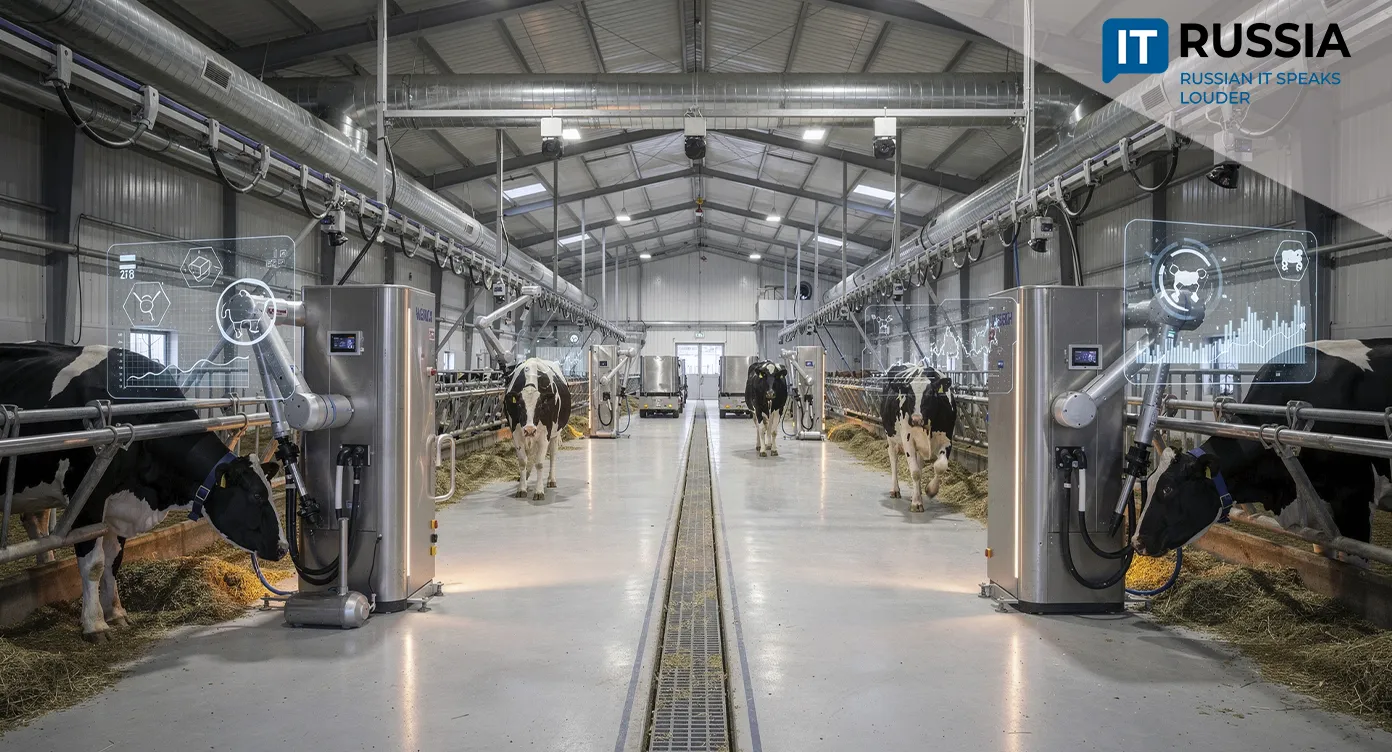
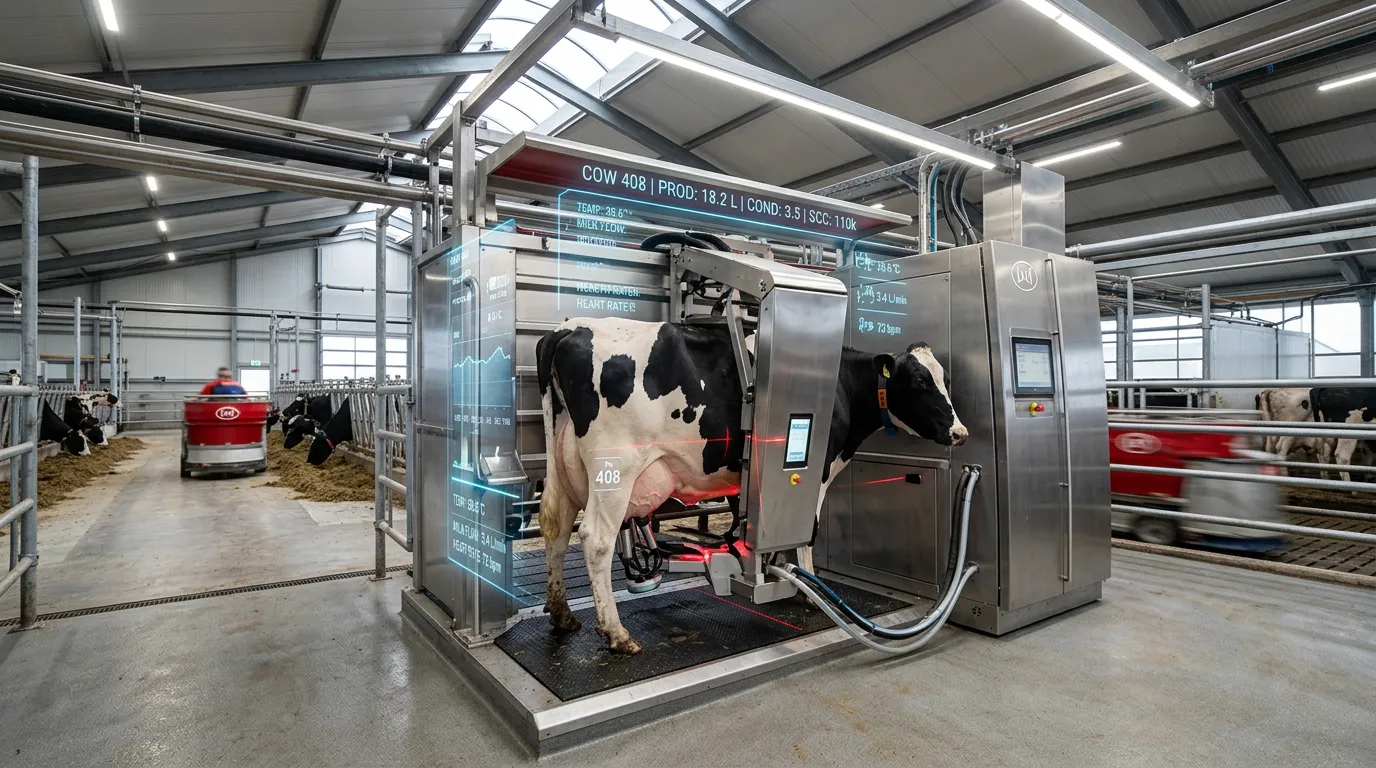
Very few people work inside the new dairy facility. Instead, four robotic milking units currently serve 226 cows, with additional robots planned as the herd expands. Every cow wears an electronic collar that tracks rumination, body temperature, and activity levels. Even trips to the milking station take place without human assistance.
"The cows come to be milked voluntarily. They walk in on their own, and nobody has to drive them. They can hardly wait to be milked. In reality, though, they are not coming to give us milk – they are coming for the tasty concentrate feed. We simply milk them while they are eating," said Danil Petryakov, manager of the Khlebinka dairy complex.
During each milking session, the robotic system continuously measures the milk's electrical conductivity while also monitoring its temperature and color. If blood or any other impurities are detected, the milk is automatically rejected. That process helps ensure consistent product quality.
Higher Milk Production With Fewer Workers
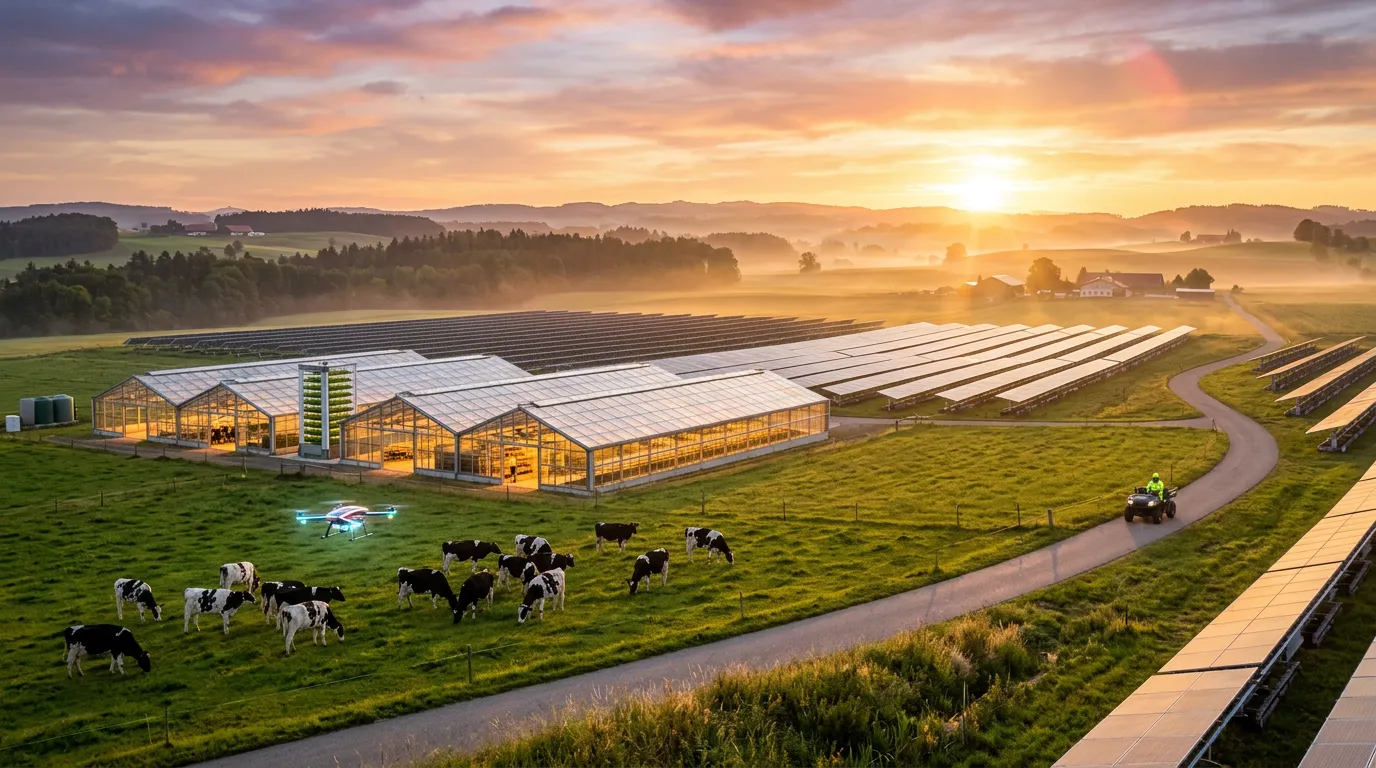
The new robotic dairy is expected to increase milk output. Average production currently stands at 29 liters per cow per day, while some animals are already producing as much as 52 liters. Milk yields are expected to continue rising.
Meanwhile, the new facility requires a permanent staff of only three people – one livestock worker, one milking operator, and one systems operator. A conventional dairy without automated systems would require several times as many employees. The company is already planning the second phase of the complex.
"A cow is a highly sophisticated animal. Thanks to conditioned reflexes, it can do perfectly well without people and can even become more productive when provided with proper housing conditions and balanced nutrition," said Alexey Kobylin, Minister of Agriculture and Deputy Governor of the Chelyabinsk Region.
Experience shows that when production processes are properly organized, robotics increases both milk yields and farm profitability. In the Altai Territory, the village of Funtiki is home to a robotic dairy farm built around voluntary milking technology, allowing cows to visit the robotic milking units whenever they choose, at any time of day, while the robots operate around the clock. As a result, milk production has increased by 25% to 50%, and the farm's profitability has reached 2.5 times that of a conventional dairy operation.
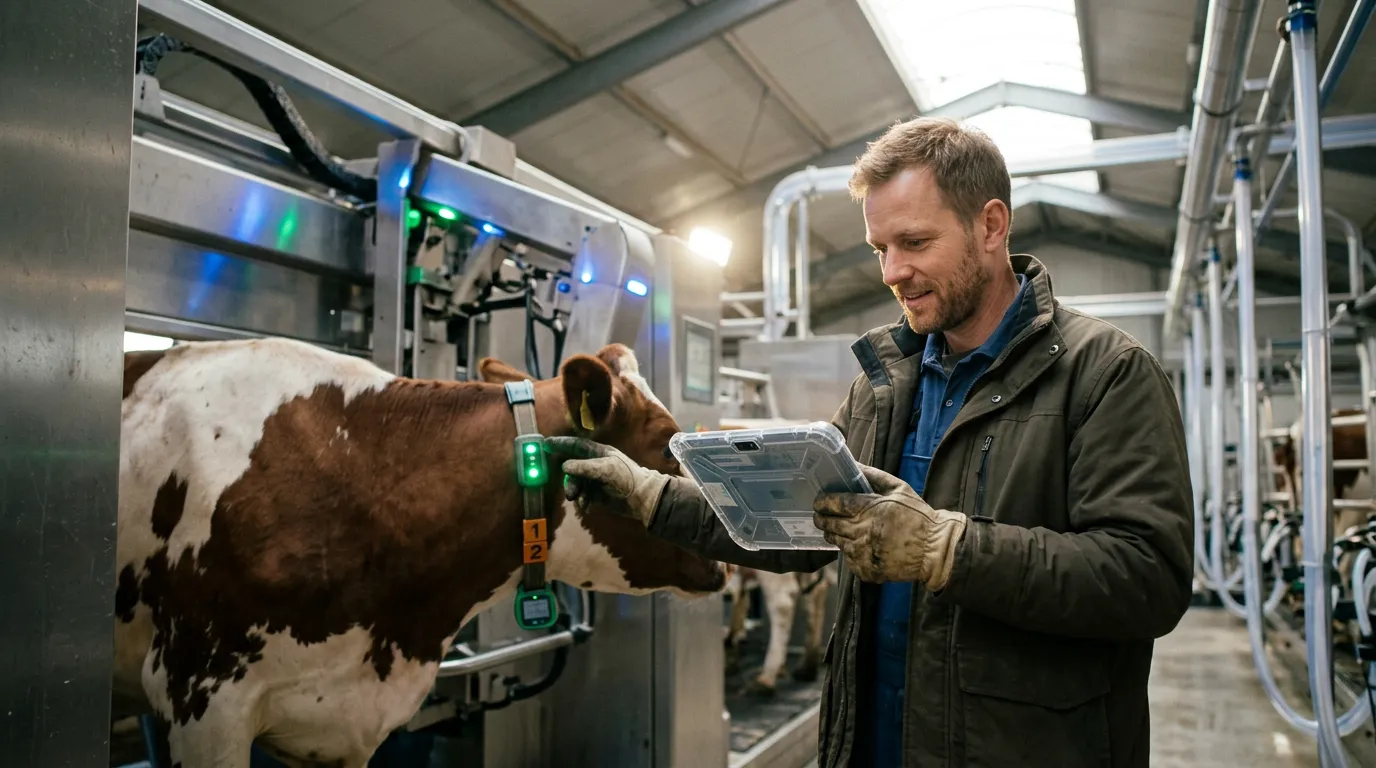
Another example of successful IT adoption is the Tritikum farming enterprise in Russia's Omsk Region. Every production process has been automated, from feed and water delivery to manure removal. Each cow wears a sensor-equipped collar that monitors its condition in real time. The resulting data is analyzed by a neural network, providing continuous insight into herd health and helping operators adjust individual feeding programs.
Training AI for the Next Generation of Farms
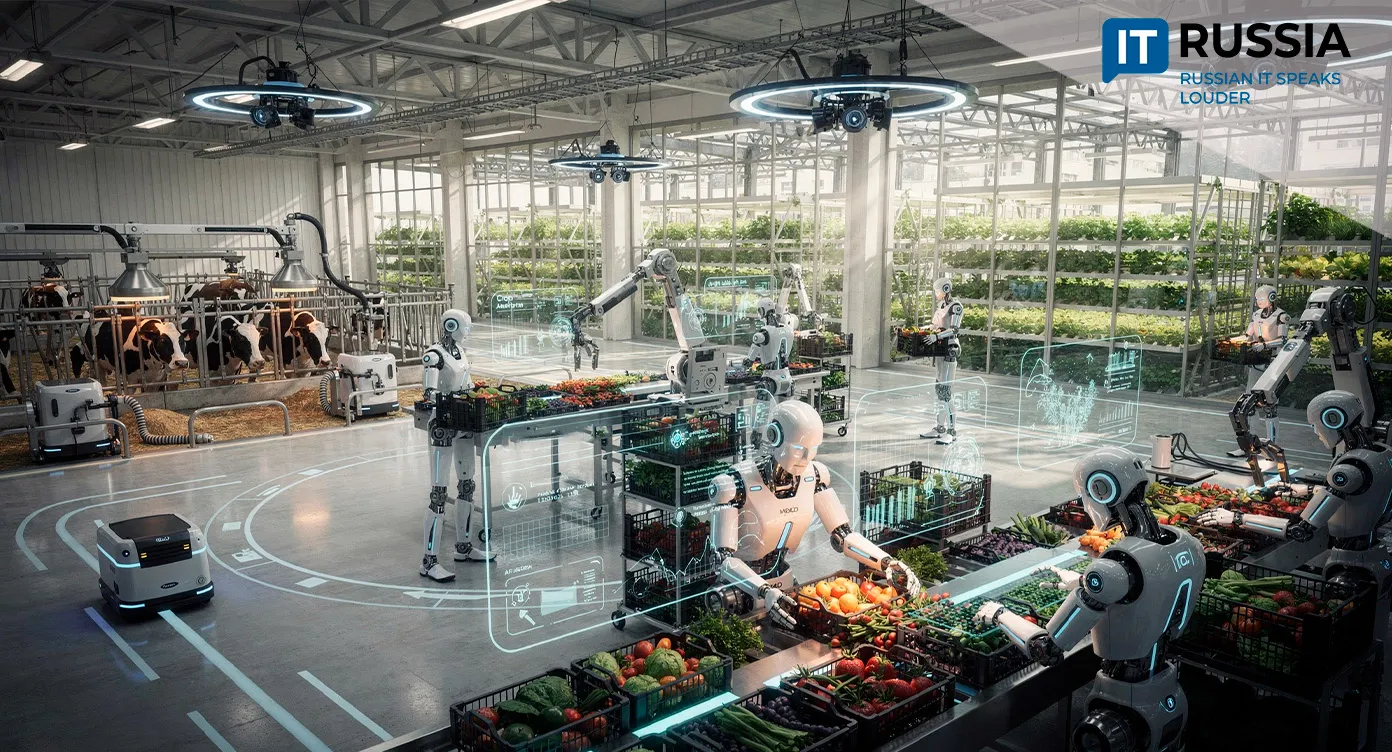
The adoption of robotic dairy farms is important not only for expanding agricultural production and increasing milk output but also for strengthening Russia's IT sector. As these operations run, they continuously generate data that can be used to train artificial intelligence algorithms. In the future, AI systems will be able to determine the optimal time for insemination, calculate individualized feeding plans, forecast diseases, and detect declining productivity before visible symptoms appear.
That foundation will support the development of integrated platforms for managing smart dairy farms. These systems are expected to combine machine vision, livestock monitoring sensors, robotic milking systems, and herd management software into a unified digital environment. Such integrated solutions could also become export products for friendly countries seeking to modernize their dairy industries.