Students Grow Mushrooms and Microgreens as Tver Region Expands Agritech Education
Schools in Kashin, Likhoslavl, and Dmitrovaya Gora are introducing agritech education, equipping students with hands-on digital skills aligned with the future of modern agriculture.
In Kashin, Likhoslavl, and the village of Dmitrovaya Gora, schools are building agri-focused learning programs designed to develop applied digital competencies for future agronomists and plant breeders.
Workforce development remains a core priority across industries. Understanding who will enter the workforce, when they will arrive, and what skills they will bring enables both companies and sectors to plan long-term growth.
That is why career guidance and applied technological education are critical for advancing modern agriculture. Since 2025, the Tver region has introduced a new agrotechnological curriculum track, including the launch of specialized agrotech classes.
Learning Through Real Projects
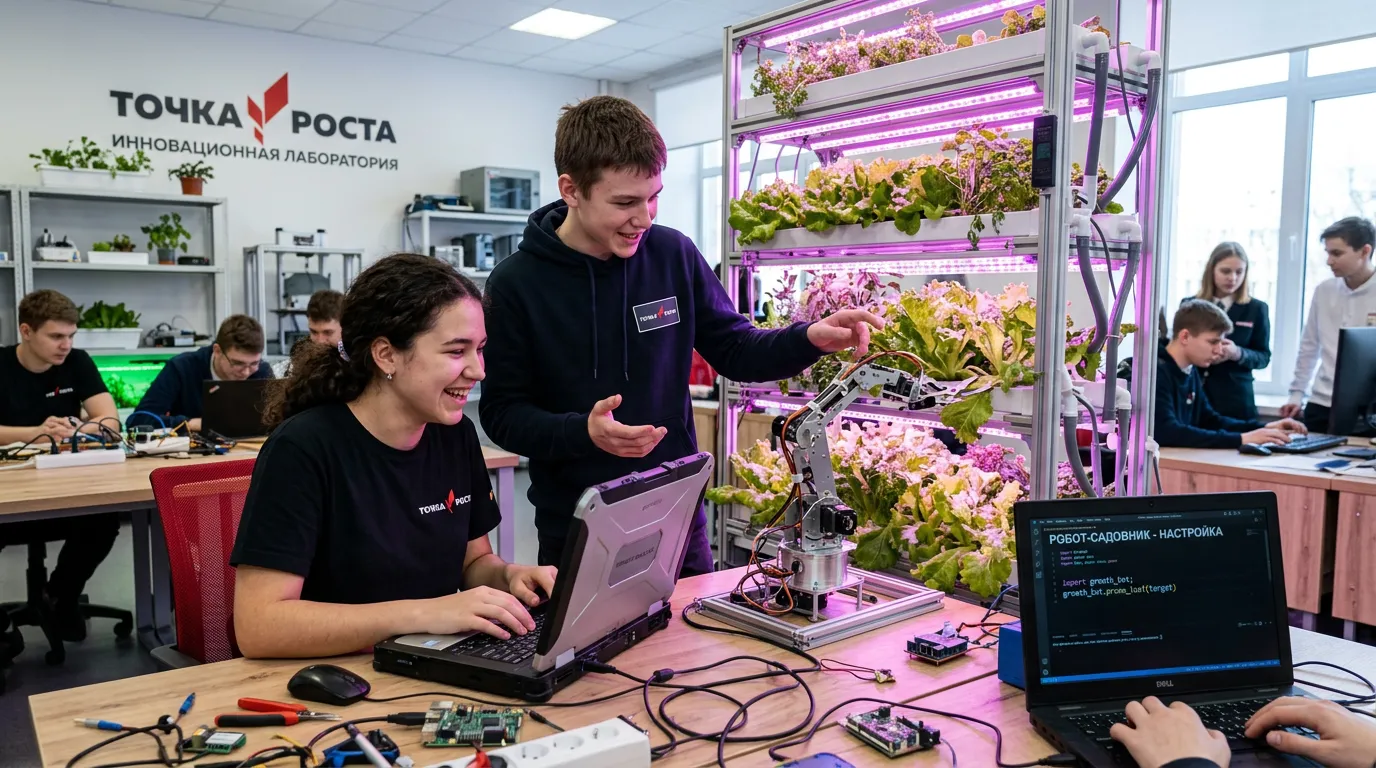
Seventh-grade students in Tver region schools in Kashin, Likhoslavl, and Dmitrovaya Gora are learning the fundamentals of modern agriculture through these agrotech classes. Their coursework combines academic study with hands-on project work.
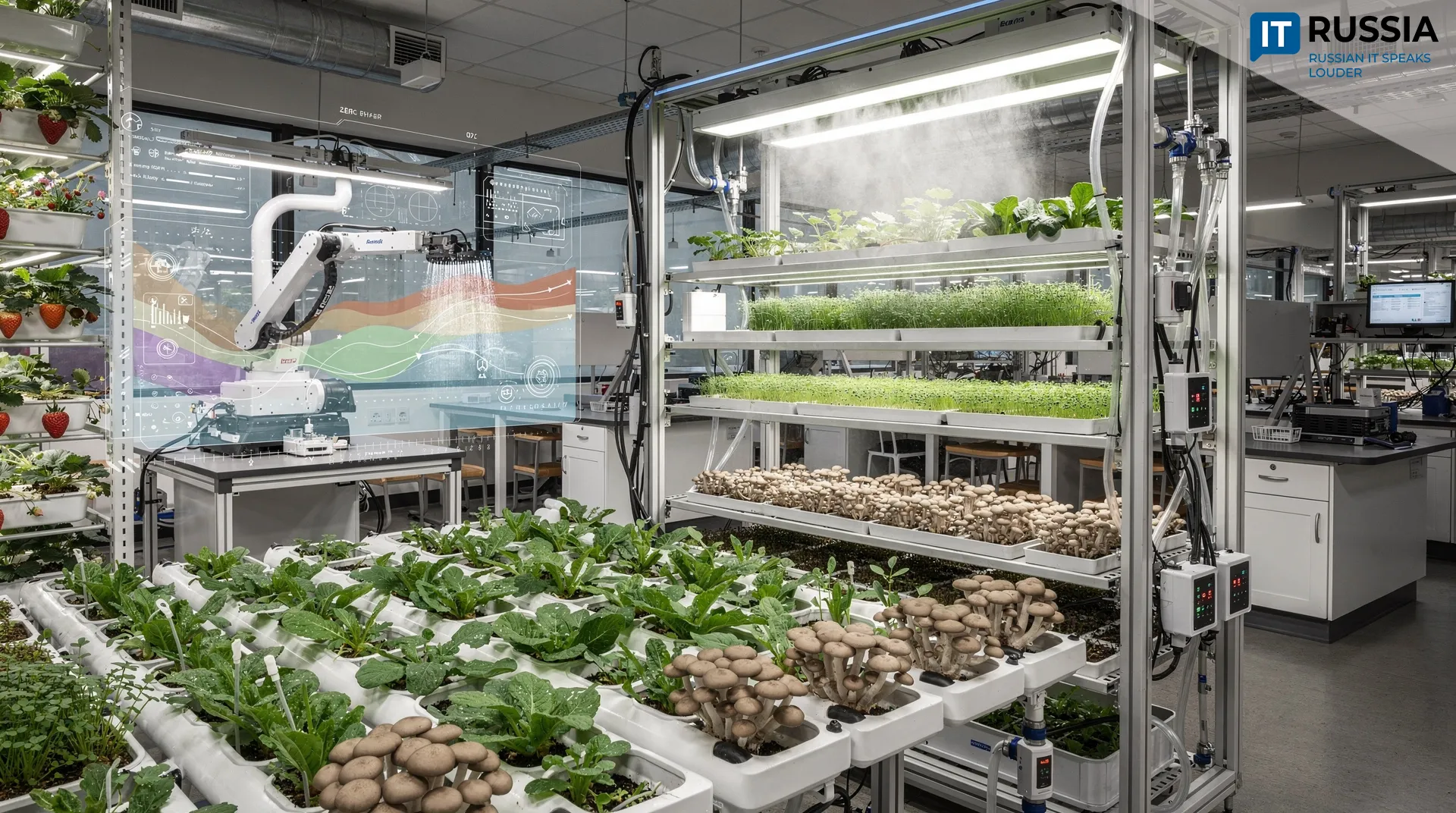
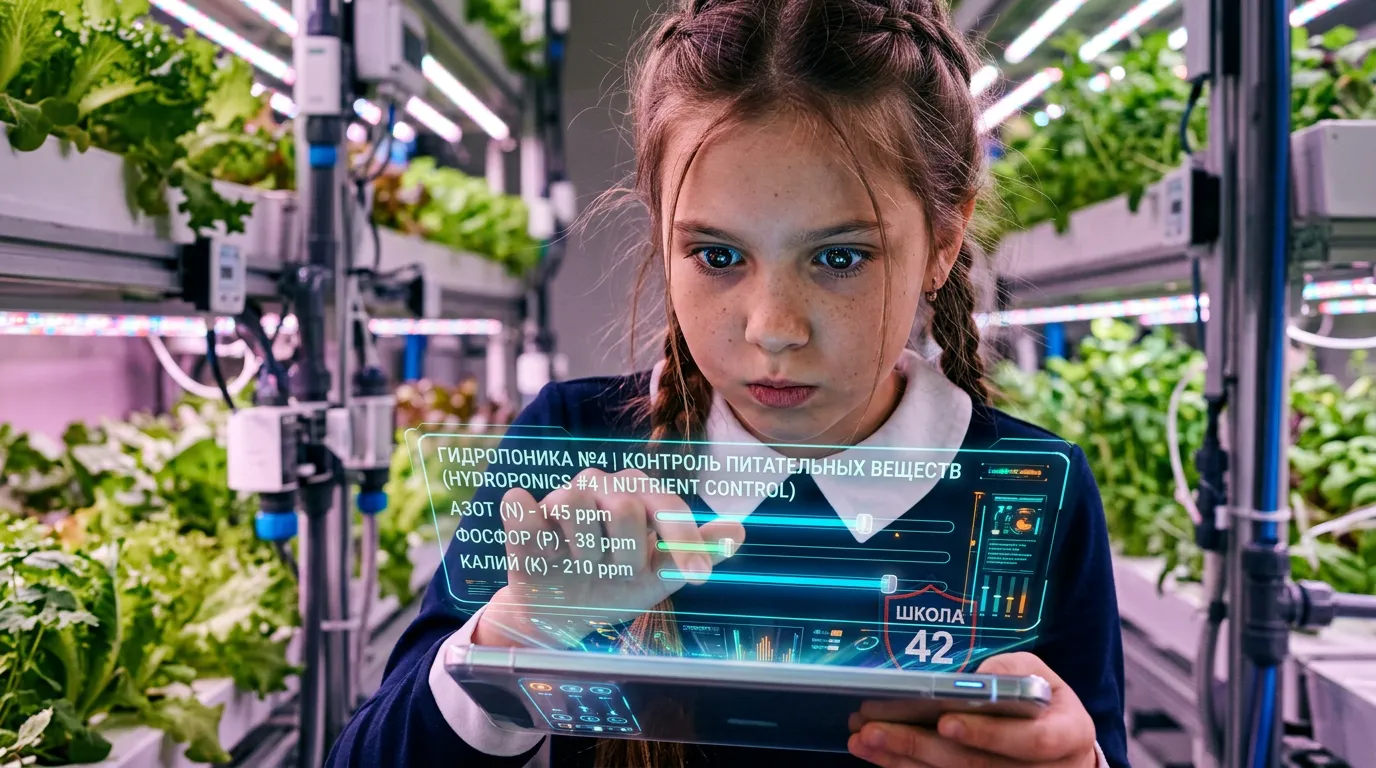
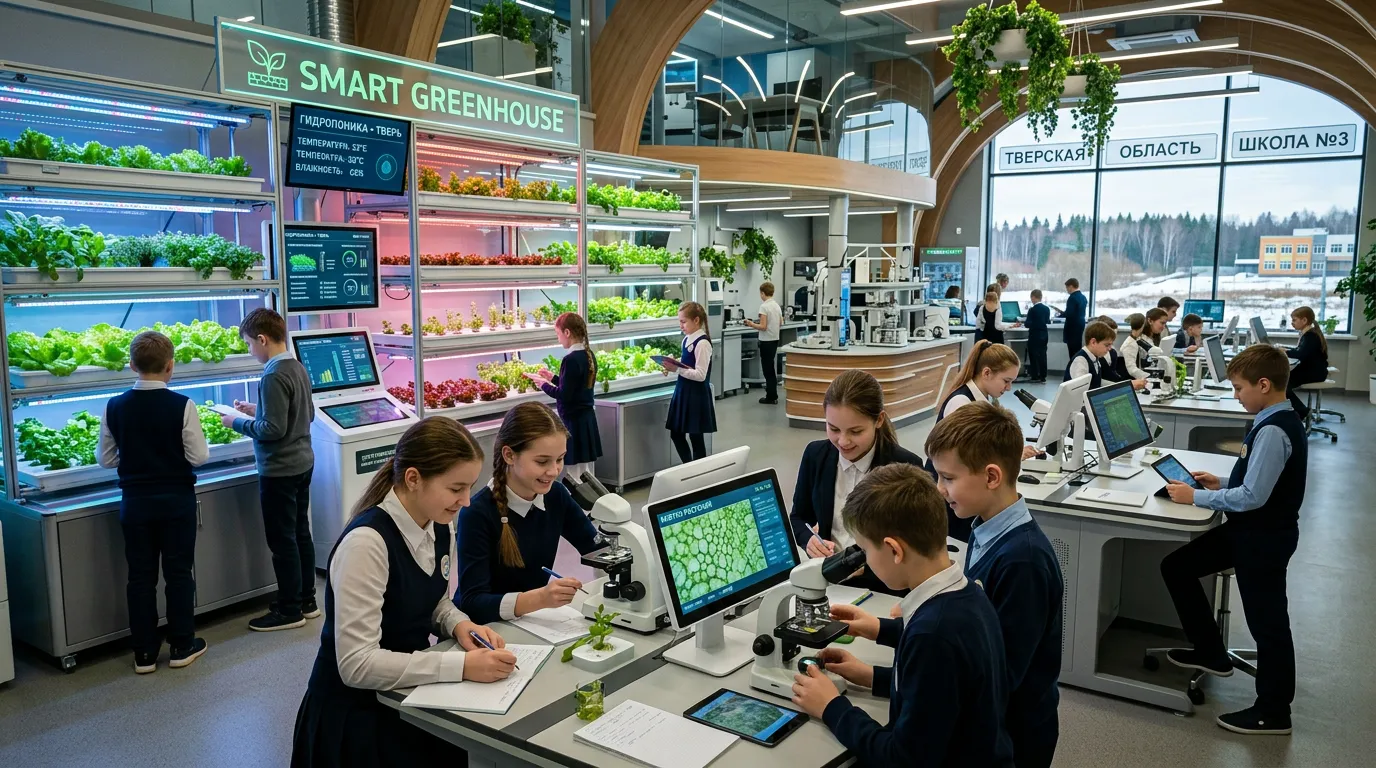
Students train in dedicated facilities equipped with a robotic greenhouse, a hydroponic system that grows plants without soil using nutrient solutions, microscopes, and an interactive panel. This setup gives them direct exposure to real-world agricultural science. Specialists from partner company Tver Agroprom guide students in understanding how the equipment works and what can be built with it.
Classes take place during an additional weekly biology session as well as in extracurricular programs. Students work with mentors to program greenhouse robotics, configure nutrient delivery systems in hydroponic units, and manage the growth of oyster mushrooms, strawberries, and microgreens. The work involves using sensors, data analysis tools, environmental monitoring systems, and robotics components in real operating conditions.
In Tver, the Federal Research Center for Bast Fiber Crops is introducing students to modern technologies for cultivating and processing flax, a crop considered strategically important.
Roman Rostovtsev, Doctor of Engineering and Director of the Federal Research Center for Bast Fiber Crops, said: “We are developing an agrotech education program at our Center. It will likely take the form of a flexible curriculum rather than a single class, allowing any interested students to participate. A dedicated module will focus on fundamental science. Our goal is to show how diverse this field can be.”
Expanding Supplemental Education Infrastructure
Students in the Tver region are already gaining practical experience with smart agriculture technologies that are being deployed across Russia’s agricultural sector. This early exposure allows them to make more informed career choices.
Agrotech classes represent the next stage in developing career guidance and supplemental education in the region. Under the national Education project, 56 “Growth Point” centers focused on science and technology were launched in 2024 in rural areas and small towns across 22 municipalities. In total, 332 such centers have been established in the region, serving more than 70,000 students.
Modern laboratory setups, including robotic greenhouses, allow students to move beyond theory and directly observe the results of their work, reinforcing practical learning outcomes.
Similar initiatives are expanding across Russia. In the Nizhny Novgorod region, 12 new agrotechnology classes have been launched under the federal Workforce in Agriculture program. Schools in the Stavropol region have introduced smart greenhouses. In Saint Petersburg and the Krasnodar region, students have developed their own smart greenhouse prototypes, including digital applications for remote control of heating, lighting, ventilation, and irrigation.
Building the Workforce for Digital Agriculture
Russia’s education system is shifting away from training abstract developers toward preparing specialists who combine IT, engineering, and agricultural expertise. Employers increasingly require practical skills developed through real-world projects, making early career guidance essential.
School-based agrotech classes serve a dual role. They help build a workforce for digital agriculture while also creating demand for domestic educational technologies, including lab systems, agritech tools, robotics, sensors, and climate control automation solutions. Scaling standardized training models for schools and agrotech labs is becoming a priority for Russia’s IT sector.
These initiatives are particularly important for small towns and rural areas, where they help build a local talent pipeline for agricultural enterprises. In practice, they represent the first step in a long-term workforce development chain that supports the growth of digital technologies in Russia’s agricultural sector and strengthens food system resilience.