

Atomenergoremont Develops Robot for Nuclear Plant Equipment Inspections
Specialists at JSC Atomenergoremont have developed a robotic system for inspecting reactor equipment.
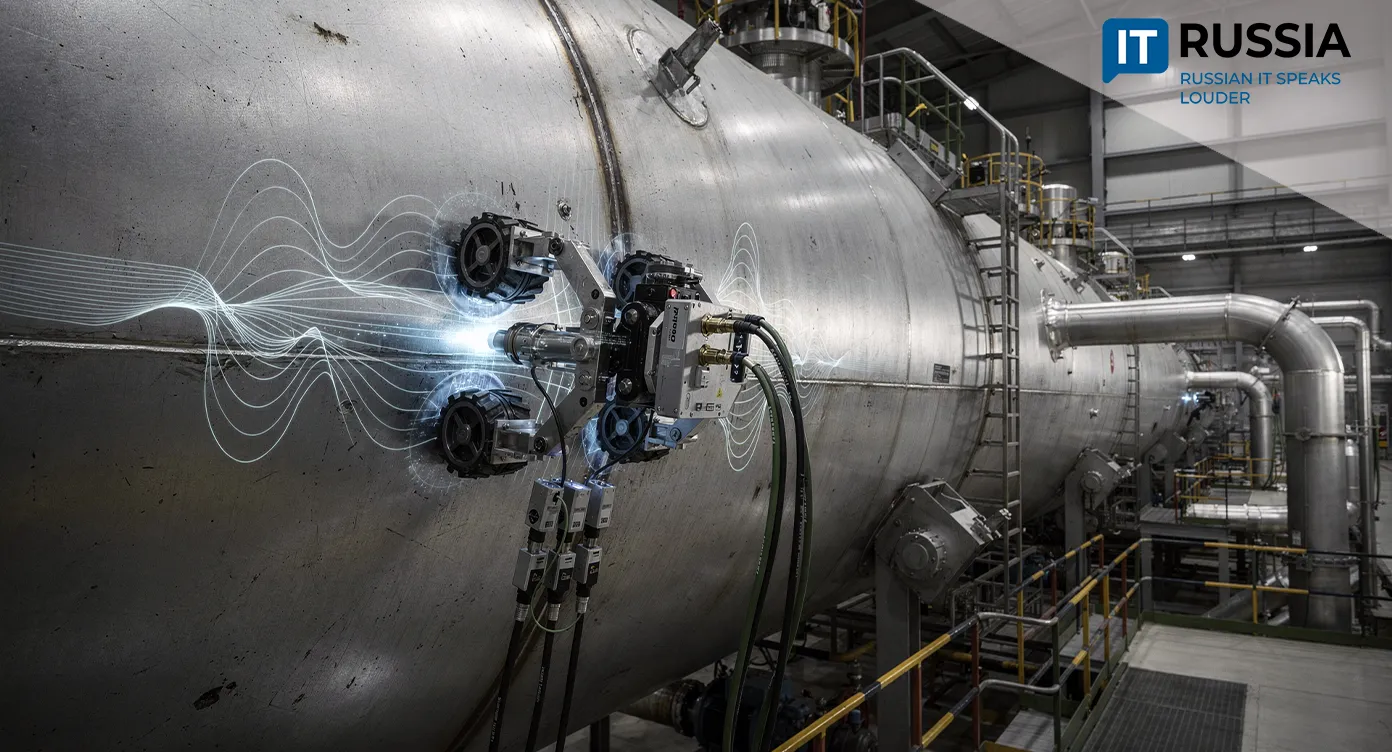
The system consists of a magnetic-wheeled robot equipped with manipulators and ultrasonic sensors. The first overseas site to use the new technology will be Egypt’s El Dabaa nuclear power plant, which is currently under construction.
Robot on Magnetic Wheels
The robotic system will be used for ultrasonic inspection of reactor equipment and primary circuit piping. It comprises manipulators and a mobile robot fitted with magnetic wheels, allowing the device to travel across vertical and inclined metal surfaces both inside and outside the reactor vessel.
The robot carries an array of ultrasonic flaw-detection sensors. An operator remotely controls the machine’s movement and sets its scanning route. In real time, the sensors transmit data on wall thickness and the presence of internal microcracks, cavities and other hidden defects in the metal. The system’s software automatically records the location of each defect and generates a detailed digital map of the equipment’s condition.
The magnetic chassis provides reliable adhesion to metal surfaces without the need to install complex rail guides. This reduces preparation time for inspections and allows the robot to examine areas with complex geometries, including welded joints.
Reducing Radiation Exposure
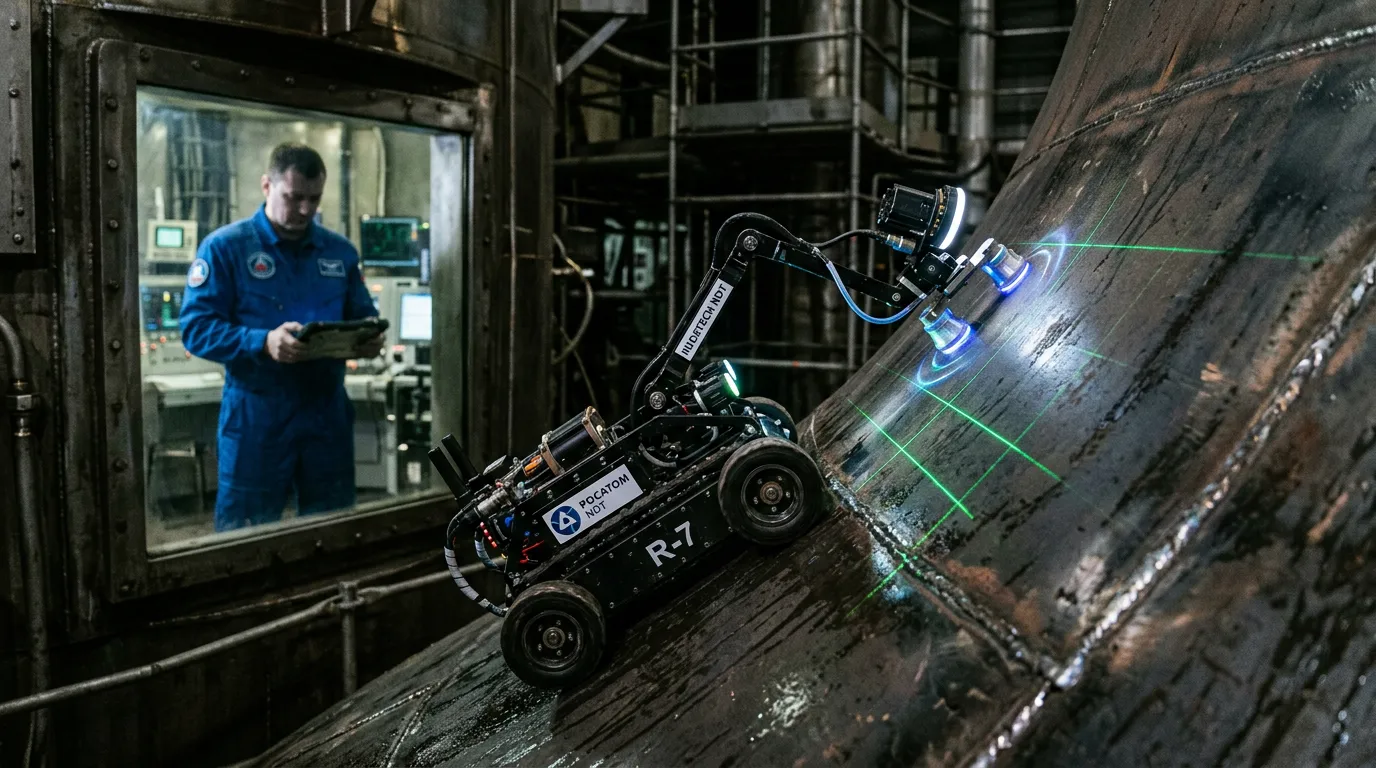
The primary purpose of deploying robotic systems at nuclear power plants is to keep personnel out of areas with elevated radiation levels. Once a plant begins operating, reactor compartment equipment accumulates radioactivity, while conventional ultrasonic inspection methods require flaw-detection personnel to be physically present close to the components being examined. This can expose workers to significant radiation doses.
Using the robotic inspection system allows measurements to be performed remotely. The operator and engineering personnel remain in a safe area and control the system through protected cable lines. This reduces the collective radiation dose during scheduled preventive maintenance and mandatory periodic inspections.
Automation also improves measurement accuracy. When complex surfaces are scanned manually, human error can result in missed areas or inaccurate sensor positioning. The robot, by contrast, follows a predetermined path at a constant speed. This provides uniform coverage and more reliable inspection results.

Russian Components and Testing
The system was designed using a Russian CAD system for 3D modeling. Atomenergoremont engineers developed the robot’s mechanics, electronics and software in-house. All components and algorithms were tested on prototypes under laboratory conditions and on training mock-ups of reactor equipment.
Tests confirmed that the magnetic locomotion system works on surfaces with varying degrees of roughness and across weld seams. The developers also verified stable signal transmission from the ultrasonic transducers. The system’s software has been adapted to work with Russian databases and systems used to archive nondestructive testing results.
Developing its own robot reduces the service organization’s dependence on imported equipment, as mobile diagnostic systems were previously purchased from foreign suppliers.
Deployment at El Dabaa NPP
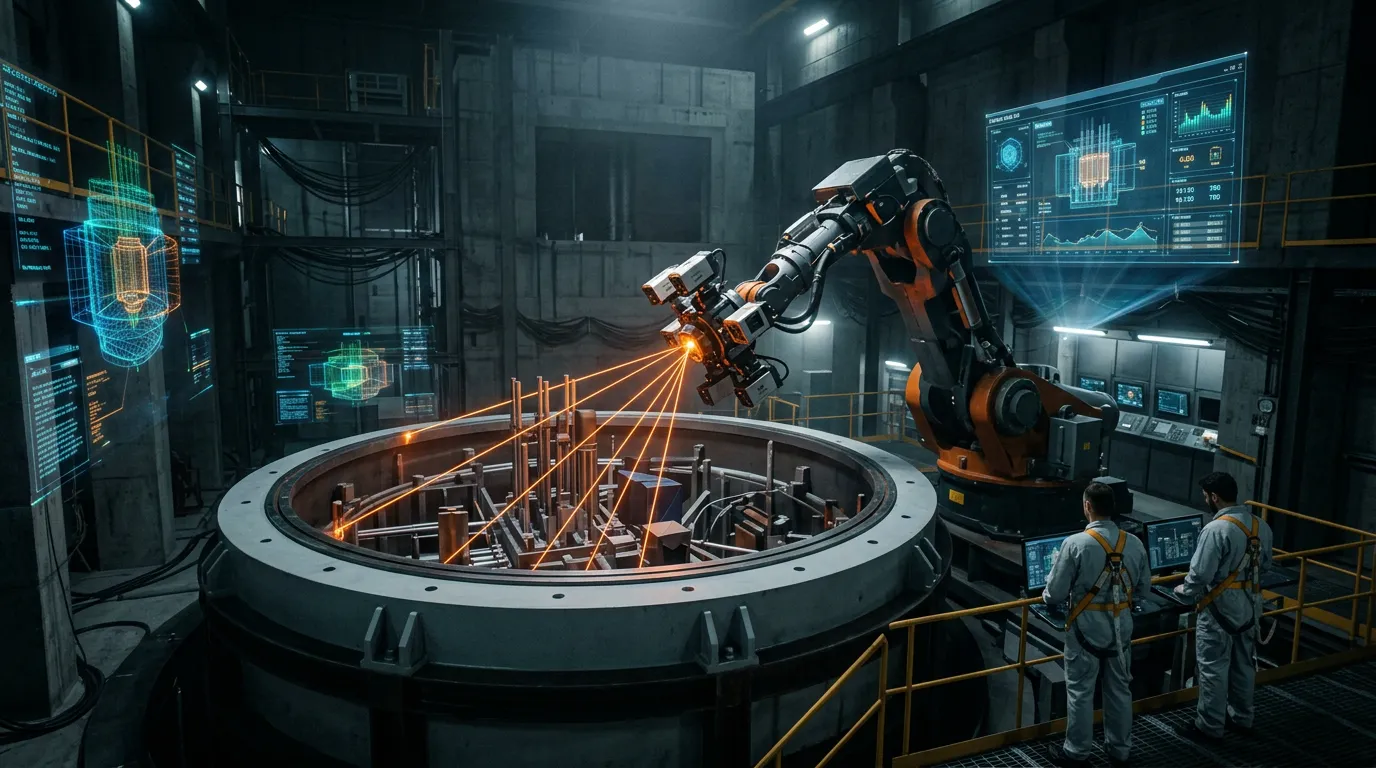
The first overseas facility to use the new robotic system will be Egypt’s El Dabaa nuclear power plant. The plant is being built to a Russian design with four Generation III+ VVER-1200 reactors. Once the units enter operation, a regular cycle of scheduled equipment inspections will begin.
The delivery of the Russian robotic inspection system to Egypt is part of the service support package Rosatom provides to overseas customers. Egyptian specialists will be trained at Russian training centers and nuclear power plants to operate the system and interpret ultrasonic inspection data.
Atomenergoremont’s technology could also find applications at other overseas nuclear power plants, including facilities in Türkiye, Bangladesh, India and China. Standardizing diagnostic equipment makes it possible to establish common standards for metal inspection and build databases tracking the condition of reactor vessel equipment across all units.