Digitalnyy uley 2.0 Comes to Bashkiria’s Apiaries
Beekeepers can now remotely monitor apiaries located as far as 40 kilometers from the nearest settlement.

One of the main challenges for professional beekeepers is the need to constantly assess the condition of bee colonies and hives. This becomes especially critical during the flowering season of nectar plants. Monitoring hive weight is essential. If the weight drops, bees must be urgently relocated to a new site. “By tracking hive weight, we understand whether we are making or losing money and what condition the colony is in,” says Bashkir beekeeper Kirill Kugeyko.
But checking the condition of an apiary often requires significant travel time. At the same time, beekeepers frequently manage dozens of apiaries spread across remote locations. That is where digital technologies and mobile connectivity begin to make a difference.
Remote Monitoring of Bee Colonies
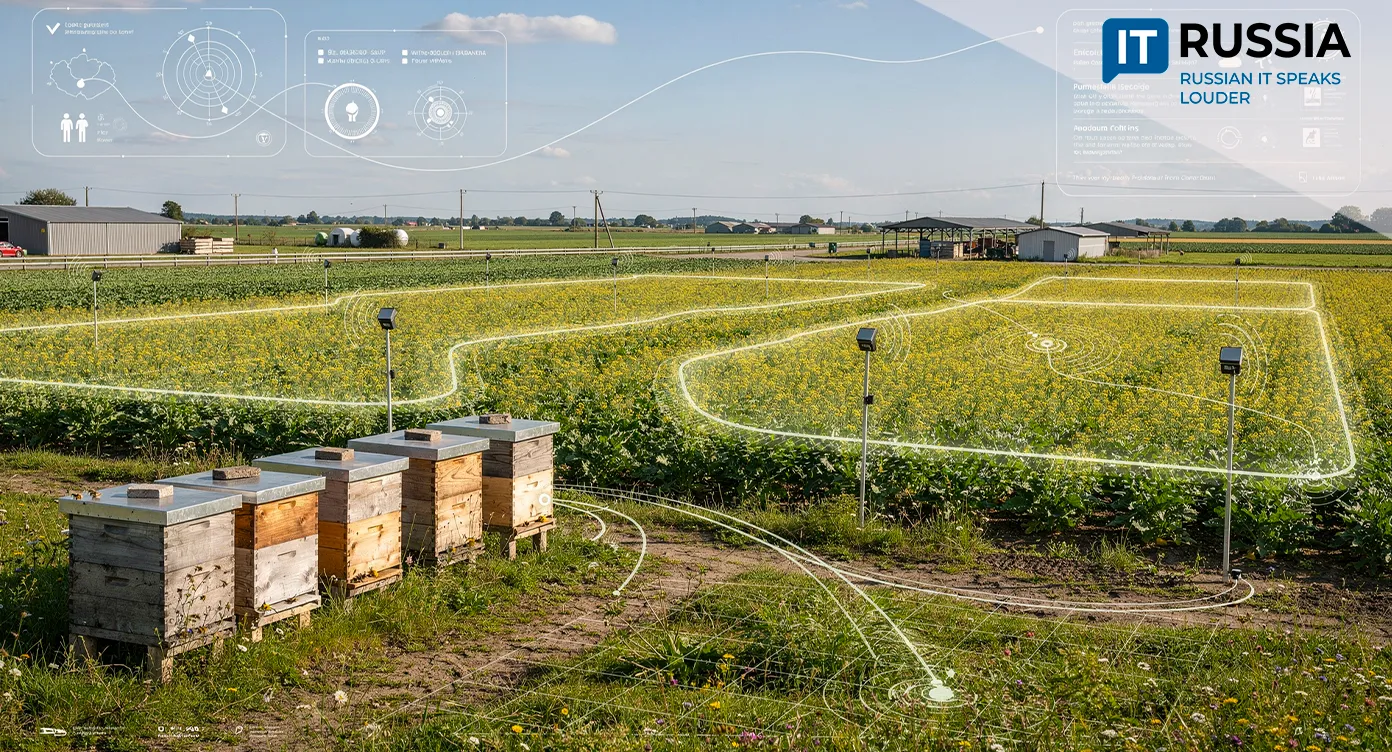
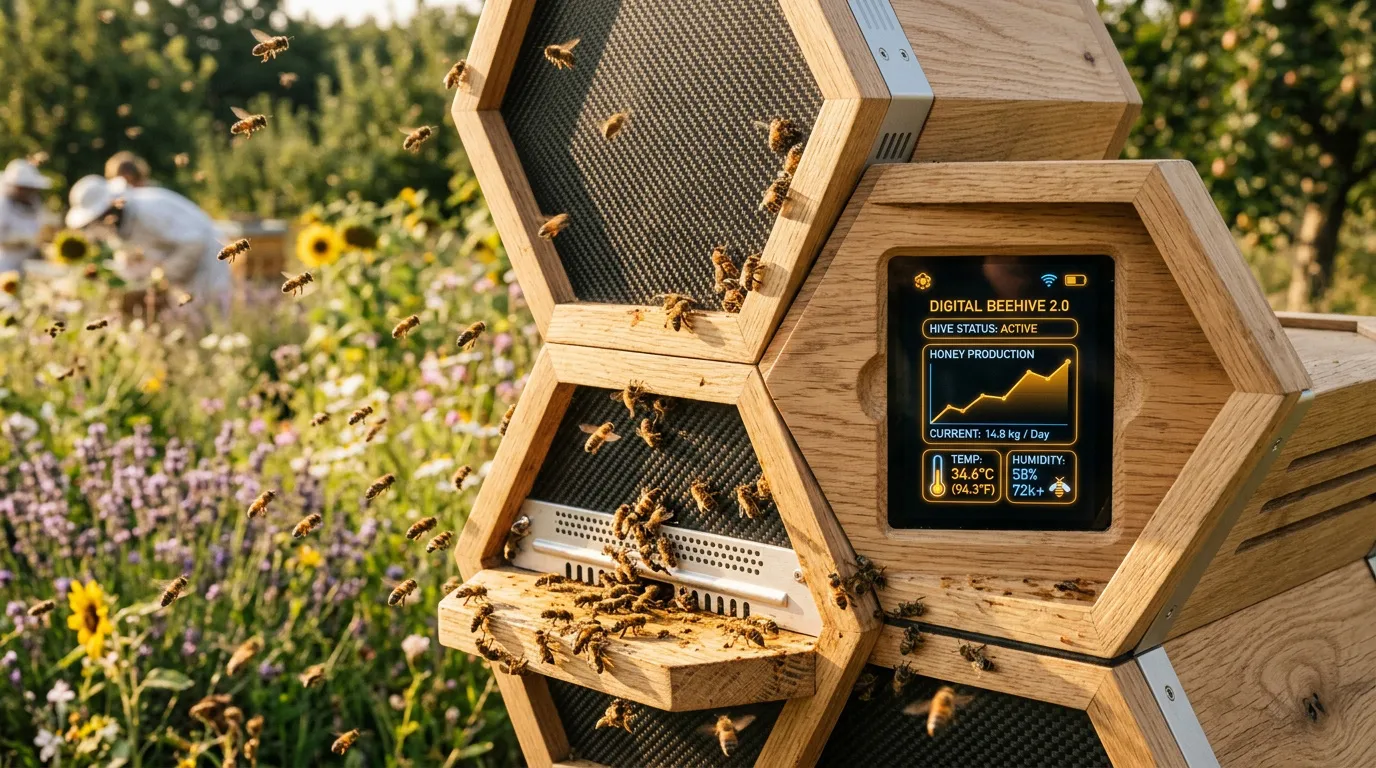
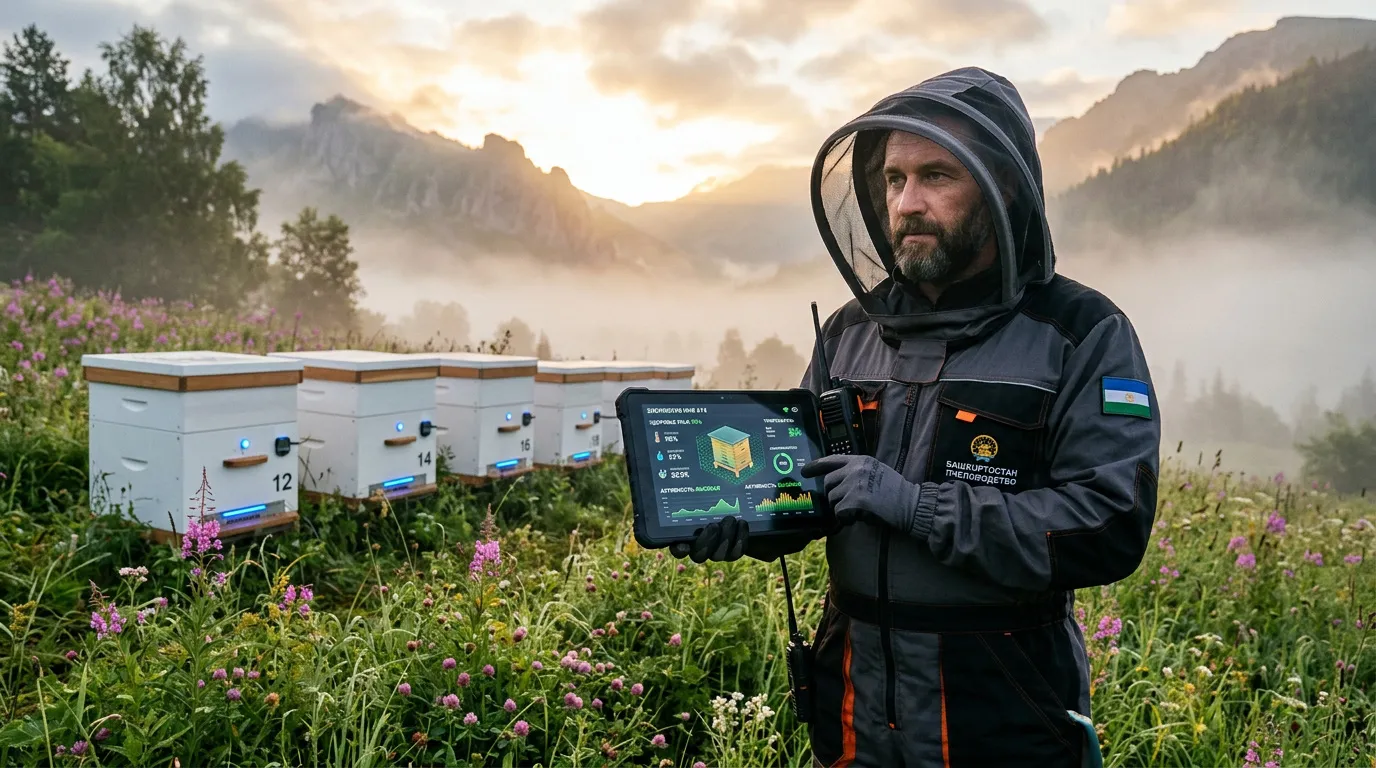
Bashkir beekeeper Ildus Smakov addressed the challenge of remote monitoring by purchasing the Digitalnyy uley 2.0 (Digital Hive 2.0) system. The platform includes a hardware and software complex and a single-board microcomputer called the Tsentr upravleniya paspekoy (Apiary Control Center), designed to collect and transmit data. The system continuously monitors bee colonies. Sensors installed in the hives track key parameters in real time.
“These include temperature, humidity, carbon dioxide levels, atmospheric pressure, weight gain and loss. An accelerometer and an infrared sensor detect when the hive lid is opened or closed, as well as the hive’s position. All this information is collected and transmitted to our platform,” said Irina Latokhina, an agricultural technology expert at Rostelecom in Bashkortostan.
The collected data is processed by artificial intelligence algorithms and transmitted via wireless communication to cloud storage. There, it synchronizes in real time with the Edinaya tsifrovaya platforma pchelovodstva (Unified Digital Beekeeping Platform). Together, Digitalnyy uley 2.0 and the platform form a remote monitoring ecosystem. Operations and data are logged in an electronic journal, and users receive an interactive map of the apiary that even includes a five-point “bee happiness index.”

An Ecosystem for Data Sharing
Bashkir beekeeper Ildus Smakov has gained a digital ecosystem for remotely managing his operations. For him, this is critical – it enables him to oversee multiple apiaries simultaneously.
“My apiary is located near the Kuperlya waterfall, 40 kilometers from the village of Nugush. Getting there is difficult – it takes three and a half hours to cover those 40 kilometers. The Digitalnyy uley helps me stay informed about what is happening at the apiary. It reduces the workload for me and my team. Data comes in via satellite internet. I track weight changes, growth, and bee health, and I know when feeding or treatment is needed,” Smakov explained.
Going forward, the digital system for managing honey production will unlock additional capabilities. Digitalnyy uley 2.0 and the Unified Digital Beekeeping Platform will enable automated data exchange with government agricultural information systems, as well as with other beekeepers.
The project has completed pilot testing in seven regions: Bashkortostan, Tatarstan, Mordovia, Chuvashia, Tyumen, Leningrad, and Tver regions. It won the “Digitalization in Agriculture: Technology of the Year” award at the CNews Awards. The platform continues to evolve, adding new measurement tools that allow beekeepers to track virtually any parameter.
A Transparent Honey Market
Digitalnyy uley 2.0 is useful both for experienced beekeepers, who can scale their operations, and for newcomers, who receive guidance in decision-making.
At the same time, digitalization of beekeeping in Russia goes beyond increasing honey production. Remote monitoring of bee health plays a critical role in crop sustainability. According to the Food and Agriculture Organization of the United Nations (FAO), around 75% of the world’s key crops depend to some extent on pollinating insects.
In the long term, the digital platform helps make the honey market more transparent, which is especially important for consumers. The Unified Digital Beekeeping Platform allows buyers to verify product quality, trace production processes, and review veterinary certificates.
As exports of Russian honey continue to grow, digital traceability will strengthen producers’ reputation in international markets. The technology itself also has export potential. With adaptation to different climate conditions, it could be deployed in partner countries developing their beekeeping industries and seeking to build transparent supply chains.