Less Memory, More Meaning: Moscow State University Researchers Teach Robots to "See" the World Differently
Researchers at the Faculty of Computational Mathematics and Cybernetics at Lomonosov Moscow State University have proposed a new approach to recognizing three-dimensional objects by representing them as graphs of simple geometric primitives and processing them with graph neural networks.
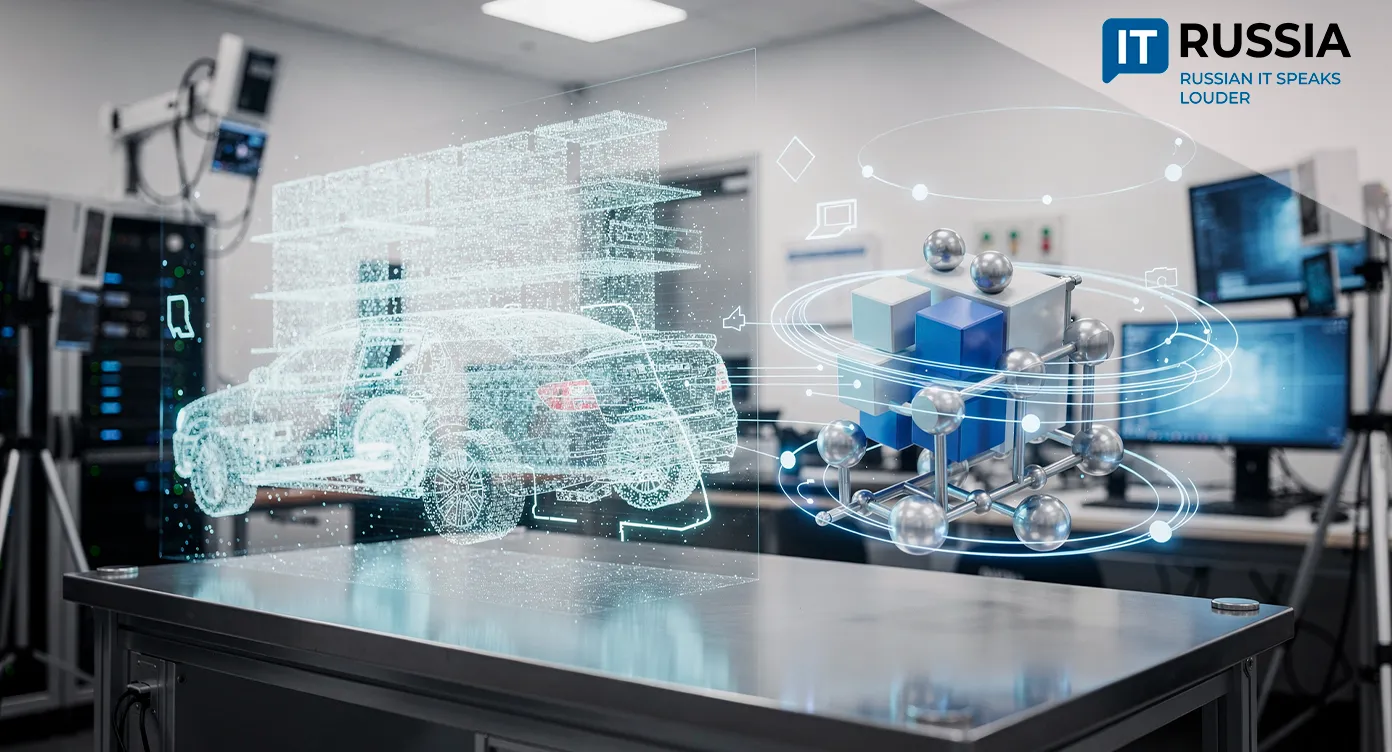
Imagine trying to describe a car using nothing but words. You could spend hours detailing every grain of dust on its surface and every microscopic crack in its paint. Or you could simply say, "It is a rectangular body resting on four cylindrical wheels." The second description requires millions of times less information while preserving nearly everything that matters about the object.
That principle lies at the heart of a new approach developed by researchers at the Faculty of Computational Mathematics and Cybernetics (CMC) at Lomonosov Moscow State University. Their method enables artificial intelligence systems to recognize three-dimensional objects while using only a fraction of the computational resources required by conventional techniques.
How Do You Compress the Nearly Infinite?
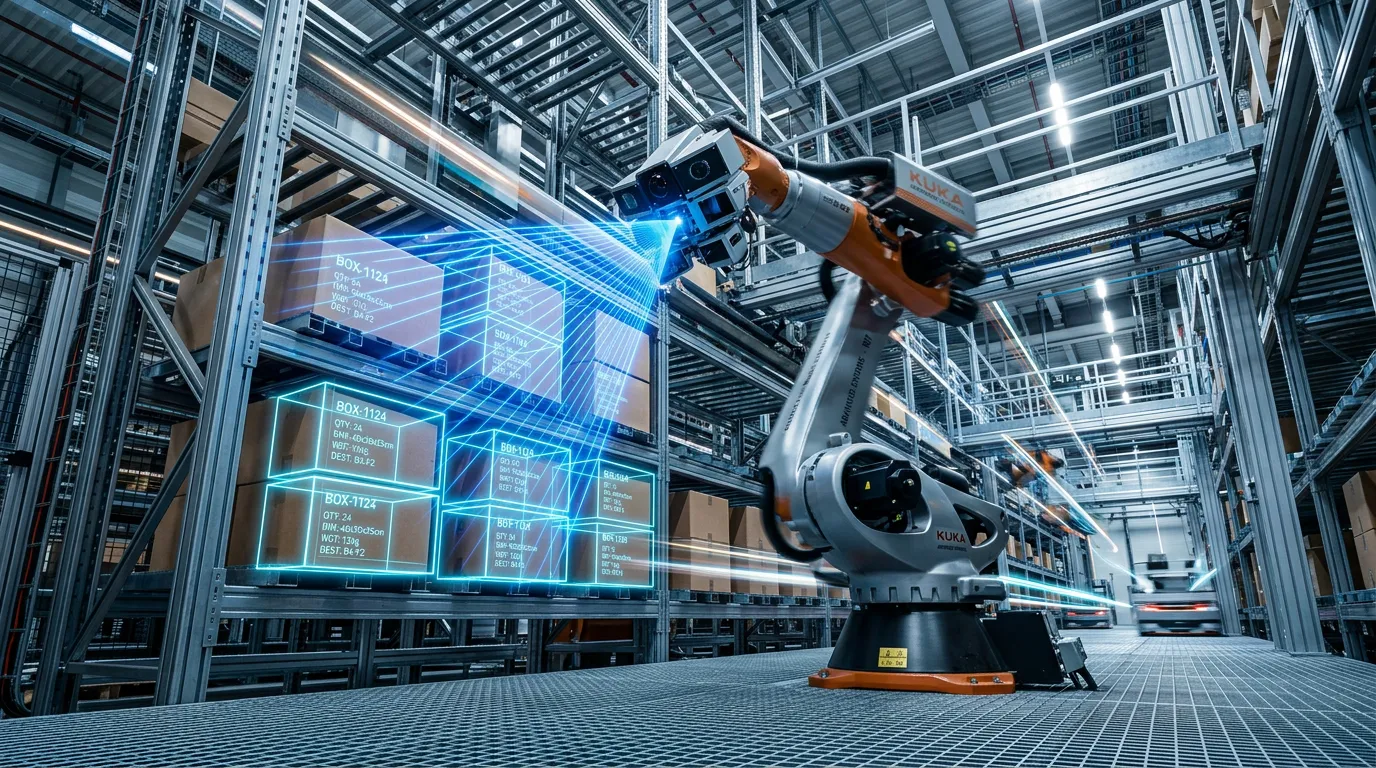
Modern robots, autonomous vehicles, and augmented reality systems navigate the physical world using lidar sensors and depth cameras. The result is a so-called point cloud, a dataset containing millions of spatial coordinates that describe every object in the surrounding environment. The challenge is that storing and processing those datasets demands enormous amounts of memory and computational power.
The Moscow State University team proposes a different strategy. Instead of storing billions of individual points, the algorithm represents an object as a graph composed of simple geometric primitives. The graph's nodes correspond to those primitives, while its edges encode how they intersect or come into contact with one another. Using only a minimal set of primitives and a single relationship type reduces the amount of stored information by several times. The approach has already been evaluated on the international ShapeNet benchmark of 3D models and presented at the Lomonosov Readings scientific conference.

Why Does This Matter Beyond the Lab?
At first glance, algorithms for processing 3D data may appear to be the exclusive domain of robotics and computer vision researchers. In practice, however, this research could have a direct impact on everyday life. One example is affordable robotics. If a robot no longer needs an onboard supercomputer simply to determine whether the object in front of it is a chair or a box, the cost of building that robot could drop substantially. Service robots in stores, hospitals, and warehouses would become far more practical to deploy at scale.
The same principle applies to unmanned aerial vehicles. Delivery drones transporting parcels or medicines currently devote a significant share of their battery capacity to powering high-performance onboard computing. Reducing the computational burden would directly increase both flight range and operating time. The approach could also enable autonomous taxis and privately owned self-driving vehicles to interpret road conditions in real time using onboard hardware, without sending data to the cloud for processing and waiting for the results to return.
Strategic Technological Sovereignty
As Russia pursues technological sovereignty, it cannot rely on foreign software platforms for critical sectors. The Moscow State University research strengthens domestic expertise in computer vision and graph neural networks.
The algorithm could become a foundational component of Russian software platforms for robotics, autonomous transportation, and industrial automation. Just as importantly, it enables efficient AI systems to run on widely available computing hardware, reducing dependence on scarce, high-end foreign processors.
Keeping Pace with Global Research
Rather than simply following global trends, Russian researchers are increasingly contributing their own approaches to making artificial intelligence more computationally efficient. Looking back over the past several years reveals a clear progression.
In 2023, researchers at ITMO University introduced a method for reconstructing a three-dimensional human model from just two photographs while requiring minimal computing resources, opening the door to virtual fitting rooms. By 2024, Russian researchers had shifted their attention toward improving neural network accuracy. In 2025, ITMO researchers synthesized methods for structural analysis of point clouds for industrial inspection. The Moscow State University method introduced in 2026 extends that trajectory by focusing not on increasing algorithmic complexity but on dramatically simplifying and compressing data while preserving its semantic content.
Today, researchers around the world face the same challenge of computationally intensive 3D perception. If the Moscow State University method performs well under real-world conditions, where sensor data is noisy and incomplete, it could find applications not only within Russia but also in international markets through robotics and smart city software platforms.
From the Laboratory to Real Roads
It is important to distinguish between an outstanding scientific result and a market-ready technology. So far, the algorithm has been evaluated using ideal digital models. Outside the laboratory, lidar sensors and depth cameras must contend with rain, snow, dust, glare, and missing data.
The next step will be to test how well the graph representation withstands noise and distortions. That will be followed by industrial prototype development and integration into the onboard computing systems of robots and autonomous vehicles.