Russia Accelerates Transition of Agriculture to Domestic Software
By 2030, at least 80% of Russia’s agricultural enterprises are expected to replace foreign software with domestically developed digital platforms.
The Russian government has set new deadlines for the digital transformation of the country’s agricultural and fisheries sectors. According to a directive issued by Prime Minister Mikhail Mishustin, by 2030 at least 80% of enterprises in Russia’s agro-industrial complex must transition to Russian basic and application software in systems that support core production and management processes.
A Strategic Sector of the Economy
The government’s close attention to digitalization of Russia’s agro-industrial complex reflects both its strategic importance and its rapid growth. Agriculture performs a critical national function – ensuring food security by providing the population with essential food products.
At the same time, the sector has become a fast-growing and high-margin business. Over the past decade, labor productivity in Russian agriculture has increased by 55%. Much of this improvement has been driven by large-scale adoption of IT technologies. Artificial intelligence systems are increasingly used to raise yields and reduce operational costs. According to analysts at the consulting firm Yakov & Partners, wider adoption of AI in the Russian agro-industrial complex could increase annual operating profits of domestic enterprises by more than $6 billion.
In this context, relying on foreign software developers for such a critical segment of the economy is viewed as economically impractical and potentially risky. Excessive dependence on external technologies could undermine long-term technological sovereignty.
Cybersecurity has also become an increasingly pressing issue for the agricultural sector. Farming operations now rely heavily on digital systems, and cyber threats have grown rapidly. Over the past three years, the share of targeted cyberattacks in Russia has risen from 10% in 2022 to 44% by the end of 2025. Importantly, around 9% of all cyberattacks are now directed at the agro-industrial complex. In 2024, authorities identified a growing trend of attempts to breach IT systems used by agricultural holdings. Agriculture is now among the three most frequently targeted sectors of the Russian economy.
Under these circumstances, domestically developed software is viewed as a key instrument for protecting agricultural production systems.
Toward Digital Maturity
The government directive also outlines another strategic objective: expanding electronic interaction among industry organizations, gradually migrating the Ministry of Agriculture’s state information systems to a unified digital platform for the agro-industrial complex, known as ECP AIC (Unified Digital Platform for the Agro-Industrial Complex), and achieving full digital maturity of the agricultural and fisheries sectors by 2030. The platform is scheduled for launch by the end of 2026.

At the first stage, six federal state information systems operated by the Ministry of Agriculture will be integrated into the unified platform. These systems manage critical industry data. The FGIS “Zerno” system tracks the movement of commercial grain across the country. FGIS “Semenovodstvo” records which seed varieties and hybrids are planted, where they are planted and for what purposes. The FGIAS “Plemenniye Resursy” system maintains centralized records and analytics on breeding livestock in Russia. FGIS USMT registers tractors, self-propelled machines and trailers. The EFGIS ZSN system accounts for all agricultural land in the country. IAS NTOR-SH provides operational monitoring and risk assessment related to scientific and technological support for agricultural development. In total, farmers currently rely on up to 30 digital systems in their daily operations.
Once operational, the unified digital platform will give industry participants and regulators access to a vast pool of data that can be used to analyze sector challenges and improve operational efficiency.
Transparency and Efficiency in Agricultural Production
The shift of Russia’s agro-industrial complex toward domestic software aligns closely with the objectives of the national “Data Economy” project. The government expects that by 2030 up to 80% of Russian enterprises overall will transition to domestic software solutions. For state-owned companies, the target is even higher at 95%. As a result, investment in IT development is expected to grow at roughly twice the pace of the broader economy.
The accumulated data generated through digital platforms is expected to stimulate technological and economic growth. “The main issue everyone is discussing is labor productivity. Estimates differ depending on the sector, but in our project economic effects were calculated together with industry experts. Productivity gains can reach up to 20%. Cost optimization can reach up to 45%, along with revenue growth and improved energy efficiency – all measurable and tangible effects,” said Deputy Prime Minister Dmitry Chernyshenko.
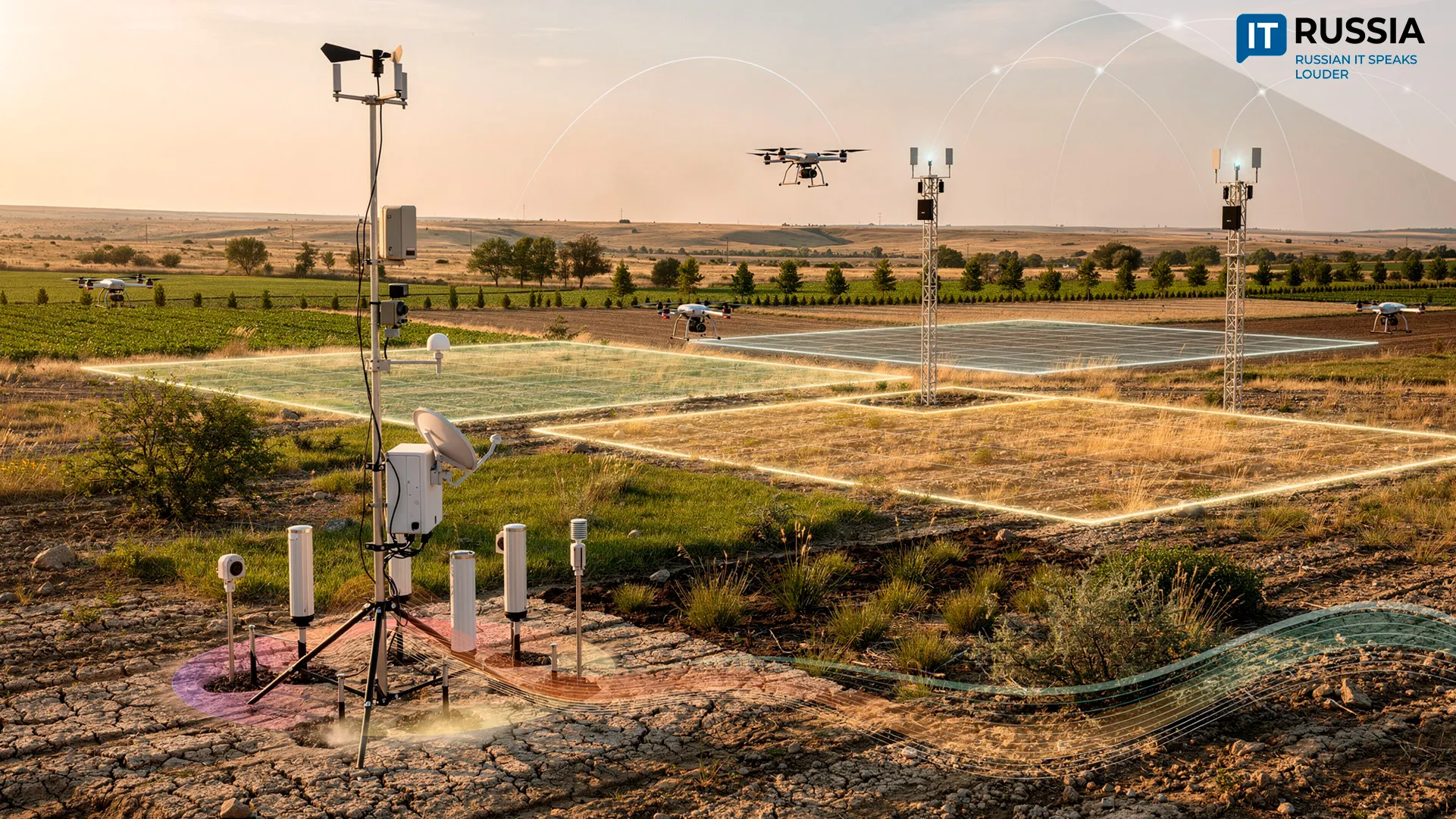
As the share of domestic software in agriculture increases and the sector moves toward digital maturity, the process is expected to become a powerful driver of the Russian IT market. Developers of agricultural management platforms, ERP systems, IoT technologies and data analytics tools will gain guaranteed demand within Russia, supporting the growth of the national technology ecosystem.
Further expansion of digitalization is expected to significantly improve agricultural productivity. According to expert estimates, digital technologies could optimize production and reduce operating costs for agricultural enterprises by 20–30%, allowing companies to reinvest additional resources into business development.
Russian agricultural IT solutions are already emerging as export products, particularly in markets such as BRICS and the Eurasian Economic Union. Although exports of these digital technologies are only beginning, they could form the foundation for future international cooperation projects with countries seeking to modernize their own agricultural sectors.