Digital Ecosystem Unifies Tatneft's Operations
Tatneft has digitised its core business processes, from well and equipment management to enterprise analytics and interaction with government agencies. Artificial intelligence serves as an engineering decision-support tool rather than a replacement for engineers.
Tatneft began its digital transformation programme in 2014. Over the company's 75-year history, its archives accumulated more than 500,000 scientific papers, technical reports, research studies, operating procedures, and engineering standards spanning 380 technical disciplines. Engineers searching for solutions to complex operational challenges previously had to manually sift through this extensive knowledge base. That prompted the development of a system capable of making decades of accumulated expertise available with a single query.
The Akela (named after the wise wolf pack leader who could not afford to make mistakes) pilot project was launched in late 2023. Once the system began supporting real production operations, there was no margin for error. Renamed Tatneft Guru, the platform became the flagship element of the company's unified digital ecosystem. It was developed jointly by Tatneft specialists and researchers from ITMO University's Strong AI in Industry research center. The platform was first presented publicly at Kazan Digital Week in 2024.

Guru for Whom?
Tatneft Guru combines multiple technologies, including large language models, knowledge management systems, vector databases, and conventional search capabilities. Trained through a step-by-step methodology, the platform retrieves relevant information, evaluates it in context, and synthesises well-supported, easy-to-understand responses.
Today, the system supports geologists, upstream production specialists, economists, finance teams, IT personnel, and employees working in biotechnology and downstream processing. It assists with routine tasks such as verifying safety requirements, assessing whether technical procedures comply with operational standards, analysing text and graphical information, and serving as an executive assistant by evaluating proposed decisions and assigning follow-up actions. Tatneft Guru is also expanding its capabilities to interpret spreadsheets, charts, and production data from operating assets. In the future, it will be able to engage experts across multiple disciplines to accelerate the resolution of more complex engineering questions.
The platform now serves more than 4,500 users and processes approximately 10,000 requests each day.
AI Tools for Specific Operational Tasks
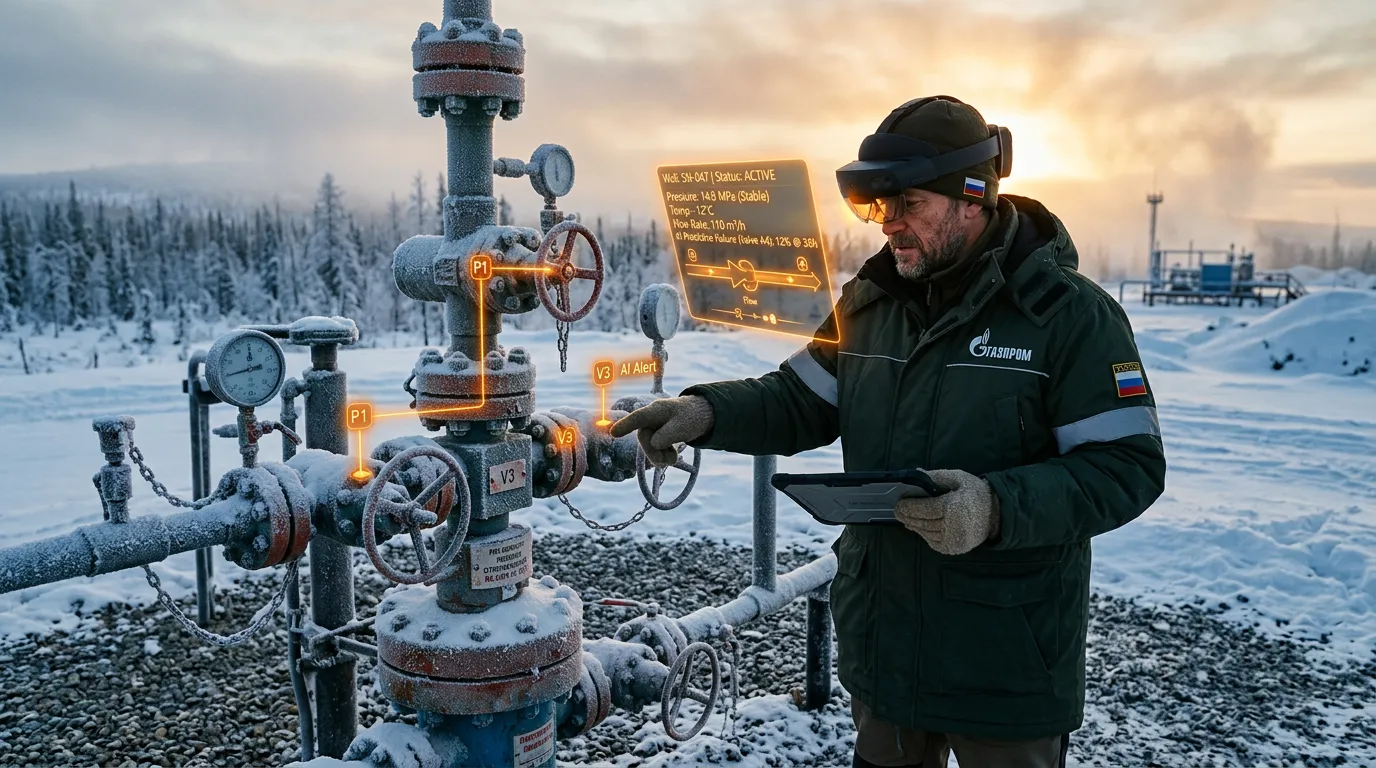
Tatneft's digital ecosystem also includes AI applications for predictive analytics to forecast pump failures, pipeline wear, and power line icing, computer vision systems for equipment inspection and industrial safety, and platforms supporting geological and production monitoring. The company's neural computing technologies are also used to forecast hydrocarbon potential and estimate oil and gas resources.
Tatneft has also developed an automated drone management system. In addition to controlling unmanned aerial vehicles, the platform processes aerial imagery directly in the field. Airborne laser scanning has significantly accelerated field operations. In 2025, the company also began autonomous road inspections, with information about detected defects automatically transferred into a central database.
To date, geological and production monitoring systems have reduced annual oil losses by 13,500 tonnes, while the company's reserves monitoring platform has been deployed across more than 80% of organisations within the Tatneft Group. By the end of 2026, developers plan to extend the platform to individual Tatneft departments.
A Competitive Digital Landscape
In 2022, SIBUR introduced its own industrial digitalisation stack, integrating equipment data collection, transmission to an Industrial Internet of Things (IIoT) platform, machine learning, and recommendation engines for production personnel. Around the same time, the company estimated that its digital transformation programme had generated cumulative economic benefits exceeding RUB 30bn (approximately USD 380m).
In 2023, Rosneft (Oil Company Rosneft) introduced an integrated suite of domestically developed software for oil and gas production. The platform covers geology, field design, reservoir development, and production operations, including AI-based applications. The company also deployed digital twins of well equipment, enabling continuous monitoring of energy consumption and operating parameters through virtual equipment replicas.
Across the sector, companies are now moving beyond deploying standalone digital tools toward creating unified enterprise environments in which data becomes the foundation of production management. The greatest benefits are expected to come from reducing unplanned downtime, preventing equipment failures, accelerating maintenance, and improving hydrocarbon production efficiency.