

160 Digital Wayfinding Displays Set for Installation in Moscow Metro in 2026
Passengers will be able to receive instant updates about changes in metro operations.
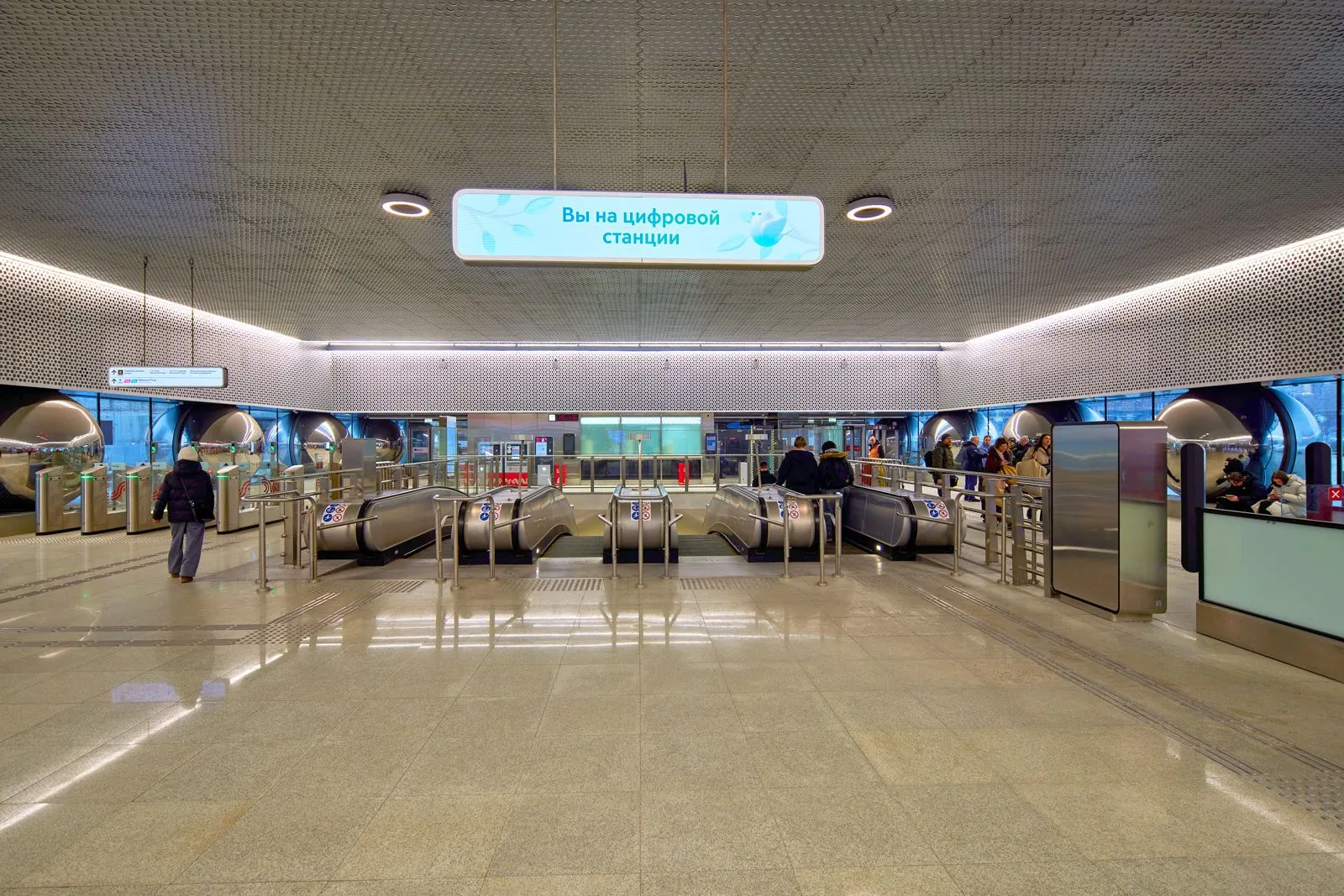
A total of 160 digital navigation displays will be installed in 2026 at stations on Moscow’s Rublevo-Arkhangelskaya metro line. Passengers will be able to receive real-time updates about changes affecting the metro system as a whole or specific stations. Specialists from the navigation department are currently preparing the information that will appear on the displays, the Moscow city government press service told IT-Russia.
Instant Information Updates
The digital displays will appear at five stations on the new Rublevo-Arkhangelskaya line: Delovoy Tsentr, Shelepikha, Zvenigorodskaya, Narodnoye Opolcheniye and Bulvar Generala Karbysheva. The displays will operate on three metro lines, including the Bolshaya Koltsevaya Line and the Troitskaya Line.
In 2024, the Mayor of Moscow opened the country’s first digital urban transport station in the metro, where technology is integrated with familiar passenger services. The station was Maryina Roshcha, where digital navigation and an interactive ‘Live Communication’ information desk were installed.
Digital Displays Eliminate Nighttime Maintenance
The digital screens offer several advantages. The most important is remote updating of information. Uploading new data takes less than a minute. Previously, specialists had to perform such updates manually and at night so as not to interfere with metro operations.
On these displays, navigation and additional information appear on a single surface. Passengers can see all relevant travel details in one place without needing posters or other sources.
The screens also show metro usage rules, operational changes and updates to surface transport routes near specific stations. Static signs are gradually disappearing, replaced by a dynamic format for communicating with passengers.
Earlier we reported that an automatic system for detecting falls onto the tracks is being tested at the Pechatniki station on the Bolshaya Koltsevaya Line in the Moscow metro. The system will alert driverless trains if an obstacle appears on the tracks.