AI Technology Developed in Russia Cuts Knee MRI Scan Time to Five Minutes
The system reconstructs medical images using artificial intelligence.
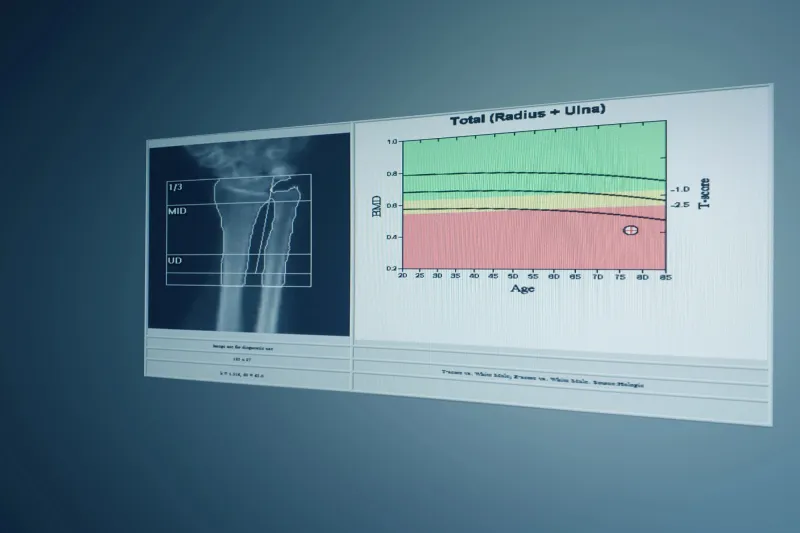
Graduate students from the AI Talent Hub at ITMO University, together with the medical genetics center Genotek, have developed an AI technology for MRI scanners that dramatically reduces scanning time for knee examinations. The system cuts the procedure from the usual 20–40 minutes to about 5–10 minutes without losing clinically important information.
The technology automatically reconstructs missing fragments of MRI images and can potentially be used on equipment from different manufacturers, the university’s press service told IT-Russia.
AI “Reads” Anatomy Like a Familiar Proverb
MRI is a safe diagnostic method that uses strong magnetic fields and radio waves to visualize the body. It is considered one of the most accurate ways to detect joint disorders. However, the scanning process can take up to 40 minutes, creating heavy workloads for clinics. Researchers say their new system addresses this challenge.
The technology relies on AI-based image reconstruction. Imagine hearing the beginning of a familiar proverb: you do not need to hear the entire phrase because your brain already knows the ending. The AI works in a similar way. Trained on thousands of MRI scans, the system has learned how human anatomy should appear in images. Rather than simply “drawing in” missing details, the neural network reconstructs a high-quality image using patterns learned from medical datasets. Reconstruction quality is measured using technical metrics. During internal tests, the model achieved a structural similarity index (SSIM) of 0.815, indicating very high correspondence with full MRI images.
Reconstructs Images and Detects Pathology
In addition to reconstructing images, the system includes an automatic screening module. The algorithm analyzes the reconstructed scans to identify potential pathologies, including cartilage damage or injuries to the meniscus and ligaments.
The project was initiated by Genotek, which provided training placements for the students and already had an initial concept for an AI-based MRI technology. A team of four ITMO students joined the effort. Since October 2025, they have been reconstructing MRI images using various neural network architectures while developing the pathology detection module.
In Russia, the joint work of ITMO researchers and Genotek specialists represents the first comprehensive solution of this kind. The next step is clinical validation with radiologists to determine whether the technology can be deployed in real medical practice.
Earlier we reported that Russian specialists developed a platform for generating synthetic MRI images.